
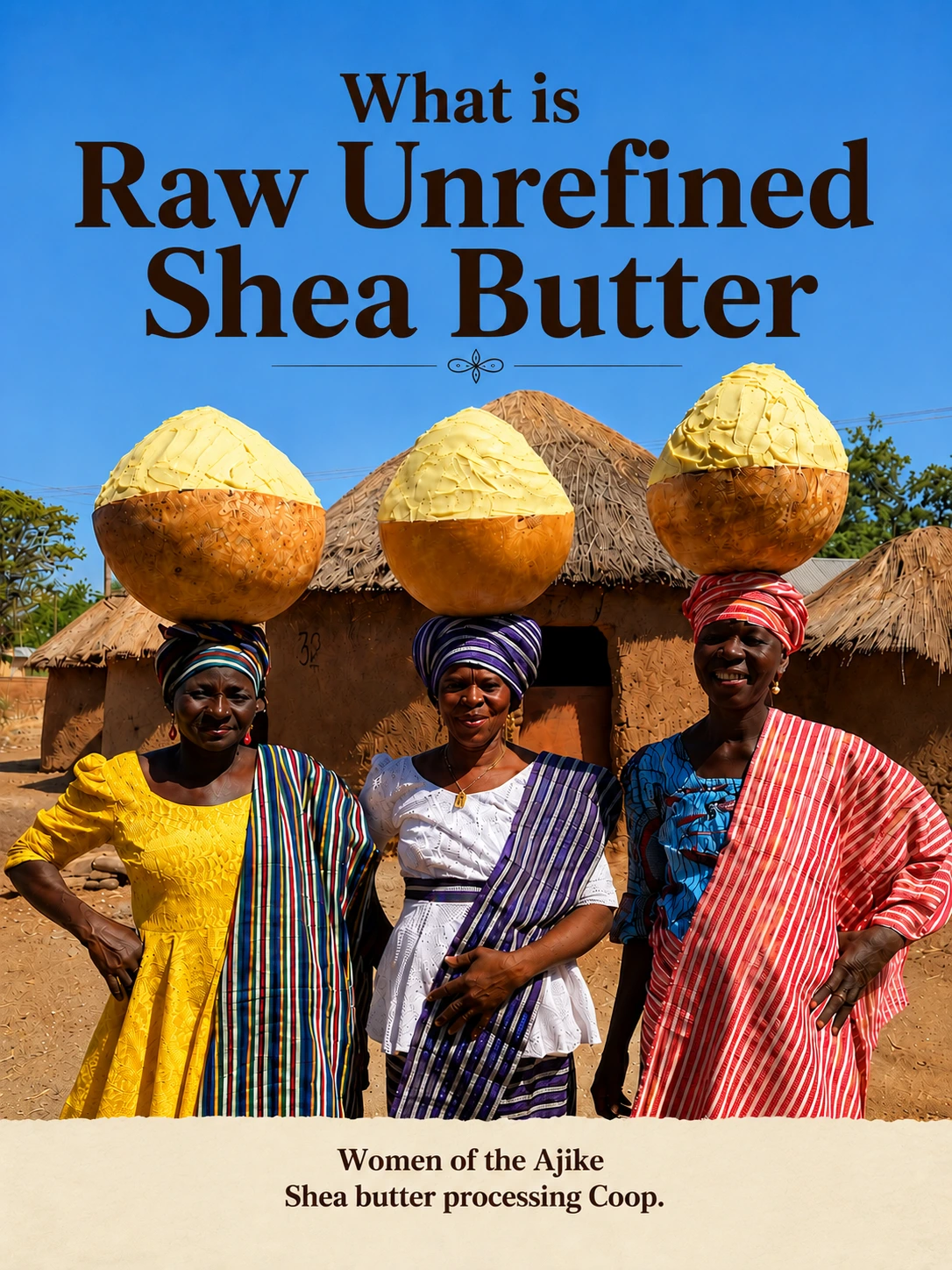
Shea butter is everywhere. You will find it listed as an ingredient on moisturisers, lip balms, hair creams, and body lotions from budget drugstore brands to premium skincare lines. But here is the thing most people do not know: the shea butter in the vast majority of those products bears almost no resemblance to the raw, unrefined shea butter that has been used across West Africa for centuries.
The difference is not marketing. It is chemistry, biology, and the complete destruction of what makes shea butter genuinely remarkable during the industrial refining process.
This guide covers everything about raw unrefined shea butter: where it comes from, how it is made, what is actually in it, what it does for skin and hair, and why the unrefined version is the only one worth seeking out. At Ajike, shea butter is the foundation of almost everything we make. We source it from Ghana, we use it in its raw, wild harvested form, and we have been working with it since we started in 2015. What follows is what we know.
What Is Raw Unrefined Shea Butter?
Where the Name Comes From
The shea tree is known botanically as Vitellaria paradoxa. It grows across the Sudanian savannah belt of West and Central Africa, from Senegal in the west through Ghana, Nigeria, and across to Ethiopia in the east. The word shea is an anglicisation of the Bambara word si, which refers to the tree across several West African languages.
Shea butter is the fat extracted from the kernel of the fruit of the shea tree. The fruit itself looks something like a large olive. Inside is a nut, and within the nut is the kernel. The fat extracted from that kernel is shea butter. In Ghana, it is called nkuto in Twi. In Northern Ghana and the Sahel region, it is a staple of both diet and skincare, used daily by families for cooking, body moisturising, hair care, and healing.
Raw vs Refined vs Ultra-Refined: What the Terms Actually Mean
Raw shea butter, sometimes also called unprocessed shea butter, refers to shea that has been extracted through the traditional manual process without the use of chemical solvents, bleaching agents, or high-temperature deodorization. It retains its natural color (ivory to pale yellow), its characteristic mild nutty smell, and its full complement of nutrients.
Refined shea butter has been processed using industrial methods: solvent extraction, high-heat deodorization, and bleaching with chemicals or activated clay. This process produces a product that is bright white, has no scent, and has a smoother, more uniform texture. It is easier to work with in cosmetic formulations, has a longer commercial shelf life, and is considerably cheaper to produce. It also loses the majority of its beneficial compounds in the process.
Ultra-refined shea butter goes through even more processing to produce an almost completely neutral, odorless, white base ingredient with minimal natural activity. You will find this version in most mass market skincare products that list shea butter on the label.
Why Unrefined Is the Only Version Worth Using
The active compounds in shea butter that make it genuinely useful for skin, hair, and healing are concentrated in what is called the unsaponifiable fraction, the portion of the fat that does not convert to soap during saponification and is not a simple fatty acid. This fraction contains the triterpenes, phytosterols, tocopherols, and other biologically active compounds that give raw shea butter its anti-inflammatory, healing, and barrier repair properties.
Refining significantly reduces or eliminates this unsaponifiable fraction. A refined shea butter may still provide some emollient benefit as a simple fat, but the compounds that make raw shea butter genuinely special for conditions like eczema, dry skin, and inflammation are gone. If you are using shea butter for anything beyond basic moisturisation, you need the raw unrefined version.
The Shea Tree: Africa's Most Remarkable Plant
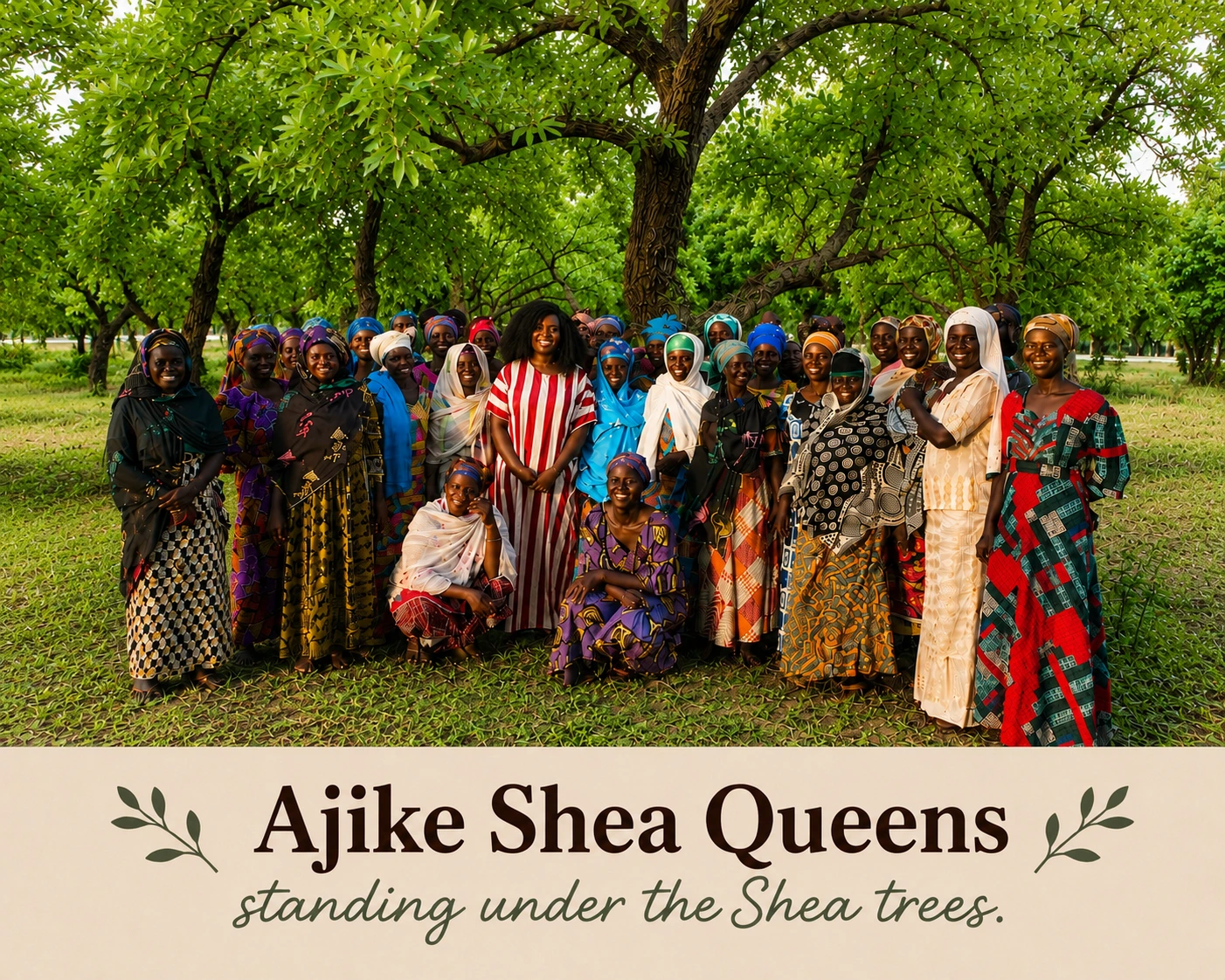
Where Shea Trees Grow
Shea trees grow naturally across a band of West and Central Africa that stretches roughly from latitude 5 degrees north to 15 degrees north. This zone runs through Senegal, Guinea, Mali, Burkina Faso, Ghana, Togo, Benin, Nigeria, Niger, and across into Sudan, Ethiopia, and Uganda. The tree thrives in the Sudanian savannah climate, which provides the specific combination of rainfall and dry season that it needs.
The belt of territory where shea trees grow naturally is sometimes called the shea belt, and the countries within it account for virtually all of the world's shea production. Ghana sits squarely within this belt, with the Upper East, Upper West, and Northern regions of Ghana being the primary shea producing areas.
Why Shea Trees Take up to 40 Years to Mature
This is the fact about shea butter that stops most people. A shea tree does not begin producing fruit until it is somewhere between 20 and 40 years old. It typically reaches peak production at around 45 to 55 years of age and can continue producing for 200 years or more from that point.
The implications of this are significant. You cannot simply plant a shea tree and expect a return in a few years the way you might with many agricultural crops. The trees that are producing fruit today were planted, or more accurately, seeded naturally, decades ago. This long growth cycle is part of what makes authentic wild harvested shea butter a genuinely precious ingredient. The trees producing the nuts that become Ajike shea butter have been growing for longer than most of us have been alive.
Wild Harvested vs Cultivated: Why the Difference Matters
Almost all of the world's shea butter comes from wild trees rather than cultivated plantations. The long maturation period makes plantation cultivation economically impractical for most purposes. This is unusual in the global food and beauty ingredient market, where most plant-based ingredients come from cultivated, managed crops.
Wild harvested shea trees grow in the natural environment, without fertilisers, pesticides, or irrigation. They draw nutrients from the soil in which they have grown for decades, developing a root system and a nutrient profile shaped by the specific ecology of the region. The nuts they produce reflect that environment. There is also an argument that wild harvesting, when done sustainably, is better for the local ecosystem and biodiversity than converting land to plantation farming would be.
The Women Behind Shea Butter Production in West Africa
Shea butter production in West Africa is almost entirely the domain of Women. The collection of shea fruits, the processing of the nuts into butter, and the sale of the product has been a source of income, autonomy, and community for women across the shea belt for generations. In northern Ghana specifically, shea collection and processing is deeply embedded in the economic and social structure of rural communities.
When you buy authentic Ghanaian shea butter, you are participating in an economic chain that supports these women and their communities directly. This is not a marketing claim, it is the actual structure of how shea gets from tree to jar. At Ajike, we source from the Ajike Shea Centre which is a space established for the Women of the Ajike Shea Producing Coop. in northern Ghana, and we understand that the quality of what we use is inseparable from the care and knowledge of the women who produce it.
How Shea Butter Is Made: From Tree to Butter
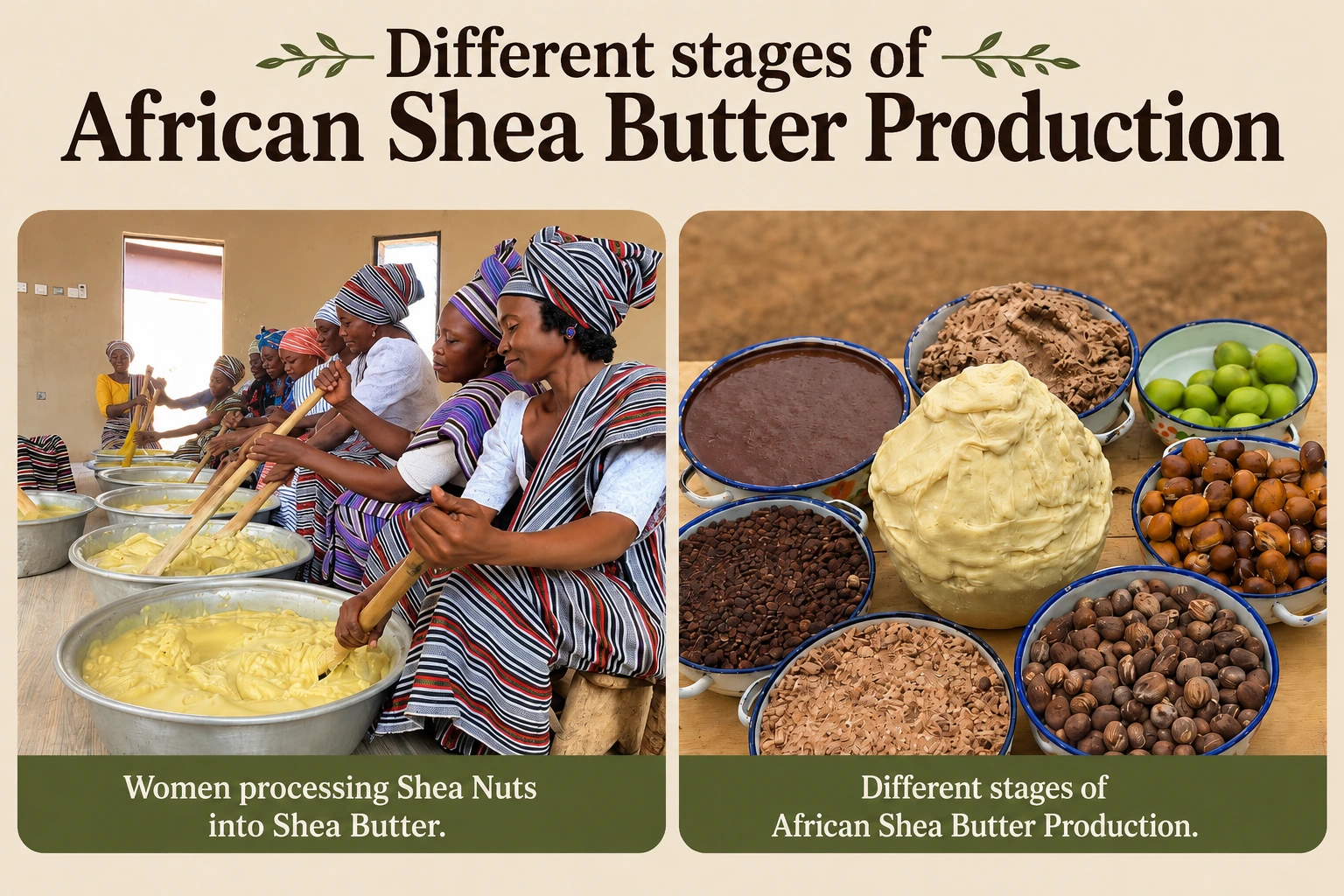
The traditional process for making shea butter is labour intensive, skilled, and quite different from the industrial extraction methods used for refined shea. Understanding this process helps you appreciate what the final product actually is. This traditional method is being passed from mothers to their daughters for centuries.
Harvesting the Shea Fruit
Shea fruits ripen and fall from the tree between May and August, varying by region. Women collect the fallen fruits from beneath the trees, a process that requires patience, time, considerable physical effort and local knowledge about where productive trees are. The fruits are soft when fresh and ferment quickly, so they need to be processed promptly. The outer pulp of the fruit, which has a pleasant sweet taste, is eaten or used locally. What remains is the nut.
Extracting the Shea Nut
The nut inside the shea fruit has a hard outer shell and a softer inner kernel. The shells are cracked open, traditionally by hand using stones, to reveal the kernel. This is skilled physical work. The kernels are then sun-dried, sometimes for several days, to reduce their moisture content and prepare them for roasting.
Roasting and Grinding
The dried kernels are roasted over a wood fire. The roasting darkens the kernels and drives off remaining moisture. The level of roasting affects the colour and scent of the final butter more lightly roasted kernels produce a paler, more subtly scented butter. The roasted kernels are then ground into a paste. Traditionally, this was done using large stone grinding mills or by hand with a pestle and mortar. The grinding paste at this stage has a rich, dark brown colour and a strong nutty, smoky smell. Today, many use mechanical grinding mills to make the process more efficent.
Kneading and Separating
During the kneading, water is gradually added to the ground paste by hand for an extended period. This kneading and churning causes the fat to begin separating from the water and the non-fat solids. The fat rises to the top of the liquid as a foam. This stage requires significant physical effort and is where much of the skill in traditional shea butter making lies. Too little kneading and the fat does not fully separate. Too much or the wrong temperature of water and the texture is affected.
Boiling and Skimming
The separated fat foam is collected and boiled in large pots. As it boils, impurities sink to the bottom and pure shea butter rises to the surface. The clean butter is carefully skimmed off and transferred to other containers. The result, after cooling, is raw unrefined shea butter: ivory or pale yellow in colour, with a characteristic texture and scent that is completely absent from the refined versions.
Why Traditional Processing Preserves the Nutrients
The entire traditional process is water based and uses no chemical solvents, no bleaching agents, and no high temperature deodorisation. The temperatures involved, while warm, do not reach the extreme levels used in industrial refining. This matters because the biologically active compounds in shea butter, particularly the unsaponifiable fraction, are heat sensitive and chemically reactive. The gentle, water based traditional process preserves these compounds. Industrial refining destroys them.
At Ajike, we source shea butter that has been produced using these traditional methods by producers in Northern Ghana. The colour, scent, and texture of our raw shea butter reflects that process.
Ivory Shea Butter vs Yellow Shea Butter: What Is the Difference?
What Makes Ivory Shea Butter Ivory
Ivory shea butter is the natural colour of shea butter when it has been produced without any additions. The ivory to pale cream colour comes from the natural carotenoids present in the shea kernel, which are retained during traditional processing. The exact shade varies from batch to batch depending on the region, the specific trees, the ripeness of the nuts, and the degree of roasting. This natural variation is a sign of authenticity, not inconsistency.
What Makes Yellow Shea Butter Yellow
Here is where it gets important. Most yellow shea butter sold today is not naturally yellow. It has been dyed with annatto, turmeric, or synthetic dyes to achieve a yellow colour that many buyers associate with quality or potency. This artificially coloured product has no additional benefits over naturally coloured ivory shea butter. The yellow colour has simply been added to meet market expectations.
Genuine naturally yellow shea butter gets its colour from the addition of burututu root during the traditional processing. This is a practice specific to certain communities in West Africa and is not widely done commercially. The result is a shea butter with a genuinely distinct colour and genuinely additional properties from the burututu root.
Burututu Root: The Natural Colourant in Authentic Yellow Shea
Burututu (Crossopteryx febrifuga) is a wild-harvested medicinal plant found across West and Central Africa. Its root bark has a long history of traditional use across the region for its anti-inflammatory, antimicrobial, and healing properties. When burututu root is infused into shea butter during the traditional processing, it imparts a rich yellow to golden colour and contributes its own bioactive compounds to the finished butter.
At Ajike, our yellow shea butter is coloured naturally with wild-harvested burututu root. You can see the difference when you compare it directly with artificially coloured alternatives: the colour from burututu root is warm and golden rather than the bright canary yellow of annatto dye, and the scent profile is distinctly different.
Which One Is Better for Skin and Hair
Both ivory and yellow shea butter, when genuinely raw and unrefined, provide the same core skin and hair benefits from the shea itself. The difference with authentic yellow shea butter is the addition of burututu root compounds, which add an extra anti-inflammatory and antimicrobial dimension. For scalp conditions and hair, the burututu addition can be particularly beneficial.
For daily body moisturisation, both are excellent and the choice often comes down to preference. For those who prefer unscented products, ivory shea butter has a milder, more subtle scent than the yellow variety. For those interested in the additional properties of burututu, the yellow is the better choice.
Read Also: Ivory Shea Butter vs Yellow Shea Butter
What Is in Raw Unrefined Shea Butter? The Nutrient Profile
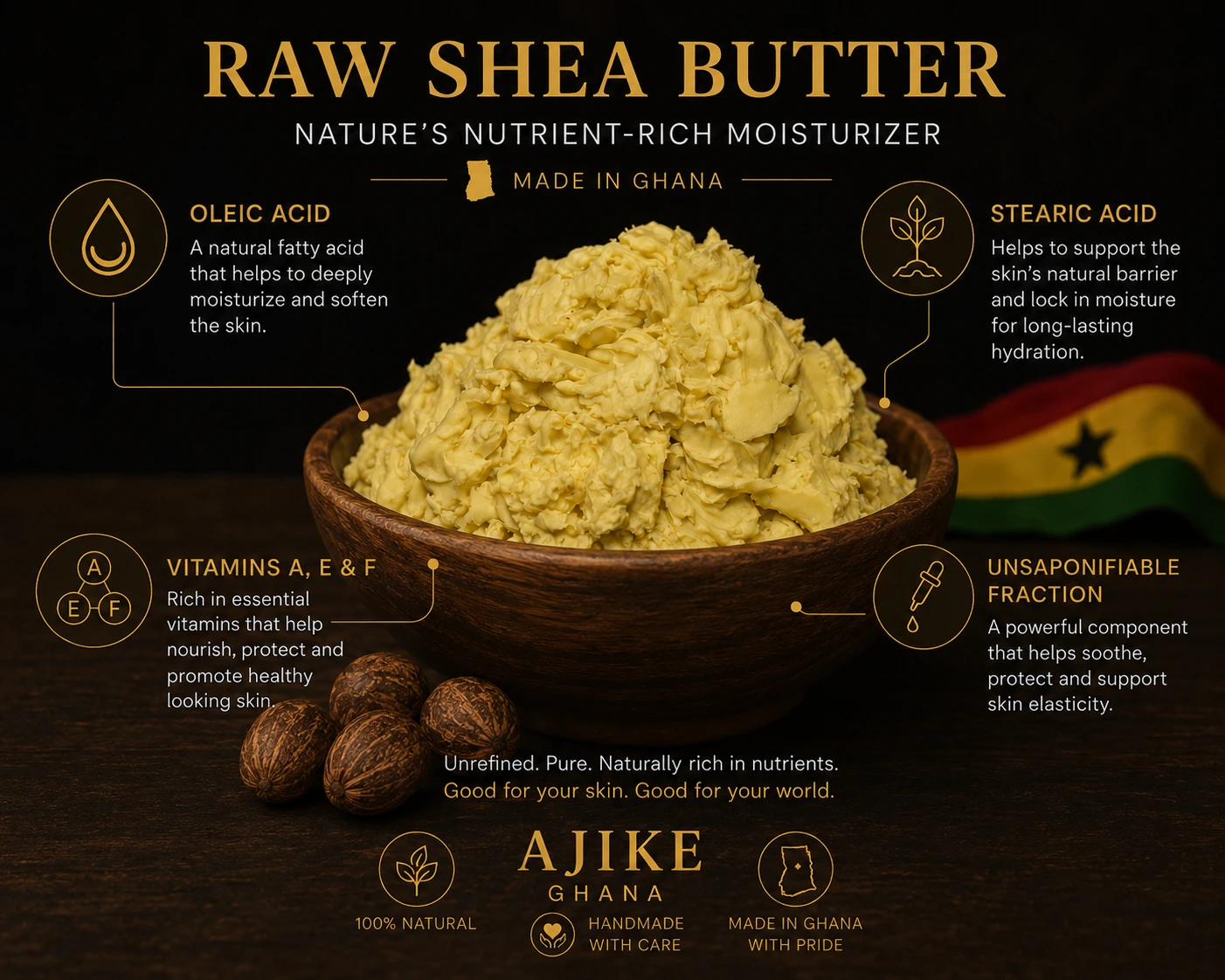
The reason Raw Unrefined Shea Butter works as well as it does for so many different skin and hair concerns comes down to a combination of fatty acids, vitamins, and biologically active compounds that work together in ways that few other natural ingredients can match.
Oleic Acid: Deep Moisturisation and Skin Softening
Oleic acid is a monounsaturated omega-9 fatty acid that makes up approximately 40 to 60 percent of raw shea butter by weight. It is the primary reason shea butter feels the way it does on skin. Oleic acid penetrates the skin's lipid bilayer relatively easily, delivering moisturising compounds to the deeper layers of the stratum corneum rather than just sitting on the surface. It softens the skin and improves its ability to retain moisture over time.
The high oleic acid content is also why shea butter is so effective for dry skin and for hair that has been dried out by chemical processing or environmental exposure.
Stearic Acid: Skin Barrier Support
Stearic acid is a saturated fatty acid present in raw shea butter at approximately 35 to 45 percent. Unlike oleic acid, stearic acid works primarily at the surface of the skin, providing an emollient effect that smooths and softens without penetrating as deeply. More importantly, stearic acid is a component of the skin's natural lipid barrier and contributes directly to barrier repair when applied topically.
For conditions where the skin barrier is compromised, such as eczema, dry skin, and reactive skin, the stearic acid content of raw shea butter helps physically reinforce the damaged barrier structure alongside the barrier active compounds in the unsaponifiable fraction.
Linoleic Acid: Anti-Inflammatory and Barrier Repair
Linoleic acid, an omega-6 polyunsaturated fatty acid, is present in raw shea butter at lower concentrations than oleic or stearic acid, typically around 5 to 10 percent. Despite being present in smaller amounts, it plays an important role. Linoleic acid is a component of ceramide synthesis in the skin, meaning it contributes to the production of one of the key lipids that make up the skin barrier. Deficiency in linoleic acid at the skin level is associated with impaired barrier function and increased transepidermal water loss.
It also has documented anti-inflammatory properties and is the fatty acid most associated with benefit for acne-prone skin, where sebum tends to be relatively low in linoleic acid compared to healthy skin.
Vitamin A: Skin Cell Renewal
Raw Shea Butter contains natural vitamin A in the form of beta carotene and other carotenoids. Vitamin A is one of the most studied compounds in skincare because of its role in regulating skin cell turnover. It supports the rate at which old skin cells are shed and replaced, which over time produces a more refined skin texture, improved tone, and reduced appearance of fine lines.
The vitamin A in raw shea butter is not at the concentrated levels found in retinol products, so the effect is gentle and gradual rather than aggressive. This makes it suitable for daily use on all skin types, including sensitive skin that cannot tolerate higher concentrations of vitamin A.
Vitamin E: Antioxidant Protection
Tocopherols, which are the chemical compounds that collectively make up vitamin E, are present in raw shea butter at significant levels. Vitamin E is a fat soluble antioxidant, meaning it works within the lipid environment of the skin barrier to neutralise free radicals produced by UV exposure, pollution, and other environmental stressors.
Free radical damage is one of the primary drivers of both skin aging and inflammatory skin conditions. The antioxidant protection provided by the tocopherols in raw shea butter works alongside the anti-inflammatory action of the unsaponifiable fraction to protect the skin on multiple fronts simultaneously.
Vitamin F: Essential Fatty Acids for Skin Health
Vitamin F is not a single vitamin but a term used to describe essential fatty acids, primarily linoleic acid and alpha-linolenic acid. These are called essential because the body cannot produce them and must obtain them through diet or topical application. In the context of skin, essential fatty acids are critical for ceramide synthesis, skin barrier integrity, and anti-inflammatory response.
The presence of vitamin F compounds in raw shea butter is one of the reasons it is particularly effective for barrier repair in eczema-prone and chronically dry skin types.
Unsaponifiable Fraction: The Part That Makes Shea Truly Special
The unsaponifiable fraction of raw shea butter is the component that sets it apart from almost every other plant fat. In most plant oils and butters, the unsaponifiable fraction makes up 1 to 2 percent of the total. In raw shea butter, it is 5 to 17 percent, one of the highest levels of any plant fat.
This fraction contains the compounds that give raw shea butter its anti-inflammatory, healing, and skin-barrier-active properties: triterpenes, phytosterols, tocopherols, polyphenols, and other biologically active molecules. These are the compounds that industrial refining destroys. They are also the compounds that pharmaceutical companies have studied extensively for wound healing, anti-inflammatory applications, and skin barrier research. No wonder Shea Butter is the No.1 healing seed oil in the world.
Triterpenes and Phytosterols: Natural Anti-Inflammatory Compounds
The triterpene alcohols in raw shea butter, particularly lupeol, alpha-amyrin, and beta-amyrin, have been the subject of significant research for their anti-inflammatory properties. These compounds inhibit the production of pro-inflammatory cytokines and prostaglandins in the skin, reducing the inflammatory response that underlies many chronic skin conditions including eczema, psoriasis, and acne.
Phytosterols, including beta-sitosterol, campesterol, and stigmasterol, complement this action by supporting ceramide synthesis in the skin barrier, reducing TEWL, and providing additional anti-inflammatory activity through inhibition of the arachidonic acid pathway. The combination of triterpenes and phytosterols in the unsaponifiable fraction of raw shea butter is what makes it genuinely therapeutic for inflammatory skin conditions rather than simply moisturising.
What Does Raw Shea Butter Do For Skin?
Deep Moisturisation Without Blocking Pores
Raw shea butter is rated at 0 to 2 on the comedogenicity scale, meaning it is very unlikely to block pores when used in appropriate amounts. Despite being a solid fat, it is not occlusive in the way that mineral oil and petroleum based ingredients are. It provides deep, lasting moisturisation by penetrating the upper layers of the stratum corneum with its oleic acid content while forming a light, breathable barrier at the surface.
The key qualifier is appropriate amounts. Applied too heavily, particularly to already oily or acne-prone skin, raw shea butter can contribute to congestion. Applied correctly, in small amounts to slightly damp skin, it provides effective moisturisation that is suitable for most skin types.
Skin Barrier Repair and Protection
The combination of stearic acid, ceramide-supporting linoleic acid and vitamin F compounds, and the phytosterols in the unsaponifiable fraction gives raw shea butter a genuine capacity for skin barrier repair. This is not a marketing claim. The compounds involved in barrier repair are well characterised, and their presence in significant quantities in raw shea butter is documented.
For skin with a damaged barrier, regular application of raw shea butter provides the lipid building blocks and biological signals that support barrier reconstruction over time. This is why it is so effective for chronic conditions like eczema, where barrier dysfunction is central to the problem.
Natural Anti-Inflammatory Properties
The triterpenes and phytosterols in the unsaponifiable fraction give raw shea butter meaningful anti-inflammatory action at the skin level. Applied to inflamed, reactive, or eczema affected skin, raw shea butter helps moderate the inflammatory response. This is not a rapid, drug like effect. It is a gradual, cumulative reduction in skin inflammation that builds with consistent daily use.
The practical result is less redness, reduced itching, and calmer skin over the course of weeks of regular application. For chronic inflammatory skin conditions, this sustained anti-inflammatory action is more valuable than any single acute intervention.
Supporting Skin Cell Renewal
The natural vitamin A content in raw shea butter supports skin cell turnover at a gentle, sustainable rate. Over weeks and months of regular use, this gradual renewal effect produces smoother skin texture, more even tone, and a reduction in the appearance of dullness and hyperpigmentation.
This is the mechanism behind the skin brightening and complexion evening effects that consistent shea butter users often report. It is not dramatic or rapid. It is slow, gentle, and cumulative, which is also why it is suitable for daily use on sensitive skin that cannot tolerate more aggressive treatments.
Eczema, Psoriasis and Dry Skin Conditions
Raw shea butter is one of the most studied natural ingredients for eczema management. The combination of barrier repair, anti-inflammatory action, and deep moisturisation addresses the three core problems of eczema simultaneously: the compromised barrier, the chronic inflammation, and the severe dehydration.
For psoriasis, the anti-inflammatory triterpenes and the emollient fatty acids help reduce the severity of scaling and inflammation. For chronic dry skin, the combination of oleic acid penetration and stearic acid surface protection provides both immediate comfort and longer-term improvement in the skin's ability to retain moisture.
Read Also: Shea Butter for Eczema
Stretch Marks and Scar Support
Raw shea butter has a long traditional history of use for stretch marks during and after pregnancy across West Africa. While no topical ingredient can eliminate stretch marks once they have formed, the combination of moisturisation and skin elasticity support from raw shea butter's oleic acid and vitamin E content helps maintain skin suppleness during periods of rapid skin stretching.
For existing scars, the skin cell renewal support from vitamin A and the anti-inflammatory action of the unsaponifiable fraction can gradually improve the texture and appearance of scars over extended periods of consistent application.
Anti-Aging and Skin Elasticity
The antioxidant protection from vitamin E, the skin cell renewal support from vitamin A, and the collagen supporting effects of the unsaponifiable fraction work together to address multiple aspects of skin aging simultaneously. Raw shea butter does not deliver the dramatic, rapid results of retinoid creams or high concentration vitamin C serums. What it delivers is consistent, gentle support for skin health that over months and years of daily use produces genuinely visible improvements in skin texture, elasticity, and tone.
What Does Raw Shea Butter Do for Hair?
Sealing Moisture into Hair Strands
The primary function of raw shea butter in hair care is as a sealant. After washing and conditioning, or after applying a water-based leave-in product, a small amount of raw shea butter applied to the hair seals the moisture into the hair strand rather than allowing it to evaporate. This moisture-sealing function is particularly valuable for natural, textured, and coily hair types, which have a structural characteristic that makes them lose moisture faster than straight hair.
Scalp Nourishment and Dry Scalp Relief
Applied to the scalp, raw shea butter provides emollient relief for dry, flaking, or irritated scalp conditions. The anti-inflammatory triterpenes help calm scalp inflammation associated with dry scalp, dandruff, and seborrhoeic dermatitis. The vitamin E content provides antioxidant protection to the scalp skin. Used as a scalp treatment before washing, it helps loosen dry, flaking skin from the scalp surface.
Reducing Breakage and Improving Hair Strength
Dry, brittle hair breaks because it lacks the moisture and flexibility needed to bend without snapping. Raw shea butter, applied as a moisture sealant after conditioning, helps maintain the hair strand's moisture levels between washes. Well-moisturised hair is significantly more flexible and resistant to breakage than dehydrated hair. Over time, consistent use of raw shea butter as part of a moisture focused hair routine reduces breakage and improves overall hair strength.
For Natural, Textured and Loc Hair
Natural and textured hair communities have used shea butter as a key hair care ingredient for generations, for good reason. It provides exactly the type of moisture sealing that coily and kinky hair needs without weighing the hair down when used in the right amounts. For locs, a small amount worked into the hair between washes helps maintain moisture and reduce the dryness that can make locs feel brittle and look dull.
Unrefined vs Refined Shea Butter: Why Refining Destroys What Makes It Special
What Happens During Refining
Industrial refining of shea butter involves several steps that are each damaging to the active compounds in the raw product. Solvent extraction, often using hexane, is used to maximise the oil yield from the shea kernels. The crude extract is then degummed, neutralised, bleached with activated clay or chemical bleaching agents, and finally deodorised using steam distillation at very high temperatures.
Each of these steps is designed to produce a more standardised, more stable, better-looking, and better smelling product for commercial use. Each of them also degrades, reduces, or destroys the biologically active compounds that give raw shea butter its real value.
What Is Lost in the Refining Process
High temperature deodorisation, which is the final step in refining, is particularly damaging to the heat-sensitive triterpenes and tocopherols in the unsaponifiable fraction. Studies comparing raw and refined shea butter have documented reductions of up to 80 percent in the concentration of specific triterpene alcohols after standard industrial refining.
The natural carotenoids that give unrefined shea butter its ivory to yellow colour are destroyed by bleaching. The characteristic scent, which comes from specific aroma compounds in the unsaponifiable fraction, is removed by deodorisation. The vitamin E content is reduced. The result is a product that still provides some emollient benefit as a simple fat, but has lost most of what made it worth using in the first place.
How to Tell the Difference When Buying
Genuine raw unrefined shea butter has a clear set of characteristics that make it identifiable. It will have a colour ranging from ivory to pale yellow to golden, never bright white. It will have a scent, mild and nutty, sometimes slightly smoky, never odourless. It will have a slightly gritty or grainy texture at room temperature that smooths when warmed. It will melt at around 30 to 37 degrees Celsius. It will not be perfectly smooth and uniform.
Refined shea butter is bright white, has no smell, has a very smooth, uniform texture, and melts more cleanly. It looks more appealing in a jar. It is less valuable for your skin.
Why Most Shea Butter in Commercial Products Is Refined
Refined shea butter is significantly cheaper to produce at commercial scale, has a longer shelf life, has no scent that might interfere with product fragrances, has a white colour that does not affect the appearance of formulations, and has a consistent texture that is easier to work with in production. These are all commercial advantages that have nothing to do with efficacy for the skin.
When a skincare brand lists shea butter on their ingredient label, they almost certainly mean refined shea butter. The raw, unrefined version requires a supply chain that goes back to specific producers in West Africa, and it commands a premium price. Most commercial brands are not willing to pay that premium or manage that supply chain. Ajike is.
How to Use Raw Shea Butter
As a Body Moisturiser
For the body, raw shea butter is most effective when applied to slightly damp skin immediately after bathing or showering. Take a small amount, warm it between your palms until it melts to an oil, then apply to the damp skin in gentle circular motions. The moisture on the skin helps the shea butter absorb and spread more evenly, and the humectant effect of the surface water is sealed in by the shea butter barrier.
A very small amount goes further than most people expect. Start with less than you think you need and add more if required.
Having trouble with absorption? Read: Why Is Shea Butter Not Absorbing Into My Skin?
As a Facial Moisturiser
On the face, an even smaller amount is appropriate. A rice-grain sized portion warmed between the fingertips is sufficient for the full face. Apply as the last step in your evening routine, after any serums or treatments have been absorbed. Press gently into slightly damp skin rather than rubbing. For oily or acne-prone skin, use sparingly and only on dry areas if needed, rather than all over the face.
For Hair and Scalp
For hair, raw shea butter works best as a sealant applied after washing and conditioning on slightly damp hair. A very small amount warmed between palms should be worked through the mid lengths and ends of the hair, avoiding the roots if your scalp is oily. For the scalp, use as a pre-wash treatment, applied directly to the scalp, left for 30 to 60 minutes, then washed out with shampoo.
For Babies and Young Children
Raw shea butter is one of the safest natural moisturisers for baby skin. Ajike ivory shea butter, which contains no additives of any kind, is appropriate for use on baby skin from birth. Apply a very small amount to damp skin after bathing. For eczema-prone baby skin, apply more generously to affected areas as part of the post-bath routine. Always patch test before first use on a new baby and monitor for any reaction over 24 to 48 hours.
Read Also: Full guide: Shea Butter for Baby Skin
For Eczema and Sensitive Skin
For eczema-prone and sensitive skin, raw shea butter is most effective when applied immediately after cleansing with a gentle, fragrance-free soap, while skin is still slightly damp. Apply generously to affected patches. For very severe eczema, applying shea butter as a thick layer and covering with a cotton garment overnight, a technique similar to wet wrapping, can provide intensive barrier repair.
As a Base for DIY Skincare
Raw shea butter is a popular base for homemade body butters, lip balms, hair butters, and other natural skincare products. It combines well with plant oils like baobab, jojoba, and argan to create lighter textures. Whipping it with an electric mixer produces a fluffy, lighter consistency that many people find easier to apply and more comfortable on oily or combination skin. It accepts essential oils, vitamin E oil, and other active additions well.
Ajike Raw Shea Butter: Wild Harvested in Ghana Since 2015
Where Our Shea Comes From
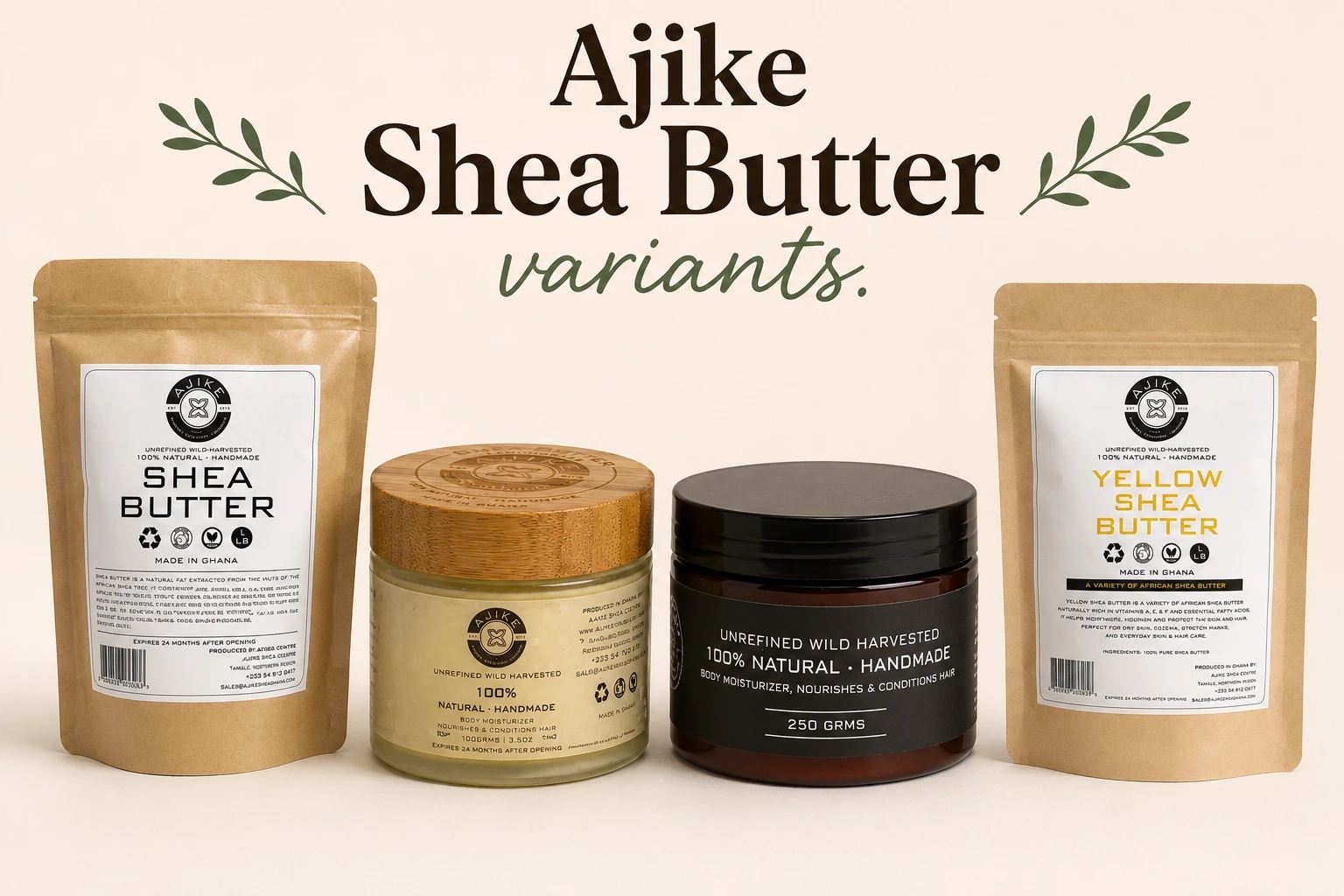
Ajike's raw shea butter is sourced from the Ajike Shea Centre, a space where women shea producers process their shea traditionally in northern Ghana, specifically from the shea belt regions where wild harvested shea trees have been producing nuts for generations. We work with women producers who use traditional processing methods, which means the shea butter we use and sell retains the full nutrient profile that makes it genuinely valuable.
We are not buying shea butter from an intermediary who has sourced from multiple regions and blended batches. We know where our shea comes from, we know how it was processed, and that transparency is part of what we offer every customer who buys our products.
How Our Shea Is Processed
Our raw shea butter is processed using traditional methods: water-based extraction, no chemical solvents, no bleaching, no deodorisation. The colour, scent, and texture of our shea butter reflects this. Our ivory shea butter has the natural ivory to cream colour of unprocessed shea. Our yellow shea butter gets its colour from wild-harvested burututu root infused during processing.
Both varieties are unrefined, unprocessed, and retain the full unsaponifiable fraction that gives raw shea butter its anti-inflammatory and barrier-repair properties.
Ivory and Yellow Shea Butter: Our Two Varieties
Choose The Right Shea Butter For Your Skin & Hair
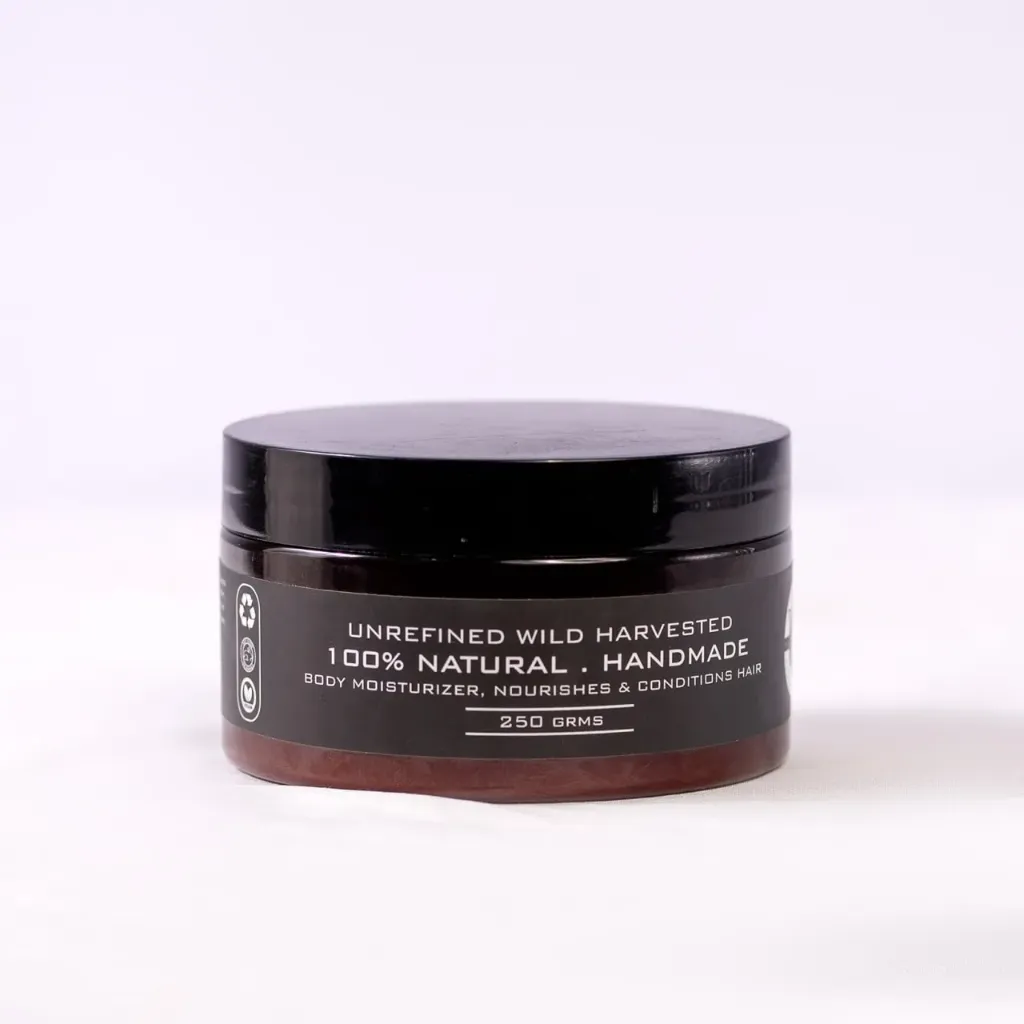
Raw Unrefined Shea Butter Ivory
Wild harvested, pure and unrefined shea butter with its complete natural nutrient profile intact. Perfect for daily skin and hair care.
View Product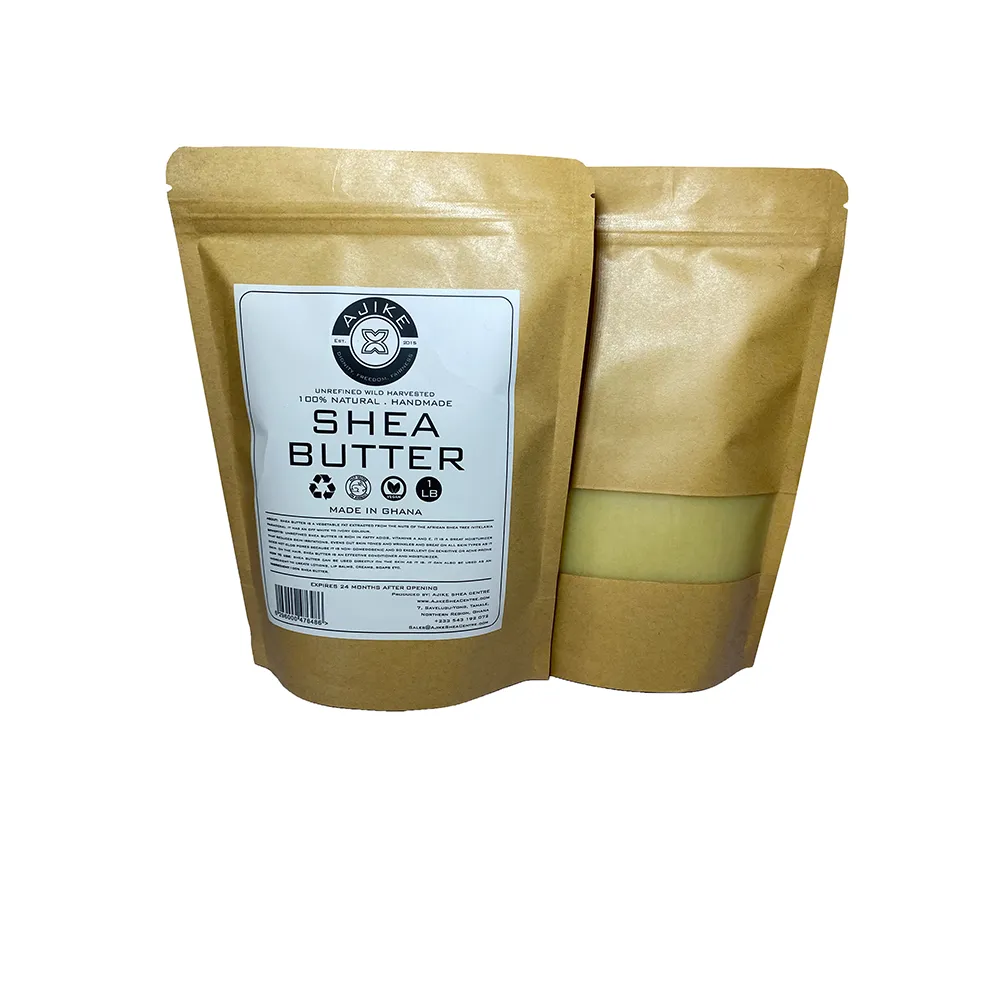
Raw Unrefined Shea Butter Yellow
Naturally coloured with wild-harvested burututu root, offering additional scalp and skin benefits with a rich golden appearance.
View ProductChoose The Right Shea Butter For Your Skin & Hair
Raw Unrefined Shea Butter Ivory
Wild harvested, pure and unrefined shea butter with its complete natural nutrient profile intact. Perfect for daily skin and hair care.
View Product
Raw Unrefined Shea Butter Yellow
Naturally coloured with wild-harvested burututu root, offering additional scalp and skin benefits with a rich golden appearance.
View ProductWhy Shea Butter Is the Foundation of Everything We Make
Shea butter is present in approximately 95 to 98 percent of Ajike's products. This is not an accident. It is a deliberate commitment to building our entire range around the most versatile, most proven, and most culturally authentic skincare ingredient that West Africa produces.
From our African black soap, which uses shea butter as the moisturising base in the saponification process, to our hair butters, body lotions, face creams, shea soap bars, baby products, and eczema formulations, shea butter is the constant. It is the ingredient that connects everything we make to the tradition and the landscape of Ghana that gave rise to Ajike in the first place.
Frequently Asked Questions
Raw shea butter, also called unrefined shea butter, has been extracted through traditional water-based methods without chemical solvents, bleaching, or deodorisation. It retains its natural colour, scent, and full nutrient profile including the unsaponifiable fraction that contains the anti-inflammatory and barrier-active compounds. Regular shea butter in most commercial products is refined, meaning it has been through industrial processing that removes the colour, scent, and most of the biologically active compounds. It provides emollient benefit as a fat but lacks the therapeutic properties of raw shea butter.
Yes. Raw shea butter is one of the most widely used natural skincare ingredients for sensitive skin. Its unsaponifiable fraction has documented anti-inflammatory properties, it is free from synthetic additives and preservatives, and it does not contain the common sensitisers found in commercial skincare products. Always perform a patch test before first use. Results may vary depending on skin type.
Yes, with appropriate caution about quantity. A very small amount, rice-grain sized, warmed between the fingertips and pressed gently into slightly damp skin, works well for most skin types including dry, normal, and sensitive skin. For oily and acne-prone skin, use sparingly and monitor carefully. It is most effective as the last step in an evening routine rather than morning use under makeup.
Genuine raw unrefined shea butter has an ivory to pale yellow colour, never bright white. It has a characteristic mild, nutty, slightly smoky scent. It has a slightly grainy texture at room temperature that smooths when warmed between the palms. It melts at body temperature. If your shea butter is perfectly white, has no smell, and has a very smooth uniform texture, it is refined.
Yes, completely normal. The scent of raw shea butter comes from specific volatile compounds in the unsaponifiable fraction that are present because the butter has not been deodorised. The scent is mild, earthy, and nutty. It fades once applied to the skin and is not detectable to others in normal use. The scent is actually a sign of quality. If your shea butter has no smell, it has been deodorised through industrial refining.
No. Shea butter is the full fat extracted from the shea kernel, containing both the liquid and solid fractions at room temperature. Shea oil refers to the liquid fraction only, with the solid stearic acid fraction removed. Shea oil has a lighter texture and is sometimes used in hair care formulations where a liquid oil is preferable. For skin barrier repair and intensive moisturisation, the full shea butter with both fractions is more effective than shea oil alone.
Our latest content
Check out what's new in our company !