
Start writing here...
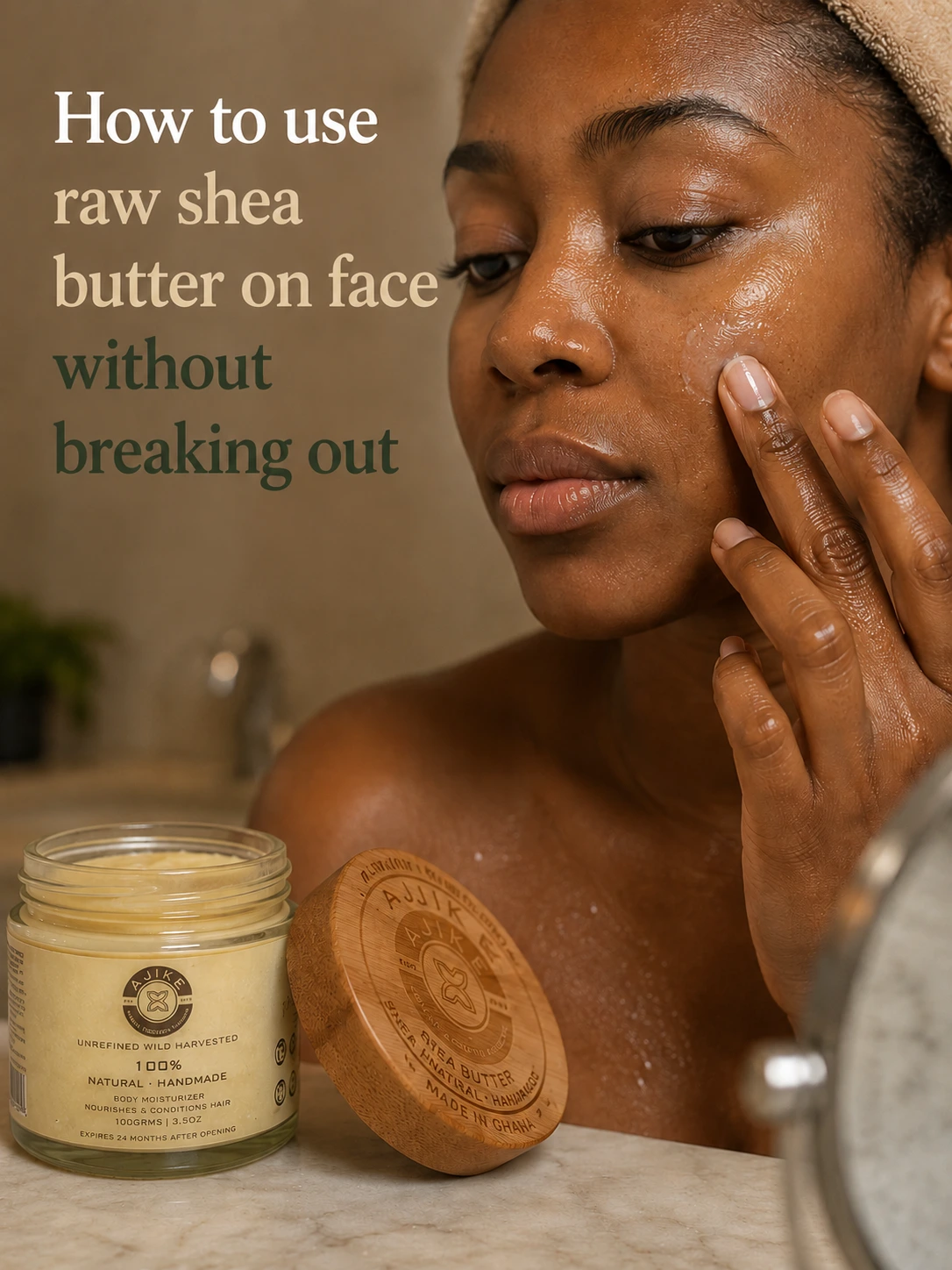
Raw shea butter on the face is a polarising topic. Some people use it as their only facial moisturiser for years with great results. Others try it once, wake up to new breakouts, and never touch it again. Both experiences are real. The difference is almost never the shea butter.
The face is more reactive than the body. The pores are more visible. The consequences of a wrong product choice are more immediate and more noticeable. So when shea butter causes a problem on the face, it tends to get blamed entirely, when in most cases the issue is quantity, timing, or technique.
This guide covers exactly why breakouts happen when people apply shea butter to the face, how to determine if shea butter is actually suitable for your skin type, and the precise routine that lets you use it without breaking out.
Read Also: New here? Start with the pillar: What Is Raw Unrefined Shea Butter?
The Reason People Break Out from Shea Butter on the Face
Over-Application Is the Most Common Cause
This is where almost every breakout story begins. The amount of shea butter that is appropriate for the face is genuinely tiny. A rice grain. Not a pea. Not a small blob. A single grain of rice, warmed in the fingertips until it is completely liquid. That is the correct starting point for one full facial application.
When people apply the same amount they would use on their forearm or leg, they are applying five to ten times more than the face can absorb effectively. The excess sits on the skin surface, creating an occlusive environment in the pores that traps sebum, dead skin cells, and bacteria. The result is congestion, and congestion on the face becomes visible breakouts faster than anywhere else on the body.
Applying to Dry Skin Instead of Damp Skin
On completely dry skin, the stratum corneum is compacted and relatively impermeable. Shea butter applied to dry facial skin has very limited pathways into the skin and primarily sits on the surface. The longer it sits on the surface without being absorbed, the more time it has to contribute to pore congestion.
On slightly damp skin, the skin surface is temporarily more permeable and the moisture provides a medium through which the shea butter can distribute more evenly and begin working with the skin rather than simply sitting on top. The damp skin application is not just a comfort tip. For facial use specifically, it is what makes the difference between shea butter that contributes to breakouts and shea butter that works as intended.
Using It Too High in Your Routine
Shea butter is an occlusive ingredient. Its job is to form a barrier at the skin surface. That job is best done at the end of a skincare routine, after any water-based treatments, serums, or lighter moisturisers have been applied and absorbed.
Applied first or early in a routine, the occlusive layer can block the absorption of everything that comes after it. Products stack up on the skin surface rather than penetrating. The combined product film on the skin then creates a congesting environment in the pores. Shea butter belongs last, not first.
Purging vs a True Breakout: Know the Difference
When you introduce a new active ingredient or switch from a commercial synthetic product to a natural one, your skin sometimes goes through a purging phase: existing congestion that was already forming beneath the skin surface is accelerated to the surface. This looks like breaking out but is actually the skin clearing a backlog.
Purging appears in your usual breakout zones, the spots come to a head and resolve relatively quickly, and the situation begins to improve by weeks 3 to 4. A true reaction to shea butter would produce breakouts in new areas, possibly burning or stinging, and would continue worsening rather than improving. If you are within the first four weeks and the breakouts are in your usual zones, give it more time before concluding that shea butter is the problem.
Read Also: Full guide on purging: African Black Soap Is Breaking Me Out, Is This Normal?
The Quality of the Shea Butter Matters More Than People Realise
Not all shea butter is the same product. Refined shea butter has had most of its biologically active compounds removed through industrial processing. Some commercial shea butter products contain mineral oil, synthetic emollients, or artificial fragrances alongside shea butter. These additions can be comedogenic or irritating even when the shea butter itself would not be.
If you tried shea butter on your face previously and broke out, the question worth asking is what grade of shea butter it was, and whether it contained any other ingredients. Raw, unrefined shea butter with no additives behaves differently from a refined or adulterated version.
Is Raw Shea Butter Comedogenic?
What Comedogenic Actually Means
Comedogenic refers to an ingredient's tendency to contribute to the formation of comedones, which are the blocked follicles that form the basis of most acne. Blackheads are open comedones. Whiteheads are closed comedones. A comedogenic ingredient is one that, when applied to the skin surface, is likely to contribute to the blocking of follicles either by penetrating into the follicle channel and solidifying there, by contributing to excess sebum production, or by creating an occlusive environment that traps existing sebum and dead skin cells.
The Comedogenicity Rating Scale Explained
The comedogenicity scale runs from 0 to 5. Ingredients rated 0 are non-comedogenic and will not clog pores for the vast majority of skin types. Ingredients rated 5 are highly comedogenic and are likely to clog pores for almost everyone. The scale was developed through skin panel testing where various ingredients were applied to skin under controlled conditions and monitored for comedone formation.
The scale is a useful starting guide but has significant limitations: it was developed primarily on rabbit ear skin in early research, testing conditions vary between sources, individual skin response varies considerably, and the application method and quantity used affects real-world outcomes in ways that are not captured by the rating alone.
Where Shea Butter Falls on the Scale
Raw shea butter is rated 0 to 2 on the comedogenicity scale, depending on the source of the rating. Most consistent references place it at 0 or 1, which puts it firmly in the non-comedogenic to very low comedogenic category. This rating means that shea butter is very unlikely to clog pores for the majority of skin types when used appropriately.
For context: coconut oil is rated 4 to 5, which is why it causes breakouts for many people who try it as a facial moisturiser. Mineral oil is rated 0 but provides no therapeutic benefit. Jojoba oil is rated 2. Argan oil is rated 0. Shea butter's rating of 0 to 2 places it well within the range of ingredients commonly considered safe for acne-prone skin.
Why the Rating Does Not Tell the Whole Story
A rating of 0 to 2 does not mean shea butter cannot contribute to breakouts in any circumstances. It means that under standard testing conditions, it is very unlikely to. Real-world use introduces variables that laboratory testing does not capture: the quantity used, the application method, the presence of other products, the individual's sebum composition, and the specific microbiome of their skin.
An ingredient with a comedogenicity rating of 0 can still contribute to breakouts if applied in very large amounts to skin that already has significant sebum overproduction. The rating tells you about the ingredient's intrinsic properties. Proper usage technique determines the actual outcome.
The Difference Between Raw and Refined Shea Butter Comedogenicity
Refined shea butter, stripped of its unsaponifiable fraction, behaves more predictably as a simple occlusive fat. Its comedogenicity rating remains low because the fatty acid profile of both raw and refined shea is similar. However, the unsaponifiable compounds in raw shea butter, particularly the phytosterols and triterpenes, actively support skin barrier function and ceramide synthesis, which helps maintain healthy pore function. Raw shea butter is not only unlikely to clog pores; it actively supports the skin biology that keeps pores functioning well.
Can You Use Shea Butter on Oily Skin?
Why Oily Skin Still Needs Moisturisation
Oily skin produces more sebum than normal or dry skin. This sebum overproduction often leads people to skip moisturiser entirely, reasoning that their skin already has plenty of oil and does not need more. This is the most common and most counterproductive mistake in oily skin care.
Sebum and moisture are not the same thing. Oily skin can be simultaneously sebum-rich and dehydrated at the cellular level. Skipping moisturiser leaves the skin dehydrated, which the sebaceous glands interpret as a signal to produce even more sebum in compensation. The result is oilier skin, not less oily skin. Moisturising oily skin correctly, with the right type of moisturiser, actually helps regulate sebum production over time.
How Shea Butter Behaves Differently on Oily Skin
On oily skin, the available sebum on the skin surface changes how shea butter interacts with the skin. The shea butter blends with the natural sebum, which can make distribution easier, but it also means the total oil load on the skin increases. For very oily skin, even a very small amount of shea butter can feel heavy or greasy because it is adding to an already-oily surface.
For this reason, the quantity adjustments for oily skin are even more important than for other skin types. Less than a rice grain. Perhaps half a rice grain. Warmed completely to a liquid between fingertips. Applied to slightly damp skin so it distributes into the moisture rather than sitting on top of an oily surface.
The Counterintuitive Truth About Occlusives on Oily Skin
There is a school of thought in evidence-based skincare, sometimes called the oil cleansing or moisture balance approach, that posits that oily skin actually benefits from a very small amount of an appropriate occlusive. The logic is that if the skin's surface has a controlled, balanced lipid environment provided externally, the sebaceous glands receive less of the dehydration signal that drives compensatory sebum overproduction.
This is not a universally accepted position, and individual results vary considerably. But it does explain why some people with oily skin find that a tiny, carefully applied amount of raw shea butter in the evening, combined with consistent hydration, actually improves their oiliness over weeks rather than making it worse.
How Much to Use on Oily Skin and When
For oily skin on the face: half a rice grain of shea butter, fully melted between fingertips, applied to slightly damp skin as the final step in an evening routine only. Morning use of shea butter on oily facial skin is not recommended for most people. Monitor for two weeks before making any adjustments. If no congestion develops, continue. If congestion develops, reduce the amount further or move to every other evening use rather than daily.
Can You Use Shea Butter on Acne - Prone Skin?
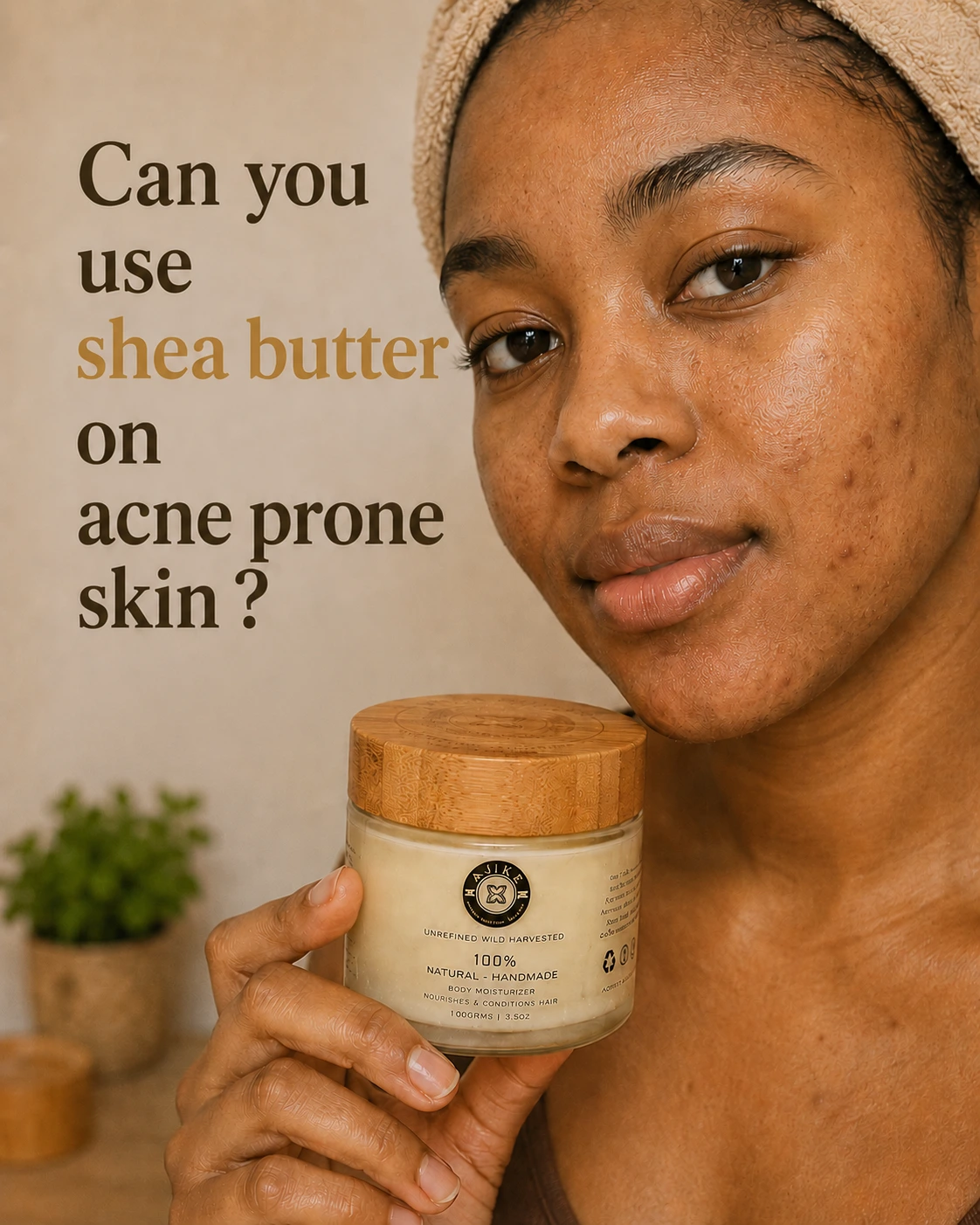
What the Research Actually Says
The research on shea butter and acne-prone skin is limited but directionally positive. The fatty acid profile of raw shea butter, particularly the linoleic acid content, is relevant to acne biology in a way that makes it potentially beneficial rather than harmful for acne-prone skin when used correctly.
Additionally, the anti-inflammatory triterpenes in the unsaponifiable fraction of raw shea butter have documented ability to reduce inflammatory signalling in the skin, which is relevant to inflammatory acne where the immune response to Cutibacterium acnes drives the formation of papules and pustules.
The Linoleic Acid Connection: Why Acne-Prone Skin Needs It
Research has shown that acne-prone skin has a sebum composition that is relatively deficient in linoleic acid compared to healthy skin. Linoleic acid-deficient sebum is more viscous, more likely to form plugs in follicles, and creates a more hospitable environment for C. acnes colonisation. Topical application of linoleic acid-rich oils has been studied as a way to normalise sebum composition and reduce comedone formation.
Raw shea butter contains linoleic acid at approximately 5 to 10 percent of its total fatty acid content. This is not the highest linoleic acid concentration of any plant oil (baobab oil, rosehip oil, and hemp seed oil have higher linoleic content), but it is present and potentially beneficial for acne-prone skin rather than harmful.
How to Use Shea Butter Safely When You Are Prone to Breakouts
For acne-prone skin, the rules are the same as for oily skin but more strictly applied. Use the smallest possible amount. Apply only to slightly damp skin. Use as the final step in an evening routine only. Do not apply to active breakouts directly, apply to clear areas of the skin around breakouts. Start with every other evening rather than daily. Monitor carefully and reduce further if any new congestion develops.
Patch test on a small, acne-prone area first. The inner cheek or chin area, rather than the side of the neck, is a better patch test location for facial acne-prone skin because it reflects how the face will actually respond.
When to Avoid Shea Butter on Acne-Prone Skin Entirely
If your acne is currently severe, with widespread active inflammatory lesions, cystic breakouts, or a significant number of active spots, this is not the time to introduce shea butter to your facial routine. During active severe acne, the priority is managing the inflammatory condition, not optimising your moisturising routine. Wait until the acne is more controlled before experimenting with shea butter on the face.
If you have tried shea butter on your face multiple times, in small amounts, on damp skin, as the last step, and you consistently experience new breakouts each time, your skin may simply not respond well to shea butter. This is not a personal failing. Some skin types respond better to other moisturising options.
Better Alternatives for Acne-Prone Skin That Cannot Tolerate Shea Butter
For acne-prone skin that consistently reacts to shea butter even when used correctly, baobab oil is the most directly comparable alternative. It has a comedogenicity rating of 2, a very high linoleic acid content of around 36 percent, and absorbs more easily than shea butter. It provides the linoleic acid benefit that acne-prone skin needs in a lighter, more easily tolerated form.
Our Pure Baobab Oil, applied as 2 to 3 drops to slightly damp facial skin after cleansing, is an effective non-comedogenic moisturiser for acne-prone skin that finds shea butter too heavy for facial use.
How Much Shea Butter to Use on Your Face
The Amount Most People Use Is Three Times Too Much
This is not an exaggeration. When we describe the correct amount for facial use as a rice grain, people often take that amount and think it seems too small. They add more. That addition is where the problem starts.
The face is not a large surface area. The skin on the face, while it has more sebaceous glands per square centimetre than the body, does not require a large volume of moisturiser to achieve effective hydration. Commercial moisturisers are formulated to be watery and lightweight, which is why they seem to require a larger volume. Raw shea butter is extremely concentrated. A genuinely rice-grain sized amount, properly melted and applied to slightly damp facial skin, covers the entire face with appropriate coverage.
What the Right Amount Actually Looks Like
Take a single raw shea butter shaving from the jar. You are aiming for a piece about the size and weight of a single grain of uncooked rice. Place it on one fingertip. Press both fingertips together and gently rub for 10 to 15 seconds. It should melt completely to a nearly invisible oil. That small, nearly invisible amount of oil is what you are applying to your face.
If you can see a significant amount of product on your fingers after warming, you have taken too much. Reduce until the warmed butter is barely visible on your fingers as a thin oil.
How to Adjust the Amount for Different Skin Types
- Very dry and dry facial skin: one rice grain, warmed to liquid. Can increase to two rice grains after 2 weeks if skin is comfortable and clear.
- Normal skin: one rice grain, warmed to liquid. This is generally sufficient and sustainable for daily use.
- Combination skin: one half to one rice grain, applied selectively to dry areas (cheeks, around eyes, on the forehead if dry) rather than all over.
- Oily skin: half a rice grain maximum. Focus on the driest areas only. Do not apply to the T-zone unless very specifically dry there.
- Acne-prone skin: half a rice grain, on clear areas only, every other evening initially.
Why Using Less Produces Better Results
This seems counterintuitive. Less moisturiser producing better moisturisation results. But the mechanism is straightforward: the correct amount of shea butter distributes evenly across the skin surface and is absorbed into and works with the skin. Excess shea butter that cannot be absorbed sits on the skin surface and contributes to problems without providing any additional benefit. The goal is the minimum effective amount, not the maximum comfortable amount.
How to Use Raw Shea Butter on Your Face Without Breaking Out: Step by Step
Before Starting: These steps work as a complete system. Skipping any step, especially Step 3 (tiny amount) and Step 7 (every other night to start), significantly increases the risk of breakouts. Read all steps before beginning.
Step 1: Cleanse First
Always apply shea butter to freshly cleansed skin. This removes the day's accumulated sebum, dead skin cells, pollution, and any product residue that would otherwise be sealed in under the shea butter layer. For facial use alongside raw shea butter, a gentle, sulfate-free cleanser is the appropriate choice. Our African Black Soap Bar or Paste, lathered in the hands and applied for 30 to 60 seconds, is an effective and compatible cleanser.
Step 2: Apply Any Serums or Treatments While Skin Is Damp
After cleansing, if you use any serums, toners, or lighter treatments, apply them now to slightly damp skin. Allow them to absorb for 60 seconds. These water-based treatments need to go on before the shea butter, not after. The shea butter's occlusive action will then help seal in the benefits of these treatments.
Step 3: Take a Rice-Grain Amount of Shea Butter
This is the step where most people go wrong. The correct amount is one grain of uncooked rice. No more. Place it on a clean fingertip and look at it before proceeding. If it looks like barely anything, you have probably got it right. If it looks like a reasonable amount of product, you have taken too much.
Step 4: Warm It Completely Between Your Fingertips
Press the fingertip with the shea butter against the fingertip of the same hand or the opposite hand. Gently rub together for 15 to 20 seconds with moderate pressure. The shea butter should transition from a solid or semi-solid piece to a clear or translucent oil that is evenly distributed across your fingertips. If it has not completely melted, warm for another 10 seconds. Applying unmelted shea butter to facial skin causes uneven distribution and potential dragging on the skin surface.
Step 5: Press Gently into Skin, Do Not Rub
Press your warmed, oil-coated fingertips gently against your slightly damp facial skin and distribute with gentle pressing movements. Start at the centre of the face and work outward. You are pressing the oil into the skin, not rubbing it across the surface. On facial skin, rubbing is more likely to irritate and less likely to produce even distribution than gentle pressing. Pay extra attention to the driest areas: around the eyes, across the cheeks if dry, and around the nose.
Step 6: Use It as the Last Step in Your Routine
After applying the shea butter, you are done with your skincare routine. Nothing goes over the shea butter. If you apply additional products after the shea butter, you are either diluting the occlusive layer before it has had time to form, or you are adding ingredients that will sit on the skin surface rather than being absorbed. Shea butter seals the routine. It does not precede other products.
Step 7: Start Every Other Night, Not Every Day
For the first two weeks, use shea butter on your face every other evening, not every night. This approach lets the skin adjust gradually, makes it easier to identify if any congestion is developing (and whether it is getting better or worse over time), and reduces the total occlusive load on the skin during the adjustment period.
After two weeks of every other night use with no new congestion, progress to every night. If congestion has developed, stop and reassess: reduce the quantity further, check you are applying to damp skin, and consider whether purging is occurring or whether shea butter is genuinely incompatible with your skin.
Raw Shea Butter Face Routine for Different Skin Types
Skin Type | Amount | Frequency | When |
Dry / Very Dry | 1 rice grain | Every evening | After serum, last step |
Normal | 1 rice grain | Every evening | After serum, last step |
Combination | Half rice grain | Every evening, dry areas only | Evening only, last step |
Oily | Half rice grain max | Every other evening to start | Evening only, driest areas only |
Acne-Prone / Sensitive | Half rice grain | Every other evening, patch test first | Evening only, clear areas only |
Dry and Very Dry Skin: The Intensive Approach
Dry skin is where raw shea butter on the face performs most reliably. After cleansing and applying any serums, apply one rice grain of shea butter melted between fingertips to slightly damp skin. For very dry facial areas, particularly around the eyes and at the sides of the nose, you can apply a very small additional amount specifically to those zones. The morning routine for dry skin can include a lighter moisturiser rather than shea butter, reserving the shea for evening use where it can work through the night.
Normal Skin: Simple and Effective Daily Use
Normal skin tolerates daily shea butter facial use well when the quantity is correct. One rice grain in the evening after serums, on slightly damp skin, provides consistent gentle barrier support and moisturisation without any of the congestion issues that affect oilier skin types. Normal skin also tolerates morning use of a small amount of shea butter, though many people prefer a lighter option in the morning for practical reasons including makeup application.
Combination Skin: Where to Apply and Where to Avoid
Combination skin requires zone-specific application. Apply shea butter to the drier areas: typically the cheeks, around the eyes, and sometimes the forehead and chin if those are dry rather than oily. Avoid the T-zone entirely if it is oily. The half rice grain can be distributed selectively to the dry zones rather than spread all over the face.
Oily Skin: The Minimal Touch Technique
For oily facial skin, shea butter use is genuinely optional. If you want to try it, start with half a rice grain every other evening on the driest patches only. Morning use is not appropriate for oily skin. The goal is to provide just enough barrier support to avoid the dehydration that drives compensatory sebum production, without adding to the oil load on an already-oily skin surface.
Sensitive and Eczema-Prone Skin: Patch Test and Build Slowly
For sensitive and eczema-prone facial skin, patch test on the inner arm before applying to the face. Start with every other evening use of one rice grain on the face, monitoring for 48 hours after each application. If comfortable after two weeks, move to every evening use. The anti-inflammatory properties of raw shea butter are genuinely beneficial for eczema-prone facial skin, but introducing any new product slowly is the right approach for reactive skin. Discontinue use if irritation occurs.
The Best Time to Apply Shea Butter on Your Face
Morning vs Evening: Which Is Better
For most skin types, evening is the more practical and more beneficial time for facial shea butter application. Evening use allows the shea butter to work without the complications of sun exposure, makeup, or environmental pollution. The skin is also in active repair mode during sleep, which means the barrier-supportive and anti-inflammatory compounds in the shea butter are working during the body's natural tissue repair period.
Morning use is appropriate for dry skin types and is fine if you are not wearing makeup over it. For oily, combination, and acne-prone skin, morning facial shea butter use is generally not recommended.
Why Evening Application Works Best for Most Skin Types
Sleep is when the skin's own repair processes are most active. Growth hormone secretion peaks during deep sleep and drives cellular repair across the body, including the skin. Applying barrier-supportive, anti-inflammatory ingredients in the evening lets them work alongside the skin's own repair cycle. By morning, the combined effect of the applied compounds and the skin's natural overnight repair produces skin that feels more nourished and balanced than with either factor alone.
How Shea Butter Works While You Sleep
During sleep, transepidermal water loss is reduced compared to daytime because the skin is not exposed to wind, air conditioning, or other drying environmental factors. The shea butter's occlusive action further reduces TEWL, creating a period of unusually effective moisture retention. The anti-inflammatory triterpenes and phytosterols work within this sustained moist environment, with better penetration conditions than during daytime application.
The result, over consistent weeks of nightly use, is a progressive improvement in the skin's hydration retention capacity and a gradual reduction in the inflammatory baseline of eczema-prone or reactive skin.
Can You Wear It Under Makeup
For dry skin: yes, carefully. Apply the rice-grain amount to damp skin, give it ten minutes to absorb, then apply makeup as normal. The shea butter should have largely absorbed by then and will leave the skin with a subtle, non-greasy nourished feel that actually helps makeup sit better on dry skin.
For oily and combination skin: generally not recommended. The residual shea butter, even in tiny amounts, can affect how foundation sits on oilier skin and may contribute to makeup sliding or pilling throughout the day.
What to Layer Shea Butter With for Better Facial Results
Layer Over a Humectant for Maximum Moisture
The most effective facial moisturising approach with shea butter is to apply a humectant first, then seal with shea butter. A humectant draws water into the skin cells. Shea butter then seals that moisture in place. The combination is more effective than either alone.
Apply a few drops of our Glycerine Hibiscus and Hyaluronic Acid Face Mist, or a hyaluronic acid serum, to slightly damp skin. Wait 30 to 60 seconds for it to partially absorb. Then apply the rice grain of shea butter over the top. The humectant draws environmental moisture and skin surface moisture into the cells, and the shea butter prevents it from evaporating. The result is deeper, longer-lasting facial hydration.
Mixing a Drop of Baobab Oil Into the Shea Butter
For oily, combination, and acne-prone skin that finds even a rice grain of shea butter too heavy for facial use, mixing it with a drop of baobab oil before applying changes the texture significantly. Take half a rice grain of shea butter and one small drop of baobab oil. Warm together between fingertips until completely liquid. Apply to slightly damp skin as a combined sealing layer.
The baobab oil thins the shea butter, improves distribution, reduces the total occlusive load on the skin, and adds its own non-comedogenic moisturising and vitamin-rich properties. The combined mixture absorbs noticeably faster than shea butter alone while still providing barrier support. For oily facial skin, this dilution approach is often the way to make shea butter work where undiluted shea would not.
What Not to Layer Shea Butter With on the Face
There are combinations that work against rather than with each other. Do not apply vitamin C serums directly over shea butter: vitamin C oxidises faster in the presence of certain oils and performs best on its own directly on the skin. Do not apply shea butter and then immediately apply retinol or retinoids over the top: the occlusive layer from the shea butter can drive deeper penetration of retinoids than the skin is accustomed to, potentially causing irritation.
Do not mix essential oils directly into shea butter for facial use unless you are very experienced with essential oil dilutions. Undiluted or improperly diluted essential oils in an occlusive base applied to facial skin can cause sensitisation reactions, particularly for already-reactive skin types.
How to Use Shea Butter as Part of an Ajike Facial Routine
A simple, complete Ajike facial routine that works with raw shea butter looks like this:
- Cleanse: Ajike African Black Soap Bar or Paste, lathered in hands, 30 to 60 seconds on damp facial skin, rinse with cool water, pat to slightly damp
- Treat (optional, evenings): Ajike Nightly Face Serum with Lactic Acid and Papaya Oil, applied to damp skin, 60 seconds to absorb
- Moisturise: Ajike Raw Baobab Anti-Aging Face Cream or a few drops of Ajike Pure Baobab Oil, applied to slightly damp skin
- Seal (last step, evenings): one rice grain of Ajike Raw Unrefined Shea Butter, melted between fingertips, pressed gently into skin
How Long Before You See Results on Your Face
What Changes in Week 1 and 2
In the first two weeks, the most noticeable changes are in how the skin feels rather than how it looks. Post-cleansing tightness reduces. The skin feels more comfortable throughout the day. For very dry skin, areas that were visibly dry and flaky may begin to look smoother.
For those going through a purging phase, weeks 1 and 2 may involve some increased surface congestion in usual breakout zones. This is the adjustment period. Stay consistent unless the reaction is clearly worsening rather than cycling through.
What Improves by Week 3 and 4
By weeks 3 and 4, the skin's moisture retention has usually improved measurably. Skin feels plumper and more resilient. For eczema-prone or reactive skin, the skin is less likely to react to minor environmental triggers. Any purging that occurred in weeks 1 and 2 should be clearly subsiding. Overall complexion often looks more even and more radiant as the skin's hydration and barrier function improve.
When to Reassess If Breakouts Have Not Resolved
If new breakouts developed when you started using shea butter on your face and they have not begun to clearly improve by week 4, stop using shea butter on your face and reassess. Think through whether you have been using the correct tiny amount, whether you have been applying to damp skin consistently, and whether you have been using it as the last step. If all three were done correctly and breakouts still persisted, your skin may simply not be compatible with shea butter on the face.
In that case, baobab oil as a facial moisturiser is the most appropriate alternative from the Ajike range: lighter, faster-absorbing, higher in linoleic acid, and with a well-established profile as a non-comedogenic facial oil.
Ajike Raw Shea Butter: Why Quality Determines Whether It Works on Your Face
Wild Harvested and Unrefined: The Nutrient Profile Intact
The difference between raw shea butter that works well on the face and refined shea butter that contributes to congestion comes down to the unsaponifiable fraction. Raw shea butter's phytosterols support ceramide synthesis and healthy pore function. Its triterpenes reduce inflammation. These compounds are present in Ajike's wild harvested, traditionally processed shea butter. They are largely absent from refined shea butter.
When people report that shea butter breaks them out, the product they usually tried was a refined, processed, or adulterated version that behaved more like a simple occlusive without the active compounds that keep skin biology functioning well.
No Additives That Could Trigger Breakouts
Our raw ivory shea butter contains one ingredient. Just shea butter. No mineral oil added to the formula. No synthetic emollients. No artificial fragrances. No stabilisers. No preservatives. For acne-prone and sensitive facial skin, knowing that nothing in the formula is a potential hidden trigger is a meaningful advantage.
Ivory and Yellow: Which to Choose for Facial Use
For facial use, ivory shea butter is generally the better choice. It is the purer, simpler product with no additions beyond the shea itself. The burututu compounds in yellow shea butter provide additional benefits for scalp and body use, but for the sensitive, reactive environment of facial skin, simpler is usually better. Ivory shea butter applied correctly is genuinely effective for facial moisturisation without the additional complexity of burututu infusion.
Our Lemongrass Shea Butter: For Those Who Want a Scented Option
For those who find the mild natural scent of raw shea butter pleasant but want something with a fresh, clean fragrance dimension, our ivory shea butter with lemongrass essential oil offers that option. Lemongrass essential oil, at the concentration used in our formulation, is generally well-tolerated, has mild antibacterial properties, and provides a clean, uplifting scent that fades as the shea butter absorbs.
For very sensitive or eczema-prone facial skin, stick to the plain ivory shea butter with no additions rather than the scented version. Essential oils, even mild ones, can be a sensitisation risk for reactive skin.
Find The Right Moisturiser For Your Skin
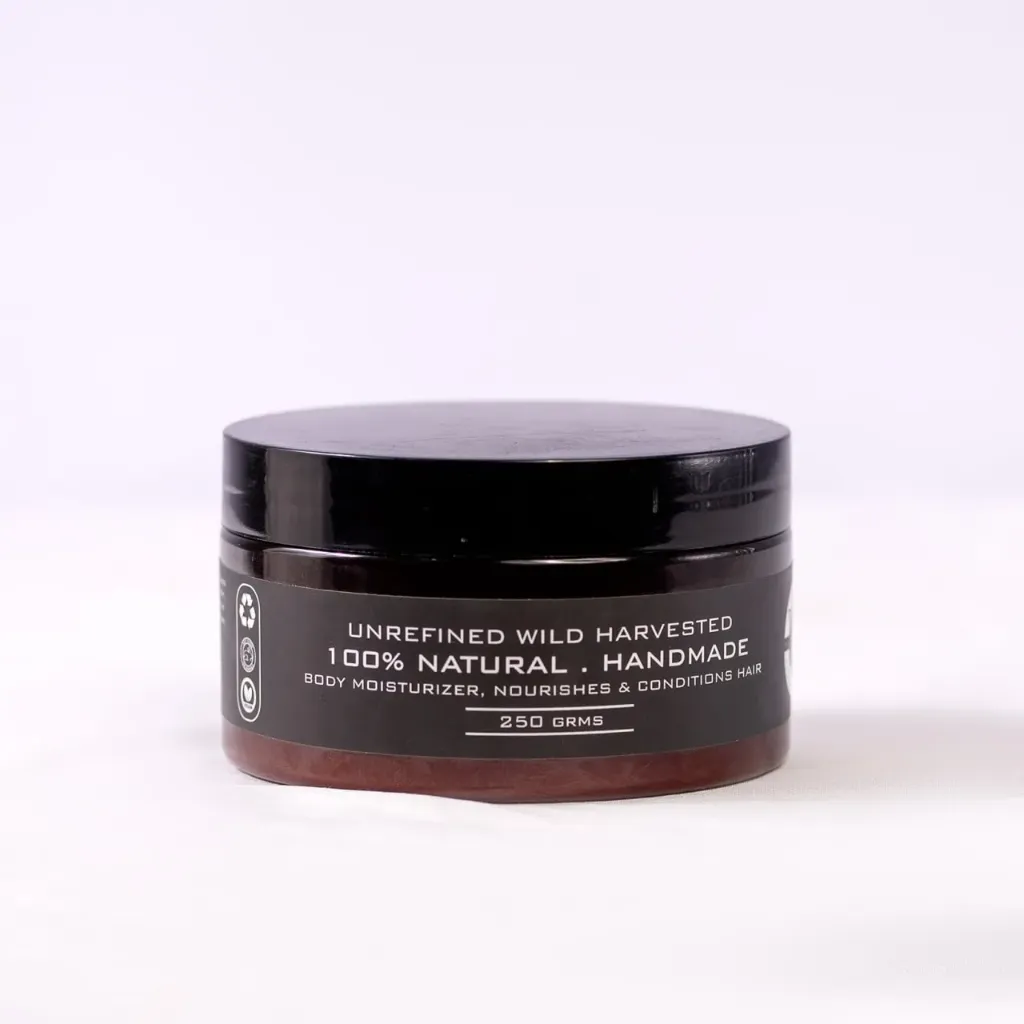
Raw Unrefined Shea Butter Ivory
Pure, wild harvested shea butter with no additives. Deeply moisturises dry skin and is the best choice for facial use.
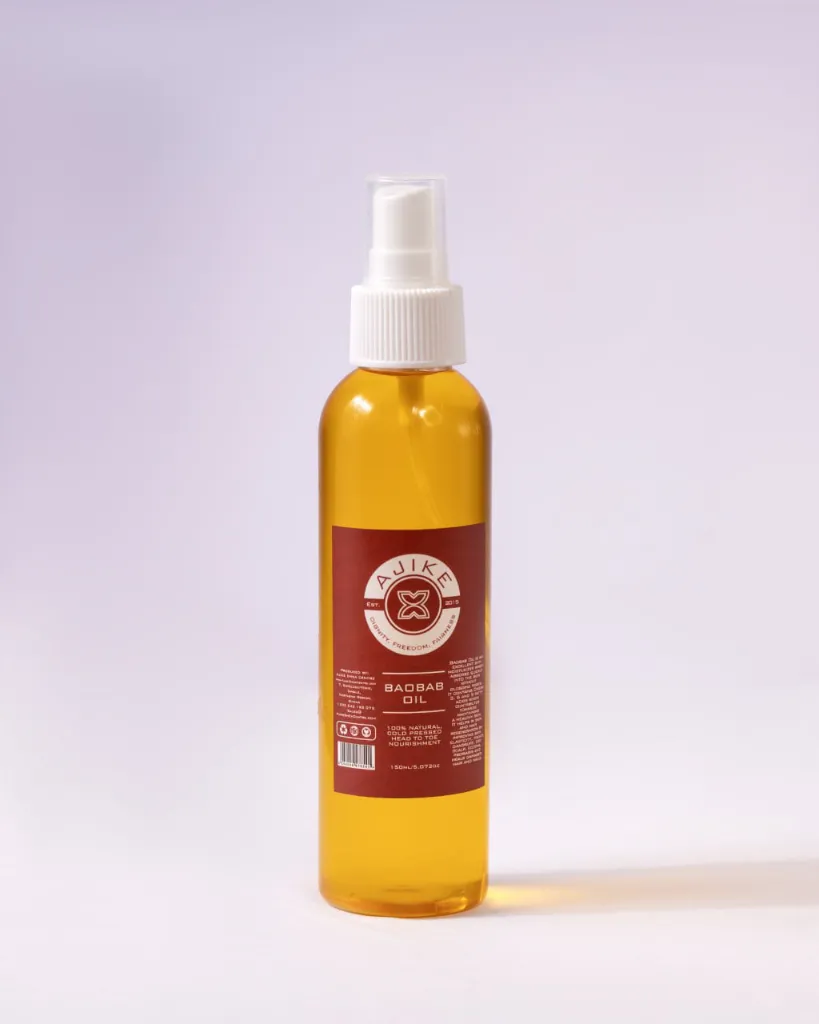
Pure Baobab Oil
Fast-absorbing oil rich in Vitamins A, D, E & F. A lightweight alternative to shea butter for oily and acne-prone skin.
Find The Right Moisturiser For Your Skin
Raw Unrefined Shea Butter Ivory
Pure, wild harvested shea butter with no additives. Deeply moisturises dry skin and is the best choice for facial use.
Pure Baobab Oil
Fast-absorbing oil rich in Vitamins A, D, E & F. A lightweight alternative to shea butter for oily and acne-prone skin.
Frequently Asked Questions
Yes, for dry and normal skin types, daily evening use of a rice-grain amount on slightly damp skin is appropriate and beneficial. For oily and acne-prone skin, start with every other evening and monitor before moving to daily use. Results may vary depending on skin type.
The most common reasons are too much product, application to completely dry skin, or applying it too early in the routine rather than as the last step. The quality of the shea butter also matters: refined or adulterated versions behave differently from raw unrefined shea butter. Review the technique in this guide and try again with a genuinely raw product before concluding shea butter is incompatible with your skin.
Yes, with the correct technique. Its comedogenicity rating of 0 to 2 places it firmly in the low-comedogenic range. Its unsaponifiable fraction actively supports healthy skin function. The technique (tiny amount, damp skin, last step, evening use) determines whether it works well or causes problems.
With daily use of approximately one rice grain per application, a 200g jar of raw shea butter for facial use alone would last well over a year. The amounts used for facial use are so small that even regular daily use consumes very little product.
Yes. A tiny amount of raw shea butter warmed to an oil and pressed very gently around the orbital bone, avoiding direct contact with the eye itself, provides gentle barrier support for the delicate under-eye skin. The fatty acids and vitamin E are beneficial for the thin skin in this area. Use the smallest possible amount, as the skin under the eye is very thin and absorbs products quickly.
Ivory shea butter is the better choice for most facial use. It is the simpler, purer product with no additional infused compounds. For sensitive and reactive facial skin, simpler is always safer. Save the yellow shea butter for hair and scalp use where the burututu properties are most relevant.
Our latest content
Check out what's new in our company !