
Start writing here...
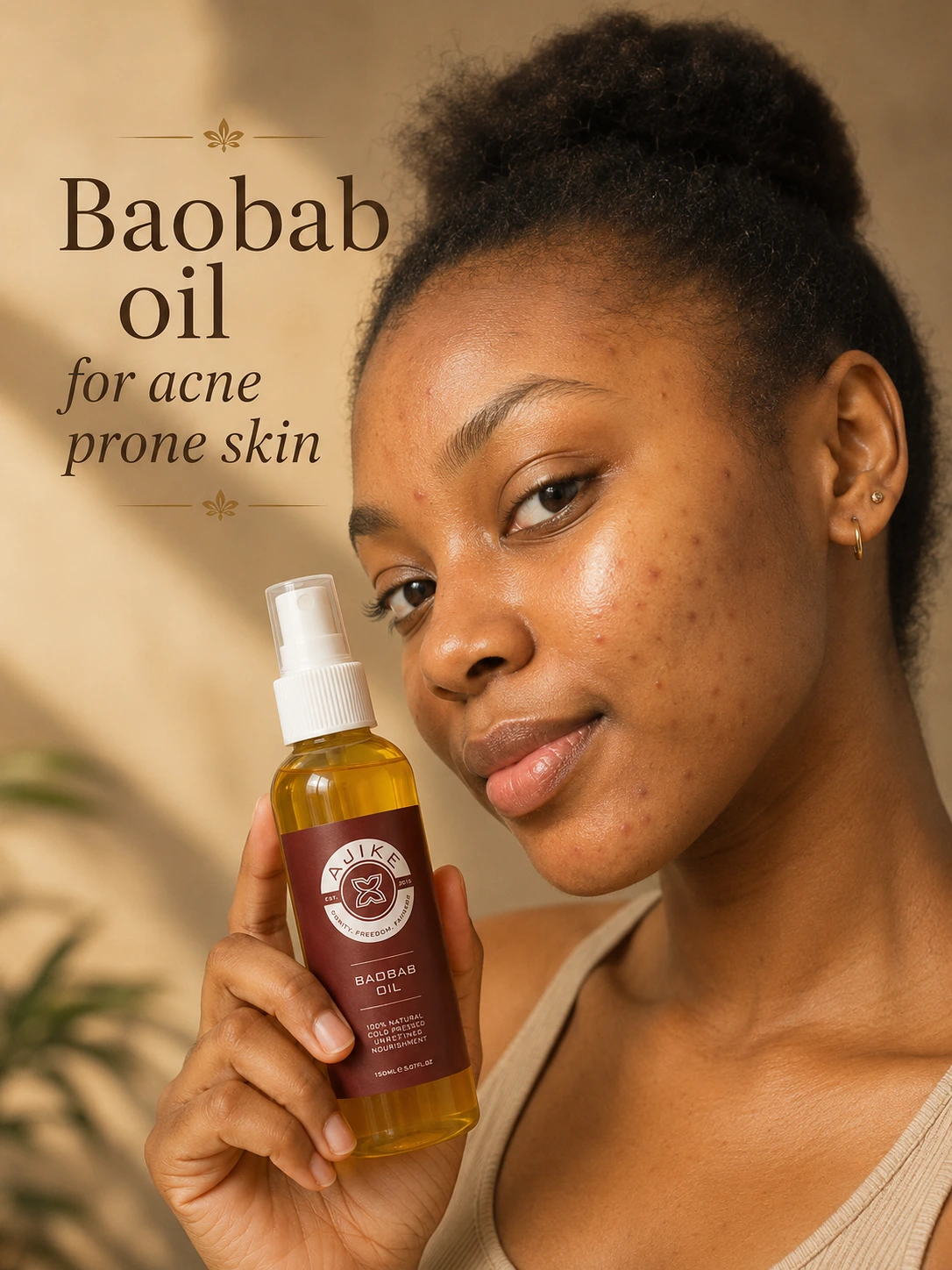
If you have acne-prone skin, the word 'oil' in a skincare product probably triggers immediate suspicion. Years of being told to avoid oil, to strip your skin of oil, to use gel cleansers and oil-free moisturisers have trained most acne-prone people to treat anything labelled as an oil as the enemy.
The problem is that this logic is fundamentally flawed, and it is one of the reasons why so many people with acne struggle to find a routine that actually works. Your skin needs oil. Not the excess sebum your glands are currently overproducing in response to years of stripping, but the right kinds of fat, applied in the right way, to support the skin biology that keeps acne under control.
Baobab oil, specifically, is one of the oils that dermatology research suggests may actually help rather than worsen acne-prone skin. This guide explains why, how to use it correctly, and what to realistically expect.
Read Also: Full baobab oil overview: Baobab Oil Benefits for Skin and Hair - Complete Guide
Why Acne-Prone Skin Actually Needs Oil
The Myth That Oily Skin Should Avoid All Oils
The idea that oily or acne-prone skin should avoid oils entirely is one of the most persistent and most damaging myths in skincare. It conflates two very different things: the excess sebum produced by overactive sebaceous glands and the carefully selected plant oils that can be applied topically to support skin health.
Avoiding all oils from your routine does not stop your sebaceous glands from producing sebum. What it does is remove any external lipid support from the skin barrier, forcing the skin to operate entirely on its own sebum production for moisture and barrier function. For skin that already struggles with that balance, removing external lipid support typically makes the problem worse over time, not better.
The Difference Between Skin Oil and Applied Oil
Sebum and topically applied plant oil are not the same thing. Sebum is a complex mixture produced by the sebaceous glands that includes triglycerides, wax esters, squalene, free fatty acids, and other compounds. The composition of this sebum varies between individuals and is genetically influenced. Excess sebum production and an imbalanced sebum composition are among the primary drivers of acne.
Topically applied plant oils are primarily triglycerides of various fatty acids, without the full complexity of sebum. Different plant oils have different fatty acid compositions that interact differently with the skin surface and the follicle environment. Some oils, like coconut oil with its high lauric and myristic acid content, are comedogenic and contribute to follicle plugging. Others, like baobab oil with its high linoleic acid content, actively support healthy follicle function.
How Oil Stripping Makes Acne Worse
Harsh cleansers, over-washing, and the use of stripping actives on acne-prone skin remove sebum from the skin surface aggressively. The sebaceous glands interpret this depletion as a signal to produce more sebum in compensation. This rebound sebum overproduction is one of the most counterproductive cycles in acne management: the more aggressively you strip the skin, the more sebum the glands produce in response.
Providing the skin with appropriate external lipid support through a well-chosen, non-comedogenic plant oil can reduce the intensity of this rebound response by signalling to the skin that its lipid balance does not need emergency compensatory production.
What Acne-Prone Skin Is Actually Missing
Research into the sebum composition of acne-prone skin has consistently found one specific deficiency: linoleic acid. Healthy skin produces sebum with a balanced ratio of oleic to linoleic acid. Acne-prone skin produces sebum that is relatively high in oleic acid and low in linoleic acid. This imbalanced sebum is more viscous, more likely to form comedonal plugs in follicles, and creates a more hospitable environment for Cutibacterium acnes colonisation.
The skin also struggles with barrier function when linoleic acid is deficient, because linoleic acid is essential for ceramide synthesis in the stratum corneum. The combination of follicle-plugging sebum and a weakened skin barrier creates the conditions where acne thrives. Addressing the linoleic acid deficiency topically is a logical, evidence-supported approach to acne management.
Is Baobab Oil Comedogenic?
What Comedogenic Means and Why It Matters
Comedogenic refers to an ingredient's tendency to contribute to the formation of comedones: the blocked follicles that form blackheads and whiteheads. A comedogenic ingredient, when applied to the skin surface, is more likely to penetrate the follicle channel and contribute to plugging, either by solidifying within the follicle, by increasing the viscosity of the follicular content, or by creating an excessively occlusive environment that traps sebum and dead skin cells.
For acne-prone skin, choosing non-comedogenic or low-comedogenic ingredients for moisturisers and applied oils is an important part of managing the condition. However, the comedogenicity rating is a guide rather than an absolute rule, and application method and quantity matter as much as the ingredient's intrinsic rating.
The Comedogenicity Scale Explained
The comedogenicity scale runs from 0 to 5. An ingredient rated 0 is considered non-comedogenic under testing conditions. An ingredient rated 5 is highly likely to cause comedone formation in most skin types. The scale was developed through controlled skin panel testing, originally on rabbit ear skin and later on human skin under standardised conditions.
Common reference points for comparison: coconut oil (rated 4-5, highly comedogenic), wheat germ oil (rated 5, highest possible), olive oil (rated 2-3, moderate), argan oil (rated 0, non-comedogenic), jojoba oil (rated 2, low), and shea butter (rated 0-2, very low).
Where Baobab Oil Sits on the Scale
Baobab oil is rated 2 on the comedogenicity scale. This places it in the low-comedogenic category, meaning it is very unlikely to contribute to comedone formation for the vast majority of skin types, including most acne-prone skin types. A rating of 2 is comparable to jojoba oil, which is widely recommended as a safe oil for acne-prone skin, and significantly lower than most culprit oils like coconut oil.
Why the Scale Is a Guide, Not a Rule
The comedogenicity rating is derived from testing under standardised conditions that do not fully replicate real-world use. Individual skin response varies considerably: one person's skin may react to an ingredient with a rating of 2 while another person uses an ingredient rated 3 without any issue. Genetics, the existing microbiome of the skin, the composition of individual sebum, and the presence of other products in the routine all influence how any specific ingredient behaves on any specific person's skin.
A rating of 2 for baobab oil means it is safe to try for the vast majority of acne-prone people. It does not guarantee that every individual will have no response. This is why starting slowly, monitoring carefully, and patch testing are always the appropriate approach.
How Application Method Affects Whether an Oil Clogs Pores
Even a non-comedogenic oil applied in excessive amounts to completely dry skin can contribute to surface congestion. The application method is as important as the ingredient's rating. Applying 2 to 3 drops of baobab oil to slightly damp skin after cleansing, as the last step in the routine, is very unlikely to cause problems for acne-prone skin. Applying 10 drops to dry skin before other products in the routine dramatically increases the risk of congestion regardless of the oil's comedogenicity rating.
Why Baobab Oil Is One of the Safer Oils for Acne-Prone Skin
The Linoleic Acid Connection: What Acne-Prone Skin Is Deficient In
Baobab oil contains approximately 28 to 36 percent linoleic acid by weight, which is among the highest linoleic acid concentrations of any botanical oil commonly used in skincare. For acne-prone skin, which is characteristically deficient in linoleic acid in its sebum, this is a directly relevant benefit.
The sebum of people with acne has been consistently found in research to have a lower ratio of linoleic to oleic acid compared to the sebum of people without acne. This linoleic acid-deficient sebum has different physical properties: it is more viscous, more prone to forming comedonal plugs, and creates a follicular environment more conducive to C. acnes proliferation.
How Linoleic Acid Normalises Sebum Composition
Topical application of linoleic acid-rich oils has been studied as a way to normalise sebum composition over time. The linoleic acid applied to the skin surface interacts with the follicular environment, contributing to a more balanced oleic-to-linoleic acid ratio in the follicular content. A study published in the Journal of Investigative Dermatology documented measurable reductions in comedone size after topical application of linoleic acid over 4 weeks compared to control.
The mechanism involves linoleic acid's role in ceramide 1 production in the follicle wall, which maintains follicle wall integrity and reduces the likelihood of follicle rupture that causes inflammatory acne lesions. Better follicle wall integrity means fewer comedones progressing to inflamed papules and pustules.
Vitamin A in Baobab Oil and Skin Cell Renewal
The beta-carotene and carotenoids in cold pressed baobab oil, which the body converts to vitamin A as needed, support regular skin cell turnover at the follicle level. One of the secondary mechanisms of comedone formation is the abnormal accumulation of keratinocytes within the follicle, a process called follicular hyperkeratosis. Vitamin A, in its various forms including pharmaceutical retinoids, is the most studied ingredient for addressing this abnormal keratinocyte accumulation.
The vitamin A in baobab oil is not at therapeutic retinoid concentrations. It provides a gentle, consistent support for normal follicular keratinocyte turnover rather than the aggressive normalisation that pharmaceutical retinoids deliver. For those who cannot tolerate retinoids or who prefer a gentler approach, baobab oil's natural vitamin A content provides some benefit in this direction.
The Anti-Inflammatory Properties That Calm Active Breakouts
The alpha-linolenic acid (omega-3) content of baobab oil, while modest at approximately 3 to 5 percent, contributes anti-inflammatory properties through its role as a precursor to anti-inflammatory eicosanoids. Acne is fundamentally an inflammatory condition: the immune response to C. acnes in the follicle drives the formation of papules, pustules, and more severe lesions.
Consistently reducing the skin's inflammatory baseline through daily application of anti-inflammatory ingredients contributes to calmer skin over time. The effect is not dramatic or rapid, but as part of a consistent daily routine, the anti-inflammatory contribution of baobab oil's alpha-linolenic acid is a meaningful background benefit.
Lightweight Texture That Does Not Sit on the Surface
Texture matters for acne-prone skin. A heavy, greasy oil that sits on the skin surface rather than absorbing effectively contributes to the congested, oily environment that acne thrives in, regardless of the oil's theoretical comedogenicity rating. Baobab oil has a notably light, dry-finish texture that absorbs more quickly than most plant oils. For acne-prone skin that finds most oils uncomfortable or too heavy, baobab oil's texture is one of its most practically important properties.
Baobab Oil vs Other Oils for Acne-Prone Skin
Oil | Comedogenicity | Linoleic Acid | Verdict for Acne |
Baobab Oil | 2 | 28-36% (very high) | Safe. High linoleic helps normalise sebum. |
Argan Oil | 0 | 12-16% (moderate) | Safe. Lower linoleic than baobab. |
Jojoba Oil | 2 | Negligible (wax ester) | Safe. Sebum-mimicking wax, good for oily skin. |
Coconut Oil | 4-5 | 2% (very low) | Avoid. Highly comedogenic. Clogs pores. |
Neem Oil | 1 | High | Spot treatment only. Too strong for all-over use. |
Rosehip Oil | 1 | Very high | Safe. Very high linoleic. Can cause purging. |
Baobab Oil vs Coconut Oil: Why Coconut Oil Is Problematic for Acne
Coconut oil is rated 4 to 5 on the comedogenicity scale, making it one of the most likely oils to cause breakouts in acne-prone skin. Its high content of lauric and myristic acid, while providing useful antibacterial properties in other contexts, creates a highly occlusive, pore-plugging environment on facial skin. Despite the frequent recommendation of coconut oil as a natural skincare option, it is one of the least appropriate choices for acne-prone facial skin.
Baobab oil's linoleic-dominant fatty acid profile is essentially the opposite of coconut oil's lauric-dominant profile in terms of acne implications. Where coconut oil plugs pores, baobab oil's high linoleic content may actively help normalise the sebum composition that predisposes pores to plugging.
Baobab Oil vs Argan Oil: Which Is Better for Breakout-Prone Skin
Both baobab and argan oil are appropriate choices for acne-prone skin. Argan oil has a lower comedogenicity rating (0 vs 2) and is non-comedogenic, which gives it a slight theoretical advantage in the least-likely-to-clog category. However, baobab oil has significantly higher linoleic acid content (28 to 36 percent vs 12 to 16 percent in argan), which is the fatty acid specifically relevant to acne-prone sebum normalisation.
For acne-prone skin where linoleic acid deficiency is a contributing factor, baobab oil is the more targeted choice. For acne-prone skin where the primary concern is simply finding an oil that will not clog pores, either is appropriate.
Baobab Oil vs Jojoba Oil: The Closest Comparison
Jojoba oil is often cited as the ideal oil for acne-prone skin because it is technically a liquid wax ester rather than a triglyceride oil, which means it does not behave like an oil on the skin in the traditional sense. Its similarity to the wax esters in human sebum makes it well-tolerated by most acne-prone skin. Its comedogenicity rating is 2, the same as baobab oil.
The practical difference is that jojoba oil provides excellent surface regulation and mimics the skin's own sebum, while baobab oil provides the linoleic acid and vitamin A content that jojoba lacks. For acne-prone skin, they can be used together or alternated: jojoba in the morning for its sebum-like regulation, baobab in the evening for its linoleic acid and vitamin A benefits.
Baobab Oil vs Neem Oil: Different Purposes, Both Useful
Neem oil is not a general facial oil for acne-prone skin. It is a potent antibacterial and anti-inflammatory ingredient best used as a targeted spot treatment on active breakouts rather than applied all over the face as a moisturiser. Its strong scent and intense concentration of active compounds (nimbidin, nimbin, azadirachtin) make it too strong for all-over daily facial use for most people.
Baobab oil and neem oil serve different functions in an acne routine. Baobab oil is the daily moisturising and sebum-balancing oil. Neem oil is the targeted active treatment on specific breakouts. Using both simultaneously, with baobab oil all over and neem oil on active spots only, covers both functions effectively.
Read Also: Natural Hair Care with African Botanicals
Non-Comedogenic African Oils Worth Knowing About
Several other African botanical oils have low or non-comedogenic profiles worth knowing about for acne-prone skin:
- Marula oil (Sclerocarya birrea): Rated 2-3. High oleic acid. Good emollient but on the heavier side for very oily skin.
- Moringa oil (Moringa oleifera): Rated 2. High oleic and behenic acid content. Antioxidant-rich. Light texture.
- Baobab oil (Adansonia digitata): Rated 2. The subject of this guide. High linoleic, vitamins A/D/E/F.
- Neem oil (Azadirachta indica): Rated 1. Best as spot treatment only rather than general facial oil.
Can Baobab Oil Cause Breakouts?
When Baobab Oil Can Cause Breakouts and Why
Yes, baobab oil can cause breakouts in certain circumstances, despite its low comedogenicity rating. The most common scenarios: using too much product (more than 2 to 3 drops for the face), applying to completely dry skin rather than slightly damp skin, using it too early in the routine rather than as the last step, combining it with other products that are more comedogenic, or using a diluted or refined baobab oil product that contains added ingredients.
Individual skin response also varies. Some acne-prone skin types that are particularly reactive may not tolerate baobab oil despite its low rating. This is not a contradiction of the science. It reflects the reality that comedogenicity ratings are population-level guides, and individual response can fall outside the average.
Purging vs a True Reaction to Baobab Oil
When you introduce a new active ingredient, including vitamin A-containing oils like baobab, the skin sometimes goes through a purging phase: existing subsurface congestion is accelerated to the surface. This looks like breaking out but represents the skin clearing a backlog of congestion that was already forming.
Purging from baobab oil: appears in your usual breakout zones, spots come to a head and resolve within a few days, the situation begins to improve by weeks 3 to 4. A true reaction to baobab oil: breakouts in new areas, no improvement after four weeks, possibly spreading redness or irritation. If you experience the latter, discontinue use and reassess.
The Role of Product Purity in Whether an Oil Breaks You Out
Many commercially available baobab oil products are not pure baobab oil. They are baobab oil diluted with cheaper carrier oils, or they contain additional ingredients including preservatives, fragrances, or other botanical extracts. If you break out after using a baobab oil product, the question to ask is whether it is the baobab oil itself or one of the additional ingredients causing the reaction.
Starting with 100 percent pure cold pressed baobab oil with no additives allows you to assess your skin's response to baobab oil specifically, rather than to a formulated product with multiple potential variables.
Other Ingredients in Your Routine That May Be the Real Cause
If you introduce baobab oil into an existing routine and notice breakouts, before attributing them to the baobab oil, consider whether anything else changed simultaneously. A new cleanser, a new moisturiser, a new serum, a change in diet or hormonal status, or seasonal changes can all trigger breakouts that coincide with a new oil but are not caused by it.
The most reliable way to assess a new product is to introduce it as the only change to your routine, keeping everything else constant, and monitor for two to four weeks before drawing conclusions.
How to Use Baobab Oil on Acne-Prone Skin Without Breaking Out
The Most Important Rule: For acne-prone skin, every single one of the six steps below matters. The quantity, the timing, the skin state, and the position in the routine collectively determine whether baobab oil helps or hinders your acne management.
Start with Two to Three Drops, Not More
Two to three drops is the correct amount for the full face. Not a palmful. Not a generous squeeze. Two to three drops warmed between fingertips until they form a nearly invisible thin oil across the skin of your fingers. This amount provides effective coverage when applied to slightly damp skin. Using more does not provide more benefit and significantly increases the risk of surface congestion.
Always Apply to Damp Skin After Cleansing
Cleanse your face first. Pat dry leaving the skin slightly damp. Apply baobab oil within 60 seconds of cleansing while the skin is still slightly damp. Damp skin is more receptive, distributes oil more evenly, and the oil works with the surface moisture rather than sitting on top of a dry, impermeable surface. Applied to dry skin, even 2 to 3 drops of baobab oil can feel heavy. Applied to slightly damp skin, the same amount absorbs effectively within two to three minutes.
Use It as the Last Step, Not the First
Baobab oil belongs at the end of your skincare routine. After cleansing, after any toner or mist, after any serum or treatment, after any lighter moisturiser. The oil seals the routine rather than creating a barrier that blocks everything applied after it. For acne-prone skin using active treatments like salicylic acid or niacinamide, apply those first on damp skin, allow them to absorb, and then apply baobab oil as the final step.
Which Areas of the Face to Apply It To
For acne-prone skin, targeted application is preferable to all-over application in the initial weeks. Focus on the less oily, less breakout-prone areas first: the cheeks if they are not your primary breakout zone, around the eyes if dry, across the forehead if dry. Avoid the T-zone if it is very oily. Avoid applying directly on active breakouts in the initial period.
After two weeks of comfortable use on less affected areas, you can begin applying more broadly if the skin is responding well.
How Often to Use It When Starting Out
Every other evening for the first two weeks. Not every morning and evening. Not every evening immediately. Every other evening gives the skin time to adjust, gives you time to monitor whether any congestion is developing, and reduces the total application load during the introduction period.
After two weeks with no new breakouts or congestion, progress to every evening. After another two weeks of comfort, you can consider morning use if you prefer, though for oily and acne-prone skin, morning is generally not necessary or recommended.
What to Layer Underneath Baobab Oil for Best Results
For acne-prone skin, the most effective layering sequence is: cleanse with Ajike African Black Soap, apply a water-based treatment if using one (niacinamide serum, hyaluronic acid, lactic acid serum), allow to absorb for 60 seconds, then apply 2 to 3 drops of baobab oil as the final step.
The water-based treatment provides the targeted active ingredient, and the baobab oil seals it in place while providing its own linoleic acid, vitamin A, and anti-inflammatory benefits. This sequence is more effective than applying baobab oil alone because the oil amplifies the retention of the water-based treatment underneath it.
Baobab Oil for Oily Skin: A Specific Guide
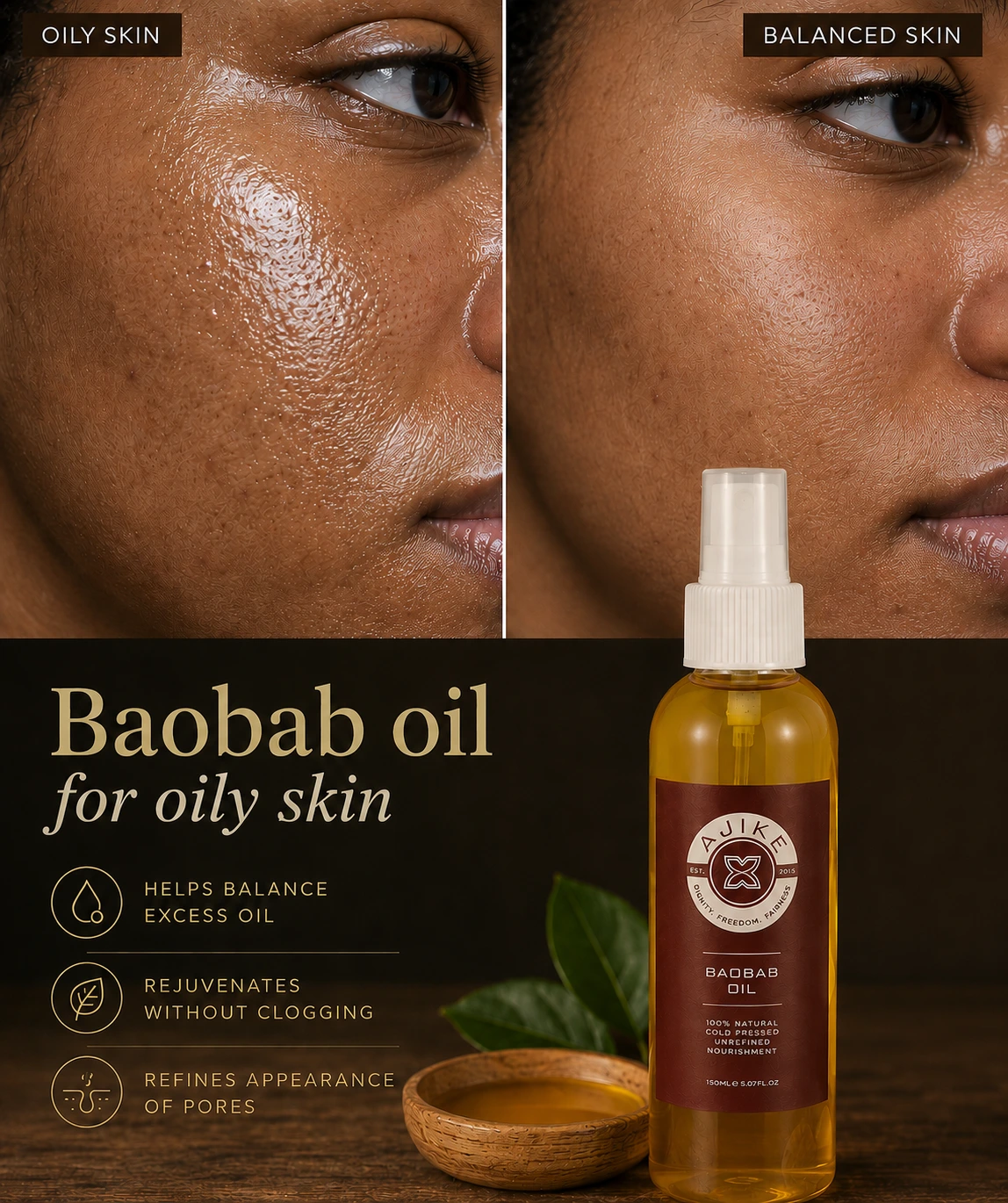
How Oily Skin Differs from Acne-Prone Skin
Oily skin is a skin type characterised by overactive sebaceous glands that produce more sebum than average. Not all oily skin is acne-prone, and not all acne-prone skin is oily. But there is significant overlap, because excess sebum production is one of the primary drivers of acne formation.
For pure oily skin without significant acne, the concern with any applied oil is primarily about adding to an already-oily surface. For oily skin with acne, both the surface oil concern and the sebum composition concern are relevant. Baobab oil addresses the sebum composition issue through its linoleic acid content, and its light dry-finish texture minimises the surface oil addition concern.
Why Baobab Oil Works Particularly Well for Oily Skin
The high linoleic acid content of baobab oil is specifically relevant to oily, acne-prone sebum. By normalising the linoleic acid content in the follicular environment over time, baobab oil may contribute to a gradual improvement in sebum composition that reduces both the tendency to form comedones and the severity of inflammatory acne.
The light texture of baobab oil means it does not add meaningfully to the surface oil load that oily skin already has. Two to three drops applied to slightly damp skin after cleansing absorbs within minutes and leaves a non-greasy finish that oily skin types find considerably more comfortable than heavier oils.
Morning vs Evening Use for Oily Skin
For oily skin, evening use is preferable and morning use is generally unnecessary. During the day, oily skin will produce enough sebum to maintain the skin's surface without additional oil from a morning application of baobab oil. Applying oil in the morning can occasionally create a surface environment that feels uncomfortably oily by midday.
In the evening, after cleansing off the day's oil, sebum, and impurities with African black soap, 2 to 3 drops of baobab oil applied to damp skin provides overnight linoleic acid and vitamin A support without any daytime comfort concerns.
How Baobab Oil Helps Regulate Sebum Over Time
This is a gradual effect rather than an immediate one. The hypothesis, supported by the linoleic acid deficiency research and the follicular normalisation studies, is that consistent topical delivery of linoleic acid to the skin surface and follicular environment gradually shifts the balance of the sebum toward a more normal composition over weeks of consistent use.
The practical result that oily skin users sometimes report after 4 to 8 weeks of consistent evening baobab oil use is slightly reduced midday oiliness and fewer new comedones forming. These are subtle improvements rather than dramatic transformations, and they are not guaranteed. Results may vary depending on skin type.
Baobab Oil and Active Acne: What to Expect
Using Baobab Oil When You Have Active Breakouts
Baobab oil is not a spot treatment for active acne lesions. Do not apply it directly to active papules, pustules, or cystic lesions in the expectation that it will resolve them. It does not have the concentrated antibacterial or anti-inflammatory action needed to address an active lesion directly.
Use baobab oil as a daily moisturiser applied to the skin broadly, avoiding direct heavy application on actively inflamed spots. Its background anti-inflammatory action from alpha-linolenic acid and its linoleic acid support for the follicular environment benefit the skin generally, creating conditions that are less conducive to new breakouts forming.
How It Interacts with Active Acne Treatments
Baobab oil is compatible with most common acne treatments when applied in the correct order. Apply any prescribed topical treatments or over-the-counter actives first on damp skin. Allow them to absorb for 60 seconds. Then apply baobab oil as the final step. The oil will not significantly interfere with the activity of salicylic acid, niacinamide, benzoyl peroxide (apply well before), or topical retinoids (though with retinoids, monitor carefully, as the oil may slightly increase penetration).
If you are on prescription oral or topical acne medication, discuss introducing any new topical product with your prescriber before beginning.
Post-Acne Marks: How Baobab Oil Supports Fading
The vitamin A content in baobab oil supports gentle skin cell renewal, gradually bringing fresher, more evenly pigmented skin cells to the surface and reducing the visibility of post-acne hyperpigmentation (PIH). The anti-inflammatory properties also reduce the ongoing inflammatory signals that continue to stimulate melanocyte activity even after an active lesion has resolved.
For faster fading of post-acne marks, baobab oil works well alongside our Nightly Face Serum with Lactic Acid and Papaya Oil: apply the serum first, allow to absorb, then apply baobab oil over the top. The lactic acid provides direct chemical exfoliation for hyperpigmented surface cells, and the baobab oil provides the supporting vitamin A and anti-inflammatory environment.
Read Also: Dark spots and post-acne marks: African Black Soap for Hyperpigmentation and Dark Spots
Realistic Timeline for Oily and Acne-Prone Skin
Week 1 to 2: skin is adjusting. You may notice a slight purging phase in your usual breakout zones. Monitor whether this is genuine purging (resolving within the period, in usual zones) or a true reaction (new areas, worsening). Continue unless there is a clear adverse reaction.
Week 3 to 4: purging, if any, should be subsiding. The linoleic acid normalisation effect begins to be measurable but is not yet dramatically visible. Skin may feel slightly more balanced after the evening routine.
Month 2 and beyond: most users with acne-prone skin notice the cumulative effects by month 2: fewer new comedones, slightly reduced midday oiliness, and some improvement in post-acne marks if present. Results may vary depending on skin type.
How to Choose a Pure Baobab Oil for Acne-Prone Skin
Cold Pressed vs Refined: Why It Matters for Acne
The linoleic acid content that makes baobab oil beneficial for acne-prone skin is a polyunsaturated fatty acid, which means it is susceptible to damage from heat. Refined baobab oil, processed with high-temperature deodorisation, loses a portion of its linoleic acid and vitamin A content in the refining process. For acne-prone skin where these specific compounds are the point, cold pressed is the only appropriate grade.
Cold pressed baobab oil is identified by its natural golden amber to light amber colour. Refined baobab oil is paler, sometimes nearly colourless. A very pale baobab oil that claims to be cold pressed is likely either refined or adulterated.
What a Pure Baobab Oil Should Look and Smell Like
Pure cold pressed baobab oil has a golden to amber colour, a mild pleasant scent that is slightly earthy and sweet, and a completely liquid consistency at room temperature. It should flow freely from the bottle. Any unusual viscosity, cloudiness (unless at low temperatures), or sharp or rancid smell is a sign of a problem.
Ingredients to Avoid in Combined Baobab Oil Products
Many products marketed as baobab oil are not pure baobab oil. They may contain fragrance, which is one of the most common contact allergens and can trigger or worsen acne in sensitive skin. They may contain mineral oil, silicones, or other occlusive additives that increase the comedogenic load of the overall product. They may contain essential oils at concentrations that can irritate acne-affected skin.
For acne-prone skin, pure baobab oil with no additives is the safest starting point. Once you have established that your skin tolerates pure baobab oil, you can consider formulated products if needed.
Why Diluted Products Give Inconsistent Results
A baobab oil diluted to 20 or 30 percent in a cheaper carrier oil delivers only a fraction of the linoleic acid and vitamin content of pure baobab oil per drop. This is why some people try a baobab oil product and see no benefit: the concentration of the active compounds is too low to produce a measurable effect. Pure baobab oil, used at the correct amount, delivers consistent results because the concentration is known and consistent.
Ajike Pure Baobab Oil: Why It Works for Acne-Prone Skin
100 Percent Pure, Cold Pressed, No Additives
Ajike Pure Baobab Oil is exactly what it says it is: 100 percent cold pressed baobab oil. No carrier oil dilution. No synthetic additives. No fragrance. No preservatives. No silicones. The golden amber colour you see in the bottle is the natural colour of cold pressed, unrefined baobab oil. The mild scent is the natural scent of the pressed seed.
For acne-prone skin where every additional ingredient is a potential variable, the simplicity of pure baobab oil is an advantage. You know exactly what you are applying. There are no hidden comedogenic additives, no sensitising fragrances, no additional ingredients to complicate the assessment of how your skin responds.
Wild Harvested in West Africa for Maximum Potency
Our baobab oil is cold pressed from wild baobab seeds collected from trees growing in their natural environment in West Africa. Wild baobab trees growing in their natural savannah environment produce seeds with the evolved nutrient profile that gives baobab oil its exceptional vitamin and fatty acid composition. This is the oil at its most potent, before any refining or adulteration.
How to Use Ajike Baobab Oil in an Acne Routine
Evening routine for acne-prone skin with Ajike Baobab Oil:
- Cleanse: Ajike African Black Soap Bar or Paste, lathered in hands, 30 to 60 seconds, rinse with cool water, pat to slightly damp
- Treat (optional): Ajike Nightly Face Serum with Lactic Acid and Papaya Oil on damp skin, 60 seconds to absorb
- Moisturise and seal: 2 to 3 drops of Ajike Pure Baobab Oil, warmed between fingertips, pressed gently into still-damp skin as the final step
Pairing It with Ajike African Black Soap for Best Results
African black soap is the cleanser that works best before baobab oil for acne-prone skin. Its natural antibacterial action from cocoa pod ash reduces C. acnes on the skin surface. Its sulfate-free, synthetic-additive-free formula removes excess sebum and impurities without over-stripping. And its retained natural glycerine leaves the skin in a slightly damp, receptive state that is ideal for baobab oil application.
The two products work together: black soap addresses the bacterial and sebum excess drivers of acne, and baobab oil addresses the linoleic acid deficiency and barrier weakness that predispose the skin to acne. This combination addresses acne from two complementary directions simultaneously.
Cleanse First, Hydrate Lightly
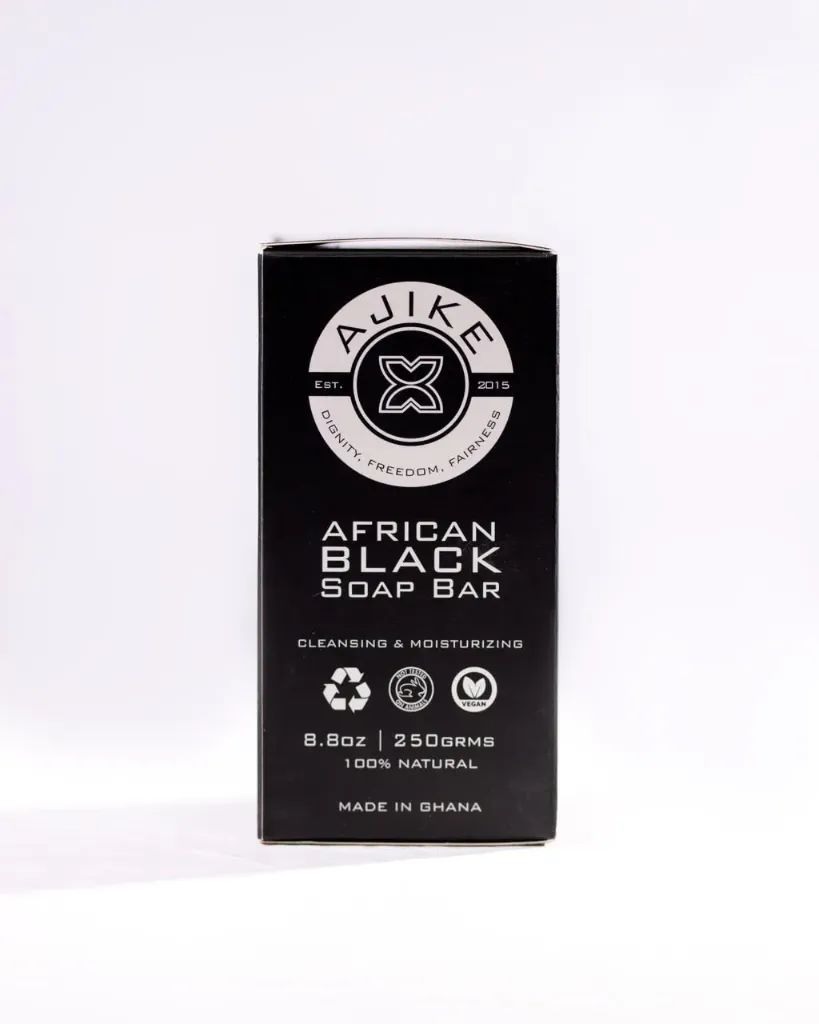
African Black Soap Bar
Natural cleanser before baobab oil. Helps remove excess oil and impurities without synthetic additives.
View Product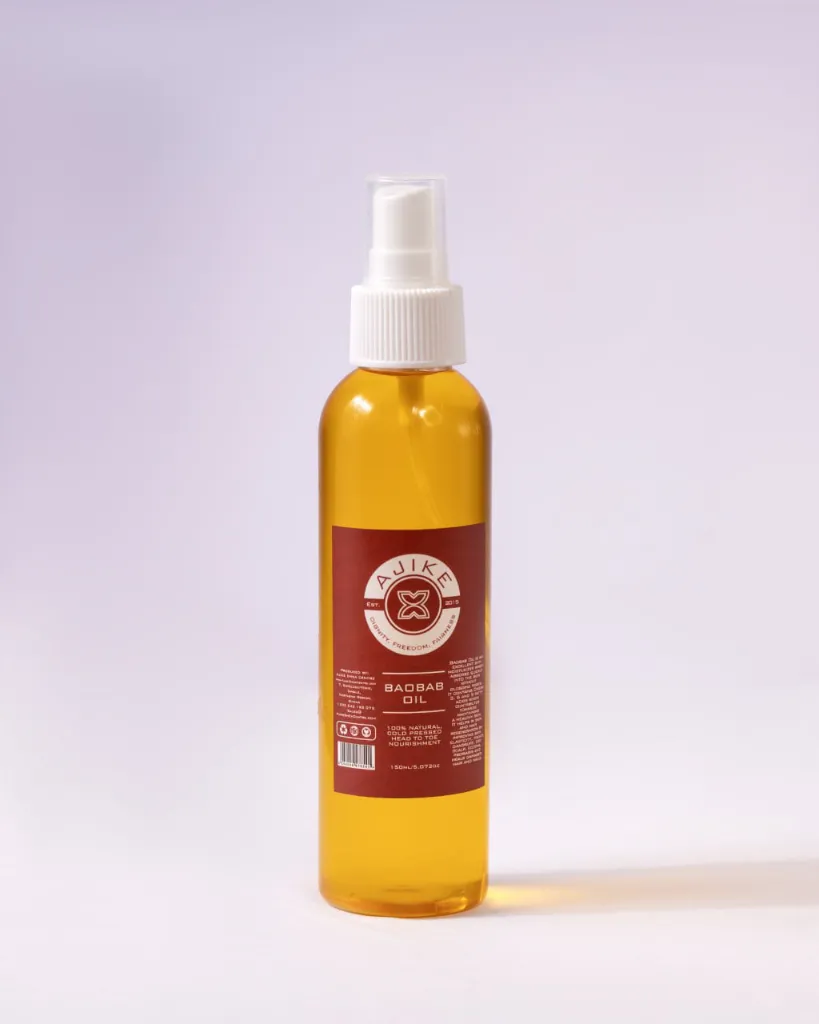
Pure Baobab Oil
Lightweight, fast-absorbing oil with high linoleic acid. Ideal for oily and acne-prone skin.
View ProductCleanse First, Hydrate Lightly
African Black Soap Bar
Natural cleanser before baobab oil. Helps remove excess oil and impurities without synthetic additives.
View Product
Pure Baobab Oil
Lightweight, fast-absorbing oil with high linoleic acid. Ideal for oily and acne-prone skin.
View ProductFrequently Asked Questions
Yes. Baobab oil has a comedogenicity rating of 2, placing it in the low-comedogenic category. Its high linoleic acid content (28-36%) is directly beneficial for acne-prone skin, which is typically deficient in linoleic acid in its sebum. Used correctly, 2 to 3 drops on slightly damp skin as the last step in an evening routine, most acne-prone skin types tolerate and benefit from baobab oil. Results may vary depending on skin type.
Baobab oil is very unlikely to clog pores when used in appropriate amounts and applied correctly to slightly damp skin. The comedogenicity rating of 2 reflects this low risk. Over-application, application to dry skin, or using it too early in the routine can contribute to surface congestion regardless of the oil's rating. Follow the application guidance in this article.
For mild to moderate cystic acne, baobab oil used as a daily moisturiser as described in this guide is safe and may be beneficial. For severe cystic acne, consult a dermatologist. Baobab oil should be used alongside, not instead of, any prescribed medical treatment for severe acne. It is not a standalone treatment for cystic acne.
The linoleic acid normalisation effect on sebum composition is a gradual process. Most users notice reduced new comedone formation and slightly improved oiliness by weeks 4 to 8 of consistent evening use. Post-acne marks may begin to visibly fade over the same period. Dramatic rapid results are not realistic or promised. Results may vary depending on skin type.
For acne-prone skin, the most beneficial oils share the characteristic of high linoleic acid content and low comedogenicity. Baobab oil (28-36% linoleic, rating 2), rosehip oil (very high linoleic, rating 1), hemp seed oil (55-65% linoleic, rating 0) and argan oil (12-16% linoleic, rating 0) are among the most appropriate botanical oils for acne-prone skin. Jojoba oil (negligible linoleic, rating 2) is also frequently recommended for its sebum-mimicking properties.
Morning use is generally not necessary or recommended for oily acne-prone skin. Oily skin produces enough sebum naturally to maintain surface hydration during the day. Evening use of baobab oil provides the overnight linoleic acid and vitamin A benefits without the midday oiliness concern that morning use can create for oily skin types.
Our latest content
Check out what's new in our company !