
Start writing here...
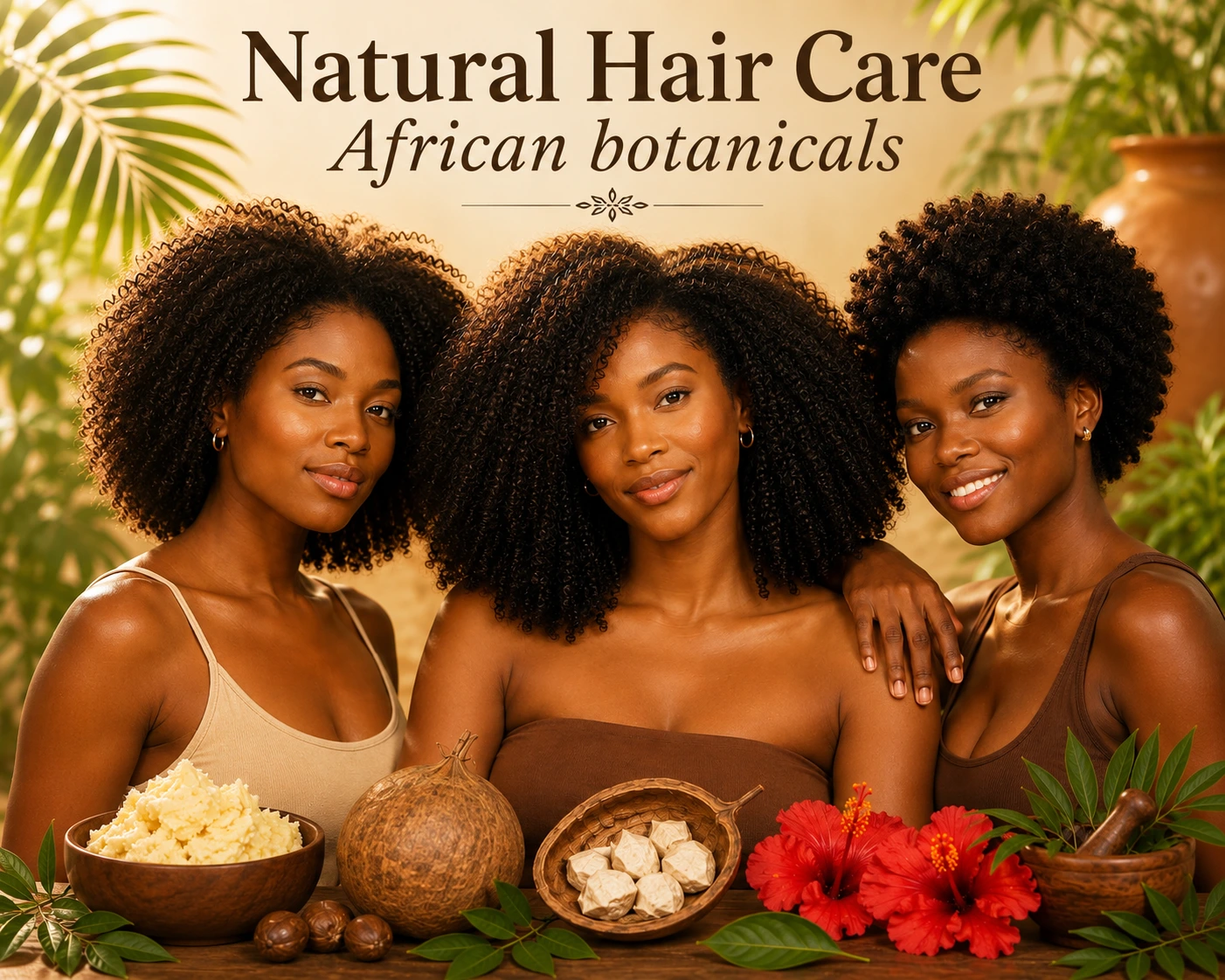
Natural hair care has never had a shortage of opinions. Everyone has a method, a product stack, a miracle ingredient. But for people with natural and textured hair, particularly 4A, 4B, and 4C hair types, the reality is that most of what gets recommended was not designed with their hair in mind.
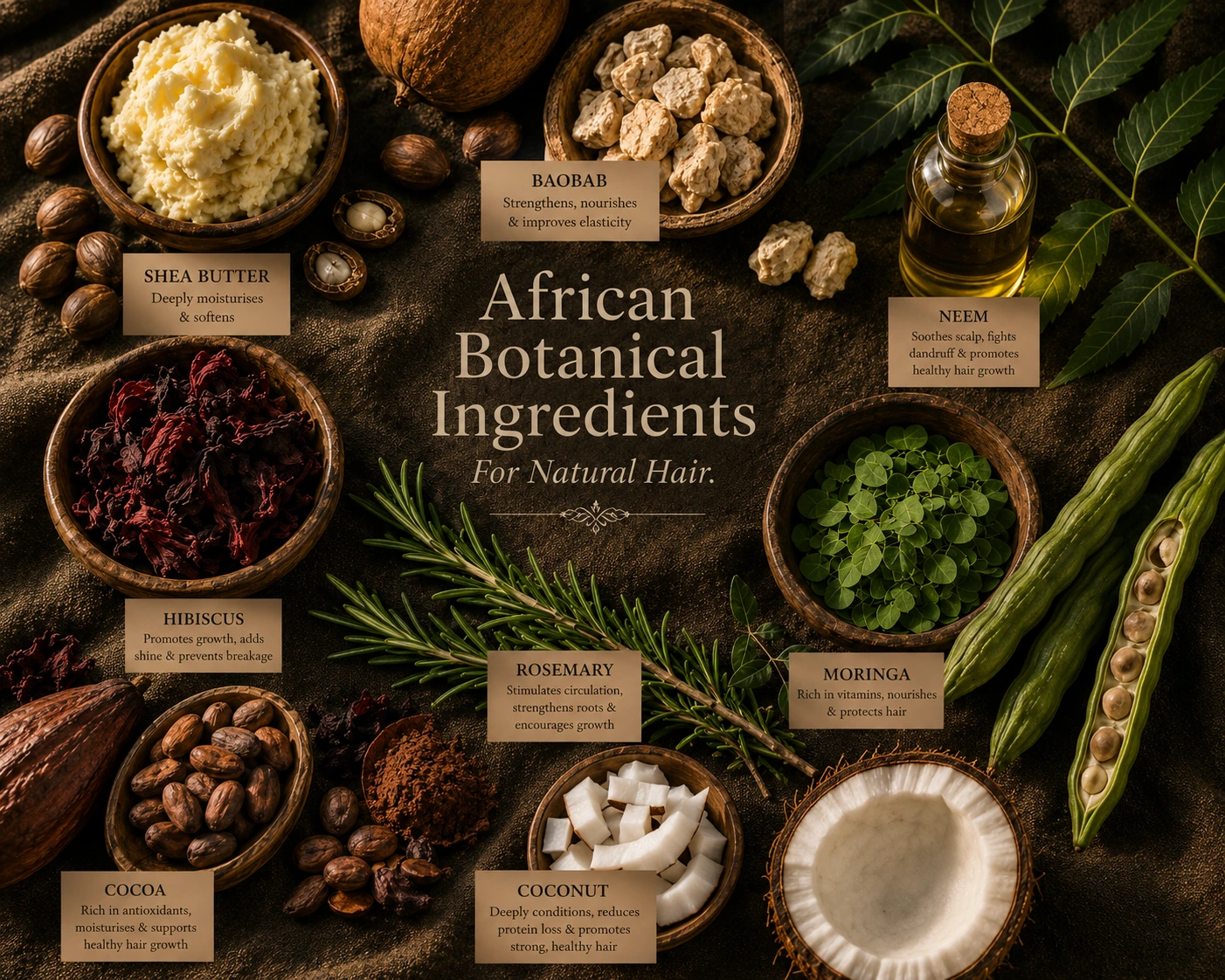
African botanical ingredients are different. Shea butter, baobab oil, neem, hibiscus, rosemary, moringa - these are not ingredients that were recently discovered and applied to textured hair. They are ingredients that have been used by the communities whose hair is most similar to yours, in the same climate and environment where these plants grow, for longer than the commercial hair care industry has existed.
This is the complete guide to building a natural hair care routine grounded in African botanical ingredients. It covers hair biology, product selection, routine building, porosity-specific guidance, and the Ajike products that make it practical.
Why African Botanicals Are the Most Effective Ingredients for Natural Hair
The Hair Types That Benefit Most from African Botanical Care
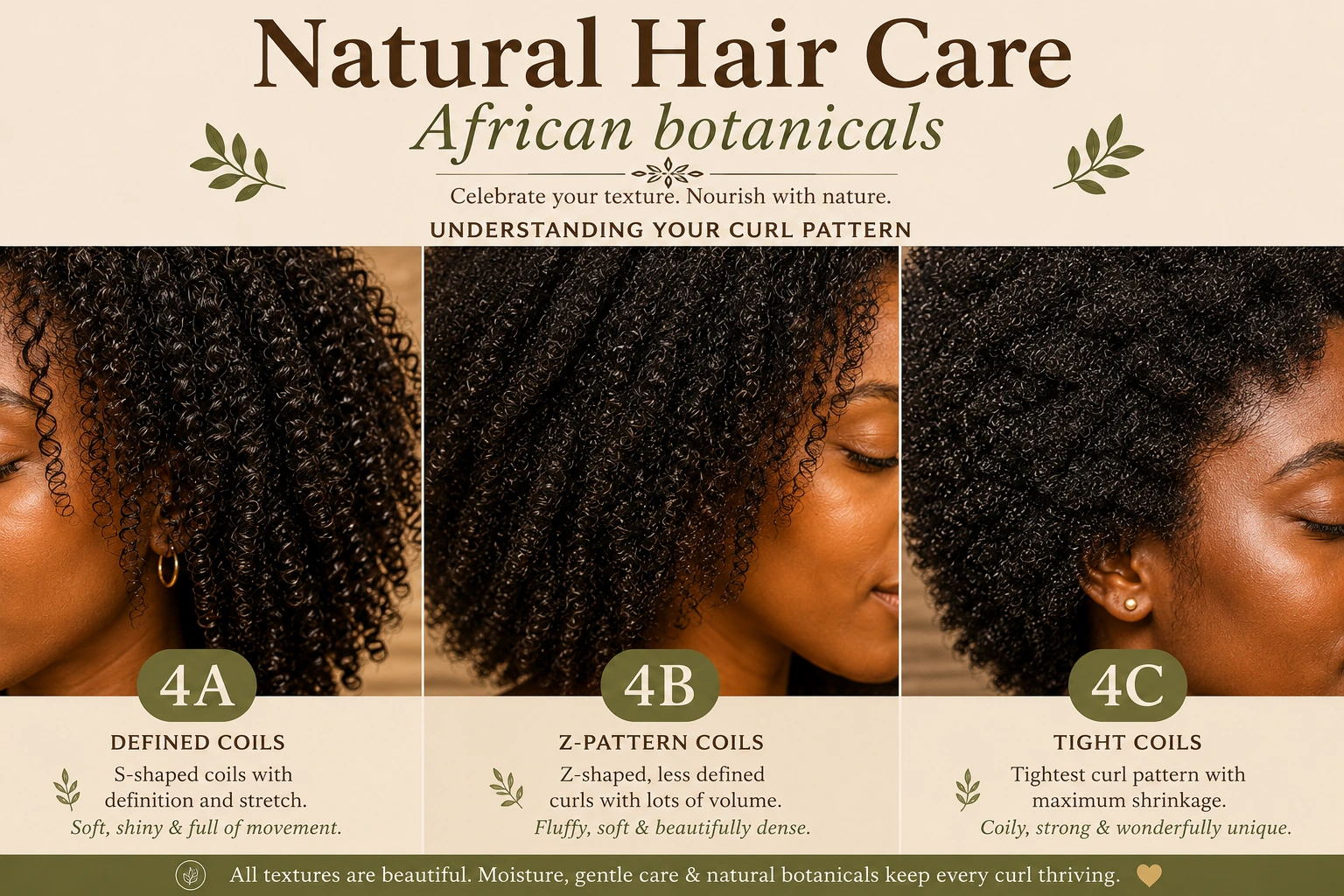
Natural and textured hair encompasses a spectrum of curl patterns from 3A loose waves through to 4C tightly coiled strands with minimal curl definition. The tighter the curl pattern, the more structurally demanding the hair's moisture and protection needs become. For 4A, 4B, and 4C hair particularly, the coil structure means natural scalp oils cannot travel down the hair shaft effectively, the cuticle has more points of structural stress, and the hair is inherently more prone to moisture loss and breakage than looser curl patterns.
African botanical ingredients were developed and refined in the communities where these hair types are the norm. Shea butter's moisture-sealing properties were not discovered in a laboratory and applied to textured hair as an experiment. They were observed, refined, and passed down across generations of women managing exactly the hair types that need them most.
Why Natural and Textured Hair Is Structurally Different from Straight Hair
Straight hair has a round cross-section and a relatively uniform cuticle that allows sebum to travel from the scalp to the tip of the strand with relative ease. Natural and textured hair has an elliptical cross-section, and the tighter the curl pattern, the more pronounced this elliptical shape becomes. Each point where the hair coils or kinks creates a structural stress point where the cuticle is more vulnerable and where breakage is most likely to occur.
This structural difference has practical implications for every product choice and every technique in a natural hair routine. Products that work well for straight or loosely wavy hair, particularly those that rely on coating the hair shaft for their effect, often create buildup and weight problems on coily and kinky hair without providing the penetrating moisture that the hair actually needs.
What African Communities Have Known About Hair Care for Generations
Before the global beauty industry began marketing shea butter as an exotic discovery, women across West Africa had been using it on their hair for generations. Before baobab oil appeared in premium skincare formulations, communities across sub-Saharan Africa had been pressing it from wild-harvested seeds and using it for both skin and hair. The knowledge embedded in these traditional practices is not anecdotal. It is the accumulated observational evidence of communities managing the same hair types, in the same climate, across centuries.
At Ajike, we are a Ghanaian brand. We were founded in Ghana in 2015, and our formulations are built on this generational knowledge, not on the adaptation of hair care developed for different hair types in different climates. This is not a marketing point. It is the foundation of why our products work for natural and textured hair.
Why the Western Hair Care Industry Got It Wrong for Textured Hair
The global hair care industry was built primarily around the needs of straight and loosely wavy hair types. Surfactant systems, conditioning formulas, styling products, even the basic concept of what moisturised hair should look and feel like, were all developed around a hair type that is fundamentally different from natural and textured hair. When textured hair was considered at all, the default approach was often to make it behave more like straight hair rather than to work with its natural structure.
The consequences of this historical bias are still visible in product formulations today. Sulfate-based shampoos that devastate the natural hair's already-limited moisture balance. Silicone conditioning agents that give the appearance of smooth, moisturised hair while creating buildup that prevents any real moisture from entering the strand. Petroleum-based products marketed as scalp moisturisers that seal the scalp against the environment without nourishing it.
Understanding Your Natural Hair Before Choosing Products
Hair Porosity: The Single Most Important Factor in Your Routine
Hair porosity describes the hair cuticle's ability to allow moisture in and to hold it there once it has entered. Low porosity hair has a tightly sealed cuticle that resists moisture absorption. High porosity hair has a more open, damaged, or structurally porous cuticle that absorbs moisture quickly but loses it just as fast. Medium porosity hair has a balanced cuticle that absorbs and retains moisture reasonably well.
Understanding your porosity is more important than knowing your curl pattern when it comes to building an effective natural hair routine. Two people with the same 4C curl pattern but different porosity will need different products, different application techniques, and different levels of heat assistance to achieve the same result.
How to Do the Porosity Test at Home
Take a clean, product-free strand of hair and place it in a glass of room temperature water. Watch what happens over two to four minutes. If the strand floats at the surface for the entire period, the cuticle is very tightly sealed: low porosity. If it slowly sinks to the bottom, the cuticle is accepting water readily: high porosity. If it floats somewhere in the middle, hovering just below the surface, the porosity is medium.
For the most accurate result, make sure the hair strand is clean and free from any product residue before testing. Product coating on the hair can affect the test result and give you an inaccurate reading.
Hair Density, Texture and Curl Pattern: What They Mean for Product Choice
Hair density refers to how many individual strands of hair you have on your head. High density hair needs larger product quantities and more thorough sectioning to ensure even coverage. Low density hair is easily weighed down by heavy products and benefits from lightweight formulas.
Hair texture refers to the diameter of each individual strand: fine, medium, or coarse. Fine strands break more easily and are weighed down by heavy products. Coarse strands are more resistant but need more intensive conditioning to maintain flexibility. Curl pattern (3A through 4C) describes the shape of the curl. While curl pattern influences some product choices, porosity and texture are more reliable guides to the products your hair will actually respond well to.
What Your Hair Is Telling You When It Breaks, Dries Out or Will Not Retain Length
Persistent breakage at the same point on the hair shaft usually indicates either a protein deficiency or a mechanical stress point from a tight style or accessory. Breakage all over the hair is more often a moisture deficiency issue. Hair that feels dry shortly after washing and conditioning is likely high porosity, not retaining the moisture that was applied. Hair that never seems to absorb product may be low porosity and needs warmth during conditioning to open the cuticle.
Lack of length retention is almost always a breakage problem rather than a growth problem. If your hair is growing from the scalp at a normal rate but never seems to get longer, the length being gained at the top is being lost to breakage at the ends before you can see it accumulate. Protective styling, consistent moisture sealing, and reduced manipulation are the solution, not growth-stimulating products.
The Problem with Most Commercial Hair Products for Natural Hair
Sulfates: What They Do and Why They Damage Natural Hair
Sodium lauryl sulfate and sodium laureth sulfate are anionic surfactants that create the heavy lather most people associate with effective cleaning. They are excellent at removing oil, dirt, and product residue. They are too good at it. Natural and textured hair is already prone to moisture loss because the coil structure prevents sebum from coating the full length of the strand. A sulfate shampoo strips away the limited natural oils present, leaving the hair and scalp depleted and triggering a rebound sebum overproduction cycle that makes the scalp appear oilier while the hair remains dry.
For straight hair, the acid mantle and sebum recover relatively quickly after a sulfate wash. For natural and textured hair, where the sebum-to-strand ratio is lower and the hair is more vulnerable to dryness, repeated sulfate washing creates cumulative damage to the hair's moisture balance that becomes harder and harder to address.
Silicones: The Illusion of Moisture
Silicones are synthetic polymers that coat the hair shaft to create a smooth, glossy appearance and a soft feel. They are extremely effective at making hair look and feel conditioned immediately after application. The problem is that they create a waterproof barrier on the hair shaft that prevents real moisture from entering. With repeated use, silicone buildup accumulates on the hair, and the only way to remove it is with a sulfate shampoo. The silicone-sulfate cycle is one of the most common reasons natural hair routines fail: the sulfate removes the silicone buildup, leaving hair stripped, then the silicone goes back on to compensate for the dryness it partly caused.
Water-soluble silicones are gentler but still create some buildup over time. Silicone-free, sulfate-free formulas are the starting point for genuine natural hair care rather than the maintenance of an appearance of health.
Mineral Oil and Petroleum: Why They Seal Dryness In Rather Than Out
Mineral oil (paraffinum liquidum) and petroleum-based products like petroleum jelly are occlusive ingredients that form an impermeable barrier on the hair and scalp surface. In the right context, an occlusive can be useful to seal moisture in. But when applied to dry hair, they seal the dryness in rather than protecting existing moisture. Unlike plant-based oils with penetrating fatty acids, mineral oil sits entirely on the surface of the hair and scalp without providing any nutritional benefit.
The scalp is particularly poorly served by mineral oil. A scalp coated with mineral oil cannot breathe effectively, cannot absorb nutrients, and creates a warm, airless environment that is conducive to the microbial overgrowth associated with dandruff and scalp irritation.
Synthetic Fragrances and Preservatives on Scalp Skin
The scalp is skin, and it responds to skincare ingredients the way skin elsewhere on the body does. Synthetic fragrances are among the most common contact sensitisers in cosmetic products and are a significant trigger for scalp irritation, itching, and contact dermatitis. For natural and textured hair that is often worn in styles that keep products in contact with the scalp for extended periods, the continuous fragrance exposure is a particular concern.
Preservatives like methylisothiazolinone (MI) have been associated with widespread contact dermatitis reactions in scalp products and are worth specifically checking for on the ingredient list of any shampoo or scalp treatment.
Why Chemical-Free Is Not the Same as Ingredient-Free
A product marketed as chemical-free is not literally made without chemicals. Everything is made of chemicals. What the term usually tries to communicate is that the product does not contain synthetic chemical additives, but this is a marketing claim rather than a regulatory one, and it is unverifiable without looking at the actual ingredient list.
The more useful framework is to understand specific ingredients: what they are, what they do, whether they are plant-derived or synthetically produced, and whether the evidence suggests they support or harm your specific hair type. This is why learning to read an ingredient list is a more valuable skill than trusting marketing language on the front of a product.
African Botanical Ingredients That Actually Work for Natural Hair
Shea Butter: The Foundation of Natural Hair Moisture
Raw unrefined shea butter is the most widely used and most deeply established African botanical ingredient in natural hair care. Its oleic acid content penetrates the hair cortex and provides internal conditioning. Its stearic acid creates surface emolliency. And its unsaponifiable fraction, containing triterpenes and phytosterols, provides anti-inflammatory support at the scalp level.
As a moisture sealant applied after a water-based leave-in conditioner, raw shea butter locks moisture into the hair strand and slows the evaporation that causes natural hair to become dry between wash days. Used correctly, in small amounts on slightly damp hair, it is the most effective single moisture-sealing ingredient available for 4B and 4C hair. The key qualification is raw and unrefined: refined shea butter has lost the active compounds that make the raw version genuinely effective.
Read Also: Full guide: What Is Raw Unrefined Shea Butter?
Baobab Oil: The Lightweight Penetrating Oil for All Hair Types
Baobab oil's combination of a penetrating oleic acid fraction with a high linoleic acid content and a multi-vitamin profile (A, D, E, and F) makes it the most versatile botanical hair oil available. Unlike shea butter, which is too heavy for fine or low-porosity hair when used in excess, baobab oil's light, dry-finish texture works across hair types and porosity levels without creating buildup or weight.
For natural hair, baobab oil works as a pre-shampoo treatment, as the oil step in the LOC or LCO method, as a daily scalp treatment with massage, and as a light between-wash moisture refresh. Its vitamin A content supports scalp cell renewal, its vitamin E provides antioxidant protection to the scalp, and its linoleic acid supports follicle wall integrity.
African Black Soap: The Scalp Cleanser Natural Hair Needs
African black soap, made through traditional saponification with cocoa pod ash, shea butter, and plant oils, provides effective scalp cleansing without the damage that sulfate-based shampoos cause. The natural antibacterial action of cocoa pod ash addresses scalp bacteria without disrupting the broader scalp microbiome. The retained natural glycerine from saponification moisturises while cleansing. And the absence of synthetic sulfates means the scalp's acid mantle is not repeatedly stripped.
In shampoo form, with the addition of peppermint, rosemary, and tea tree for scalp-specific benefits, African black soap becomes one of the most comprehensive natural scalp cleansers available for natural hair.
Read Also: Full guide: What Is African Black Soap? Complete Guide →
Neem Oil: Targeted Scalp Treatment and Antibacterial Support
Neem oil contains nimbidin, nimbin, and azadirachtin, compounds with documented antibacterial and antifungal properties. Applied directly to the scalp as a targeted treatment, neem oil addresses the microbial environment associated with dandruff, scalp eczema, and folliculitis. It is not a gentle all-over oil in the way baobab oil is. It is a potent targeted ingredient that works best applied in small amounts directly to affected scalp areas before washing.
For natural hair wearers dealing with persistent scalp conditions, incorporating neem oil into the pre-poo scalp treatment alongside baobab oil provides both the gentle nourishment of baobab and the targeted antimicrobial action of neem.
Moringa Oil: The High Oleic Penetrating Oil for Dry and Damaged Hair
Moringa oil (pressed from Moringa oleifera seeds) is one of the most oleic-acid-rich botanical oils available, with an oleic acid content of approximately 70 to 80 percent. This high oleic content makes it an excellent penetrating oil for dry and damaged hair, as oleic acid enters the hair cortex more readily than other fatty acids. It is particularly effective as a hot oil treatment for chemically treated or heat-damaged natural hair.
Moringa oil's conditioning properties complement baobab oil's multi-vitamin and linoleic-rich profile: baobab oil provides the broader nutritional depth and the barrier-supportive essential fatty acids, while moringa oil provides more intensive internal conditioning. The two oils work well together as a pre-shampoo treatment blend.
Hibiscus: Natural Slip and Conditioning for Textured Hair
Hibiscus (Hibiscus sabdariffa) has been used in African and Indian hair care traditions for generations, valued for its mucilage content, the naturally occurring gel-like compound that provides slip and conditioning to the hair. Slip is the property that allows a comb or fingers to glide through tangled or coily hair without snagging, which is critical for reducing mechanical breakage during detangling.
Hibiscus also contains natural alpha-hydroxy acids that provide gentle surface conditioning and scalp exfoliation. In leave-in conditioners and conditioning treatments, hibiscus extract or hibiscus powder adds a conditioning and detangling dimension that plant oils alone cannot provide.
Rosemary: Scalp Circulation and Hair Growth Support
Rosemary (Rosmarinus officinalis) has accumulated significant research interest in recent years for its documented effects on scalp health and hair retention. A widely cited study published in Skincare Medicine compared rosemary oil at two percent concentration to two percent minoxidil over six months and found comparable results in hair count increase, with rosemary producing less scalp itching than the pharmaceutical. The active compounds ursolic acid and carnosic acid contribute to both scalp circulation improvement and anti-inflammatory action.
In a natural hair routine, rosemary works best as a component of a scalp oil blend or a scalp-focused shampoo, applied with scalp massage to maximise the circulation benefit.
Building a Natural Hair Care Routine with African Botanicals
The Four Elements Every Natural Hair Routine Needs
Regardless of hair type, porosity, or specific concerns, an effective natural hair routine needs four things: cleansing (removing buildup and impurities without stripping the hair), moisture (introducing water or water-based products into the hair strand), sealing (applying an oil or butter to lock moisture in and slow its evaporation), and protection (managing mechanical stress from manipulation, styling, and the environment).
Every product in your routine should serve one or more of these four functions. Products that do not serve a clear function are contributing to buildup and complexity without adding benefit. Simpler routines, built around high-quality products that each serve a clear purpose, consistently outperform complex routines with many products of lower quality.
How Often to Wash Natural and Textured Hair
There is no single correct wash frequency for natural hair. The right frequency depends on your hair's scalp oil production, how quickly product buildup accumulates, your lifestyle, and how your hair responds to water. For most natural hair types, weekly to bi-weekly washing is appropriate. Washing too frequently strips the hair's limited natural oil protection. Not washing frequently enough allows buildup to accumulate that blocks moisture from entering the hair strand.
A practical guide: if your scalp is visibly oily or itchy before your planned wash day, wash more frequently. If your hair is consistently dry and tangled by wash day, consider washing less frequently or using a co-wash (conditioner-only wash) between full shampoo washes to add moisture without fully stripping the hair.
The Importance of Protective Styling in Length Retention
Protective styling, wearing the hair in styles that tuck away the ends and minimise daily manipulation, is one of the most effective strategies for retaining length on natural hair. Braids, twists, updos, and styles that keep the ends protected reduce the mechanical breakage that removes length as fast as it grows.
The caveat is that protective styles can cause damage when worn for too long, when tension at the root is excessive, or when the hair inside the style is not moisturised regularly. A protective style that causes breakage at the root is counterproductive. The goal is to minimise manipulation while keeping the hair inside the style adequately moisturised.
How to Layer Products for Maximum Moisture Retention
The most effective moisture retention approach for natural hair is layering: applying products in a sequence where each layer serves a specific function that builds on the layer before it. The LOC method (Liquid, Oil, Cream) and LCO method (Liquid, Cream, Oil) are the two most widely used natural hair layering sequences.
In both methods, the liquid layer (water or water-based leave-in) provides the actual moisture that the hair needs. The oil layer either seals the moisture immediately (LOC) or creates a barrier between the moisture and the cream (LCO). The cream provides a longer-lasting moisture layer and additional conditioning. The optimal sequence depends on your hair's porosity and how it responds to each combination.
The Complete Natural Hair Care Routine: Step by Step
Before You Start: Gather everything before you begin. Having all products within reach prevents you from leaving wet hair unattended between steps, which is one of the fastest ways to lose moisture before you have sealed it in.
Step 1: Pre-Poo Treatment with Baobab Oil or Shea Butter
Before shampooing, apply Ajike Pure Baobab Oil to dry or slightly damp hair in sections, working from root to tip. For very dry or damaged hair, use raw shea butter melted in the palms and applied to the same sections. Cover with a shower cap and allow to sit for 30 to 60 minutes, or overnight. This pre-shampoo treatment creates a protective oil layer around each hair strand that limits the degree to which shampooing strips the hair's natural oils. The result is hair that is more moisturised after washing than it would be without the pre-poo.
Step 2: Cleanse with a Sulfate-Free African Black Soap Shampoo
Apply Ajike Peppermint, Rosemary and Tea Tree African Black Soap Shampoo directly to the scalp in sections. Focus the shampoo on the scalp rather than working it through the length of the hair. The shampoo will run through the length as you rinse, providing sufficient cleansing to the hair shaft without the need to scrub or manipulate the length directly. Leave the shampoo on the scalp for 2 to 3 minutes before rinsing, to allow the tea tree's antifungal action and the peppermint's circulation-stimulating properties to work.
Rinse with cool water. The cool rinse helps close the cuticle slightly after the warm water wash, reducing moisture loss during the subsequent conditioning steps.
Step 3: Deep Condition to Restore Moisture and Protein Balance
Apply Ajike Marula and Baobab Anti-Breakage Conditioner generously through the length of the hair in sections. Use a wide-tooth comb or fingers to detangle gently while the conditioner is providing slip. Cover with a shower cap and apply gentle heat from a hooded dryer or warm towel for 15 to 30 minutes. The heat swells the hair cuticle, allowing the conditioning compounds to penetrate more effectively.
If your hair is showing signs of protein deficiency (limp, gummy when wet, no elasticity on the stretch test), incorporate a protein treatment at this step once every 4 to 6 weeks. Rinse the deep conditioner thoroughly with cool water.
Step 4: Apply Leave-In Conditioner While Hair Is Wet
Do not let the hair dry between rinsing the deep conditioner and applying the leave-in. While the hair is still wet, apply Ajike Marula and Baobab Leave-In Conditioner through sections. Rake through with fingers or a wide-tooth comb to ensure even distribution. The leave-in provides the foundation moisture layer that the subsequent oil and cream layers will seal in.
Step 5: Seal with the LOC or LCO Method Using African Oils
Immediately after the leave-in, apply Ajike Pure Baobab Oil through the hair in sections, working from mid-length to ends. 2 to 3 drops per section is sufficient for most hair types. For low porosity hair: use the LCO sequence, applying a cream or butter over the leave-in before the oil. For high porosity hair: use the LOC sequence with the oil applied directly after the leave-in, then cream over the oil.
For 4B and 4C hair that needs intensive moisture sealing: add a small amount of raw Ajike shea butter (warmed between palms) as the final sealing layer after the baobab oil for maximum moisture lock.
Step 6: Scalp Care Between Wash Days
Between wash days, use Ajike Hair and Scalp Luxury Oil applied in drops directly to the scalp between partings. Massage gently for 3 to 4 minutes per session. This scalp massage with the oil blend provides the circulation support and scalp nourishment that maintains the growth environment between washes. For hair that is drying out between washes, a daily moisture refresh with a light water mist followed by 1 to 2 drops of Ajike Pure Baobab Oil through the hair maintains moisture levels.
Step 7: Protective Styling and Length Retention Practices
After styling, cover hair with a satin or silk bonnet at night. This single step reduces the friction-induced breakage that occurs when natural hair rubs against cotton pillowcases overnight. For very long natural hair, use a satin pillowcase as well or secure hair in a loose bun or pineapple to keep it from tangling while you sleep.
During protective styles, moisturise the hair inside the style at least twice weekly with a light water mist and baobab oil. Do not leave a protective style in place for more than 6 to 8 weeks without refreshing the edges, scalp, and hair inside the style.
Natural Hair Care Routine for Different Hair Porosity Types
Factor | Low Porosity | Medium Porosity | High Porosity |
Cuticle | Tightly sealed, resistant | Normal, balanced | Open, damaged or porous |
Water absorption | Slow (floats in test) | Medium (sinks slowly) | Fast (sinks quickly) |
Moisture loss | Slow (holds well once in) | Balanced | Fast (loses moisture quickly) |
Best oils | Light (baobab, argan) | Any balanced oil | Heavier (shea, castor blended) |
Method | LCO, warm water, heat cap | LOC or LCO, either works | LOC, protein treatments |
Low Porosity Natural Hair Routine
Low porosity hair resists moisture absorption because the cuticle is tightly sealed. The key for low porosity hair is heat: warm water during washing opens the cuticle slightly, and a heat cap or hooded dryer during deep conditioning forces the conditioning compounds past the resistant cuticle. Apply all products to soaking wet rather than towel-dried hair, as wet hair has temporarily swollen cuticles that are more receptive.
Use lighter oils like Ajike Pure Baobab Oil rather than heavier products like pure shea butter for daily use, as the hair's tightly sealed cuticle means heavy products sit on the surface and create buildup without penetrating. Reserve shea butter for the occasional intensive seal on very dry sections rather than for all-over daily use.
Medium Porosity Natural Hair Routine
Medium porosity hair is the most flexible in terms of product choices and application methods. Both LOC and LCO methods work well. A wider range of oils, from the lighter baobab oil to medium-weight marula oil, can be used without creating excessive buildup. Deep conditioning every wash day with Ajike Marula and Baobab Conditioner, followed by leave-in and a light oil seal, is the standard effective routine.
The main challenge for medium porosity hair is that it can drift toward high porosity over time with heat damage, chemical processing, or repeated aggressive manipulation. Gentle handling, minimal heat, and consistent protein-moisture balance maintenance keep medium porosity hair in its optimal condition.
High Porosity Natural Hair Routine
High porosity hair absorbs products quickly and loses moisture just as fast. The priority for high porosity hair is sealing: applying an effective occlusive layer quickly after moisture application to slow the rapid moisture loss. Raw shea butter as the final sealing step in the LOC method is particularly effective for high porosity hair.
Protein treatments are more important for high porosity hair than for other porosity types, because high porosity is often the result of structural damage to the hair shaft that protein can help temporarily reinforce. Incorporate a light protein treatment, using Ajike Marula and Baobab Conditioner on its own or combined with a protein-rich deep conditioner, every 2 to 4 weeks alongside the regular routine.
How to Adjust When Your Porosity Changes
Hair porosity is not completely fixed. Chemical treatments, consistent heat styling, sun exposure, and hard water can all shift hair from medium to high porosity over time. Conversely, reducing heat use and consistent protein-moisture balance maintenance can gradually improve the cuticle's condition. The porosity test is worth repeating every few months to ensure your routine is still matched to your hair's current state.
Natural Hair Care for Specific Concerns
Natural Hair That Will Not Retain Length
If your hair is growing from the scalp but you are not seeing length accumulate over time, the issue is breakage rather than growth rate. The length that grows at the root is being broken off at the ends before it accumulates into visible length gain. The solution is to address the moisture balance and the mechanical stress on the hair. Consistent LOC or LCO sealing after every wash, protective styling to reduce daily manipulation, satin bonnet use every night, and regular trimming of split ends that will propagate breakage up the shaft.
Read Also: Full breakage guide: How to Stop Hair Breakage on Natural and Textured Hair
Dry and Brittle Natural Hair That Breaks Easily
Persistently dry and brittle natural hair usually indicates one of three issues: insufficient moisture sealing (the hair is getting moisture from water but it is evaporating before the oil seal locks it in), a porosity mismatch (products or techniques that work against rather than with the hair's porosity), or protein overload (too many protein treatments that make the hair stiff and brittle rather than flexible). Assess each possibility systematically before adding more products.
Slow-Growing Hair and Scalp Health Issues
Apparent slow growth is almost always actually breakage that is removing length as quickly as it grows. True slow growth from the follicle, where the actual growth rate has slowed, is less common but can be associated with scalp health issues including chronic inflammation, significant dandruff, or scalp conditions that prematurely push follicles into the resting phase.
Scalp massage with Ajike Hair and Scalp Luxury Oil 2 to 3 times per week, combined with a scalp-focused shampoo routine, addresses the growth environment systematically. If scalp conditions persist despite a good cleansing routine, a dermatologist assessment is appropriate.
Natural Hair with Scalp Conditions: Dandruff, Dry Scalp, Seborrhoeic Dermatitis
Dandruff and seborrhoeic dermatitis on natural hair require a shampoo with genuine antifungal action. Ajike Peppermint, Rosemary and Tea Tree African Black Soap Shampoo provides terpinen-4-ol (tea tree) antifungal action, menthol anti-inflammatory relief, and ursolic acid (rosemary) scalp circulation support in a sulfate-free base that does not strip the hair. Apply directly to the scalp and leave for 2 to 3 minutes before rinsing for maximum efficacy.
Read Also: Full dandruff guide: Natural Shampoo for Dandruff
Transitioning from Relaxed to Natural Hair
Transitioning, growing out a chemical relaxer while retaining the relaxed hair, creates a unique challenge: two different hair textures on the same strand, with the weakest point being the line of demarcation between natural new growth and relaxed processed hair. This point is highly vulnerable to breakage.
The transitioning routine should focus on minimising manipulation at the line of demarcation, maintaining intensive moisture and sealing, and using protective styles that reduce the mechanical stress on this weak point. Ajike Pure Baobab Oil applied as a pre-shampoo treatment to the length of the hair before every wash, with particular attention to the line of demarcation, helps maintain flexibility at the most vulnerable point.
Chemical-Free Hair Care: What It Actually Means
Understanding Ingredients in Your Hair Products
Every ingredient in a hair product is a chemical. Shea butter is made of chemical compounds. Water is a chemical (H2O). The phrase chemical-free in hair product marketing is meaningless in a strict sense. What most people mean when they say chemical-free is free from synthetic or harsh chemical additives, and this is a reasonable goal even if the terminology is imprecise.
The useful question is not whether a product contains chemicals, because they all do, but whether the specific chemicals it contains are plant-derived or synthetically manufactured, whether they are known irritants or sensitisers, and whether they serve a genuine function in maintaining or improving hair health.
How to Read a Shampoo Label for Natural Hair
Ingredients are listed in descending order of concentration. The first five ingredients are the highest-concentration components and define the character of the product. For a natural hair shampoo: water should be first, followed by gentle surfactants (look for names containing glucoside or glutamate rather than sulfate or betaine), then conditioning agents and beneficial botanical ingredients.
Check specifically for: sulfates (sodium lauryl sulfate, sodium laureth sulfate), synthetic fragrance (parfum or fragrance in the list), methylisothiazolinone or methylchloroisothiazolinone as preservatives, and silicones (look for ingredients ending in -cone, -conol, or -xane in the mid to lower section of the list).
Which Ingredients to Avoid and Which to Embrace
- Avoid: SLS, SLES, synthetic fragrance, MIT/MCI, silicones (dimethicone, cyclomethicone), mineral oil, petroleum
- Approach with caution: cocamidopropyl betaine (mild but a sensitiser for some), propylene glycol (humectant that can irritate in high concentrations)
- Embrace: coco glucoside, decyl glucoside, sodium cocoyl glutamate (gentle plant-derived surfactants), shea butter, baobab oil, glycerine, aloe vera, hibiscus extract, rosemary extract
The Difference Between Natural, Organic and Clean in Hair Care
Natural has no regulated definition in cosmetics. Any product can claim to be natural without meeting any specific ingredient standard. Organic refers to ingredients grown without synthetic pesticides or fertilisers, and products can be certified organic by third-party organisations. However, an organic product can still contain synthetic preservatives or fragrances alongside its organic plant ingredients.
Clean is the newest and least defined term, used by various retailers to mean products free from specific lists of disputed ingredients. Different retailers have different clean standards. The most reliable approach is to skip the marketing language on the front and read the ingredient list on the back using the framework described above.
Ajike's Natural Hair Care Range: African Botanicals from Ghana
Ajike African Black Soap Shampoo Range: Peppermint, Rosemary and Tea Tree
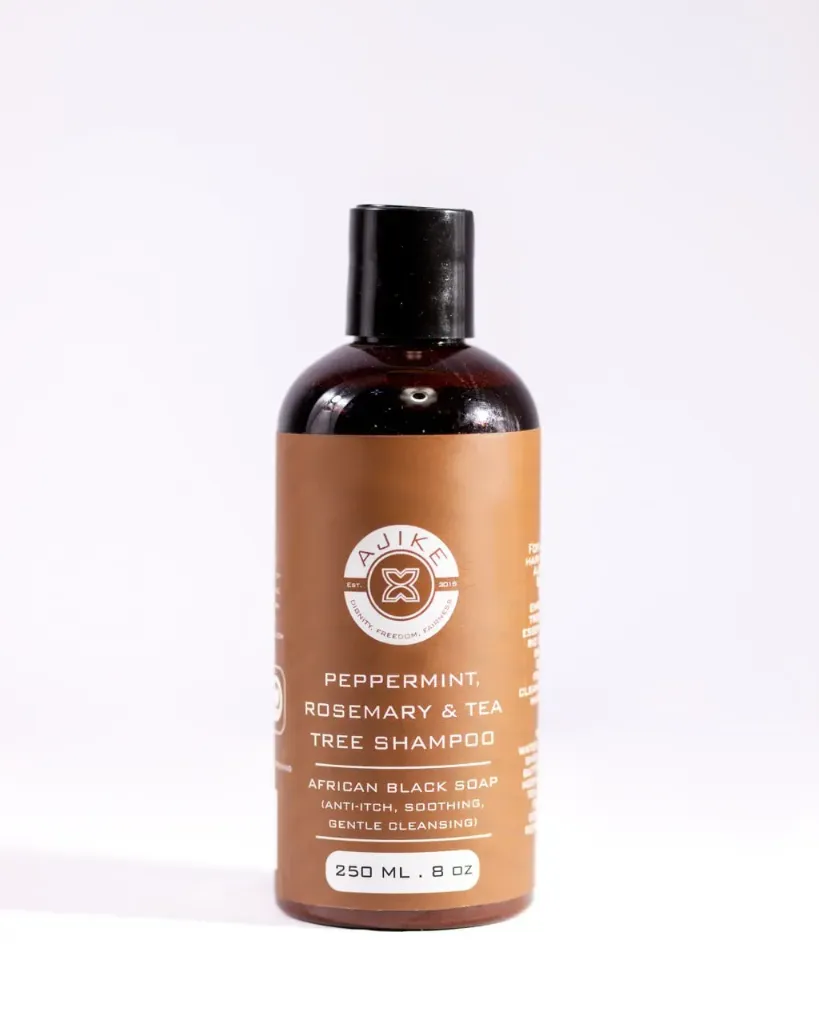
Our peppermint, rosemary and tea tree shampoo is built on an African black soap base, providing the gentle antibacterial and natural cleansing action of cocoa pod ash without synthetic sulfates. The three-oil blend addresses dandruff through tea tree's terpinen-4-ol antifungal action, scalp inflammation through peppermint's menthol compounds, and scalp circulation through rosemary's ursolic acid content. Sulfate-free, fragrance-free (the scent comes from the functional essential oils themselves), and suitable for all natural hair types.
Refresh & Cleanse Your Scalp Naturally
Peppermint, Rosemary & Tea Tree African Black Soap Shampoo
Sulfate-free African black soap shampoo infused with peppermint, rosemary and tea tree essential oils to gently cleanse the scalp while helping reduce dandruff and itchiness.
Refresh & Cleanse Your Scalp Naturally
Peppermint, Rosemary & Tea Tree African Black Soap Shampoo
Sulfate-free African black soap shampoo infused with peppermint, rosemary and tea tree essential oils to gently cleanse the scalp while helping reduce dandruff and itchiness.
Ajike Marula and Baobab Anti-Breakage Shampoo
Our anti-breakage shampoo integrates marula and baobab oil into the shampoo formula itself, which means the cleansing step also delivers conditioning to the hair shaft rather than stripping it. The result is hair that is significantly less tangled and more manageable after shampooing than with a standard cleanse-only formula. Sulfate-free, formulated specifically for natural and textured hair prone to breakage.
Stronger Hair With Every Wash
Marula & Baobab Anti-Breakage Shampoo
A sulfate-free shampoo enriched with marula and baobab oils to gently cleanse while helping reduce breakage, improve manageability and support healthier-looking curls.
View Product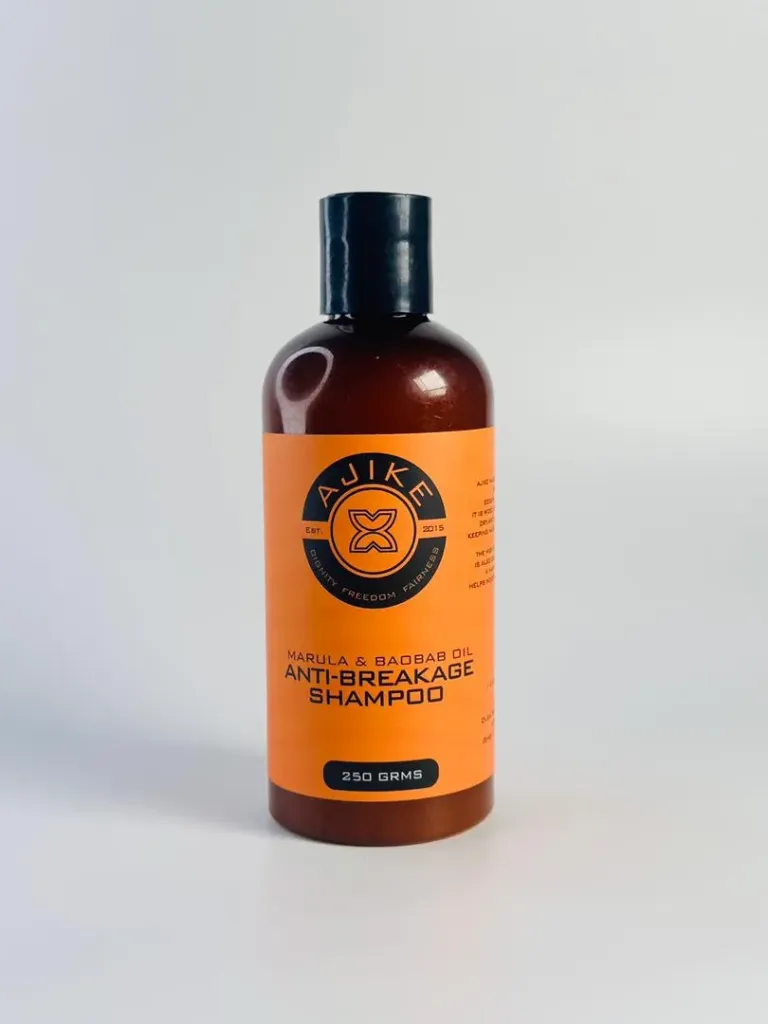
Stronger Hair With Every Wash
Marula & Baobab Anti-Breakage Shampoo
A sulfate-free shampoo enriched with marula and baobab oils to gently cleanse while helping reduce breakage, improve manageability and support healthier-looking curls.
View Product
Ajike Marula and Baobab Anti-Breakage Conditioner and Leave-In
Our conditioner provides the main post-shampoo conditioning and detangling step. The marula oil content provides intensive internal conditioning through its high oleic acid penetration. The baobab oil contributes vitamins A, D, E, and F alongside its linoleic-rich fatty acid profile. Together they produce a deeply conditioning treatment that significantly reduces detangling time for 4B and 4C hair. Our leave-in extends this conditioning through the styling process and provides the foundation moisture layer for the LOC or LCO method.
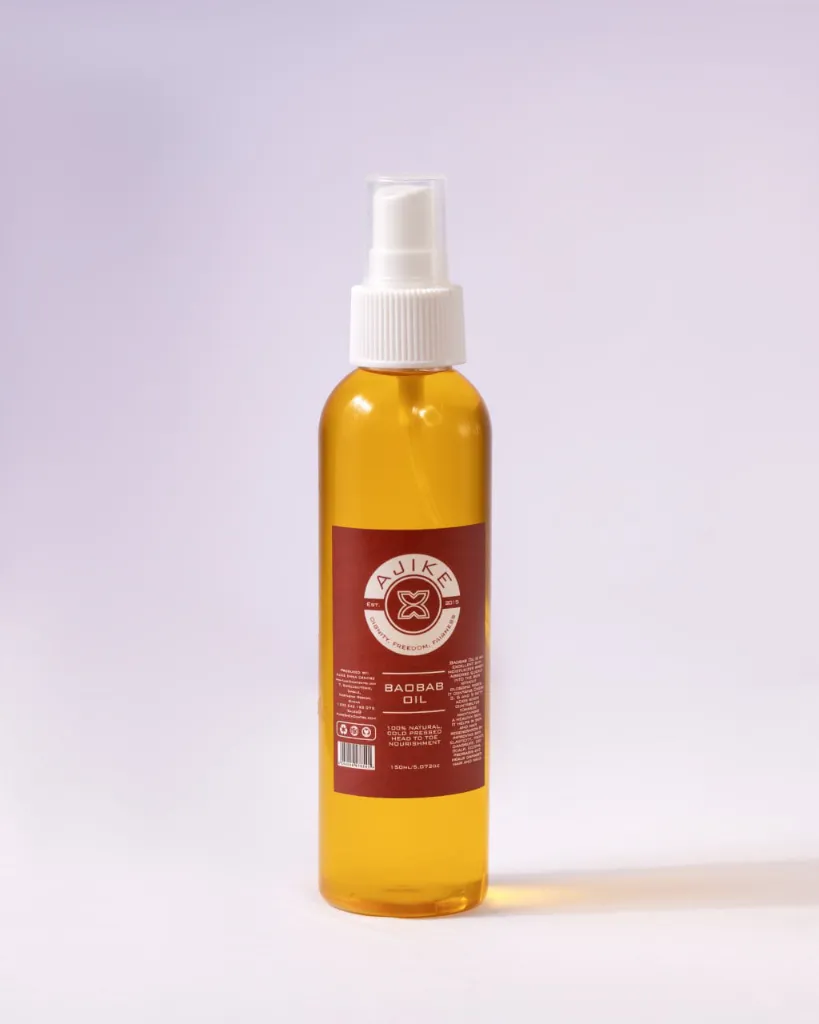
Ajike Hair and Scalp Luxury Oil: Baobab-Based Treatment Blend
Our Hair and Scalp Luxury Oil uses baobab oil as the base, blended with additional botanical oils and a rosemary-forward essential oil complex. It is formulated for direct scalp application with massage, as a between-wash scalp treatment, and as an additional nourishing layer in a natural hair routine. The rosemary component specifically targets scalp circulation and growth environment support.
Nourish Your Hair From Root To Tip
Hair & Scalp Luxury Oil
A luxurious baobab-based botanical oil blend designed to moisturise the scalp, support healthy-looking hair and add lasting softness and shine between wash days.
✓ Rosemary Botanical Blend
✓ Scalp Massage Oil
✓ Suitable For All Hair Types
Nourish Your Hair From Root To Tip
Hair & Scalp Luxury Oil
A luxurious baobab-based botanical oil blend designed to moisturise the scalp, support healthy-looking hair and add lasting softness and shine between wash days.
✓ Rosemary Botanical Blend
✓ Scalp Massage Oil
✓ Suitable For All Hair Types
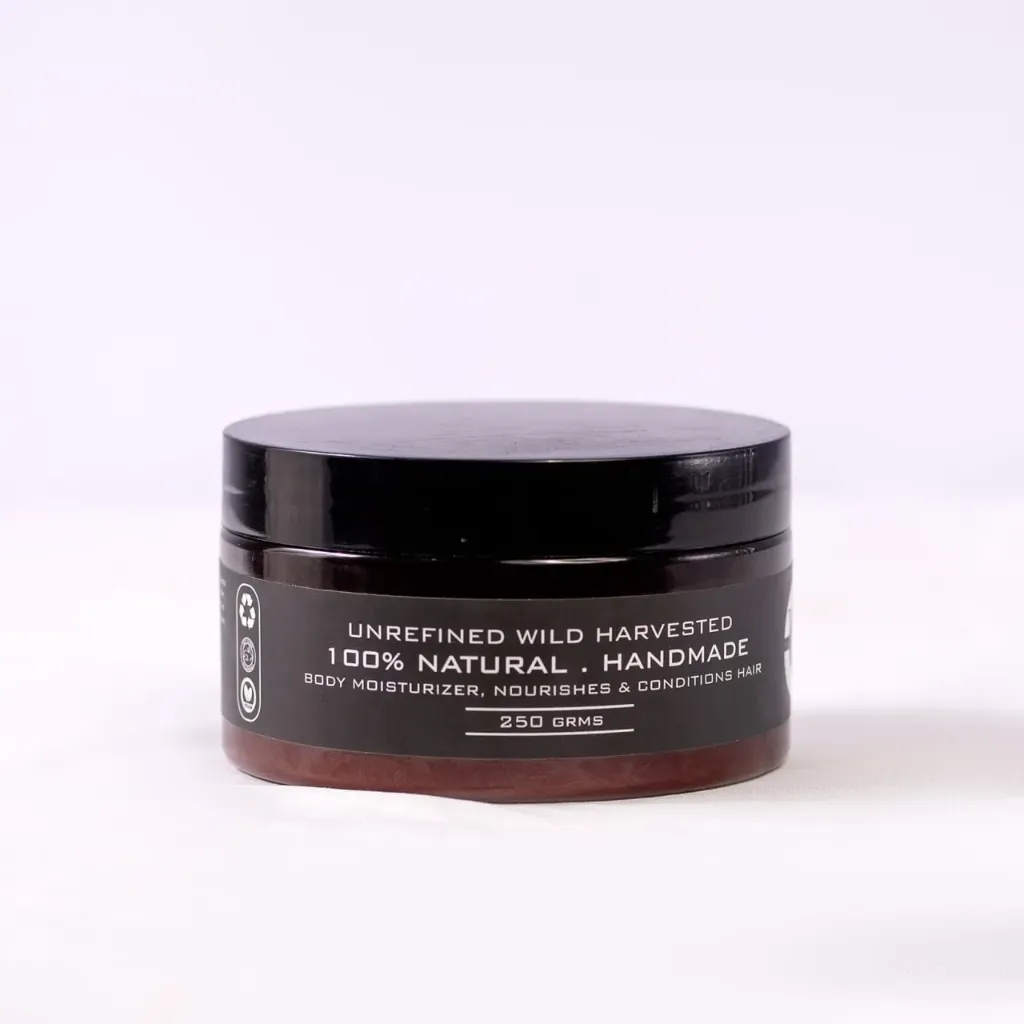
Ajike Pure Baobab Oil and Raw Shea Butter: The Core Moisturising Duo
These two products are the foundation of the Ajike natural hair routine. Ajike Pure Baobab Oil, used as a pre-shampoo treatment and as the oil step in LOC or LCO, delivers the lightweight penetrating conditioning and multi-vitamin nourishment that natural hair needs. Ajike Raw Unrefined Shea Butter, used as the final moisture sealing step for 4B and 4C hair that needs intensive locking, provides the most effective single-ingredient moisture barrier available for coily and kinky hair.
Hydrate First. Seal Moisture Last.
Pure Baobab Oil
Lightweight cold-pressed oil for the LOC/LCO method, daily scalp massage and pre-shampoo nourishment.
View Product
LOCK IN
MOISTURE
Raw Unrefined Shea Butter
Pure shea butter that seals moisture into 4B & 4C hair and works perfectly as the final LOC routine step.
View ProductHydrate First. Seal Moisture Last.
Pure Baobab Oil
Lightweight cold-pressed oil for the LOC/LCO method, daily scalp massage and pre-shampoo nourishment.
View Product
LOCK IN
MOISTURE
Raw Unrefined Shea Butter
Pure shea butter that seals moisture into 4B & 4C hair and works perfectly as the final LOC routine step.
View ProductHow to Build a Complete Ajike Natural Hair Routine
A complete Ajike routine covers all four elements: cleanse (African Black Soap Shampoo or Marula Baobab Shampoo), moisture (Marula Baobab Leave-In on wet hair), seal (Pure Baobab Oil then Shea Butter for intensive seal), and scalp care (Hair and Scalp Luxury Oil with massage between washes). Every product connects to the next. The shampoo prepares the scalp. The conditioner and leave-in build the moisture foundation. The oils seal and protect. The scalp oil maintains the growth environment between wash days.
Frequently Asked Questions
The most effective African botanical ingredients for natural and textured hair are raw unrefined shea butter (for moisture sealing and conditioning), baobab oil (for lightweight penetrating nourishment with vitamins A, D, E, and F), African black soap (for gentle sulfate-free scalp cleansing), neem oil (for targeted scalp antibacterial support), rosemary (for scalp circulation), hibiscus (for slip and detangling), and moringa oil (for intensive conditioning of dry and damaged hair).
Weekly to bi-weekly washing is appropriate for most natural hair types. Very active lifestyles, oily scalps, or heavy product use may require more frequent washing. Protective styles and hair that responds well to going longer between washes can extend to every 2 weeks. The scalp's comfort and the hair's cleanliness are the best guides, not a fixed schedule.
LOC stands for Liquid, Oil, Cream: apply a water or water-based product first, then oil to seal, then cream over the top. LCO reverses the oil and cream steps. For high porosity hair, LOC tends to work better because sealing with oil immediately traps moisture before it evaporates. For low porosity hair, LCO often works better because the cream goes directly over the water without an oil barrier blocking it, and the oil goes on last to seal everything. Try both and monitor which leaves your hair more moisturised after 24 hours.
Yes, with correct technique. The keys are: use less than you think you need (a very small amount melted between palms), apply to slightly damp rather than dry hair, and ensure it is raw unrefined shea butter without additives. Refined shea butter with additional emulsifiers and additives is more prone to causing buildup than pure raw shea. Used correctly, raw shea butter provides intensive moisture sealing without accumulation.
🔗 Read Also: Full guide: How to Moisturise Natural Hair Without Product Buildup → https://www.ajikeghana.com/blog/how-to-moisturise-natural-hair-without-buildup
Yes. African black soap shampoo is gentler on colour-treated hair than sulfate-based shampoos, which are particularly damaging to colour because they open the cuticle aggressively and allow colour molecules to escape. A sulfate-free African black soap shampoo cleanses effectively while being gentler on the cuticle. Follow with a protein-enriched deep conditioner to maintain the structural integrity of the colour-treated hair shaft.
The stretch test: take a wet hair strand and stretch it gently. If it stretches significantly before breaking, the hair has reasonable elasticity but may need moisture if it snaps back quickly. If it stretches barely at all and snaps immediately, the hair is likely protein-deficient or severely dry. If it stretches and does not snap back at all, or feels gummy and limp, there is protein overload or excess softness. Healthy hair with good protein-moisture balance stretches 20 to 30 percent of its length before returning to its original shape.
Our latest content
Check out what's new in our company !