
Start writing here...
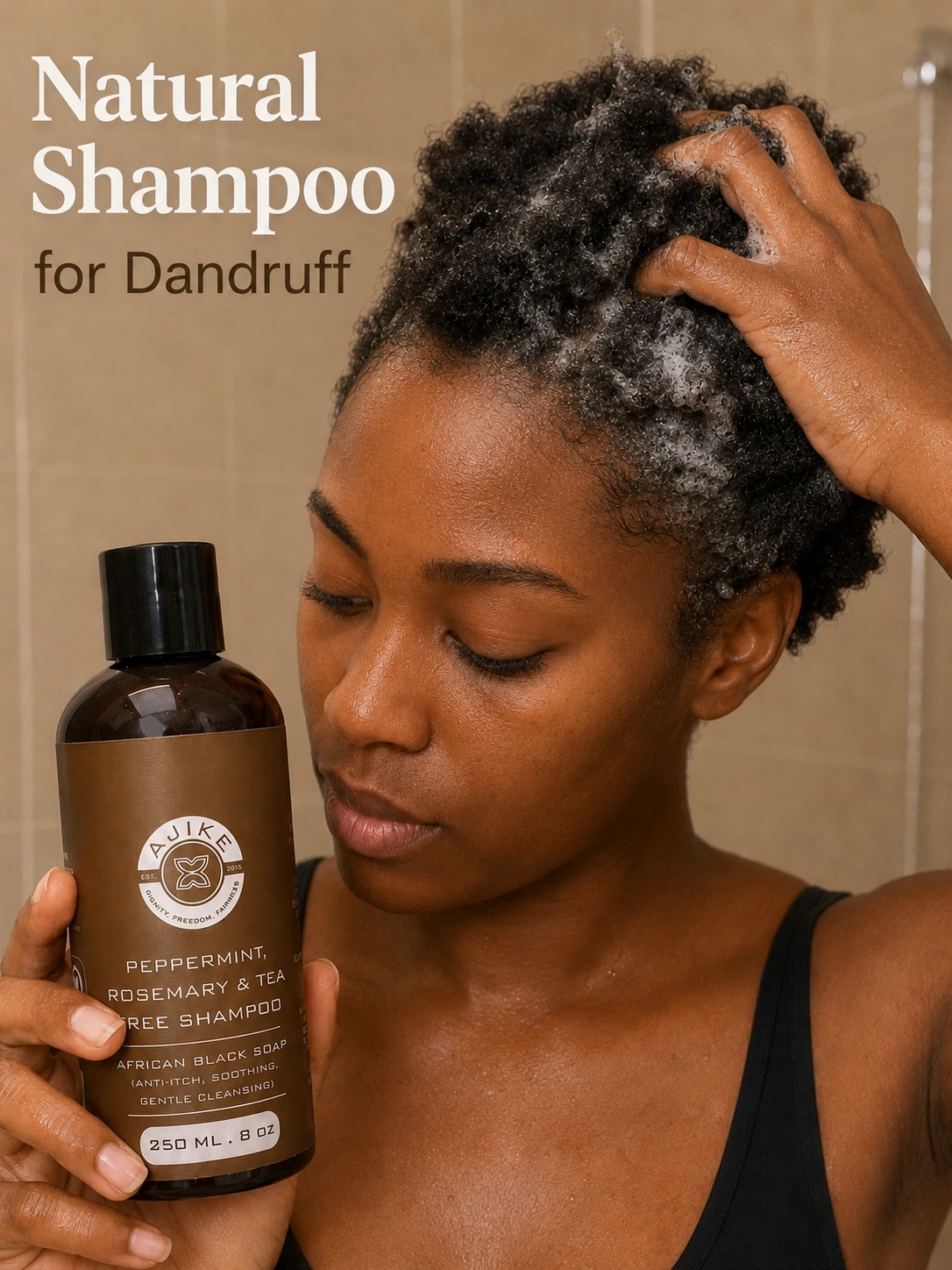
Dandruff is one of the most common scalp conditions in the world, affecting approximately half of the adult population at some point in their lives. It is also one of the most misunderstood, which is why so many people cycle through anti-dandruff shampoos without ever actually resolving the underlying problem.
The conventional anti-dandruff shampoo market is built around a small number of active pharmaceutical ingredients that suppress Malassezia yeast without addressing why it is overgrowing in the first place. The result is a pattern of temporary suppression followed by return, leading many people to use medicated shampoos indefinitely.
There is a more sustainable approach. This guide covers what dandruff actually is, the specific natural ingredients that address it at the fungal level, how to use them correctly, and how to build a routine that produces lasting results rather than temporary suppression.
Scalp itch after washing? Read: Why Is My Scalp Itchy After Washing Hair? Causes and Natural Solutions →
What Dandruff Actually Is and Why It Keeps Coming Back
The Malassezia Connection: Why Dandruff Is a Fungal Issue
Dandruff is primarily a fungal condition driven by the overgrowth of Malassezia globosa, a lipophilic yeast that lives naturally on every human scalp. Malassezia is a permanent resident of the scalp microbiome and is not pathogenic in normal quantities. The problem begins when it overgrows beyond the microbiome's normal balance.
Malassezia feeds on the lipids in scalp sebum. In the process of metabolising these lipids, it produces oleic acid as a metabolic byproduct. Oleic acid, at the concentrations produced by an overgrown Malassezia population, penetrates the scalp's stratum corneum and triggers an inflammatory response that accelerates skin cell turnover. The accelerated turnover produces the visible flaking of dandruff: skin cells being shed in clusters before they have fully dried and separated.
Why Dandruff Is Not Caused by a Dirty Scalp
This is the most persistent and most damaging myth about dandruff. A dirty scalp does not cause dandruff. In fact, the relationship between sebum and Malassezia means that sebum-rich scalps, not unwashed scalps, are more likely to experience dandruff because Malassezia has more lipid substrate to feed on. People with naturally high sebum production are at higher risk of dandruff than those with naturally dry scalps, regardless of how frequently they wash.
The shame and stigma associated with dandruff, driven by the dirty scalp myth, often lead to the single most counterproductive response to dandruff: washing more frequently with harsh shampoos. This strips the acid mantle, disrupts the microbiome, and ultimately creates conditions that worsen Malassezia overgrowth rather than addressing it.
The Sebum and Malassezia Feedback Loop
Dandruff tends to persist and worsen through a self-reinforcing cycle. Malassezia overgrowth triggers inflammation and accelerated skin cell shedding. The inflammation disrupts the scalp's acid mantle and microbial balance, creating conditions that favour further Malassezia growth. The scalp, responding to the disruption, may increase sebum production as a protective response, providing more food for Malassezia. The cycle accelerates.
Breaking this cycle requires addressing both the Malassezia population directly (through antifungal treatment) and the scalp environment that is allowing it to overgrow (by restoring the acid mantle, balancing sebum, and supporting the healthy microbiome that keeps Malassezia in check).
Why Most Anti-Dandruff Shampoos Only Suppress Rather Than Address the Cause
Pharmaceutical anti-dandruff shampoos containing zinc pyrithione, selenium sulfide, or ketoconazole are antifungal agents that reduce the Malassezia population when applied. They work, in the sense that they reduce the immediate flaking and itch. But they do not address the scalp environment that allowed Malassezia to overgrow in the first place. When treatment stops, the conditions for overgrowth remain, and the Malassezia population rebounds.
This is why most people who use medicated anti-dandruff shampoos find they need to use them indefinitely, alternating between products to prevent the yeast from developing resistance, without ever achieving a sustained period of dandruff-free scalp. Sustainable dandruff management requires addressing the scalp environment alongside the Malassezia population.
The Difference Between Dandruff and Dry Scalp on Natural Hair
On natural and textured hair, the distinction between dandruff and dry scalp is particularly important because the two conditions look similar but require opposite approaches. Dandruff produces larger, sometimes oily or yellowish flakes on a scalp that is sebum-rich. Dry scalp produces smaller, white, powdery flakes on a scalp that feels tight and dry. Treating dry scalp with antifungal shampoos strips it further. Treating dandruff with rich moisturisers provides more sebum substrate for Malassezia.
For natural hair specifically, the reduced sebum distribution from scalp to strand tip means that even a scalp with normal or high sebum production can coexist with dry hair and dry ends. The dandruff-prone scalp and the dry hair length are not contradictory, they reflect the structural reality of how natural hair manages its sebum.
Why Chemical Anti-Dandruff Shampoos Are a Problem for Natural Hair
Zinc Pyrithione, Selenium Sulfide and Ketoconazole: What They Do
Zinc pyrithione, the most widely used active in over-the-counter anti-dandruff shampoos, works by disrupting the membrane function and metabolic processes of Malassezia cells. It is broad-spectrum and effective but does not distinguish between Malassezia and the beneficial microorganisms in the healthy scalp microbiome.
Selenium sulfide works through a similar mechanism at higher activity levels and is found in stronger medicated formulas. Ketoconazole is a prescription-grade antifungal that inhibits ergosterol synthesis in fungal cell membranes, making it the most targeted of the three but also the most disruptive to the broader scalp microbiome when used long-term.
Why These Active Ingredients Cause Dryness on Natural and Textured Hair
The active antifungal compounds in medicated shampoos, particularly selenium sulfide, can be drying to the hair shaft itself. This is less noticeable for straight and loosely wavy hair, which has access to regular sebum coating. For natural and textured hair, where the coil structure already limits sebum distribution, the additional drying effect of antifungal actives on hair that is washing through the length leaves the hair significantly drier after each medicated wash.
The situation is compounded by the sulfate-based shampoo bases in which these actives are typically delivered. The surfactant system necessary to lather and rinse a medicated shampoo is almost always sulfate-based, creating a double stripping effect on natural hair: surfactant stripping of scalp oils combined with antifungal compound drying of the hair shaft.
Sulfates in Anti-Dandruff Shampoos and the Itch-Rewash Cycle
The itch-rewash cycle is a pattern particularly common in natural hair dandruff management: harsh antifungal shampoo causes scalp stripping and dryness, the stripped scalp becomes more reactive and itchy, the itch triggers rewashing with the same harsh shampoo, which causes more stripping, which produces more itch. The dandruff may temporarily reduce from the antifungal action, but the scalp's overall health deteriorates with each cycle.
For natural and textured hair, which is already more vulnerable to moisture loss and scalp disruption than straight hair, this cycle can produce a situation where the scalp is simultaneously over-treated with antifungals and chronically disrupted by harsh surfactants, producing a scalp that is neither healthy nor dandruff-free.
How Stripping Shampoos Create the Conditions That Worsen Dandruff
This is the key paradox of conventional anti-dandruff treatment. The harsh surfactant systems in most medicated shampoos strip the acid mantle. The acid mantle, with its pH of 4.5 to 5.5, is one of the primary inhibitors of Malassezia overgrowth: the yeast prefers a less acidic environment. When the acid mantle is repeatedly disrupted by alkaline surfactants, the scalp pH rises, creating conditions more favourable for Malassezia.
The scalp responds to the stripping by increasing sebum production as a protective response, providing more Malassezia food. The combined effect of elevated pH, disrupted microbiome, and increased sebum creates a more dandruff-permissive environment than existed before treatment began.
Why a Gentler Approach Produces More Sustainable Results
A gentler approach to dandruff management, using antifungal botanicals delivered in a sulfate-free base that does not disrupt the acid mantle, addresses the Malassezia population while supporting rather than undermining the scalp's own protective mechanisms. The dandruff reduction may be somewhat slower to appear than with pharmaceutical actives, but the scalp environment improves alongside the reduction in Malassezia, producing a more sustained result.
Tea Tree Oil for Dandruff: The Science Behind It
What Tea Tree Oil Is and Where It Comes From
Tea tree oil is an essential oil distilled from the leaves of Melaleuca alternifolia, a tree native to Australia. It has been used in traditional Aboriginal medicine for thousands of years and has been the subject of extensive modern pharmacological research since the early 20th century. Its primary active compound, terpinen-4-ol, is responsible for most of its documented antimicrobial and antifungal properties.
Terpinen-4-ol: The Active Compound That Addresses Malassezia
Terpinen-4-ol is a monoterpene alcohol that constitutes approximately 30 to 48 percent of high-quality tea tree oil. Its antifungal mechanism involves disrupting the cell membrane of fungal organisms, increasing membrane permeability and ultimately causing cell death. Against Malassezia globosa specifically, terpinen-4-ol has been shown in vitro studies to have meaningful antifungal activity at concentrations achievable in a shampoo formula.
Terpinen-4-ol also has anti-inflammatory properties that are relevant to dandruff management. By suppressing the production of pro-inflammatory mediators from immune cells, it reduces the inflammatory component of dandruff that drives the accelerated skin cell turnover producing the flaking.
How Tea Tree Oil Compares to Pharmaceutical Antifungals for Scalp Use
Tea tree oil at 5 percent concentration was compared directly to 2.5 percent selenium sulfide in a clinical study and produced equivalent reductions in scalp yeast levels over 4 weeks. A study published in the Journal of the American Academy of Dermatology found that a 5 percent tea tree oil shampoo reduced dandruff severity by 41 percent compared to 11 percent in the placebo group after 4 weeks of use.
This does not mean tea tree oil is equivalent to pharmaceutical-grade antifungals in all applications. Ketoconazole at clinical concentrations is more potent against resistant fungal infections. But for the management of standard dandruff, 5 percent tea tree oil in an appropriate shampoo base produces clinically meaningful results with a significantly better safety and tolerability profile than medicated alternatives, particularly for natural hair.
The Concentration That Is Effective vs the Concentration That Irritates
Tea tree oil's antifungal benefits are concentration-dependent. Studies demonstrating efficacy used concentrations of 2 to 5 percent in the finished formula. At these concentrations, tea tree oil is well-tolerated by most scalps. At higher concentrations, particularly the undiluted oil, tea tree oil can cause significant scalp irritation, sensitisation, and contact dermatitis.
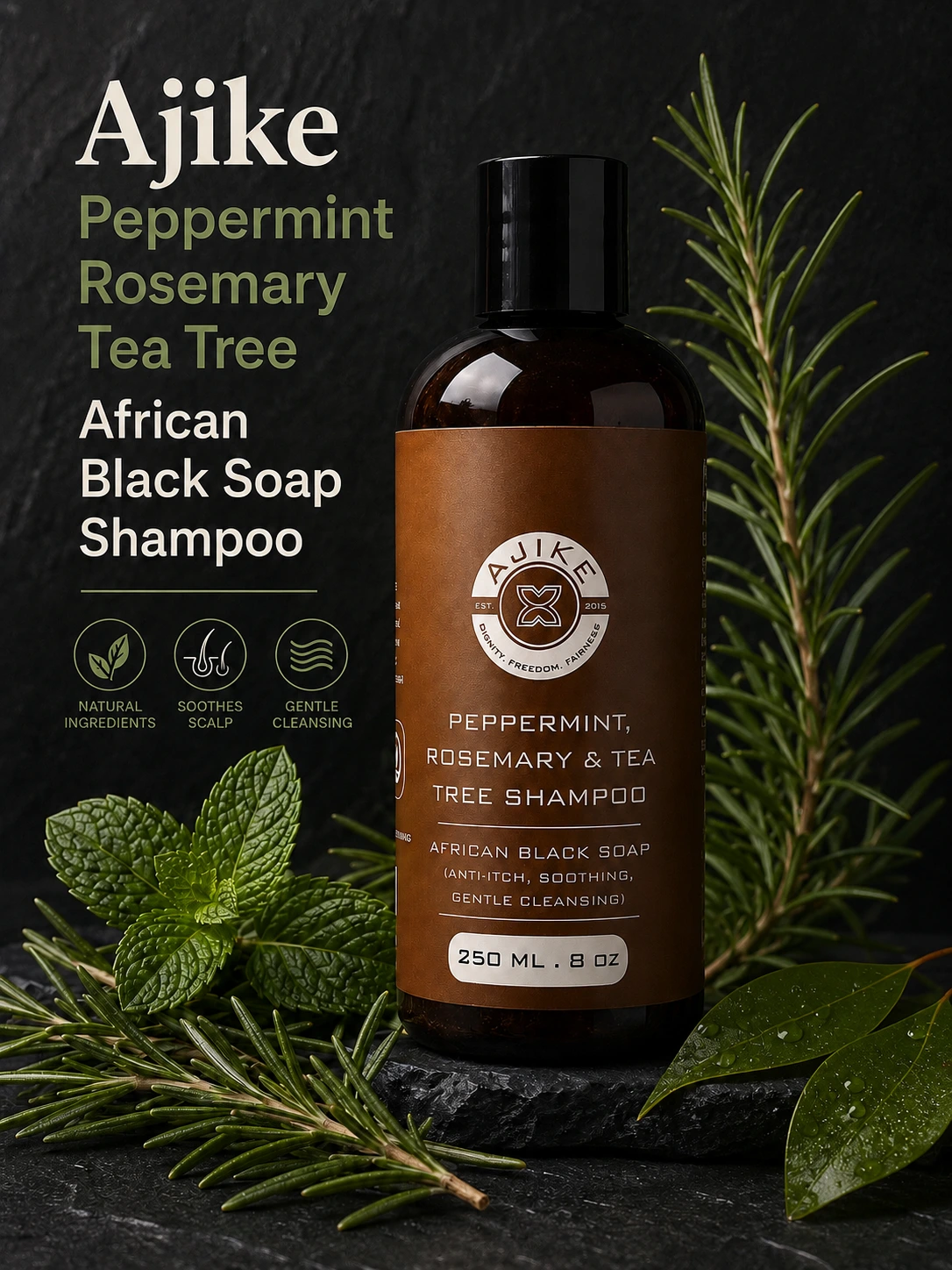
This is why using neat (undiluted) tea tree oil directly on the scalp as a dandruff treatment is not appropriate. The correct approach is to use tea tree oil in a formulated shampoo at a proven effective concentration, or to dilute it appropriately in a carrier if making a custom treatment. The Ajike Peppermint, Rosemary and Tea Tree Shampoo uses tea tree oil at a concentration calibrated for both efficacy and tolerability.
Why Tea Tree Oil Works Better in a Shampoo Than as a Standalone Treatment
The leave-in contact time of a standalone scalp application is longer than that of a shampoo, but the distribution and penetration of a surfactant-based shampoo is superior. Shampoo, applied as a lather directly to the scalp, distributes the active compound evenly across the scalp surface including between the hairs and into the scalp folds where Malassezia concentrates. A standalone oil applied to the scalp sits on the surface and is less evenly distributed.
Additionally, the surfactant action of the shampoo base removes the scalp sebum that provides Malassezia's food source, creating two antifungal effects simultaneously: the direct antimicrobial action of terpinen-4-ol and the reduced substrate availability from effective sebum removal.
Who Should Use Tea Tree Oil with Caution
Tea tree oil at appropriate shampoo concentrations is safe for most people. Specific cautions: those with known tea tree oil sensitivity or contact allergy should avoid it. Some individuals with lavender or other Lamiaceae family plant allergies may cross-react with tea tree. People using prescription-strength antifungal medications should discuss adding tea tree oil products with their healthcare provider to avoid potential interactions.
Patch test any new tea tree product on the inner arm before first scalp use. For natural hair wearers with a history of reactive scalp conditions, introduce the product gradually rather than using it daily from the first wash.
Peppermint Oil for Dandruff: Beyond the Cooling Sensation
What Makes Peppermint Oil More Than Just a Scalp Tingle
Peppermint oil, distilled from Mentha piperita, is often perceived primarily as a sensory ingredient: the cooling tingle that signals to the user that the product is working. The cooling sensation is real, but it is a side effect of the pharmacological activity rather than its primary purpose. The menthol content of peppermint oil provides genuine anti-inflammatory and antimicrobial benefits beyond the sensory experience.
Menthol and Its Anti-Inflammatory Effect on Irritated Scalp Skin
Menthol activates the TRPM8 receptor, the cold-sensing receptor in scalp nerve endings, which is responsible for the cooling sensation. But beyond the sensory pathway, menthol also modulates inflammatory signalling, reducing the production of pro-inflammatory cytokines and prostaglandins that drive scalp inflammation in dandruff-affected skin.
For dandruff, where the oleic acid produced by Malassezia triggers an inflammatory cascade that drives the accelerated skin cell turnover, reducing this inflammatory signalling helps moderate the primary mechanism producing the flaking. Menthol's anti-inflammatory action works alongside tea tree oil's direct antifungal action to address dandruff from two directions simultaneously.
How Peppermint Oil Supports Scalp Circulation
Peppermint oil has documented vasodilatory effects on the small blood vessels of the scalp, increasing local blood flow in the treated area. Improved scalp circulation supports the follicle environment by increasing nutrient delivery to the dermal papilla and by supporting the scalp's immune response to microbial challenges. A scalp with better circulation is better equipped to regulate its own Malassezia population through its normal immune defence mechanisms.
For natural hair wearers focused on scalp health and growth support alongside dandruff management, the circulation benefit of peppermint is an additional reason to choose a peppermint-containing shampoo over alternatives that provide only antifungal action.
The Antibacterial Properties of Peppermint That Complement Tea Tree
Peppermint oil has documented antibacterial activity against several bacterial species that colonise the scalp environment, including Staphylococcus epidermidis and Staphylococcus aureus. For scalp conditions where bacterial colonisation contributes alongside Malassezia overgrowth, particularly seborrhoeic dermatitis which often has both fungal and bacterial components, peppermint's antibacterial action provides a complementary layer of microbial management to tea tree's primary antifungal focus.
Why Peppermint and Tea Tree Work Better Together Than Alone
The combination of peppermint and tea tree in a single shampoo formula provides broader antimicrobial coverage than either ingredient alone. Tea tree's terpinen-4-ol addresses Malassezia at the fungal cell membrane level. Peppermint's menthol and other phenolic compounds address both bacterial colonisation and the inflammatory response that drives flaking. Where tea tree is most active, peppermint provides supporting anti-inflammatory action. Where peppermint addresses bacteria, tea tree adds antifungal coverage.
This synergy is part of the rationale for combining multiple botanicals in a single antidandruff formula rather than using any single ingredient at maximum concentration. Lower concentrations of multiple active botanicals can provide broader and more effective coverage than a higher concentration of a single active.
How Long Before You Feel and See a Difference
The cooling and anti-inflammatory effects of peppermint are immediate from the first application. Most users notice scalp itch relief within minutes of first use. Reduction in flaking, which depends on the terpinen-4-ol antifungal action reducing the Malassezia population, typically becomes visible within 2 to 4 weeks of twice-weekly use. Full dandruff control, where the flaking has reduced to minimal or absent levels, typically takes 4 to 6 weeks of consistent use. Results may vary depending on skin type.
Rosemary for Dandruff and Scalp Health
Rosemary's Documented Scalp Benefits Beyond Hair Growth
Rosemary (Rosmarinus officinalis, now reclassified as Salvia rosmarinus) is most widely known in the natural hair community for its documented effects on scalp circulation and hair growth, following the study comparing rosemary oil to 2 percent minoxidil. But rosemary's scalp benefits extend beyond the growth domain into active antimicrobial and anti-inflammatory properties that are directly relevant to dandruff management.
Ursolic Acid and Carnosic Acid: The Anti-Inflammatory Compounds in Rosemary
Ursolic acid and carnosic acid are the primary bioactive compounds in rosemary extract responsible for its anti-inflammatory activity. Ursolic acid inhibits the production of pro-inflammatory mediators including leukotrienes and prostaglandins, reducing the inflammatory cascade that Malassezia-produced oleic acid triggers in the scalp. Carnosic acid is a potent antioxidant that reduces oxidative stress in scalp tissue, which is a secondary driver of inflammation in dandruff-affected skin.
Together, these compounds provide a meaningful reduction in the scalp's inflammatory baseline, which is important for dandruff management because the accelerated skin cell turnover that produces flaking is driven by inflammation. Reducing inflammation reduces turnover rate, which reduces the visible flaking even when some Malassezia is still present.
How Rosemary Addresses the Inflammation That Makes Dandruff Worse
The mechanism by which Malassezia produces dandruff is not direct. The yeast itself does not cause the flaking. Its metabolite, oleic acid, triggers an inflammatory response from the scalp's immune cells, and this inflammatory response drives the accelerated skin cell turnover that produces the flakes. Any ingredient that reduces this inflammatory signal reduces the visible manifestation of dandruff, even without directly killing Malassezia.
Rosemary's ursolic acid and carnosic acid work precisely at this inflammatory level, suppressing the cytokine signals that drive turnover without competing with tea tree oil's direct antifungal action. The combination of direct antifungal (tea tree), anti-inflammatory (rosemary and peppermint), and antimicrobial (peppermint and tea tree) action covers every link in the dandruff chain.
Rosemary and Scalp Circulation: Supporting a Healthier Scalp Environment
The scalp circulation benefit of rosemary, documented in the 2023 study comparing rosemary oil to minoxidil, improves nutrient delivery to the scalp microenvironment and supports the local immune response that helps keep Malassezia populations in check. A well-circulated, nutritionally supported scalp is more resilient to Malassezia overgrowth than a poorly circulated scalp with restricted local immunity.
For natural hair wearers who are managing dandruff while also wanting to support overall scalp health and hair growth, the circulation benefit of rosemary makes it uniquely valuable in a multi-purpose scalp shampoo formula.
Why Rosemary, Tea Tree and Peppermint Together Are More Effective Than Any Single Ingredient
Dandruff is a multi-mechanism condition involving Malassezia overgrowth, inflammatory signalling, accelerated skin cell turnover, and a disrupted scalp microbiome. No single ingredient addresses all of these mechanisms. Tea tree oil addresses Malassezia directly. Peppermint addresses the inflammatory response and bacterial co-colonisation. Rosemary addresses the inflammatory cascade and the scalp environment that allows overgrowth. Together they provide a comprehensive approach.
This is the ingredient logic behind Ajike's Peppermint, Rosemary and Tea Tree formulation: not three ingredients for marketing variety, but three ingredients that each address a different mechanism of dandruff at a clinically meaningful concentration in a base that does not undermine their action.
African Black Soap as a Dandruff Shampoo Base: Why It Works
How the Natural Alkalinity of Cocoa Pod Ash Creates an Inhospitable Environment for Malassezia
Traditional African black soap is made through the saponification of plant oils and fats with ash from burned cocoa pods, plantain skins, or shea tree bark. The ash provides the alkali (primarily potassium carbonate) that drives the saponification reaction. The finished soap has a slightly alkaline pH in its concentrated form, but when diluted and applied to the scalp and rinsed, the brief alkaline exposure creates a temporarily inhospitable environment for Malassezia, which prefers a less acidic but not aggressively alkaline pH range of approximately 5.5 to 8.
This pH disruption during washing, followed by the scalp's return to its natural acidic pH as it recovers, provides a transient antifungal environmental action that complements the direct antifungal action of terpinen-4-ol. The scalp's acid mantle recovery, which occurs within minutes to hours of washing, restores the protective environment that keeps Malassezia in check between washes.
The Antibacterial Properties of African Black Soap That Benefit Dandruff-Prone Scalps
The ash component of African black soap, particularly cocoa pod ash, contains antimicrobial compounds that inhibit bacterial growth on the skin and scalp. For dandruff-prone scalps where Staphylococcus aureus co-colonisation often accompanies and worsens Malassezia overgrowth, this broad-spectrum antibacterial action provides a cleansing environment that addresses both the fungal and bacterial dimensions of the scalp microbiome imbalance.
Why the Sulfate-Free Formula Protects the Scalp Acid Mantle
African black soap produced through traditional saponification does not contain synthetic surfactants and is not formulated with sodium lauryl sulfate or sodium laureth sulfate. The surfactant action comes from the naturally produced soap molecules (potassium salts of fatty acids) formed during saponification. These natural soap surfactants are effective at cleansing the scalp but are significantly less aggressive in their acid mantle disruption than synthetic sulfate surfactants.
For dandruff management, this matters because the acid mantle is one of the scalp's primary defences against Malassezia overgrowth. A shampoo that cleanses effectively while preserving rather than stripping the acid mantle allows the scalp's own antifungal defences to work alongside the active ingredients in the shampoo, rather than undermining them.
How African Black Soap Cleanses the Scalp Without Triggering the Rebound Itch
The rebound itch cycle, where harsh shampoo strips the scalp, the stripped scalp becomes more reactive and itchy, and the itch triggers more washing with the same harsh shampoo, does not develop with African black soap shampoo in the way it does with sulfate-based products. The gentler surfactant system and the natural glycerine retained from saponification provide effective cleansing without the degree of stripping that triggers the compensatory sebum overproduction and acid mantle disruption that underlie rebound itch.
How to Use a Natural Dandruff Shampoo Effectively
Step | What to Do | Why It Matters |
1. Water temperature | Lukewarm, not hot | Hot water increases scalp reactivity and strips more oils |
2. Apply directly | Shampoo to scalp sections, not hair first | Ensures active compounds reach the scalp, not just the hair |
3. Leave-in time | 2 to 3 minutes before rinsing | Terpinen-4-ol needs contact time to work on Malassezia |
4. Rinse | Cool water final rinse | Closes pores, starts acid mantle recovery, reduces reactivity |
5. Frequency | Twice weekly until controlled, then weekly | Regular antifungal contact needed to reduce Malassezia population |
How to Apply Shampoo Directly to the Scalp for Maximum Antifungal Contact
Part the hair in sections and apply the shampoo directly to each exposed scalp section before applying to the hair as a whole. Use the shampoo applicator nozzle or fingertip application to place the shampoo directly on the scalp surface. Work in small circular motions with the fingertip pads to distribute the lather across the full scalp, including the hair-free scalp at the front and nape.
The goal is to maximise direct scalp contact time for the antifungal active compounds. Shampoo applied first to the hair and then worked down to the scalp through manipulation is far less effective for dandruff management than shampoo applied directly to the scalp surface.
Leave-In Time: Why You Cannot Just Rinse Immediately
Terpinen-4-ol's antifungal action requires direct contact time with the Malassezia cells in the scalp's stratum corneum. Rinsing immediately after application limits the contact time to seconds, which may be sufficient for basic cleansing but is not sufficient for meaningful antifungal activity. Leaving the shampoo on the scalp for 2 to 3 minutes before rinsing allows the terpinen-4-ol and menthol to penetrate the surface scalp layer and act on the Malassezia population.
This leave-in period is also when the rosemary's anti-inflammatory compounds have the opportunity to reduce scalp inflammation. Making it a habit to apply the shampoo, set a 2-minute timer, continue with the rest of the shower, and then rinse is the most practical way to ensure consistent leave-in time.
Water Temperature for Dandruff-Prone Scalps
Hot water during hair washing increases scalp blood vessel dilation and pore opening, which increases the scalp's reactivity to both irritants and active ingredients. For a dandruff-prone scalp that is already in an inflamed state, hot water washing intensifies the post-wash itch and reactivity. Lukewarm water throughout the wash, with a cool or cold final rinse, produces the same cleansing result with significantly less scalp disruption.
How Often to Use a Natural Anti-Dandruff Shampoo
For active dandruff that is producing visible flaking and itch: wash twice weekly with the antifungal shampoo. The twice-weekly frequency maintains consistent antifungal pressure on the Malassezia population without over-stripping the scalp. As dandruff improves over 4 to 6 weeks, reduce to once weekly for ongoing management.
For dandruff that has been controlled but tends to recur: weekly use of the antifungal shampoo maintains the scalp environment that prevents Malassezia from rebounding. Many people find that switching to a standard shampoo after dandruff is controlled leads to recurrence within weeks, confirming that ongoing maintenance with the antifungal formula is needed.
What to Do Between Washes to Prevent Dandruff Recurring
Between wash days, Ajike Hair and Scalp Luxury Oil applied to the scalp with massage provides additional support for the scalp environment that resists Malassezia overgrowth. The rosemary component's anti-inflammatory and antimicrobial properties provide some antifungal support between washes. The baobab oil nourishes the scalp skin without providing the heavy lipid substrate that would feed Malassezia.
Avoid applying heavy butters, thick creams, or mineral oil-based products to the scalp between washes, as these provide an additional lipid load that increases Malassezia food availability and can worsen dandruff between wash days.
When to Clarify vs When to Use the Anti-Dandruff Shampoo
The antifungal shampoo should be the primary shampoo for all wash days when dandruff is actively present. A clarifying wash with a more stripping shampoo should be reserved for the occasions when significant product buildup has accumulated, typically 4 to 6 times per year, and followed by careful rehydration of the hair and a scalp oil treatment to restore what the clarifying wash removed.
After a clarifying wash, return to the antifungal shampoo as the primary wash product at the next wash. The clarifying wash removes buildup but also removes some of the antimicrobial lipid environment, so resuming antifungal shampoo use promptly after clarifying is important for preventing Malassezia rebound.
Building a Complete Natural Dandruff Routine
The Scalp Before Washing: Pre-Poo Scalp Treatment
For dandruff specifically, a pre-wash scalp treatment 30 minutes before shampooing can enhance the effectiveness of the antifungal shampoo. Apply a mixture of Ajike Pure Baobab Oil and 2 to 3 drops of pure tea tree oil (well-diluted in the baobab oil) directly to the scalp in sections. Massage gently for 3 to 4 minutes and leave for 30 minutes under a shower cap before shampooing.
This pre-treatment provides an additional direct antifungal application to the scalp before the shampoo, extending the total antifungal contact time per wash session. The baobab oil's light texture does not leave a heavy residue that would interfere with the shampoo's cleansing action.
Wash Day: Shampoo Technique for Dandruff
Apply Ajike Peppermint, Rosemary and Tea Tree Shampoo directly to scalp sections on wet hair. Work in small circular motions across the full scalp. Set a 2-minute timer and allow the shampoo to remain on the scalp before rinsing. Rinse thoroughly with lukewarm water, then do a final cool water rinse. If the scalp still feels itchy or the hair feels like it needs a second cleanse, apply a very small amount to the scalp only and rinse immediately rather than a second full application.
Post-Wash: The Scalp Treatment That Prevents Reoccurrence
Immediately after washing and while the scalp is still clean and damp, apply Ajike Hair and Scalp Luxury Oil to the scalp between hair sections. Massage for 3 to 4 minutes. This is the most receptive moment for scalp oil absorption: the pores are clean and slightly open from the warm water wash. The scalp treatment applied at this moment has better penetration and efficacy than the same treatment applied to an unwashed scalp with sebum and product residue on the surface.
Between Washes: Keeping Malassezia Under Control
Apply Ajike Hair and Scalp Luxury Oil to the scalp on days between washes, focusing on the areas most prone to dandruff. Massage gently for 2 to 3 minutes. Avoid scratching the scalp between washes even when itchy, as scratching disrupts the scalp surface and can introduce bacteria from the fingernails into the scalp microenvironment.
If the scalp becomes significantly itchy between wash days, a diluted apple cider vinegar spray applied to the scalp and left for 2 minutes before rinsing can provide relief by temporarily restoring the acid mantle pH and providing some direct antimicrobial action against Malassezia without requiring a full wash.
Dietary and Lifestyle Factors That Affect Dandruff Severity
Dandruff severity is influenced by systemic factors that affect sebum composition and the scalp immune response. High sugar and refined carbohydrate intake is associated with increased Malassezia activity because sugars affect sebum composition in ways that may favour the yeast. Stress elevates cortisol, which increases sebum production and suppresses local scalp immune responses. Poor sleep reduces the immune function that keeps Malassezia populations in check.
These are not the primary treatment for dandruff, and addressing them alone without antifungal treatment is rarely sufficient. But maintaining a diet with reduced sugar and processed carbohydrates, managing stress levels, and ensuring adequate sleep genuinely contributes to more effective and more lasting dandruff control alongside the topical routine.
Natural Dandruff Treatment for Different Hair Types
Natural Dandruff Shampoo for Natural and Textured Hair
Natural and textured hair needs the antifungal benefits of a dandruff shampoo in a formula that does not devastate the hair's already-limited moisture balance. The Ajike Peppermint, Rosemary and Tea Tree Shampoo addresses this directly: the African black soap base provides effective scalp cleansing without the stripping of sulfate systems, and the shampoo formula does not contain conditioning agents that would build up inside coily and kinky hair.
For wash day with natural hair: use the antifungal shampoo as the primary shampoo, follow with deep conditioning using Ajike Marula and Baobab Anti-Breakage Conditioner to restore moisture after cleansing, then apply leave-in and seal with baobab oil as the LOC method. The antifungal shampoo performs the scalp treatment function and the conditioner restores the hair moisture.
Anti-Dandruff Shampoo for Locs: Residue-Free Is Essential
Residue is the primary shampoo consideration for locs. An antidandruff shampoo that leaves conditioning agents, proteins, or active compound residue inside the compressed loc structure creates buildup that is very difficult to remove and worsens over time. The Ajike Peppermint, Rosemary and Tea Tree Shampoo is appropriate for locs because the African black soap base saponifies and rinses cleanly without leaving depositing agents inside the loc structure.
Apply the shampoo directly to the scalp between the locs. Leave for 2 to 3 minutes. Allow the lather to travel down the length of the locs during rinsing rather than working it through each loc individually. Ensure thorough rinsing and complete drying before covering or tying locs.
Dandruff Shampoo for Dry Hair That Cannot Tolerate Frequent Washing
For hair that dries out significantly with each wash, washing twice weekly for dandruff control is not always practical. A more appropriate approach is to use the antifungal shampoo once weekly for the full antifungal wash routine, and use a co-wash (conditioner-only wash) on the alternate wash day to maintain scalp cleanliness without the more stripping shampoo contact.
Between washes, the scalp tea tree oil treatment applied directly to the scalp, in place of or alongside the Hair and Scalp Luxury Oil, maintains antifungal pressure on the scalp without requiring an additional full wash session.
Dandruff on Oily Scalp: A Different Approach
For oily scalps where sebum overproduction is a significant Malassezia driver, a more frequent washing schedule (twice weekly) is appropriate and less damaging to the scalp than it would be for a dry scalp, because the sebum recovery is faster. The scalp treatment between washes should focus on light, non-sebum-adding products: the Hair and Scalp Luxury Oil in very small amounts applied with scalp massage, without additional butters or heavy oils that add to the sebum load.
When Natural Dandruff Treatments Are Not Enough
See a Doctor If: Consult a dermatologist if: dandruff does not improve after 6 to 8 weeks of consistent natural treatment, the condition involves thick plaques, widespread inflammation, significant hair loss, or spreading beyond the scalp to the face or chest.
Signs Your Dandruff Is Seborrhoeic Dermatitis Rather Than Simple Dandruff
Seborrhoeic dermatitis is the more severe form of the Malassezia-driven spectrum, involving a more pronounced inflammatory component and typically affecting multiple sebaceous gland-rich areas simultaneously. Where simple dandruff affects primarily the scalp, seborrhoeic dermatitis often also involves the eyebrows, the nasolabial folds beside the nose, the external ear canal, and sometimes the chest.
The scalp manifestation of seborrhoeic dermatitis is more severe than simple dandruff: thicker, more adherent scale, more intense itch, more visible redness and inflammation beneath the flaking. It follows a chronic relapsing pattern and is more resistant to management than simple dandruff, often requiring pharmaceutical intervention alongside natural management.
When Scalp Psoriasis Mimics Dandruff
Scalp psoriasis produces well-defined plaques of thick, silvery-white scale overlying red, inflamed scalp skin. Unlike dandruff, which tends to be diffuse, psoriasis plaques have sharp, well-defined edges and often extend slightly beyond the hairline onto the forehead, behind the ears, or at the nape. The scale is drier and thicker than dandruff flakes. Psoriasis does not respond to antifungal treatment because it is not a fungal condition.
If your scalp condition has these characteristics, particularly the well-defined plaque edges, the extension beyond the hairline, or the presence of psoriasis elsewhere on the body (elbows, knees, lower back), a dermatologist assessment rather than a natural dandruff routine is the appropriate next step.
Signs of Scalp Infection That Need Medical Attention
Bacterial scalp infection produces localised areas of significant tenderness, warmth, and sometimes pus-filled bumps (folliculitis) that are painful to touch. Fungal scalp infections beyond simple Malassezia overgrowth, including tinea capitis (scalp ringworm), produce circular areas of hair loss with scaling and require prescription antifungal medication rather than topical management. Neither of these conditions is addressed by antidandruff shampoo alone.
How to Use Natural and Medical Approaches Together
When prescribed pharmaceutical antifungal treatment (ketoconazole shampoo, oral antifungals) or corticosteroid scalp treatments for seborrhoeic dermatitis, natural approaches can be used as complementary maintenance tools. The antifungal shampoo can be alternated with the prescribed treatment rather than used as a replacement for it, reducing the total pharmaceutical exposure while maintaining consistent antifungal pressure on the scalp.
Always discuss adding any topical treatment, including natural products, with the prescribing healthcare provider when using prescription scalp medications.
Ajike Peppermint, Rosemary and Tea Tree Shampoo: The Natural Dandruff Solution
How This Formulation Addresses Dandruff at Every Level
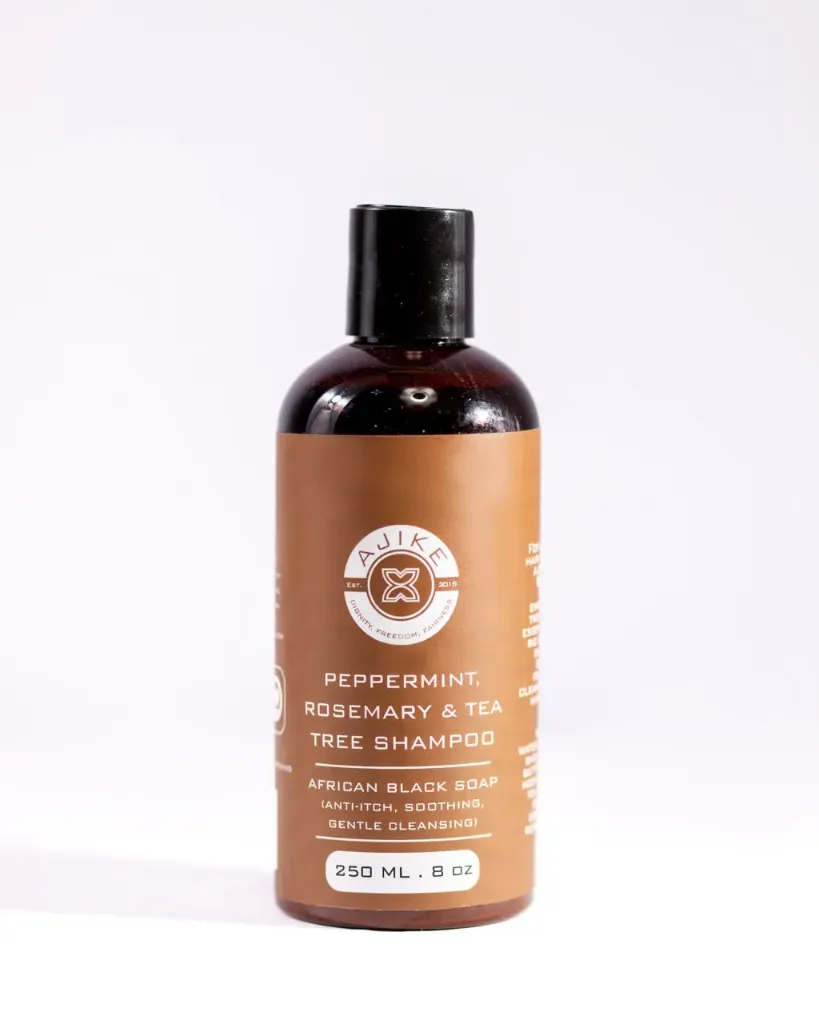
Ajike Peppermint, Rosemary and Tea Tree African Black Soap Shampoo is designed to address every mechanism of dandruff simultaneously. The tea tree provides direct antifungal action against Malassezia through terpinen-4-ol. The peppermint provides anti-inflammatory relief of the scalp inflammation that drives flaking, antibacterial support against bacterial co-colonisers, and scalp circulation benefit. The rosemary provides additional anti-inflammatory action through ursolic acid and carnosic acid, and scalp circulation support through its documented vasodilatory effects.
The African black soap base provides effective sulfate-free cleansing that removes scalp sebum (reducing Malassezia food substrate), temporarily disrupts the Malassezia-preferred pH range during washing, and does not leave depositing residue that would undermine the shampoo's antifungal effectiveness.
African Black Soap Base: Why the Foundation Matters
The choice of shampoo base is as important as the active ingredients for natural hair with dandruff. A base that strips the scalp's acid mantle undermines the scalp's own defences against Malassezia, even when the active botanical ingredients are providing antifungal action. Our African black soap base cleanses effectively without the degree of acid mantle disruption that sulfate systems cause, allowing the scalp's natural antifungal defences to work alongside the active botanical ingredients rather than being undermined by the shampoo delivery vehicle.
The Three-Oil Blend: Peppermint, Rosemary and Tea Tree Working Together
Each oil in the blend is present at a concentration calibrated for functional benefit rather than fragrance. Tea tree at approximately 5 percent for meaningful terpinen-4-ol antifungal activity. Peppermint at a concentration that provides the anti-inflammatory menthol effect and noticeable cooling relief without causing scalp irritation. Rosemary at a concentration where its anti-inflammatory compounds and scalp circulation effects are active.
The result is a formula where every ingredient is doing functional work relevant to dandruff management, not just providing a pleasant scent. The scent is the natural output of the functional essential oils at working concentrations.
Sulfate-Free, Fragrance-Free: What the Formula Does Not Contain
Our shampoo contains no sodium lauryl sulfate, no sodium laureth sulfate, no synthetic fragrance (the scent is from the functional essential oils themselves, not added fragrance), no parabens, no methylisothiazolinone, no silicones, and no mineral oil. For a dandruff-prone scalp, the absence of these ingredients is as important as the presence of the three active botanicals: the formula does not contain any of the common scalp irritants and sensitisers that worsen the scalp conditions that favour dandruff.
How to Use It for Best Results on Natural, Textured and Loc Hair
Natural and textured hair: apply directly to scalp sections on wet hair, massage 2 to 3 minutes, rinse. Follow with Ajike Marula and Baobab Anti-Breakage Conditioner for hair length moisturisation. LOC seal with baobab oil. For locs: apply to scalp between locs, leave 2 to 3 minutes, allow lather to travel down loc length during rinse. Dry thoroughly before covering.
Frequently Asked Questions
Yes, when it contains the right active ingredients at effective concentrations. Tea tree oil at 5 percent concentration has been shown in clinical studies to reduce dandruff severity by 41 percent over 4 weeks. Peppermint and rosemary provide complementary anti-inflammatory and antimicrobial support. A natural shampoo containing these ingredients in a sulfate-free base that does not disrupt the scalp acid mantle produces genuinely effective dandruff management, often more sustainably than pharmaceutical antifungal shampoos used repeatedly.
The cooling and anti-inflammatory relief from peppermint is immediate from first use. Visible reduction in flaking typically begins within 2 to 4 weeks of twice-weekly use. Full dandruff control, where flaking is minimal or absent, usually takes 4 to 6 weeks of consistent use. If there is no meaningful improvement after 6 to 8 weeks of consistent use, the condition may be seborrhoeic dermatitis rather than simple dandruff and may need a dermatologist assessment. Results may vary depending on skin type.
Daily use is not necessary and may cause over-stripping of scalp sebum even with a sulfate-free formula. Twice weekly for active dandruff management and once weekly for ongoing maintenance is the appropriate frequency. Essential oils, while beneficial at the concentrations used in the shampoo, can cause scalp sensitisation with excessive application frequency over time.
The peppermint, rosemary, and tea tree in the formula all have characteristic scents that are present in the shampoo. The peppermint and rosemary scent is noticeable when applied but fades significantly after rinsing. The tea tree scent is more persistent on the scalp. For those sensitive to strong herbal scents, the scent level is meaningful but not overwhelming for most users. The scent is from the functional botanicals rather than added fragrance.
The antifungal shampoo is specifically formulated for Malassezia-driven dandruff. For a purely dry scalp condition without any dandruff, a gentler shampoo without the active essential oil concentrate, such as Ajike Marula and Baobab Anti-Breakage Shampoo, is more appropriate. If you are unsure whether you have dandruff or dry scalp, the flake identification approach described earlier in this article can help you distinguish between the two.
Our latest content
Check out what's new in our company !