
Start writing here...
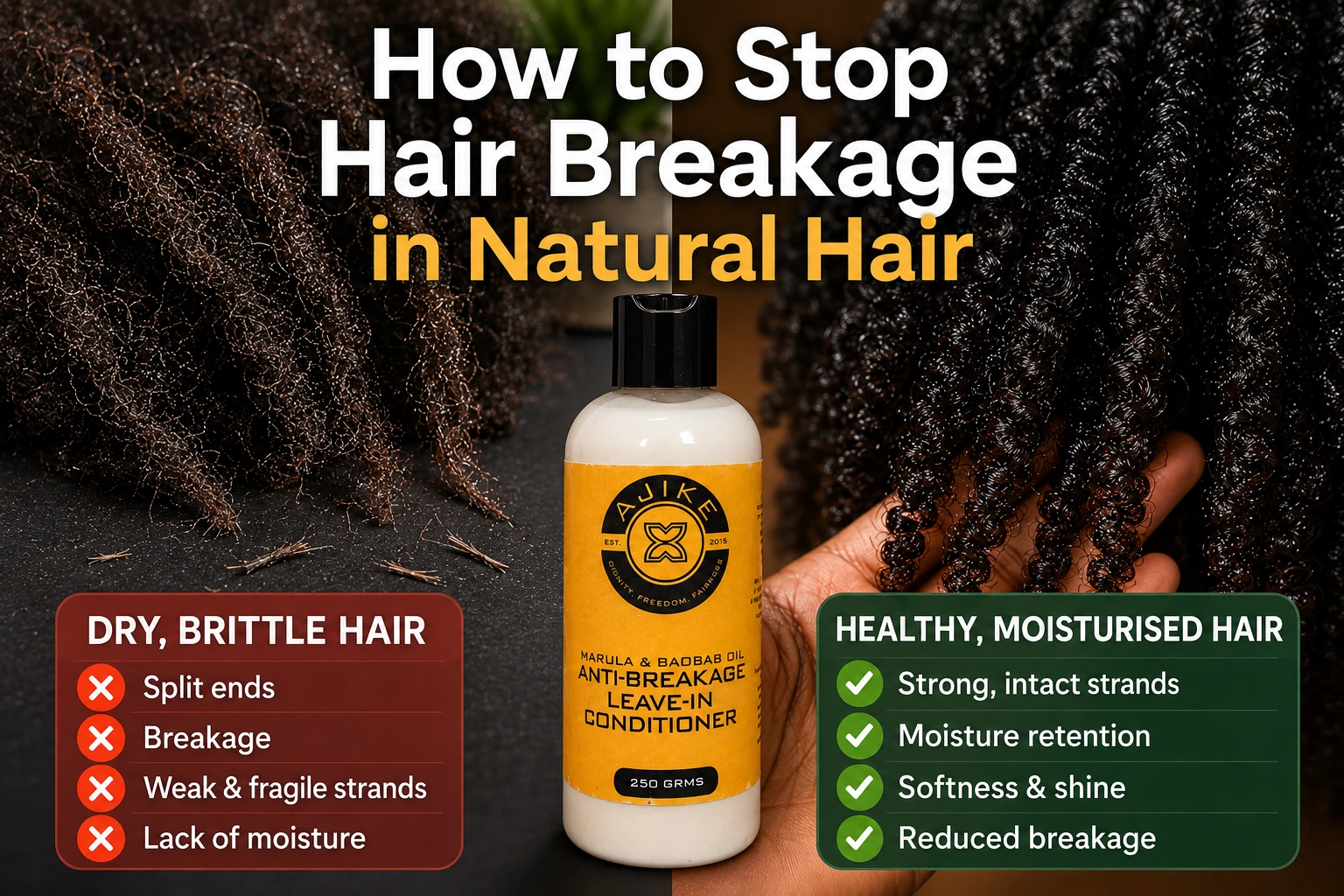
Hair breakage is one of the most frustrating experiences in natural hair care. You are consistent with your routine. You invest in good products. And yet your hair never seems to get longer, or you are finding short broken pieces on your pillow, in your comb, or on your clothes every time you touch your hair.
The most important thing to understand is that breakage is almost always fixable once you identify the actual cause. Most people approach breakage by adding more products when the problem is usually one of three things: a moisture imbalance, a protein imbalance, or a mechanical stress issue. Adding more products without understanding which of these applies to your hair will not fix the breakage, and may make it worse.
This guide covers how to accurately diagnose your breakage, the specific routines and products that address each cause, and exactly how marula oil and baobab oil support anti-breakage hair care.
Read Also: Building a full natural hair routine?
Understanding Hair Breakage Before Trying to Fix It
Hair Breakage vs Hair Loss: Why the Difference Matters
Hair breakage and hair loss are not the same thing, and treating one as the other produces poor results. Hair loss involves hair falling from the follicle with the root attached. You will see a small white or slightly darker bulb at the end of a shed hair strand. Hair loss is part of the normal hair growth cycle, with approximately 50 to 100 strands shed daily from healthy scalps as follicles cycle through the telogen resting phase.
Hair breakage involves the hair shaft itself snapping, typically at a point of weakness or stress along the strand. Broken hairs have no root bulb at the end. They are often significantly shorter than shed hairs, and they produce the short, stubby pieces that collect in combs, on pillows, and on clothing. Breakage is the cause of the failure to retain length that most natural hair wearers experience.
How to Tell If You Are Experiencing Breakage or Shedding
The simplest way to distinguish is to examine the hairs you are losing. Take a few strands from your comb or from the hair that comes out during washing. Look at the end that was closest to the scalp. If you can see a small bulb or slightly thickened root, the strand was shed normally from the follicle. If the end is a clean, even break with no bulb, the strand broke from the shaft.
A mixture of shed and broken hairs is normal. What you want to avoid is a situation where the majority of hair leaving your head is broken rather than shed. If you are unsure, count 10 strands from your next detangling session and examine each end. If more than 3 to 4 lack a root bulb, breakage is likely the primary issue.
Why Natural and Textured Hair Breaks More Easily Than Straight Hair
The coil and kink structure of natural and textured hair creates points of structural stress along each strand. At every point where the hair curves, bends, or kinks, the cuticle on the outside of the curve is stretched and the cuticle on the inside is compressed. These stress points are where the hair is most likely to snap under manipulation, dryness, or physical pressure.
The elliptical cross-section of coily and kinky hair also means the strand has a non-uniform thickness at different points along its length, creating natural weak points. Add to this the inherent difficulty that natural scalp oils have in coating the full length of highly coiled strands, and you have a hair type that is structurally more demanding than straight hair in terms of moisture maintenance and gentle handling.
The Most Common Places Breakage Happens and What They Mean
Breakage at the ends: the ends are the oldest, most fragile part of the hair. Breakage concentrated at the ends almost always indicates that the ends are not being adequately moisturised and sealed, or that split ends are propagating up the shaft. Regular trimming and consistent ends care are the solution.
Breakage at the crown: the crown area is often the driest part of the scalp, receives the most friction against headrests and pillows, and is often twisted or pinned in styles that create mechanical stress. Crown breakage typically responds to improved nighttime protection and focused moisturisation of that zone.
Breakage all over: generalised breakage suggests a systemic moisture or protein deficiency rather than a localised mechanical issue. The protein-moisture balance is likely off, and a systematic diagnostic approach is needed before adding more products.
Breakage at one specific length: if hair consistently breaks at the same point along the strand, a tight hairstyle at that position, a hair tie or clip habitually used at that point, or an old hair tie snap mark are the likely culprits.
What Is Actually Causing Your Hair to Break?
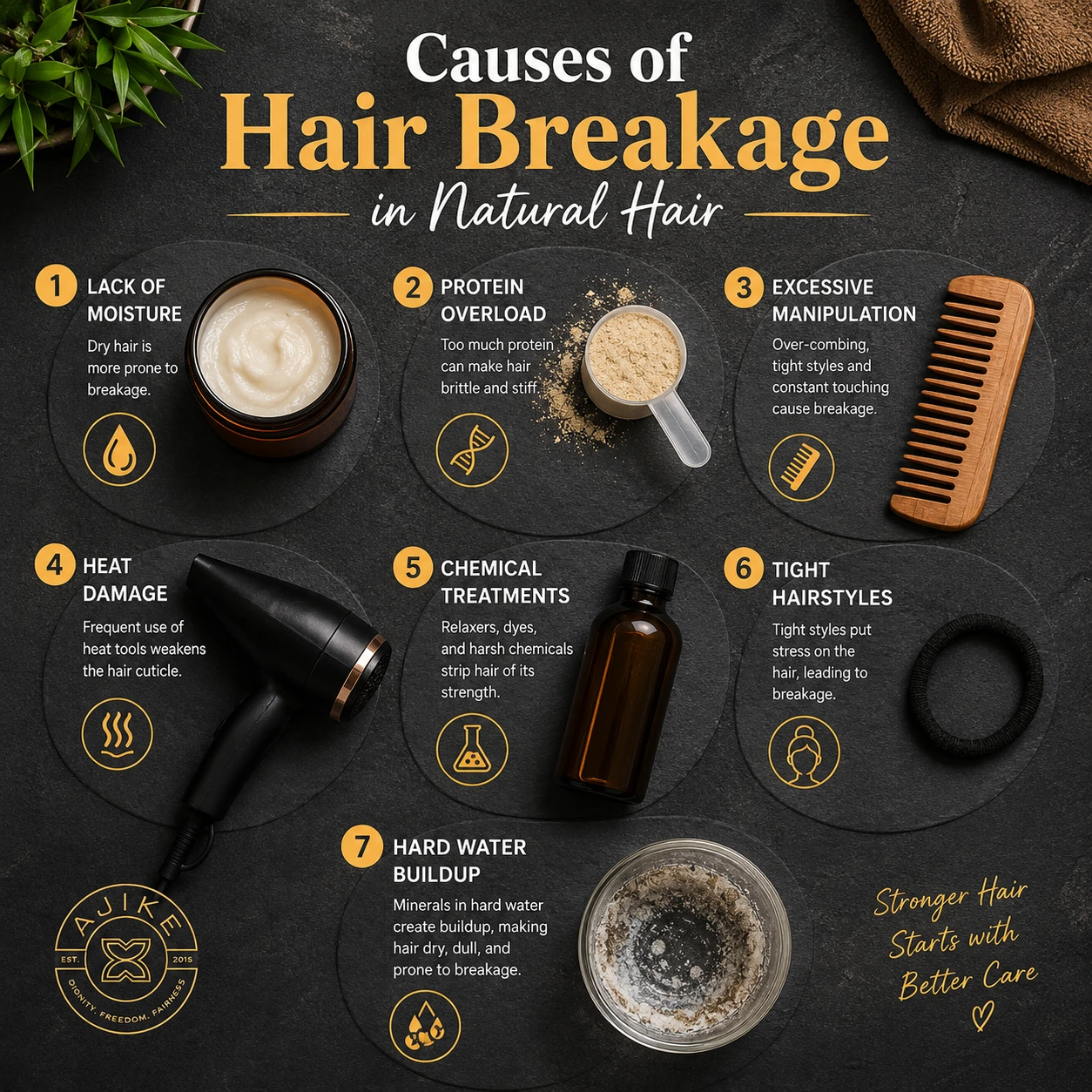
Moisture Deficiency: The Root Cause of Most Breakage
Hair is naturally flexible and resilient when adequately hydrated. When water content in the hair shaft drops below a healthy level, the hair becomes brittle and inflexible. Brittle hair has much lower tensile strength, meaning it requires significantly less force to snap. The same manipulation that healthy, moisturised hair would tolerate without damage causes breakage in dehydrated hair.
Moisture deficiency in natural hair almost always has a compounding cause: either the moisture is not being applied in sufficient quantity during the wash routine, or it is not being retained between washes because the sealing step is inadequate. Both problems need to be addressed. Moisture without sealing evaporates. Sealing without moisture seals dryness in rather than out.
Protein Deficiency: When the Hair Structure Is Compromised
Hair is approximately 90 percent keratin, a structural protein. The integrity of the disulfide bonds between keratin molecules determines the hair's strength and its ability to return to its original shape after stretching. When the hair has been subjected to heat, chemical processing, or environmental stress that has damaged these bonds, the hair becomes weaker and more prone to breakage even when it appears moisturised.
Protein-deficient hair can feel limp and mushy when wet, has little elasticity on the stretch test, and may feel gummy or stretchy before breaking. It needs protein treatment, not simply more moisture. Applying more conditioning products to protein-deficient hair without addressing the structural deficiency compounds the problem by making the hair overly soft and even more fragile.
Over-Manipulation: Too Much Combing, Styling and Handling
Every time you touch natural hair, you are creating friction and tension on the hair shaft and at the cuticle. Natural and textured hair, with its coil structure that causes strands to interlock and its higher number of structural stress points per centimetre of length, is particularly vulnerable to manipulation-induced breakage.
The most common over-manipulation patterns in natural hair care: daily combing of dry hair, detangling without adequate slip, styling the same hair repeatedly without protective styling periods, constantly changing styles that require manipulation to install, and the habit of touching, twisting, or fidgeting with hair throughout the day.
Heat Damage: What It Does to the Hair at the Strand Level
Heat styling above 230 degrees Celsius (450 degrees Fahrenheit) begins to permanently alter the protein structure of the hair, breaking the disulfide bonds that give hair its natural curl pattern and structural strength. Repeated heat application at lower temperatures can also cause cumulative damage over time, gradually weakening the hair shaft and changing the curl pattern in what is called heat damage.
Heat-damaged hair is identifiable by sections that no longer return to the natural curl pattern after washing, feel different in texture from the rest of the hair, or appear straight or stretched without heat having been applied. Heat damage is permanent at the strand level and can only be fully resolved by growing out the damaged sections.
Chemical Damage from Relaxers, Colour and Other Treatments
Chemical relaxers work by breaking the disulfide bonds in the hair shaft and reforming them in a straightened position, permanently altering the hair's structure. This process fundamentally weakens the hair shaft. Over-processed or frequently relaxed hair has significantly reduced tensile strength compared to natural, unprocessed hair.
Hair colour, particularly bleach, also breaks disulfide bonds and damages the cuticle to allow the colour pigment to enter and exit the cortex. Multiple colour treatments, particularly bleaching, produce cumulative damage that significantly increases breakage risk. The line of demarcation between chemically processed and natural (unprocessed) hair is always a point of particular weakness and requires specific care attention.
Mechanical Damage from Accessories: Bands, Clips and Tight Styles
Rubber hair bands, particularly the plain rubber elastic type, snag and pull individual hair strands with every application and removal. They are one of the most common overlooked causes of mechanical breakage. Replacing rubber bands with snag-free fabric ties or spiral hair ties significantly reduces this source of damage.
Tight buns, high ponytails, tightly installed braids and weaves all create constant tension at the point of attachment that weakens the hair shaft over time. This tension-induced breakage is most visible at the hairline, edges, and nape, where the hair is finer and more susceptible to mechanical stress.
Dryness from Hard Water and Product Buildup
Hard water leaves calcium and magnesium mineral deposits on the hair shaft that make it rough, porous, and more prone to tangling and breakage. The deposits interfere with the cuticle's ability to lie flat, making the hair feel rough and causing more friction between strands during manipulation.
Product buildup from accumulated silicones, heavy butters, mineral oil, and petroleum creates a coating on the hair that feels like moisture but prevents actual water and conditioning compounds from penetrating the shaft. Hair under heavy product buildup often feels coated and appears shiny but is actually dry and brittle beneath the surface, breaking with minimal stress.
The Protein-Moisture Balance: The Most Important Concept in Natural Hair Care
The Core Principle: Hair needs both protein for structure and strength, and moisture for flexibility and elasticity. Too little of either causes breakage. Too much of either also causes breakage. The goal is balance, assessed regularly and adjusted based on how the hair responds.
What Protein Does in the Hair Strand
Protein in the context of hair care refers to compounds that temporarily reinforce or fill damaged areas of the hair shaft. Hydrolysed proteins, which are proteins that have been broken down into smaller molecular sizes to allow some degree of penetration into the hair, can temporarily bond with keratin in the cortex and fill gaps left by disulfide bond damage. This temporarily increases the hair's strength and reduces its elasticity to a more healthy range.
On the strand surface, protein compounds also fill gaps in the cuticle layer, reducing porosity and improving the hair's ability to retain moisture. For high-porosity or chemically damaged hair, protein treatments are particularly important because the hair's own protein structure is significantly compromised.
What Moisture Does in the Hair Strand
Water is what gives hair its flexibility and elasticity. The hydrogen bonds in the hair shaft that allow it to be stretched and to return to its original shape require water to function. Dehydrated hair has fewer active hydrogen bonds, meaning it is less flexible and less able to absorb the stress of manipulation without snapping.
Moisture in a hair care context means actual water content in the hair strand, not surface coating. A product that coats the hair with oil or silicone without allowing water to enter is not moisturising the hair. The moisture must come from water-based products applied to damp or wet hair, sealed in by an oil or butter layer before the water evaporates.
How to Know If Your Hair Needs Protein or Moisture Right Now
The feel test: take a hair strand, wet it, and feel how it responds to gentle handling. Hair that needs moisture feels rough, dry, and brittle when wet, and breaks with minimal tension. Hair that needs protein feels soft, limp, and mushy when wet, and stretches significantly before breaking or breaks with a weak, elastic snap.
Hair that is balanced feels smooth and slightly elastic when wet, stretches 20 to 30 percent of its length under tension and returns to its original shape, and does not feel either stiff or mushy.
The Stretch Test: How to Assess Your Hair's Current Balance
Take a clean, wet hair strand. Hold it at both ends and stretch gently. Observe what happens. If it stretches less than 20 percent of its length before snapping cleanly: too much protein or severe moisture deficiency. Deep condition intensively with a moisture-rich treatment and reduce protein frequency.
If it stretches more than 50 percent of its length and does not snap back, or snaps with a weak, stretchy break: protein deficiency. Incorporate a protein treatment before your next moisturising step. If it stretches 20 to 30 percent, returns to shape after tension is released, and snaps cleanly only when stretched significantly: the balance is good. Maintain the current routine.
Why Too Much Protein Is Just as Damaging as Too Little
Protein overload, sometimes called protein sensitivity, produces hair that is stiff, dry-feeling, and brittle despite appearing healthy. Over-proteinated hair feels rough and wiry when touched and breaks with a snapping quality that is easy to mistake for moisture-related breakage. The mistake of adding more protein to over-proteinated hair makes the problem significantly worse.
Protein overload typically develops when protein treatments are applied too frequently, when multiple products in the routine all contain proteins, or when a very strong protein treatment is applied to hair that did not need it. Hair that has not been chemically processed and is not significantly damaged does not need intensive protein treatments. Light protein in leave-in conditioners is generally sufficient for maintaining healthy natural hair.
How to Restore Balance When Your Hair Is Out of Sync
For moisture-deficient hair: begin with a clarifying wash to remove any buildup that is blocking moisture absorption, then apply a deeply moisturising conditioner under heat for 30 to 40 minutes, follow with a water-based leave-in and a thorough oil seal. Repeat weekly until balance is restored, then move to every other week.
For protein-deficient hair: apply a protein treatment (Ajike Marula and Baobab Conditioner with added hydrolysed protein, or a dedicated protein treatment) before your next conditioning session. Follow with a deep conditioning treatment to soften the hair and restore flexibility after the protein. Reduce to once monthly for maintenance.
Hair Breakage at the Crown: A Specific Guide
Why the Crown Is the Most Common Breakage Zone
The crown area is the highest point of the head, which means it receives the most friction against headrests, car seats, and pillows. It is also the area where many people habitually create styles (high buns, puffs, and ponytails) that create constant tension. The crown hair is often a slightly different texture or porosity from the rest of the hair, and this means the moisture and product routine that works for the rest of the hair may not be sufficient for the crown.
Additionally, many people apply more heat or tension to the crown during styling to achieve smoothness or definition there, creating a double burden of heat stress and mechanical tension in the same area.
How Sleeping Without Protection Damages Crown Hair
Cotton pillowcases and bedding create friction against natural hair as you move in your sleep. For crown hair, which is in constant contact with the pillow surface throughout the night, this friction abraids the cuticle, creates tangles that lead to breakage during morning detangling, and strips moisture from the hair. A full night of friction against cotton can undo the moisture balance achieved by a thorough wash day routine.
Sleeping with a satin or silk bonnet, or on a satin pillowcase, reduces this friction dramatically. The smooth surface allows the hair to move without catching and snagging. This single change is among the most impactful and lowest-effort anti-breakage interventions available for crown breakage.
How Edges and Nape Breakage Differ from Crown Breakage
Edges, the fine hairline hair at the front of the scalp, are the most delicate hair on the head. They have the smallest diameter, the highest exposure to manipulation (edge control products, brushing, styling), and the most tension from styles that pull them back. Edge breakage and thinning is often more advanced than breakage elsewhere before it is noticed, because the hairline is so visible.
Nape hair is similarly fine and delicate, and is subject to friction from shirt collars, necklaces, and lying against surfaces. For locs and braids that include nape hair, the weight of the style at the nape can create significant traction that breaks the fine nape hairs over time.
Tension Alopecia vs Breakage: Knowing When to Be Concerned
Breakage leaves hair that is short but still present in the area. The follicles are intact and the hair will regrow with appropriate care. Tension alopecia occurs when chronic traction on the hair follicle damages the follicle itself, leading to hair loss from the root rather than simply breakage. If the edges or crown area show smooth scalp with no hair visible and the skin appears slightly shiny or different in texture, this indicates possible follicle damage.
Tension alopecia in its early stages is reversible if the tension is removed and the scalp is given time to recover. In later stages, the follicle damage can be permanent. If you notice consistent and progressive thinning in the edges or crown rather than just breakage, reduce all tension in those areas immediately and consult a dermatologist if there is no regrowth within 3 months.
How to Stop Hair Breakage: The Complete Routine Approach
Start Here: Do not add any new products until you have completed Step 1. Adding more products before diagnosing the cause of breakage is the most common reason natural hair routines fail to resolve breakage. Diagnosis first, then treatment.
Step 1: Diagnose the Cause Before Adding More Products
Before purchasing anything new, assess your current situation using the stretch test and the feel test described above. Identify whether your hair is moisture-deficient, protein-deficient, or balanced but being damaged mechanically. Look honestly at your styling habits: are you manipulating the hair daily? Are you using heat regularly? Are there tight styles creating tension? Do you sleep without hair protection?
Write down what you find. This gives you a baseline to work from and a way to measure improvement over 4 to 6 weeks of implementing changes.
Step 2: Restore Moisture with Deep Conditioning
If moisture is the identified issue, the first intervention is a thorough deep conditioning session. Apply Ajike Marula and Baobab Anti-Breakage Conditioner generously through damp hair in sections. Use a wide-tooth comb to detangle while the conditioner provides slip. Cover with a shower cap and apply heat (hooded dryer or warm towel) for 30 to 40 minutes. Rinse thoroughly with cool water.
Follow immediately with a water-based leave-in conditioner applied to dripping wet hair, then seal with Ajike Pure Baobab Oil using the LOC method. This sequence ensures the moisture is both introduced and locked in effectively.
Step 3: Introduce Protein Treatments Carefully and Correctly
If protein deficiency is identified, introduce a protein treatment before the deep conditioning step, not instead of it. Apply the protein treatment to clean, damp hair, leave for the time specified, rinse, then follow with a deep moisturising conditioner. This sequence is critical: protein without subsequent moisture conditioning produces stiff, brittle hair even when the protein itself was needed.
For healthy natural hair that is not chemically processed and is not significantly damaged, a protein treatment once every 4 to 6 weeks is typically sufficient for maintenance. For chemically treated or heat-damaged hair, once every 2 to 3 weeks may be needed initially, reducing to monthly as the hair improves.
Step 4: Seal Moisture with the Right Oil
The sealing step is where most natural hair moisture routines fail or succeed. The oil must be applied to wet or damp hair immediately after the leave-in conditioner, before the water in the hair has time to evaporate. For 4B and 4C hair that loses moisture quickly, applying the sealant oil within 60 seconds of applying the leave-in is optimal.
Ajike Pure Baobab Oil is the most versatile sealing oil for natural hair: light enough for fine and low-porosity hair, effective enough for coarser textures. For very high-porosity or very dry hair, following the baobab oil with a small amount of raw shea butter as the final occlusive layer creates a more robust moisture seal that holds through the day.
Step 5: Handle Hair Gently and Minimise Manipulation
Reduce how often you touch, style, and manipulate your hair. Detangle only when the hair is wet and loaded with conditioner, using a wide-tooth comb or fingers starting from the ends and working toward the root. Never comb dry natural hair. Style in larger, simpler styles that do not require daily reinstallation.
The target is to reduce the number of times you manipulate the hair each week to as few occasions as possible, ideally just once on wash day for full detangling and conditioning, with minimal manipulation between wash days.
Step 6: Protect Hair at Night
Every night. Without exception. A satin or silk bonnet, or a satin pillowcase, is the single most consistently underused anti-breakage tool in natural hair care. Cotton absorbs the moisture you applied during your wash day routine and creates friction that breaks the most fragile hairs. One missed night of protection can undo a full week of careful moisturising.
For very long natural hair, loosely pineappling the hair at the top of the head (gathering it into a very loose, high ponytail secured with a snag-free fabric tie) before putting on the bonnet prevents tangling in the bonnet overnight.
Step 7: Trim Regularly to Remove Damaged Ends
Split ends and damaged ends do not repair themselves. Left in place, they propagate up the hair shaft, splitting further and causing breakage that goes progressively higher on the strand. Regular trimming of the damaged ends, every 8 to 12 weeks for most natural hair types, removes the weakest, most fragile part of the hair and allows the rest of the strand to remain strong.
The fear of trimming, based on the misconception that trimming removes length, is counterproductive. A half-centimetre trim that removes split ends prevents the centimetres of breakage that split ends cause if left in place.
How Marula Oil Reduces Hair Breakage
Why Marula Oil Is Particularly Effective for Breakage-Prone Hair
Marula oil, pressed from the seeds of the marula tree (Sclerocarya birrea), has one of the highest oleic acid concentrations of any botanical oil used in hair care, typically 70 to 78 percent. This makes it one of the most penetrating botanical oils available: oleic acid's molecular structure allows it to enter the hair cortex rather than simply coating the surface, providing genuine internal conditioning at the structural level rather than surface-only emolliency.
For breakage-prone hair, this internal conditioning is significant. A hair strand that has been internally conditioned by penetrating oleic acid is genuinely more flexible and more resistant to snapping under the mechanical stress of manipulation than a hair strand that has only been surface-coated. This is the functional difference between marula oil and silicone-based conditioning agents.
The Oleic Acid Content That Penetrates and Conditions the Hair Shaft
The high oleic acid content of marula oil (70 to 78 percent) is higher than most commonly used botanical oils. Argan oil contains approximately 43 to 49 percent oleic acid. Baobab oil contains 33 to 38 percent. The higher the oleic acid content, the more of the oil's conditioning benefit reaches the hair cortex rather than remaining on the surface.
For chemically damaged or heat-damaged hair where the cortex has been compromised by disulfide bond disruption, the penetration of marula oil's oleic acid into these damaged areas provides a degree of internal filling and conditioning that reduces the structural vulnerability of the damaged zones.
Anti-Oxidant Properties That Protect Hair from Environmental Damage
Marula oil contains tocopherols (vitamin E) and other antioxidant compounds that protect the hair and scalp from oxidative damage caused by UV radiation, pollution, and free radical activity. While hair cannot repair itself once it is damaged, preventing new oxidative damage to the hair shaft and scalp reduces the ongoing accumulation of damage that leads to breakage.
The antioxidant protection is particularly relevant for natural hair worn in outdoor environments with high UV exposure or in urban areas with significant pollution. In these contexts, incorporating marula oil as a pre-styling treatment or as a component of a styling oil provides protective antioxidant coverage alongside its conditioning benefits.
How to Use Marula Oil for Maximum Anti-Breakage Benefit
As a pre-shampoo treatment: apply marula oil to dry or slightly damp hair 30 to 60 minutes before washing. Section the hair and work the oil through each section from root to tip, focusing on the ends and any areas of particular fragility. The pre-wash oil treatment creates a protective conditioning layer that limits stripping during shampooing.
As a post-wash sealant: on damp hair after leave-in conditioner, apply 2 to 3 drops of marula oil through the mid-lengths and ends. Follow with a cream or butter as the final LOC step for additional sealing. The combination of marula oil's deep penetration with a surface-sealing cream provides both internal and external conditioning simultaneously.
How Baobab Oil Reduces Hair Breakage
The Fatty Acid Profile That Improves Hair Elasticity
Baobab oil's fatty acid profile is uniquely well-suited to reducing hair breakage because it combines oleic acid (33 to 38 percent) for internal conditioning and penetration, linoleic acid (28 to 36 percent) for cuticle lipid support and barrier integrity, and alpha-linolenic acid (3 to 5 percent) for anti-inflammatory scalp support. This combination addresses breakage through multiple mechanisms simultaneously rather than focusing on penetration alone.
The linoleic acid component is particularly relevant to hair elasticity. Linoleic acid is a component of the lipid layer that surrounds each hair strand and is critical for the cuticle's ability to lie flat and resist snagging on adjacent strands. Inadequate linoleic acid in the hair's lipid environment is associated with increased porosity, rougher cuticle, and higher breakage rates.
Vitamin F and the Essential Fatty Acids the Hair Strand Needs
Vitamin F, the collective term for essential fatty acids including linoleic acid and alpha-linolenic acid, plays a role in the integrity of the follicle wall and in the production of the natural lipids that coat the hair strand. Essential fatty acid deficiency at the scalp level is associated with increased hair shedding, dry scalp, and reduced hair strength.
Baobab oil's high essential fatty acid content makes it one of the most nutritionally complete oils for hair and scalp use. Applied topically during a pre-shampoo scalp treatment, it delivers these essential fatty acids directly to the scalp where they can be absorbed through the scalp skin, potentially supporting the natural lipid production of the sebaceous glands.
How Baobab Oil Works as a Pre-Shampoo Breakage Treatment
Apply 3 to 5 drops of Ajike Pure Baobab Oil to each section of dry or slightly damp hair before washing. Focus particularly on the ends and on areas of visible breakage or fragility. Work through the hair gently with fingertips rather than a comb. Cover with a shower cap and leave for a minimum of 30 minutes, ideally 60 minutes or overnight.
The pre-shampoo treatment with baobab oil provides three benefits simultaneously: it conditions the hair shaft before the stripping action of shampooing, it creates a protective layer that reduces the direct contact between the hair and the surfactants in the shampoo, and it delivers vitamin and fatty acid nourishment to the scalp during the treatment period.
Using Baobab Oil in the LOC Method for Daily Breakage Prevention
For daily moisture and breakage prevention, baobab oil works as the oil step in the LOC or LCO method. After applying a water-based leave-in conditioner to damp hair, apply 2 to 3 drops of baobab oil through the mid-lengths and ends. The oil seals the moisture from the leave-in into the hair strand, slowing evaporation and maintaining flexibility through the day.
Baobab oil's light texture means it does not create buildup with daily use in the way that heavier oils do, making it sustainable as a daily sealant. The linoleic acid in the oil continuously supports the hair's lipid environment with each application, contributing to a gradual improvement in hair strength and reduced breakage over consistent weeks of use.
Read Also: Full baobab oil hair guide: Baobab Oil for Hair Growth and Scalp Health
Anti-Breakage Hair Routine: Morning, Night and Wash Day
Wash Day Anti-Breakage Routine
Pre-poo (30 to 60 minutes before washing): apply Ajike Pure Baobab Oil to all sections of dry hair from root to tip, focusing on ends. Shampoo: Ajike Marula and Baobab Anti-Breakage Shampoo applied to the scalp, worked gently through the length in downward strokes rather than circular scrubbing motions. Rinse with cool water.
Deep condition: Ajike Marula and Baobab Anti-Breakage Conditioner applied generously, heat applied for 30 minutes. Detangle with wide-tooth comb while conditioner provides slip. Rinse with cool water. Leave-in: Ajike Marula and Baobab Leave-In Conditioner applied to dripping wet hair by sections. LOC seal: Ajike Pure Baobab Oil as the oil step, followed by a small amount of raw shea butter for very dry or high-porosity hair as the cream and final occlusive step.
Daily Moisture Maintenance Between Washes
Morning: assess hair's moisture level by feel. If the hair feels dry or lacks flexibility, do a quick moisture refresh: mist lightly with water or a diluted leave-in spray, then apply 1 to 2 drops of baobab oil to the hands and work through the hair gently. This maintains moisture without requiring a full re-wash.
Handling: minimise daily manipulation. If the hair is in a protective style, do not re-style it daily. Style once on wash day and leave it, with only a bonnet at night and a light moisture refresh in the morning as needed.
The Nighttime Routine That Protects Hair While You Sleep
Apply a light moisture refresh if the hair feels dry before bed. Loosely pineapple or section the hair to prevent overnight tangling. Apply the satin or silk bonnet. This nightly routine takes 3 to 5 minutes and prevents the friction, tangling, and moisture loss that could undo the moisture work done on wash day.
For highly breakage-prone hair in a vulnerable recovery period: apply 1 to 2 drops of baobab oil to the ends before bonneting. The ends are the most fragile point on the strand and benefit most from overnight conditioning protection.
Monthly Protein Treatment Schedule
For natural, unprocessed hair: light protein treatment once every 6 to 8 weeks is sufficient for maintenance. For chemically treated or heat-damaged hair: once every 3 to 4 weeks during a recovery period, moving to once every 6 weeks once the breakage is controlled.
The protein treatment always follows the sequence: cleanse, protein treatment, rinse, deep moisture condition, rinse, leave-in, seal. Never protein treat without following with a moisture-rich conditioner. Never protein treat more than once per month regardless of how much breakage is present, as over-proteinating will worsen the situation.
Protective Styling for Breakage Prevention
Which Protective Styles Actually Protect and Which Cause More Damage
Effective protective styles keep the ends of the hair tucked away, require minimal manipulation once installed, and do not create tension at the root. Twists, braids (particularly two-strand twists and flat braids), buns, and updos that are loosely secured all work well when installed without excessive tension.
Styles that cause damage while appearing protective include: tightly installed micro braids or box braids that create traction at the follicle, heavy extensions that weigh down the natural hair and create scalp tension, sew-in weaves where the foundation braids are extremely tight, and any style that pulls the edges or nape to their limits.
How Long to Wear a Protective Style Before It Becomes Damaging
The general guideline is 6 to 8 weeks maximum for any installed protective style including braids, twists, and weaves. Beyond 8 weeks, the new growth at the root begins to loc with the hair inside the style, creating a matting situation that requires forceful separation that causes breakage. The weight of the style also increases as the hair grows.
During the style: moisturise the scalp and accessible hair at least twice weekly. Do not attempt to re-tighten the roots, as this adds tension on already-stressed follicles. If any style causes pain at the scalp from tightness, it is too tight and should be taken down rather than waited out.
How to Care for Hair Inside a Protective Style
Scalp: apply Ajike Hair and Scalp Luxury Oil to the scalp between the braids or twists every 5 to 7 days with gentle massage. This maintains scalp health without disturbing the style. The scalp still needs moisture and circulation even when the hair is put away.
Hair: if the style allows access to the hair, lightly mist with a water-based product and apply a small amount of baobab oil to accessible sections every 3 to 5 days. If the hair is completely enclosed (wigs, full sew-ins), focus on scalp care and ensure the hair underneath is well-moisturised when the style is removed.
What to Do with Your Hair After Removing a Protective Style
After removing a protective style, the hair will likely be matted, tangled, and potentially quite dry from weeks inside a style. Do not approach removal aggressively. Apply a generous amount of baobab oil or conditioner to each section as you remove it, to provide slip that allows gentle separation before detangling.
Follow removal with a thorough clarifying wash to remove scalp buildup, then a deep conditioning session. This is also a good time to assess protein-moisture balance and to address any breakage or thinning that the protective style revealed.
What Not to Do When Your Hair Is Breaking
Do Not Add More Products Without Understanding the Cause
This is the most common response to breakage and the most consistently counterproductive one. Adding more products without understanding whether the issue is moisture, protein, or mechanical creates a situation where you have more variables to manage, more potential for buildup, and no clear way to assess which change, if any, is working. Diagnose first. Treat second.
Do Not Over-Protein Treat in a Panic
Discovering that your hair is breaking tends to create a panic response where multiple protein treatments are applied in quick succession, sometimes multiple times per week. Protein overload produces hair that is hard, brittle, and breaks even more than the original deficiency that prompted the treatment. If protein is needed, apply once, follow with moisture conditioning, and wait at least 3 to 4 weeks before the next protein treatment.
Do Not Skip Deep Conditioning
Deep conditioning is the single most important step in a natural hair breakage-recovery routine. It is also the step most often skipped or shortened when people are busy. A regular shampoo conditioner left on for 2 minutes is not a deep conditioning treatment. A deeply conditioning formula applied under heat for 30 minutes is. The difference in results is significant and consistent.
Do Not Continue Wearing Tight Styles on Already-Damaged Hair
If breakage is already occurring at the edges, crown, or nape, continuing to wear tight braids, high ponytails, or tightly secured buns in those areas will worsen the damage and may push it from breakage into follicle-damaging traction alopecia. Give the breaking areas rest, loose styles, and targeted moisturisation until the breakage is controlled before returning to more structured styling.
Ajike Products for Hair Breakage Prevention
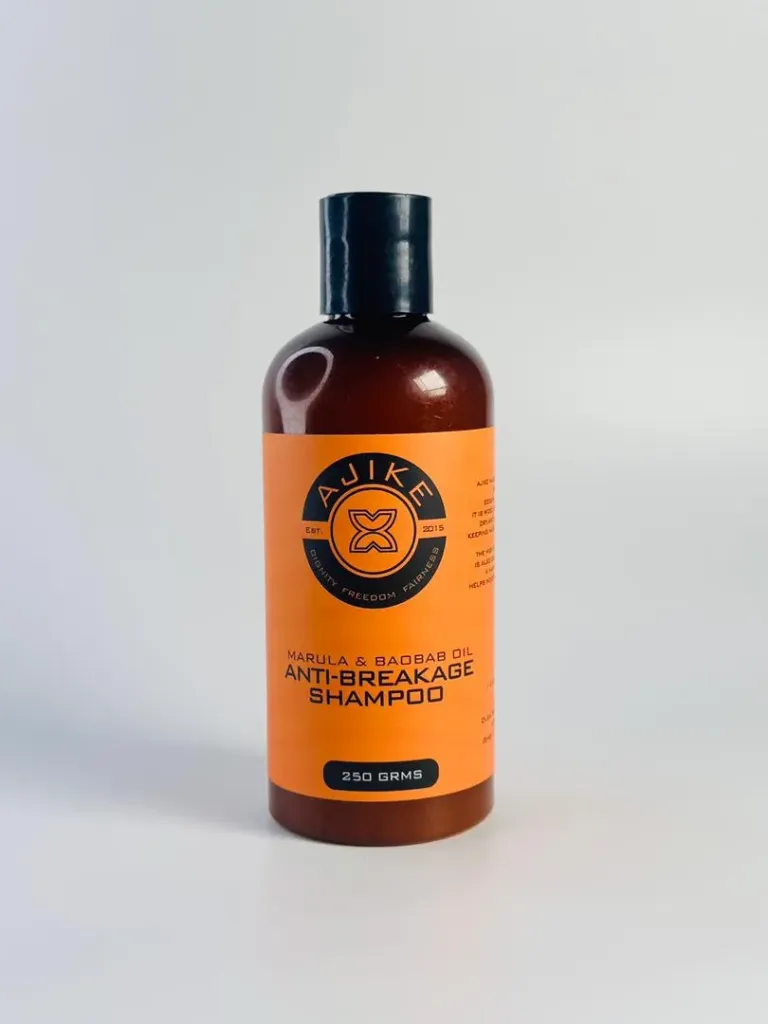
Ajike Marula and Baobab Anti-Breakage Shampoo: Start with the Right Cleanser
A shampoo that strips the hair during cleansing directly contributes to the dryness and brittleness that leads to breakage. Our Marula and Baobab Anti-Breakage Shampoo integrates marula and baobab oil into the cleansing formula, so the shampoo step provides conditioning alongside cleansing rather than simply removing everything and leaving the hair depleted. Sulfate-free.
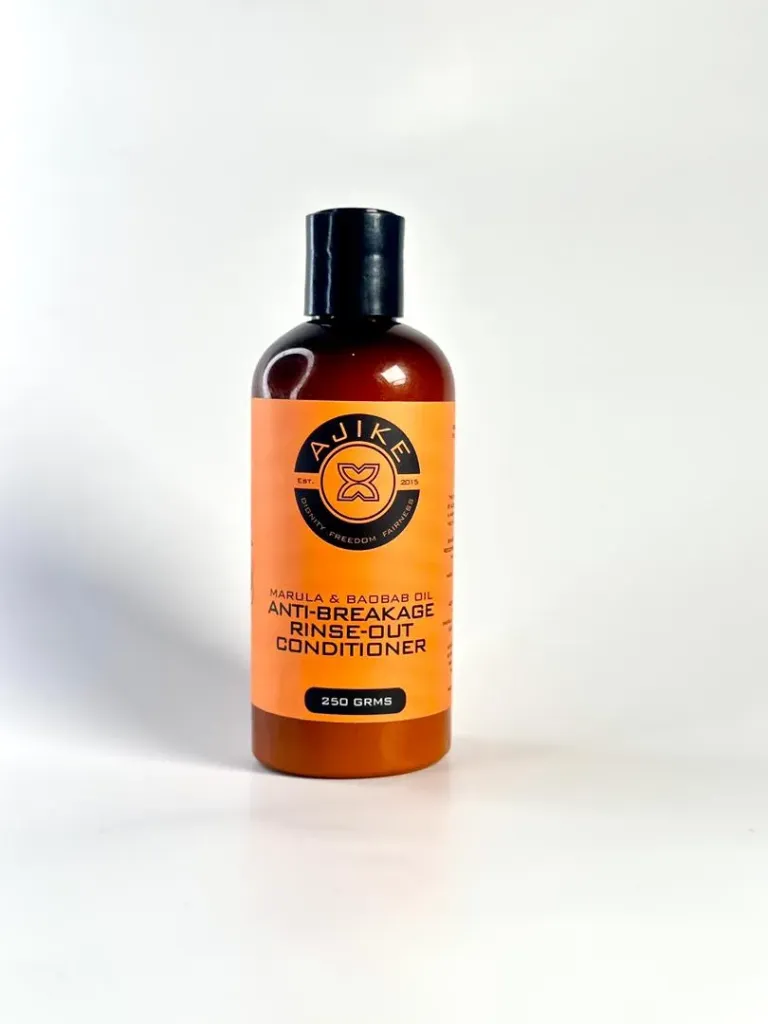
Ajike Marula and Baobab Anti-Breakage Conditioner: Deep Conditioning for Weak Hair
Our conditioner combines marula oil's deep penetrating oleic acid with baobab oil's multi-vitamin and essential fatty acid profile in a formula specifically designed for hair that is breaking. Used with heat for 30 minutes during each wash day session, it provides the intensive moisture and conditioning that breakage-prone hair needs to begin recovering its strength and elasticity.
Ajike Marula and Baobab Leave-In Conditioner: Daily Moisture Maintenance
The leave-in is the moisture foundation that the oil seal locks in. Our Marula and Baobab Leave-In Conditioner applied to dripping wet hair provides the water-based moisture layer that natural hair needs between washes. It extends the conditioning benefit of wash day through the week and maintains the hair's flexibility that prevents breakage during daily movement.
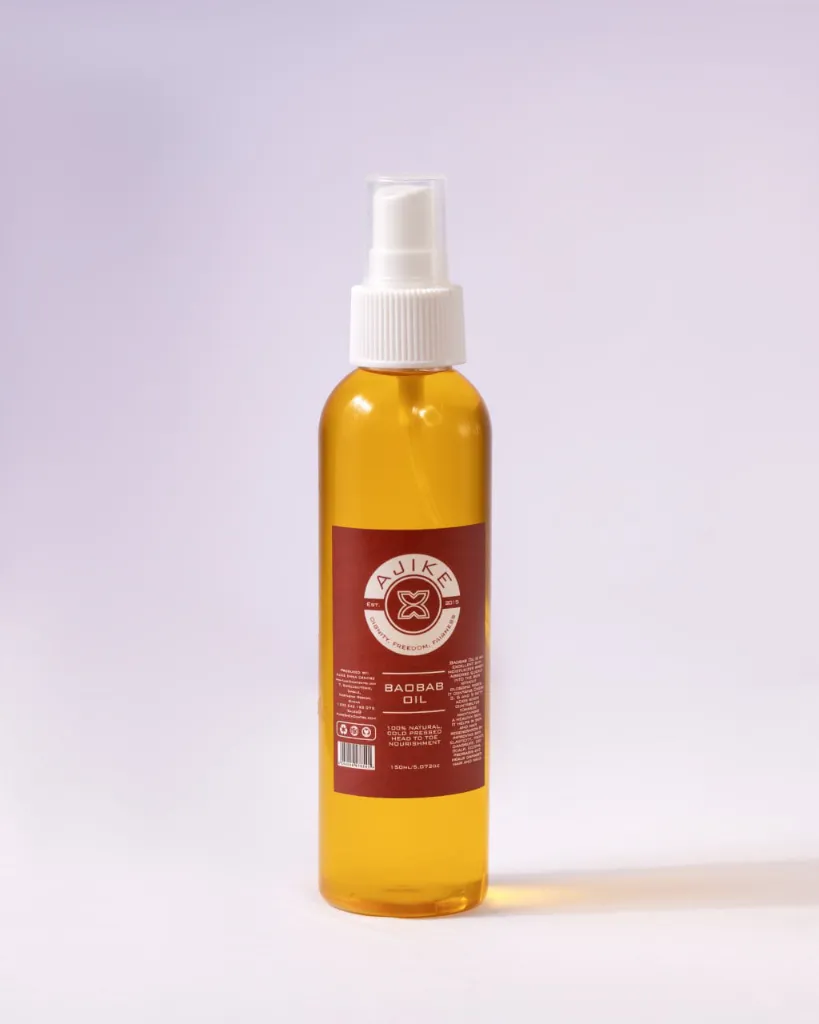
Ajike Pure Baobab Oil: The Pre-Shampoo and Sealing Oil
For the anti-breakage routine, baobab oil serves two functions: a pre-shampoo protective treatment applied to dry hair before washing, and the oil sealing step applied to damp hair after the leave-in. Its light texture allows daily use without buildup, and its linoleic acid and essential fatty acid content provides continuous support for the hair's structural integrity with each application.
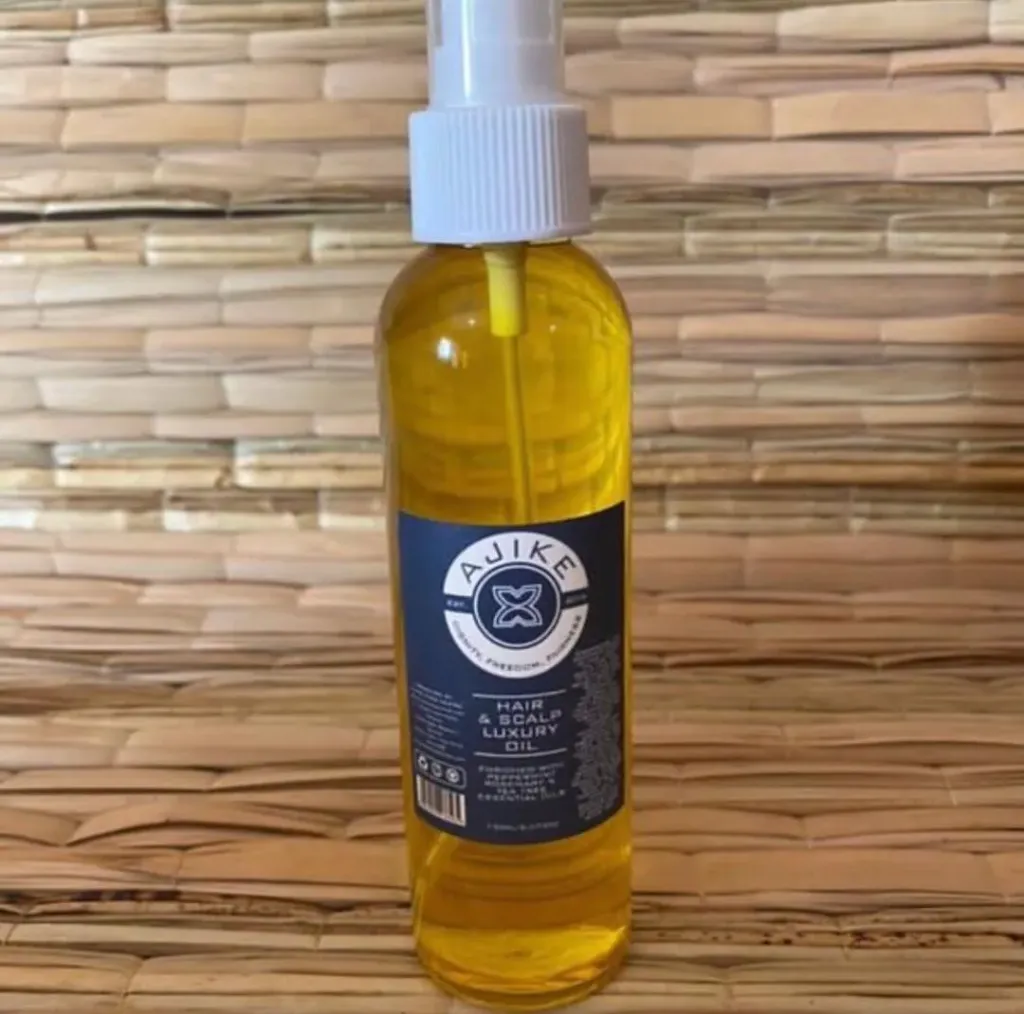
Ajike Hair and Scalp Luxury Oil: Scalp Health for Stronger Root Growth
Breakage prevention is not only about the hair strand. A healthy scalp supports stronger hair growth from the follicle, meaning the hair that grows is stronger and more resilient from the moment it emerges. Our Hair and Scalp Luxury Oil applied with scalp massage between washes maintains the scalp health that supports the strongest possible new growth.
Frequently Asked Questions
The most common causes of significant breakage in natural hair are moisture deficiency (not enough water-based moisture being applied or not being sealed in effectively), protein deficiency or protein-moisture imbalance, over-manipulation, heat damage, and mechanical damage from accessories or tight styles. Use the stretch test to assess whether protein or moisture is the priority, then work through the 7-step routine approach in this guide.
Yes. Marula oil's high oleic acid content (70 to 78 percent) allows it to penetrate the hair cortex and provide genuine internal conditioning that makes the hair strand more flexible and more resistant to snapping. Applied as a pre-shampoo treatment and as part of a post-wash LOC routine, marula oil produces measurable improvements in hair flexibility and reduced breakage over 4 to 8 weeks of consistent use. Results may vary depending on hair type.
With consistent implementation of the correct routine for the diagnosed cause, most people see noticeable reduction in breakage within 4 to 6 weeks. Full recovery of hair health, where the hair is retaining length and feels strong and flexible, typically takes 2 to 4 months of consistent practice. There are no instant fixes. The most important variable is consistency of the routine. Results may vary depending on hair type.
The protein-moisture balance refers to the ratio of structural protein (keratin and hydrolysed proteins) to hydration (water content) in the hair shaft. Both are needed for healthy, flexible, strong hair. Too little moisture produces dry, brittle hair that snaps easily. Too little protein produces limp, weak hair that stretches too far and breaks. Too much protein produces stiff, brittle hair. Maintaining the correct balance for your hair type is the most fundamental aspect of breakage prevention.
Yes. Trimming damaged, split ends does not cause you to lose length in the long run. Split ends propagate up the shaft, causing the breakage point to move progressively higher over time. A small trim that removes split ends prevents significantly more breakage than it removes. Trim every 8 to 12 weeks as part of the anti-breakage routine, more frequently during the initial recovery period if significant split ends are present.
Our latest content
Check out what's new in our company !