
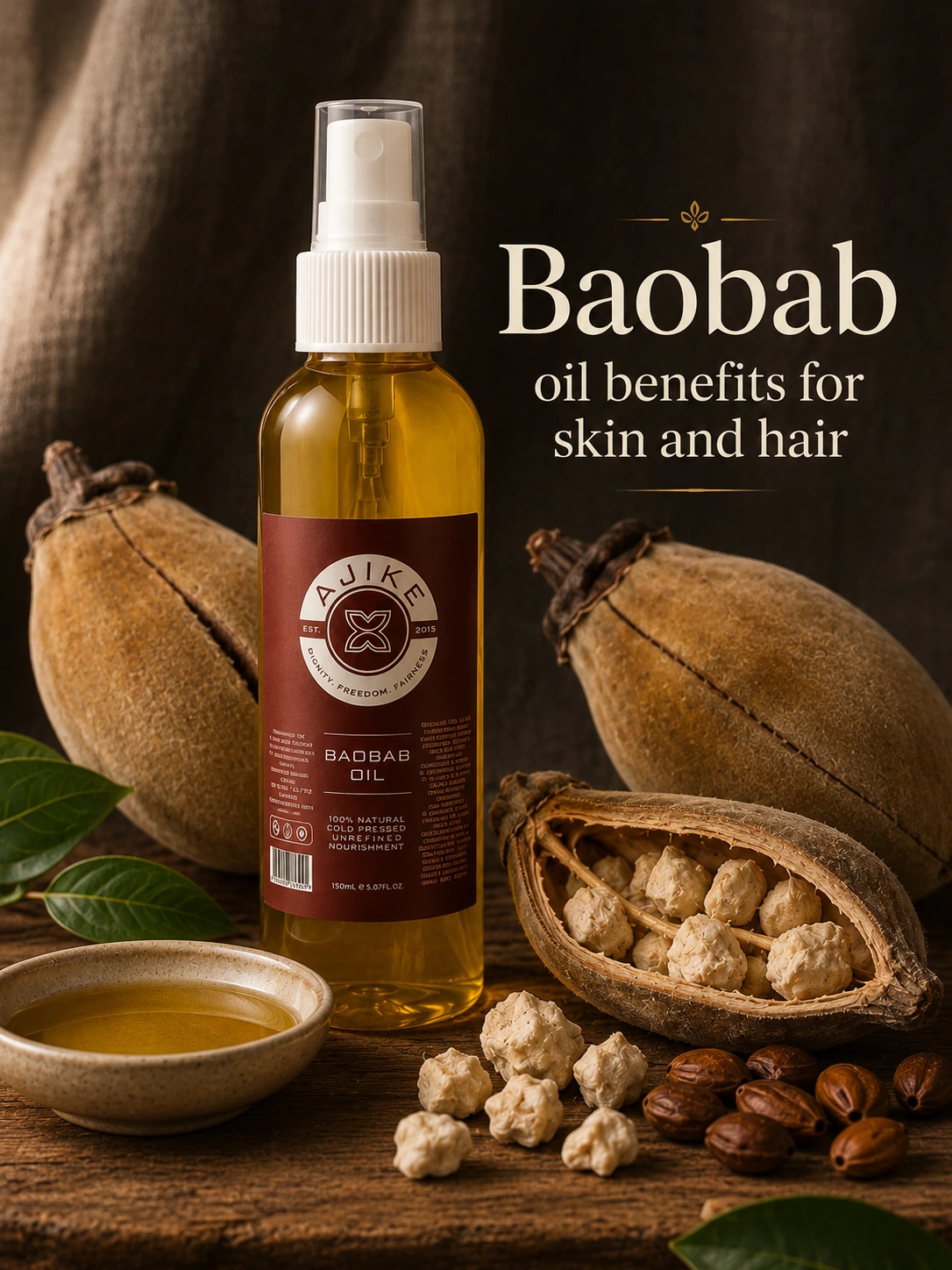
If you spend any time in African skincare or natural beauty circles, you will have heard about baobab oil. It has been called liquid gold, Africa's best-kept skincare secret, and a dozen other things that make it sound like marketing language. But baobab oil is genuinely remarkable, and the reasons why are grounded in measurable science rather than claims.
The baobab tree produces a seed oil with one of the most complete vitamin profiles of any botanical oil available. Vitamins A, D, E, and F simultaneously. A fatty acid composition that covers the full spectrum from deeply penetrating oleic acid to anti-inflammatory alpha-linolenic acid. A texture light enough for oily skin, a nutrient density rich enough for the driest hair.
This is the complete guide to baobab oil: what it is, what is actually in it, what it genuinely does for skin and hair, how it compares to other oils, and how to use it correctly.
Read Also: Using baobab oil for acne-prone skin?
What Is Baobab Oil?
The Baobab Tree: Africa's Tree of Life
The baobab tree, known botanically as Adansonia digitata, is one of the most extraordinary plants on Earth. It grows across the African savannah, particularly in sub-Saharan Africa, and is recognisable by its enormous, swollen trunk that can reach up to 10 metres in diameter and its relatively sparse canopy of branches that appear almost upside-down in the dry season when they are leafless.
The baobab is called the Tree of Life across many African cultures because almost every part of it has a use. The leaves are nutritious and eaten as a vegetable. The fruit pulp is extraordinarily high in vitamin C and is eaten fresh or used to make drinks. The bark has traditional medicinal uses. The seeds, pressed, yield baobab oil. A single tree can live for thousands of years. Some of the baobab trees alive today in southern Africa were already mature when the Roman Empire was at its height.
Where Baobab Oil Comes From
Baobab oil is extracted from the seeds inside the large, hard-shelled baobab fruit. The fruit contains a dry, powdery pulp surrounding the seeds. Once the fruit has been harvested or collected from the ground after it falls naturally, the shells are cracked open, the seeds are separated from the pulp, and the oil is pressed from the seeds.
Baobab trees grow across sub-Saharan Africa, but the primary production regions for commercial baobab oil include Mali, Burkina Faso, Senegal, Ghana, and Zimbabwe. Unlike the shea tree, baobab trees do grow in Ghana and across West Africa, which is why baobab oil is one of the core botanical ingredients in Ajike's range alongside shea butter.
How Baobab Oil Is Extracted
The quality of baobab oil depends significantly on the extraction method. Cold pressing is the preferred method for skincare-grade baobab oil. The seeds are pressed at low temperatures that do not exceed approximately 40 to 45 degrees Celsius, which preserves the heat-sensitive vitamins and polyunsaturated fatty acids that give the oil its beneficial properties.
Solvent extraction, using hexane or other chemical solvents, is used in some commercial production to maximise yield. This method damages the polyunsaturated fatty acids and leaves behind potential solvent residues. For skincare use, cold pressed is the only appropriate extraction method.
Cold Pressed vs Refined Baobab Oil: Why It Matters
The difference between cold pressed and refined baobab oil follows the same pattern as the difference between raw and refined shea butter. Cold pressed baobab oil retains its natural golden yellow to amber colour, its mild pleasant scent, and its full vitamin and fatty acid profile. Refined baobab oil is bleached to a paler colour, deodorised to remove its natural scent, and loses a significant proportion of its heat-sensitive vitamins and polyunsaturated fatty acids in the process.
The vitamins A, D, E, and F that make baobab oil genuinely special are concentrated in the cold pressed version. Vitamin A is particularly heat-sensitive and is significantly reduced by refining. For any skin or hair application where the vitamins are the point, cold pressed is non-negotiable.
What Makes Baobab Oil Different from Other Botanical Oils
Most botanical oils are celebrated for one or two standout properties: argan oil for vitamin E content, rosehip for vitamin A, hemp seed for linoleic acid, jojoba for its similarity to skin sebum. Baobab oil is exceptional because it has outstanding properties across multiple dimensions simultaneously.
The simultaneous presence of vitamins A, D, E, and F in meaningful concentrations is genuinely unusual in a single plant oil. The balanced fatty acid profile, which covers oleic, linoleic, and alpha-linolenic acids in a composition that works for almost every skin type, makes it one of the most versatile botanical oils available. And the light, non-greasy texture means this nutrient density is delivered without the heavy feel that richer oils tend to have.
The Nutrient Profile of Baobab Oil: What Is Actually in It
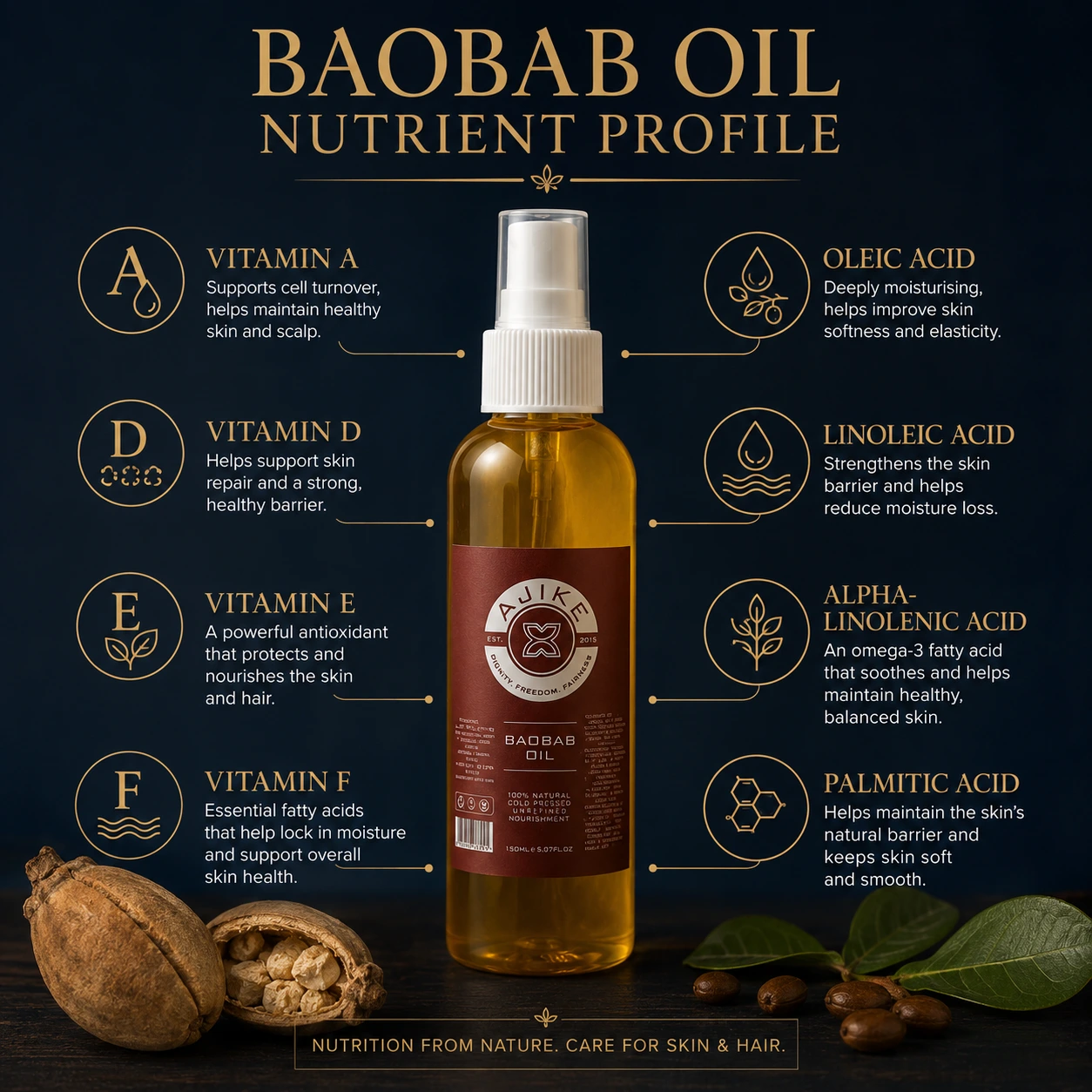
Baobab oil's reputation as Africa's most nutrient-rich botanical oil is earned. Here is what a bottle of cold pressed baobab oil actually contains:
Vitamin A: Skin Cell Renewal and Clarity
Vitamin A in baobab oil is present primarily as beta-carotene and other carotenoids, which the body converts to retinol as needed. Vitamin A is one of the most studied nutrients in dermatology because of its central role in regulating skin cell turnover. It supports the rate at which old, dead skin cells are shed and replaced by new, healthier cells, which over time produces a clearer, more refined skin texture and improved skin tone.
The vitamin A in cold pressed baobab oil is present at concentrations that are meaningful but not aggressive. Unlike pharmaceutical retinoid treatments, which deliver concentrated vitamin A at skin-irritating doses, the naturally occurring vitamin A in baobab oil provides a gentle, cumulative skin renewal benefit without the irritation, peeling, or photosensitivity that concentrated retinoids cause.
Vitamin D: Skin Health and Barrier Support
Vitamin D is less commonly highlighted in botanical oil discussions but is one of baobab oil's distinctive features. Vitamin D3 plays a role in skin barrier function, specifically in the synthesis of antimicrobial peptides that are part of the skin's innate immune defence, and in the regulation of keratinocyte differentiation, which affects how the skin surface layer is formed and renewed.
Topical vitamin D, while not a substitute for systemic vitamin D from sunlight or diet, contributes to the skin's surface immune environment. For skin prone to Staphylococcus aureus colonisation, as in eczema, or for skin dealing with chronic low-grade infection, the vitamin D content of baobab oil is a meaningful additional benefit.
Vitamin E: Antioxidant Protection Against Environmental Damage
Tocopherols, collectively vitamin E, are fat-soluble antioxidants that work within the lipid environment of the skin barrier. They neutralise free radicals produced by UV radiation, pollution, and other environmental stressors before these free radicals can damage skin cell DNA, lipid membranes, and collagen structures.
Baobab oil's vitamin E content is significant but not as concentrated as argan oil's, which is the most vitamin E-rich plant oil commonly used in skincare. What baobab oil provides is effective antioxidant protection as part of a broader multi-vitamin profile, rather than relying on vitamin E alone as argan oil essentially does.
Vitamin F: The Essential Fatty Acids Most Skin Is Missing
Vitamin F is the collective term for essential fatty acids, primarily linoleic acid (omega-6) and alpha-linolenic acid (omega-3). They are called essential because the body cannot synthesise them and must obtain them through diet or topical application. In the context of skin, essential fatty acids are fundamental building blocks for ceramide synthesis, and ceramides are the lipid molecules that hold the skin barrier together.
Deficiency in essential fatty acids at the skin level is associated with impaired barrier function, increased transepidermal water loss, and conditions like eczema and psoriasis where barrier dysfunction is central. Baobab oil, with its meaningful concentrations of both linoleic and alpha-linolenic acid, provides topical essential fatty acid support that directly benefits skin barrier health.
Oleic Acid: Deep Penetration and Moisture Delivery
Oleic acid, an omega-9 monounsaturated fatty acid, makes up approximately 33 to 38 percent of baobab oil by weight. It is a skin-compatible fatty acid that penetrates the upper layers of the stratum corneum relatively easily, delivering the oil's active compounds to where they can be most effective. Oleic acid also has emollient properties, smoothing the skin surface and improving moisture retention.
The oleic acid content of baobab oil is lower than that of argan oil (approximately 43 percent) or olive oil (approximately 70 percent), which is one of the reasons baobab oil feels lighter on the skin than these higher-oleic alternatives.
Linoleic Acid: Skin Barrier Repair and Acne Support
Linoleic acid (omega-6) is present in baobab oil at approximately 28 to 36 percent, which is one of the highest linoleic acid concentrations of any commonly used botanical oil. This high linoleic content is one of baobab oil's most significant properties for skincare.
Linoleic acid is a component of ceramide synthesis in the skin barrier. Ceramide 1, one of the most important ceramides for barrier integrity, requires linoleic acid for its production. Acne-prone skin is specifically deficient in linoleic acid in its sebum compared to clear skin, and topical application of linoleic acid-rich oils has been shown in studies to normalise sebum composition and reduce comedone formation over time. This is why baobab oil, despite being an oil, is well-suited to acne-prone skin.
Alpha-Linolenic Acid: Anti-Inflammatory Action
Alpha-linolenic acid (ALA), an omega-3 polyunsaturated fatty acid, is present in baobab oil at approximately 3 to 5 percent. While this is a relatively modest concentration, ALA has potent anti-inflammatory properties through its role as a precursor to anti-inflammatory eicosanoids. These signalling molecules modulate the skin's inflammatory response, reducing chronic inflammation at the skin barrier level.
The combination of linoleic acid's barrier-repair properties and alpha-linolenic acid's anti-inflammatory action gives baobab oil a two-front approach to barrier health that makes it particularly appropriate for inflammatory skin conditions and for skin that experiences chronic redness or irritation.
Palmitic Acid: Emollient Smoothing Effect
Palmitic acid, a saturated fatty acid present at approximately 20 to 28 percent of baobab oil, contributes to the oil's emollient properties. It smooths the skin surface by filling the microscopic gaps between skin cells, improving texture and feel. Palmitic acid also contributes a degree of stability to the oil, helping it resist oxidation. Unlike some saturated fatty acids, palmitic acid at the concentrations found in baobab oil is not significantly comedogenic.
Baobab Oil Benefits for Skin
Deep Hydration That Does Not Feel Heavy
This is the property that surprises most people who try baobab oil for the first time. Despite its rich vitamin and fatty acid profile, baobab oil has a light, dry texture that absorbs relatively quickly without leaving a greasy or heavy residue. This is primarily because of its balanced fatty acid composition, which does not have an excessively high oleic acid content that would make it heavy, and because its linoleic acid content produces a more fluid oil texture.
For skin types that need intensive nourishment but find heavier oils uncomfortable, baobab oil represents an unusual combination: genuine nutritional depth with a texture that most skin types, including oily and combination skin, can wear comfortably.
Skin Barrier Strengthening and TEWL Reduction
The combination of linoleic acid-driven ceramide synthesis support and the direct occlusive properties of its fatty acid composition gives baobab oil meaningful skin barrier-strengthening properties. Regular application reduces transepidermal water loss by both strengthening the barrier structure from within (through ceramide support) and providing a breathable lipid layer at the surface that slows moisture evaporation.
For conditions where barrier weakness is the primary problem, including eczema, psoriasis, and chronically dry skin, this barrier-strengthening action is the most therapeutically relevant benefit of regular baobab oil use.
Natural Anti-Aging: Elasticity and Fine Lines
The combination of vitamin A (skin cell renewal), vitamin E (antioxidant protection), and alpha-linolenic acid (anti-inflammatory action) addresses the three primary mechanisms of skin aging simultaneously. Vitamin A supports the turnover of older, less organised skin cells, gradually improving surface texture and reducing the visibility of fine lines. Vitamin E neutralises the free radical damage that breaks down collagen and elastin. Alpha-linolenic acid reduces the chronic low-grade inflammation that drives accelerated aging in skin.
Baobab oil is not a replacement for pharmaceutical retinoid anti-aging treatments if those are appropriate for a particular situation. But as a daily-use botanical anti-aging oil with no irritation risk, it is one of the most complete options available.
Brightening and Skin Tone Improvement
The vitamin A content of baobab oil supports gradual skin cell renewal, which over time reduces the accumulation of hyperpigmented surface cells that cause uneven tone and dullness. This effect is gentle and cumulative rather than rapid and dramatic, but with consistent daily use, most users notice a more even, more radiant complexion over 6 to 12 weeks.
For post-acne marks and mild hyperpigmentation, baobab oil works well as a daily moisturiser alongside a targeted brightening treatment such as our Nightly Face Serum with Lactic Acid and Papaya Oil. The serum provides the active brightening, and the baobab oil supports the skin renewal process and provides the moisture barrier needed for effective healing.
Calming Inflammation and Redness
The alpha-linolenic acid and vitamin E content of baobab oil both contribute to anti-inflammatory action at the skin surface. For skin prone to redness, reactivity, or chronic low-grade inflammation, regular baobab oil application provides a gentle, cumulative anti-inflammatory effect. This is not an immediate or dramatic result. It is a gradual improvement in the baseline inflammatory state of the skin that becomes noticeable over weeks of consistent use.
Suitable for All Skin Types Including Oily Skin
Baobab oil's comedogenicity rating of 2 on the 0 to 5 scale, combined with its high linoleic acid content and its light, quickly-absorbing texture, makes it one of the few plant oils genuinely suitable for oily and acne-prone skin. The linoleic acid content is specifically beneficial for acne-prone sebum composition. The light texture does not add to the surface oil load in a way that feels uncomfortable.
For oily skin, 2 to 3 drops of baobab oil applied to slightly damp skin after cleansing, rather than the heavier moisturisers that oily skin types often avoid, provides the hydration and barrier support the skin needs without the weight and congestion risk of heavier products.
Supporting Skin After Sun Exposure
Vitamin E's antioxidant properties make baobab oil supportive for skin that has been exposed to UV radiation. After sun exposure, free radical damage in the skin continues for hours. Applying an antioxidant-rich oil like baobab oil after sun exposure helps neutralise some of this ongoing free radical damage. The vitamin A content also supports the accelerated skin cell renewal needed to replace UV-damaged surface cells.
Baobab oil is not a sunscreen and does not provide UV protection. It should be used as a post-sun support measure alongside, not instead of, an SPF product.
Stretch Marks, Scars and Uneven Texture
The vitamin A content in baobab oil supports gradual skin cell renewal that over time improves the appearance of scarring, stretch marks, and uneven skin texture. The fatty acid profile provides the lipid support for healthy skin cell production in areas of scarring. The improvement is gradual and consistent rather than rapid, and it works best with daily application to the affected area over several months.
Baobab Oil for Acne-Prone Skin: Is It Safe?
The Comedogenicity Rating of Baobab Oil
Baobab oil is rated 2 on the comedogenicity scale of 0 to 5. This places it firmly in the low-comedogenic category, meaning it is very unlikely to block pores for the majority of skin types. For context, coconut oil is rated 4 to 5, making it likely to cause breakouts for most people who use it on their face. Jojoba oil is rated 2, the same as baobab. Argan oil is rated 0. Baobab oil's rating of 2 means it is a safe choice for most acne-prone skin types when used in appropriate amounts.
Why Linoleic Acid Makes Baobab Oil Suitable for Acne-Prone Skin
Research has established that acne-prone skin produces sebum that is relatively deficient in linoleic acid compared to healthy skin. This linoleic acid-deficient sebum is more viscous, more likely to form comedonal plugs in follicles, and creates a more hospitable environment for Cutibacterium acnes colonisation. The linoleic acid present in acne-prone sebum is also important for maintaining the follicle wall integrity that prevents follicle rupture.
Baobab oil, with approximately 28 to 36 percent linoleic acid content, is one of the highest linoleic acid botanical oils available. Applied topically, it supplements the skin surface and the follicle environment with the linoleic acid that acne-prone sebum lacks. Studies using linoleic acid-rich oils on acne-prone skin have documented reductions in comedone size and number over 4 to 8 weeks of consistent use.
How to Use Baobab Oil Safely When You Are Prone to Breakouts
For acne-prone skin, apply 2 to 3 drops of cold pressed baobab oil to slightly damp skin after cleansing with Ajike African Black Soap, as the last step in your evening skincare routine. Start with every other evening for the first two weeks, monitoring for any new congestion. If none develops, progress to every evening. Keep the contact with active breakout areas minimal, applying primarily to clear skin between and around breakouts rather than directly on active lesions.
Baobab Oil vs Heavier Oils for Acne-Prone Skin
For acne-prone skin, baobab oil is preferable to heavier, higher-oleic oils like olive oil, marula oil, or avocado oil, which have richer textures and higher oleic acid contents that can feel heavy and potentially congesting on oily skin. It is comparable in suitability to argan oil and jojoba oil. The advantage baobab oil has over argan oil specifically is its higher linoleic acid content, which is more directly beneficial for acne-prone sebum composition.
Read Also: Full guide: Baobab Oil for Hair Growth and Scalp Health: Does It Really Work?
Baobab Oil Benefits for Hair
Sealing Moisture into Hair Strands
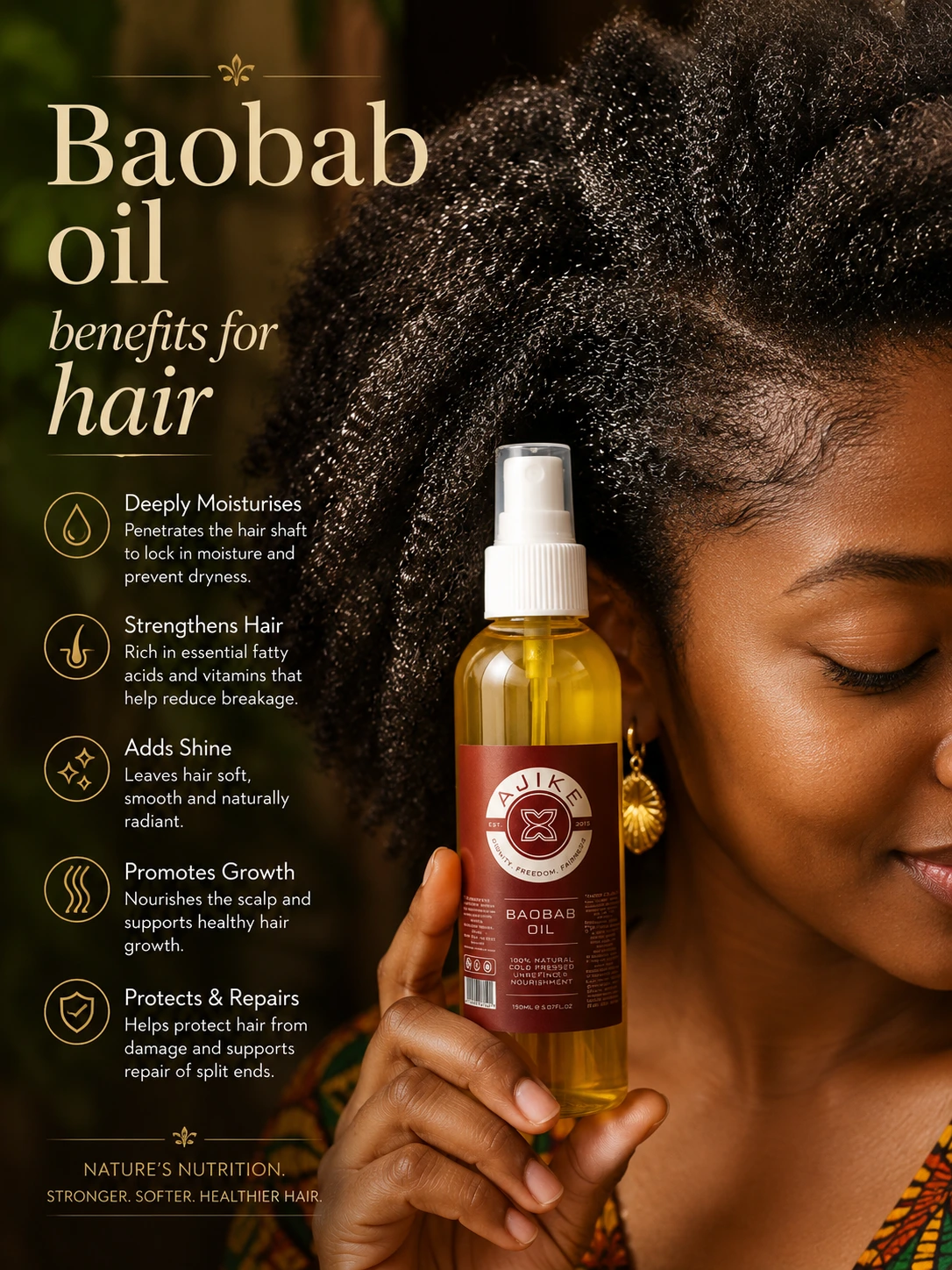
Baobab oil's primary function in hair care is as a moisture-sealing oil. Applied after washing and conditioning, or after applying a water-based leave-in product, a small amount of baobab oil seals the moisture into the hair strand by coating the hair cuticle with a thin, breathable lipid layer that slows moisture evaporation without creating buildup.
The light texture of baobab oil is a significant advantage here. Heavier oils like castor oil or coconut oil provide moisture sealing but leave a heavy, greasy residue that can weigh fine hair down and create buildup in coarser or higher-porosity hair over time. Baobab oil seals effectively without the weight.
Strengthening Hair and Reducing Breakage
The fatty acid profile of baobab oil, particularly the oleic acid content, allows it to penetrate into the hair shaft cortex rather than simply coating the surface. Oil that penetrates the hair shaft provides internal flexibility, reducing brittleness and the likelihood of the hair snapping during styling, combing, or environmental stress.
The vitamin E content provides antioxidant protection to the hair strand itself, reducing oxidative damage from UV exposure and heat styling. Over consistent use, this combination of internal conditioning and antioxidant protection produces measurably stronger, more resilient hair.
Scalp Nourishment and Dry Scalp Relief
Applied to the scalp, baobab oil provides emollient relief for dry, flaking, or irritated scalp conditions. The vitamin D content is relevant to scalp health through its role in keratinocyte regulation and antimicrobial peptide production. The anti-inflammatory properties of alpha-linolenic acid help calm scalp inflammation associated with dry scalp and seborrhoeic dermatitis.
For scalp use, apply baobab oil in sections directly to the scalp using a dropper or fingertip, massage gently, and leave for 30 to 60 minutes before washing. This pre-shampoo scalp treatment allows the oil to work on the scalp without the residue concerns of leave-in application.
Improving Hair Elasticity and Reducing Frizz
Hair elasticity, the ability of a hair strand to stretch and return to its original length without breaking, is a key indicator of hair health. Elasticity is maintained by adequate moisture balance within the hair strand. Baobab oil, by sealing in moisture and providing internal conditioning, directly supports and improves hair elasticity over consistent use.
Frizz in natural and textured hair is largely a moisture issue: when the hair lacks internal moisture, it seeks it from the surrounding humid air, causing the cuticle to swell and lift, creating frizz. Sealing the hair with baobab oil after moisturising reduces this moisture exchange with the environment, keeping the cuticle smooth and the hair less prone to frizz.
For Natural, Textured, Loc and Chemically Treated Hair
Baobab oil's combination of light texture, meaningful penetration, and effective moisture sealing makes it versatile across hair types. For natural and textured hair (coily and kinky hair types), it works well as a sealant in the LOC (Liquid, Oil, Cream) or LCO (Liquid, Cream, Oil) method, applied after water and before or after a leave-in cream. For locs, it provides moisture without the buildup that heavier oils cause. For chemically treated hair, the vitamin and fatty acid profile helps maintain the integrity of chemically altered hair strands.
Using Baobab Oil as a Pre-Shampoo Treatment
A pre-shampoo treatment with baobab oil applied to hair and scalp 30 to 60 minutes before washing provides intensive conditioning that the shampooing process then does not strip away entirely. The oil creates a protective layer around each hair strand during washing, reducing the cuticle-lifting effect of shampooing and leaving hair in better condition after washing than it would be without the pre-treatment.
Apply 3 to 5 drops to each section of dry or slightly damp hair, work through from mid-length to ends and onto the scalp. Cover with a shower cap if possible to increase the temperature and improve penetration. Wash as normal.
Read Also: Full hair guide: Baobab Oil vs Argan Oil: Which One Is Better for Your Skin?
Baobab Oil vs Argan Oil: Which One Is Better for Your Skin?
Feature | Baobab Oil | Argan Oil |
Origin | Sub-Saharan Africa | Morocco |
Vitamins | A, D, E, F (four vitamins) | E primarily, trace A |
Linoleic acid | 28-36% (very high) | 12-16% (moderate) |
Oleic acid | 33-38% | 43-49% |
Texture | Light, dry, fast-absorbing | Light to medium, absorbs well |
Comedogenicity | Rating 2 | Rating 0 |
Best for skin | Acne, eczema, anti-aging, all types | Anti-aging, mature, dry skin |
Best for hair | All types, scalp conditions | Fine and medium hair, frizz control |
Where Each Oil Comes From
Argan oil is pressed from the kernels of the argan tree (Argania spinosa), which grows almost exclusively in the semi-arid areas of southwestern Morocco. It is a UNESCO-protected biosphere and the oil is produced primarily by women's cooperatives. Baobab oil comes from the seeds of the baobab tree (Adansonia digitata), which grows across sub-Saharan Africa from Senegal to Ethiopia. Both are African botanical oils, though from very different regions and climates.
Nutrient Profile Comparison
This is where the most significant differences lie. Argan oil is exceptional for its vitamin E content, which is one of the highest of any botanical oil. Its fatty acid profile is primarily oleic and linoleic acid. It contains some vitamin A in the form of beta-carotene but in modest amounts.
Baobab oil has a more complete multi-vitamin profile: meaningful concentrations of vitamins A, D, E, and F simultaneously. Its vitamin E content is lower than argan oil's, but its linoleic acid content is significantly higher, and it contains alpha-linolenic acid (omega-3) which argan oil has in very small amounts. For skin conditions where essential fatty acids and vitamin A are particularly relevant, baobab oil has a fuller profile.
Texture and Absorption Comparison
Both oils are considered lightweight for botanical oils. Argan oil has a slightly more emollient feel on application, which many people find pleasant and which contributes to its popularity as a serum and finishing oil. Baobab oil has a slightly dryer finish that absorbs marginally faster, which some skin types prefer and which makes it more appropriate for oilier skin.
Which Is Better for Dry Skin
For dry skin seeking intensive hydration, argan oil's higher oleic acid content provides slightly richer, longer-lasting surface moisturisation. Baobab oil's vitamin A and barrier-repairing essential fatty acids provide better long-term barrier improvement. For immediate comfort, argan. For barrier repair over time, baobab. Many people with dry skin benefit from using both: baobab oil for its barrier-repair and vitamin A benefits, argan oil when a richer feel is wanted.
Which Is Better for Oily and Acne-Prone Skin
Baobab oil, clearly. The higher linoleic acid content is specifically beneficial for acne-prone sebum composition. The slightly dryer finish is more comfortable on already-oily skin. The comedogenicity rating of 2 vs 0 is a minor distinction in practical terms. For acne-prone skin that wants a botanical oil, baobab oil is the more appropriate choice over argan.
Which Is Better for Hair
Both oils work well for hair, but with different strengths. Argan oil is excellent for fine and medium hair where its emollient properties improve smoothness and frizz control without excessive weight. Baobab oil is better for coarser, more porous, natural and textured hair types where its penetrative properties and scalp-health vitamins are most relevant. For locs and hair prone to buildup, baobab oil causes less accumulation than argan oil in extended use.
Price and Availability Comparison
Argan oil is more globally available and in higher commercial demand, which means it is produced at larger scale and with more commercial standardisation. This does not make it better; it means it is more widely available and, in some markets, less expensive than premium baobab oil.
Baobab oil is produced in smaller quantities at lower commercial scale. Genuine cold pressed baobab oil is not as widely produced as cold pressed argan oil, which means adulteration with cheaper oils is more common. A very cheap baobab oil is almost certainly diluted. For pure baobab oil, expect to pay a premium comparable to or slightly above quality argan oil.
The Honest Verdict: When to Choose Each One
Choose baobab oil when: you have acne-prone or oily skin, you want a higher linoleic acid content for barrier repair, you have eczema or inflammatory skin, you use it for scalp and hair conditions, or you want the multi-vitamin profile including vitamin D that baobab provides uniquely.
Choose argan oil when: your primary concern is antioxidant anti-aging with vitamin E, you have fine hair where you want a finishing oil, you want the lightest possible feel on the skin surface, or argan oil is simply more accessible in your area.
Both are genuinely good oils. Neither is universally superior. The choice should be made based on your specific skin type and concerns.
Baobab Oil Anti-Aging: What It Actually Does and What to Expect
How Free Radical Damage Causes Skin Aging
Free radicals are unstable molecules produced by UV radiation, pollution, smoking, and normal metabolic processes. When free radicals react with the molecules in skin cells, they cause oxidative damage that accumulates over time. This oxidative damage degrades collagen and elastin fibres, the structural proteins that give skin its firmness and elasticity. It also damages skin cell DNA and lipid membranes, accelerating cell dysfunction and surface aging.
The visible results of this accumulated oxidative damage are what we recognise as skin aging: fine lines and wrinkles from collagen and elastin degradation, uneven tone and dullness from accumulated damaged cells, loss of firmness and elasticity, and irregular texture.
How Vitamin E and Alpha-Linolenic Acid Address This
Vitamin E (tocopherols) in baobab oil are fat-soluble antioxidants that work within the skin's lipid barrier, neutralising free radicals before they can reach and damage cellular structures. Applied daily, vitamin E provides consistent antioxidant protection that, over time, reduces the rate of oxidative damage accumulation.
Alpha-linolenic acid adds to this through its anti-inflammatory properties. Chronic skin inflammation, driven by both UV exposure and environmental pollutants, is a secondary driver of skin aging through its stimulation of matrix metalloproteinases (MMPs), enzymes that break down collagen. Reducing the inflammatory baseline through regular application of alpha-linolenic acid-rich oils reduces MMP activation and supports better collagen preservation.
Collagen Support and Skin Elasticity
Vitamin A in baobab oil supports fibroblast activity, the skin cells responsible for producing collagen and elastin. While the vitamin A concentrations in baobab oil are not at the therapeutic levels of pharmaceutical retinoids, the regular delivery of vitamin A to the skin surface does provide genuine, if modest, support for ongoing collagen production. Over months of daily use, this contribution to collagen synthesis adds up to measurable improvements in skin firmness and elasticity.
Realistic Timeline for Anti-Aging Results
Realistic expectations for baobab oil as an anti-aging oil are important to set. In the first 4 to 6 weeks of daily use, you will likely notice improved skin hydration, better moisture retention throughout the day, and a more even, more radiant skin surface as the vitamin A cell renewal action begins. These are real improvements but modest ones.
By month 3 to 4 of consistent daily use, most people with dry or mature skin notice more meaningful improvements in skin texture and a gradual softening of fine lines. Over 6 to 12 months of daily use, the cumulative effect of consistent antioxidant protection, vitamin A cell renewal, and essential fatty acid barrier support produces visible improvements in skin health that are meaningful but gradual. Results may vary depending on skin type.
How to Use Baobab Oil as Part of an Anti-Aging Routine
For an anti-aging routine with baobab oil: cleanse, apply any targeted treatments (hyaluronic acid serum, nightly lactic acid serum), then apply 3 to 4 drops of baobab oil to slightly damp skin as the moisturising and sealing step. Morning use provides the antioxidant protection most relevant to daytime UV and pollution exposure. Evening use provides the vitamin A and essential fatty acid support most relevant to overnight repair.
How to Use Pure Baobab Oil on Skin and Hair
On the Face: How Much, When and How
For the face, 2 to 3 drops of cold pressed baobab oil warmed between fingertips and pressed to slightly damp skin after cleansing. It can be used as a standalone moisturiser for oily, normal, and combination skin. For dry skin, it works best layered over a humectant (glycerine or hyaluronic acid) and under a richer moisturiser or shea butter.
Apply morning and evening, or evening only for oily skin. Press gently into skin rather than rubbing. It should absorb within two to three minutes.
On the Body: Layering Over a Moisturiser
For the body, baobab oil works well as a finishing layer applied over a body lotion or on its own to slightly damp skin after bathing. 5 to 8 drops for the full body is sufficient. The light texture makes it practical for full-body use in a way that heavier oils are not. Apply while skin is still slightly damp after bathing, distribute quickly with light pressing movements, and dress within a few minutes.
On the Hair: Pre-Shampoo, Sealing and Scalp Massage
For hair: as a pre-shampoo treatment, apply 3 to 5 drops per section to dry hair and scalp, leave for 30 to 60 minutes, then shampoo as normal. As a post-wash sealant, apply 2 to 3 drops to damp hair after conditioning, working from mid-length to ends. As a daily scalp oil, apply 1 to 2 drops per section to the scalp only and massage gently.
On the Scalp: Application Technique
For scalp application, use a dropper if your bottle has one, or apply drops from the bottle directly to parted hair sections. Gently massage the scalp with fingertips using circular movements for two to three minutes after application. This scalp massage improves circulation, supports nutrient delivery to the hair follicle, and ensures even distribution of the oil across the scalp.
For Babies: Is Baobab Oil Safe for Infant Skin
Yes. Cold pressed baobab oil with no additives is safe for use on baby and infant skin. Its edible-grade safety profile (baobab fruit is a food) makes it appropriate for the most sensitive skin. Ajike uses baobab oil in our baby range precisely because of this safety profile combined with its vitamin and essential fatty acid content. Apply in small amounts to slightly damp baby skin after bathing.
How to Store Baobab Oil to Preserve Its Nutrients
Baobab oil is relatively stable compared to other high-polyunsaturated oils, but its vitamin A and polyunsaturated fatty acids are still susceptible to oxidation from light, heat, and air exposure. Store in a dark glass bottle or dark amber bottle away from direct sunlight. Keep the lid tightly closed between uses. Store at room temperature or slightly below. An opened bottle of cold pressed baobab oil stored correctly should remain in good condition for 12 to 18 months.
African Baobab Oil Skincare: Why the Origin Matters
Where Authentic Baobab Oil Comes From
Genuine baobab oil comes from the wild baobab trees of sub-Saharan Africa. The primary producing countries include Mali, Burkina Faso, Senegal, Tanzania, and Zimbabwe, with smaller production in Ghana and other West African nations. Baobab trees are not cultivated commercially in most of these regions. The fruit is collected from wild trees, making baobab oil a wild-harvested product with a similar community-based production model to shea butter.
Cold Pressed from Wild Baobab Seeds
The small-scale, often cooperative production of baobab oil in producing communities uses cold pressing as the standard extraction method. The seeds are pressed manually or with small-scale cold presses, producing an oil with a natural golden to amber colour and a mild, pleasant scent. This is the baobab oil worth using for skin and hair.
Why African-Sourced Baobab Oil Is Superior
Baobab trees growing in their native African environment have developed their characteristic nutrient profile in response to the specific conditions of the African savannah: intense UV radiation, prolonged dry seasons, and nutrient-rich laterite soils. The vitamin E content in particular is thought to be an evolutionary response to the high UV environment, providing the tree's seeds with antioxidant protection during dormancy. Seeds from wild African trees produce oil with this evolved nutrient density intact.
How to Tell Genuine Cold Pressed Baobab Oil from Diluted or Refined Products
Genuine cold pressed baobab oil has a golden to amber colour, ranging from pale gold to a richer amber depending on the batch and origin. It has a mild, pleasant, slightly sweet and earthy scent. It flows smoothly and is completely liquid at room temperature. A very pale or colourless baobab oil has likely been refined or bleached. A baobab oil with no detectable scent has likely been deodorised. A very low-priced baobab oil is almost certainly diluted with a cheaper carrier oil.
Ajike Pure Baobab Oil: Wild Harvested and Cold Pressed in West Africa
Where Our Baobab Oil Comes From
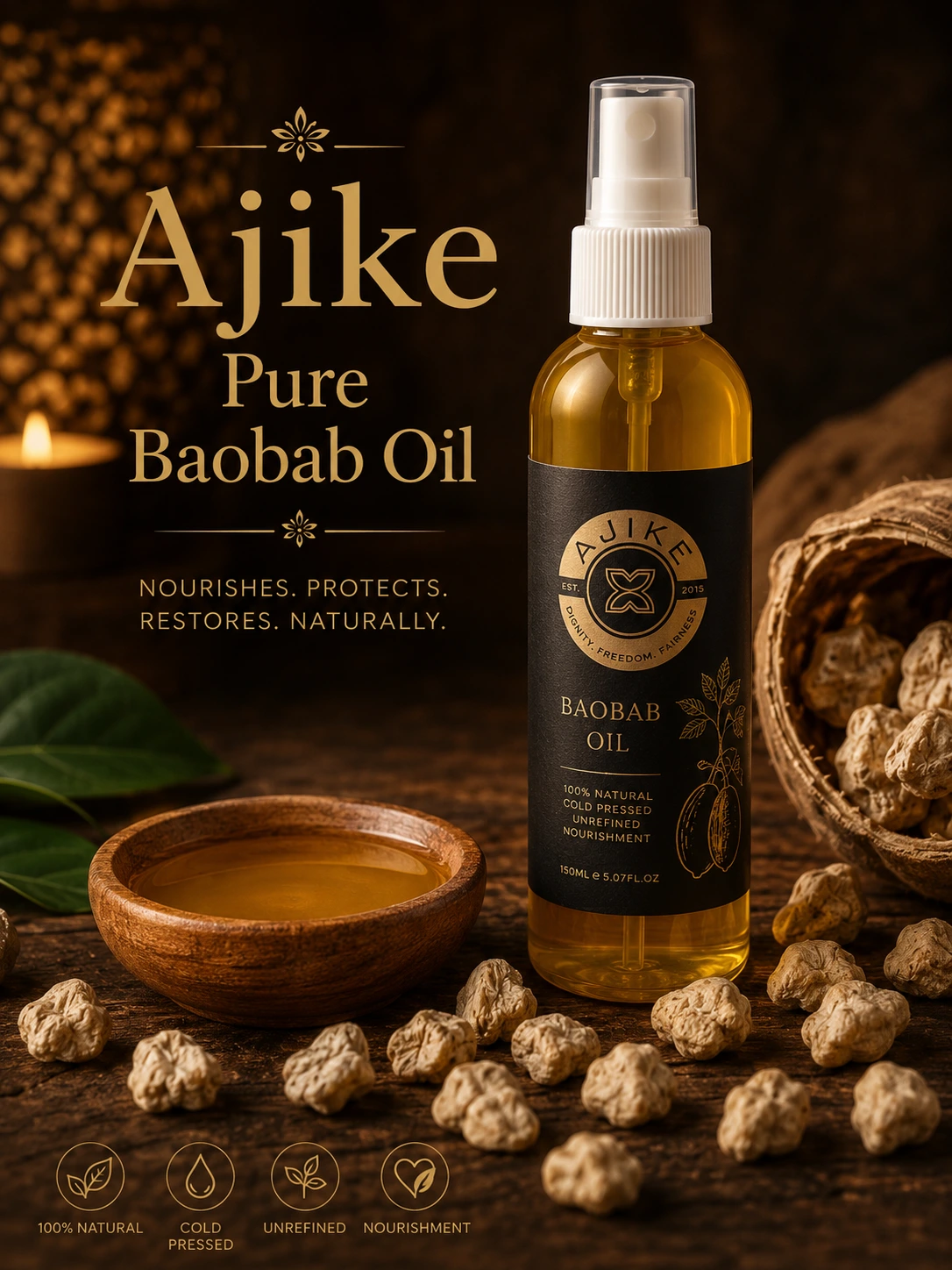
Ajike's baobab oil is wild harvested and cold pressed in West Africa. We source from producers who collect baobab fruit from wild trees, press the seeds using cold pressing methods, and produce an oil that retains the natural colour, scent, and full nutrient profile of genuine cold pressed baobab oil. The golden amber colour of our baobab oil is the natural colour of a properly produced, unrefined product.
Cold Pressed for Maximum Nutrient Retention
Every batch of Ajike Pure Baobab Oil is cold pressed. The temperature during pressing does not exceed 45 degrees Celsius, preserving the heat-sensitive vitamins A and F (essential fatty acids) that are most therapeutically relevant for skin and hair. The oil is then filtered to remove seed particulate but is not bleached, deodorised, or refined in any other way.
How We Use Baobab Oil Across Our Entire Product Range
Baobab oil is one of the core ingredients at Ajike, present in our Raw Baobab Anti-Aging Face Cream, our Pamper Me Face and Body Oil, our Baby Moisturiser, our Nightly Face Moisturiser with Hyaluronic Acid and Marula, and our hair care range. The decision to build so many products around baobab oil reflects our commitment to this ingredient's genuinely exceptional multi-vitamin profile and its suitability across almost all skin and hair types.
Why Baobab Oil Is One of the Core Ingredients at Ajike
Alongside shea butter, baobab oil is the ingredient that most defines Ajike's formulation philosophy. Both are African botanical ingredients with deep roots in the communities that produce them. Both have exceptional, well-documented benefits for skin and hair. And both are ingredients that the global beauty industry has begun to pay attention to, but that West African communities have understood and used for generations.
When you use Ajike Pure Baobab Oil, you are using the same ingredient, from the same wild trees, in the same unrefined form, that has been valued in West African skincare and beauty for longer than any laboratory has been studying it.
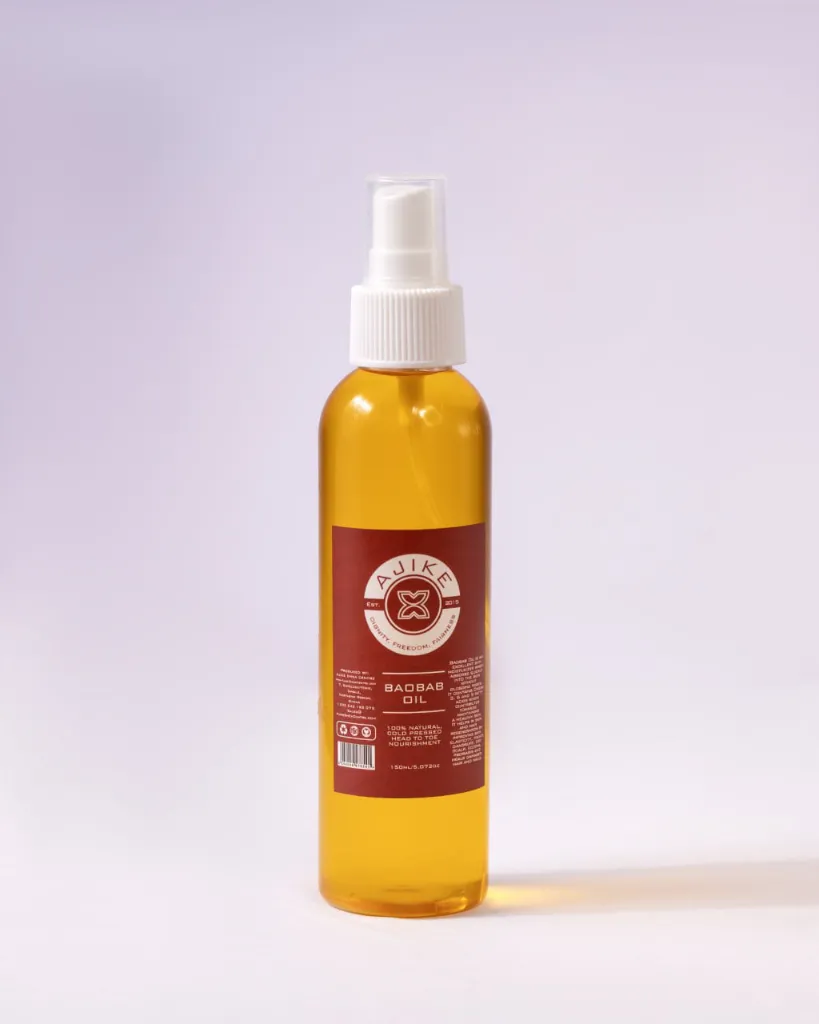
Lightweight Oil For Skin, Hair & Scalp
Pure Baobab Oil
100% pure cold pressed baobab oil with no additives. Wild harvested in West Africa and rich in Vitamins A, D, E and F.
View Product
Lightweight Oil For Skin, Hair & Scalp
Pure Baobab Oil
100% pure cold pressed baobab oil with no additives. Wild harvested in West Africa and rich in Vitamins A, D, E and F.
View ProductFrequently Asked Questions
Baobab oil is a multi-purpose botanical oil with documented benefits for skin hydration and barrier repair, anti-aging support through vitamins A and E, acne-prone skin through its high linoleic acid content, hair moisturisation and strength through its fatty acid profile and vitamin content, scalp health, and as a safe oil for baby skin. Its combination of four vitamins (A, D, E, F) and a balanced fatty acid profile makes it one of the most versatile botanical oils available.
Neither is universally better. Baobab oil is better for acne-prone and oily skin (higher linoleic acid, dryer finish), for eczema and inflammatory skin (more complete essential fatty acid profile), and for scalp and natural hair conditions (additional vitamin D, scalp-health properties). Argan oil is better for pure antioxidant anti-aging focus (higher vitamin E), for fine hair, and for a richer emollient feel. The best choice depends on your specific skin type and concerns.
Apply 2 to 3 drops to slightly damp facial skin after cleansing, warmed between fingertips. Press gently into the skin. Use as the last or near-last step in your routine, after any water-based serums have been applied. It can be used alone as a moisturiser for oily and normal skin, or as a sealing layer over a lighter moisturiser for dry skin. Morning and evening use is appropriate for dry and normal skin. Evening use is recommended for oily skin.
Yes. The light texture of baobab oil makes daily hair use practical without significant buildup concerns. For daily use, apply 1 to 2 drops to the mid-lengths and ends of hair as a finishing oil after styling. For more intensive scalp or hair treatment, use as a pre-shampoo treatment 1 to 2 times per week.
Baobab oil has a comedogenicity rating of 2 on the 0 to 5 scale, which places it firmly in the low-comedogenic category. The vast majority of skin types, including oily and acne-prone skin, can use baobab oil without significant pore-clogging concern when applied in appropriate amounts (2 to 3 drops) to slightly damp skin. Results may vary depending on skin type.
A properly stored bottle of cold pressed baobab oil, kept in a dark location with the lid tightly closed between uses and stored away from heat and sunlight, will remain in good condition for 12 to 18 months after opening. Oxidation is detectable by a change in scent from the pleasant mild characteristic odour to a rancid or sharp smell.
Start writing here...
Our latest content
Check out what's new in our company !