
Start writing here...
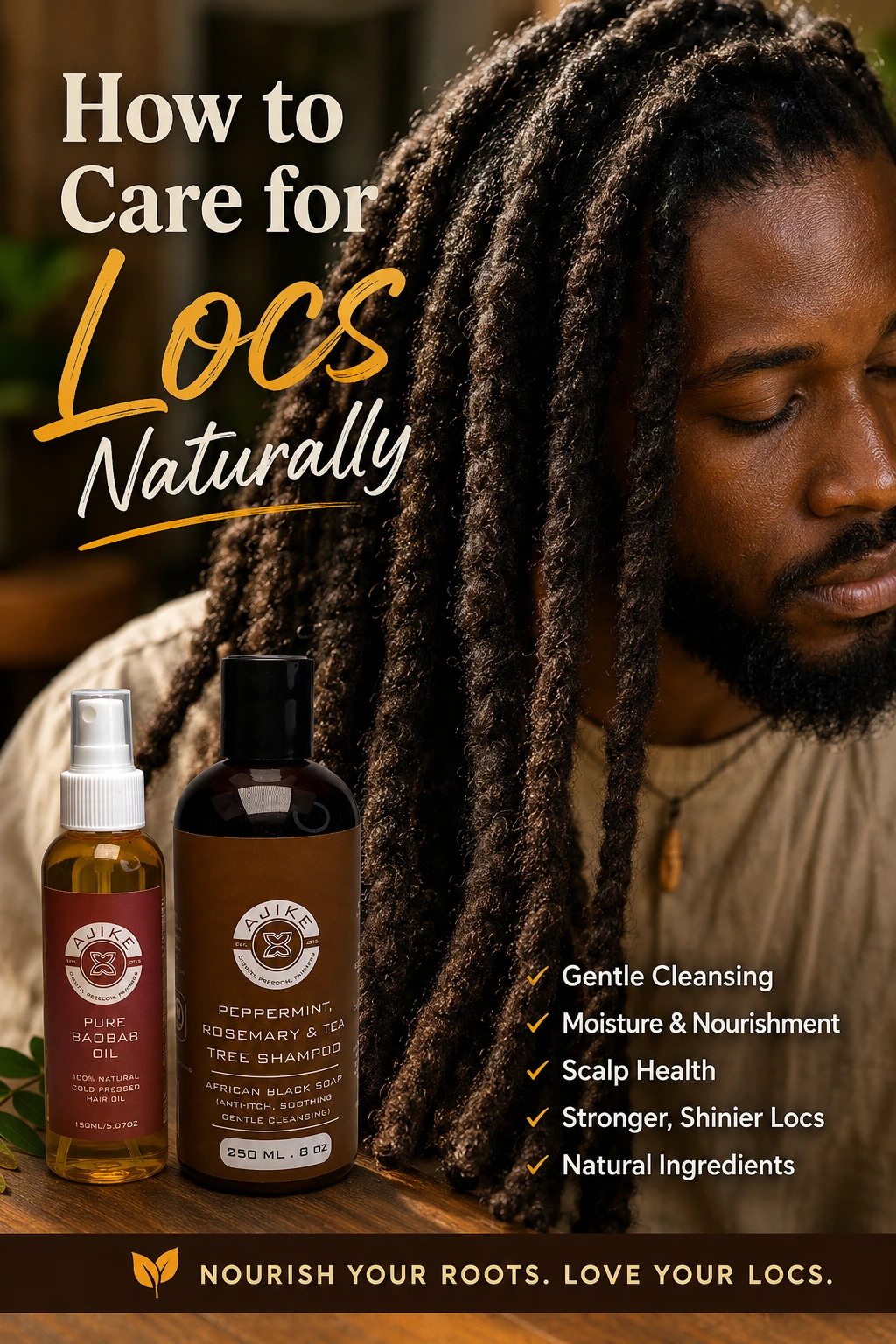 Locs are often described as low-maintenance hair. They are not. They are different-maintenance hair. The routines and products that work for loose natural hair need significant adjustment for locs, and the consequences of using the wrong products in locs, specifically the buildup that forms inside the compressed loc structure, are harder to reverse than most loc wearers realise before they experience it.
Whether you are in your first months of starting locs or maintaining a mature set, the three fundamentals are the same: moisture, cleanliness, and scalp health. Get these three right and the locs take care of themselves. Get them wrong and the recovery is slow and sometimes permanent.
This guide covers loc care from the beginning of the journey to mature locs, with specific guidance on the products that work, the ones to avoid, and the routines that keep both locs and scalp in their best condition.
Read Also: Understanding natural hair fundamentals: Natural Hair Care with African Botanicals - Complete Guide
Understanding What Locs Actually Need
How Locs Are Structurally Different from Loose Natural Hair
A loc is a compressed, interlocked column of hair. Once a loc has matured, the individual strands within it are permanently interlocked, creating a structure that is essentially a single, dense unit rather than individual strands. This compression changes how every aspect of hair care works: how products penetrate, how moisture moves through the hair, how buildup accumulates, and how the hair responds to washing.
The interior of a mature loc is significantly drier than the outer surface because moisture applied from outside must penetrate through the compressed outer fibres to reach the core. Products that work well for loose natural hair by coating individual strands often do not penetrate the loc deeply enough to reach where the hair needs them most. This is why loc care requires lighter, more penetrating products than loose natural hair.
Why Moisture Is the Biggest Challenge in Loc Care
The same compression that defines a loc also makes it one of the most challenging hair structures to keep adequately moisturised. Water penetrates the outer fibres readily but evaporates from the surface before it reaches the core. Products applied to the loc surface often remain there rather than travelling into the interior. The result is locs that appear moisturised on the outside and are dry in the middle.
Long-term internal dryness in locs produces brittle, snapping loc fibres, thinning at specific points along the loc shaft, and reduced flexibility that makes locs more susceptible to breakage at stress points. The goal of every moisturising effort in loc care is to get moisture into the interior of the loc, not just onto the surface.
The Three Things Every Loc Routine Must Address
Moisture: getting real water-based moisture into the loc interior and slowing its evaporation with a light sealing oil. Cleanliness: removing scalp sebum, dead skin cells, product residue, and environmental debris without leaving residue in the locs. Scalp health: keeping the scalp skin beneath the locs healthy, nourished, and free from the microbial overgrowth that causes dandruff, seborrhoeic dermatitis, and inflammation that can impair hair growth.
Every product choice and every routine decision in loc care should be evaluated against these three requirements. Products that contribute to one at the expense of another are net negatives for the locs.
How Loc Needs Change from Starter Locs to Mature Locs
Starter locs (typically the first 6 to 18 months depending on hair type, method, and how quickly the hair locks) have fundamentally different needs from mature locs. In the starter phase, the hair has not yet permanently interlocked. Products applied during this phase become trapped inside the forming loc structure as it locks, creating internal buildup that is impossible to remove without completely unravelling the loc.
Mature locs have a fully interlocked structure that is more resilient, more predictable in its response to products, and more tolerant of a slightly wider product range, though the basic principle of lightness and residue-free formulas remains important. The transition from starter to mature loc care is one of the most important adjustments in the loc journey.
Why Most Loc Products Cause More Problems Than They Solve
Beeswax and Petroleum-Based Products: The Buildup Problem
Beeswax is the single most damaging product category for locs, and it remains widely marketed as a loc starter and loc maintenance product. Beeswax is a highly viscous, hydrophobic wax that penetrates the forming loc structure during the starter phase and remains trapped inside as the hair locks permanently around it. The wax does not wash out.
Over time, beeswax accumulation inside locs attracts dirt and debris, creates a sticky internal environment that catches and holds everything the loc comes into contact with, reduces the loc's flexibility significantly, and produces the dull, heavy, grey-tinged appearance that is the hallmark of severely beeswax-compromised locs. Petroleum-based products behave similarly: they do not wash out, they accumulate, and they create an internal environment that is difficult to remediate.
Heavy Butters That Trap Moisture Rather Than Seal It
Thick plant butters, including raw shea butter used in excess, can create a similar problem to beeswax on a less severe scale when applied generously to locs, particularly starter locs. A heavy butter layer on the loc surface prevents water from entering the loc interior, trapping dryness inside while creating an illusion of moisture on the surface.
The key distinction with shea butter specifically is that the problem is one of quantity and placement. A very small amount of shea butter applied to the scalp between locs, not to the locs themselves, is appropriate. Applying generous amounts of shea butter or any thick butter to the loc surface or working it into locs creates the same buildup and sealing-out-of-moisture problem, just more slowly than beeswax.
Synthetic Fragrances and Preservatives on Loc Scalps
The scalp beneath locs is harder to access for cleansing than a loose natural hair scalp, which means anything applied to the scalp accumulates there for longer. Synthetic fragrances, which are among the most common contact sensitisers, remain in contact with the scalp between the locs for extended periods, significantly increasing the risk of scalp sensitisation and contact dermatitis.
For loc wearers, fragrance-free scalp products are even more important than for loose natural hair, precisely because the scalp exposure time is longer and the sensitisation risk is higher.
Why Most Products Designed for Loose Natural Hair Do Not Work for Locs
Leave-in conditioners formulated for loose natural hair typically contain conditioning agents, emulsifiers, and sometimes proteins that deposit on individual hair strands and are partially removed during the next wash. In locs, these conditioning agents accumulate inside the compressed structure rather than washing out cleanly, creating progressive buildup with each application.
Similarly, styling products designed to define and hold loose curl patterns serve no useful purpose in locs and simply add to the product load inside the loc structure. The most effective loc care routine uses the fewest, lightest products that accomplish the three fundamentals of moisture, cleanliness, and scalp health.
How to Identify Buildup in Your Locs
Buildup-compromised locs feel heavy and dense beyond what the hair volume alone would explain. They lose their springiness and feel stiff rather than flexible. The interior of the loc may feel sticky or tacky when squeezed. There may be a dull, grey, or whitish residue visible on the loc surface or inside the loc when it is stretched slightly. Locs with significant buildup often do not dry completely after washing, remaining slightly damp in the interior even hours after a wash.
A clarifying wash, using a sulfate-containing shampoo used specifically and infrequently for clarification purposes, can remove some product buildup. Wax and petroleum-based buildup may not be removable at all without professional assistance and may require cutting the affected portion of the loc.
How to Moisturise Locs Without Buildup
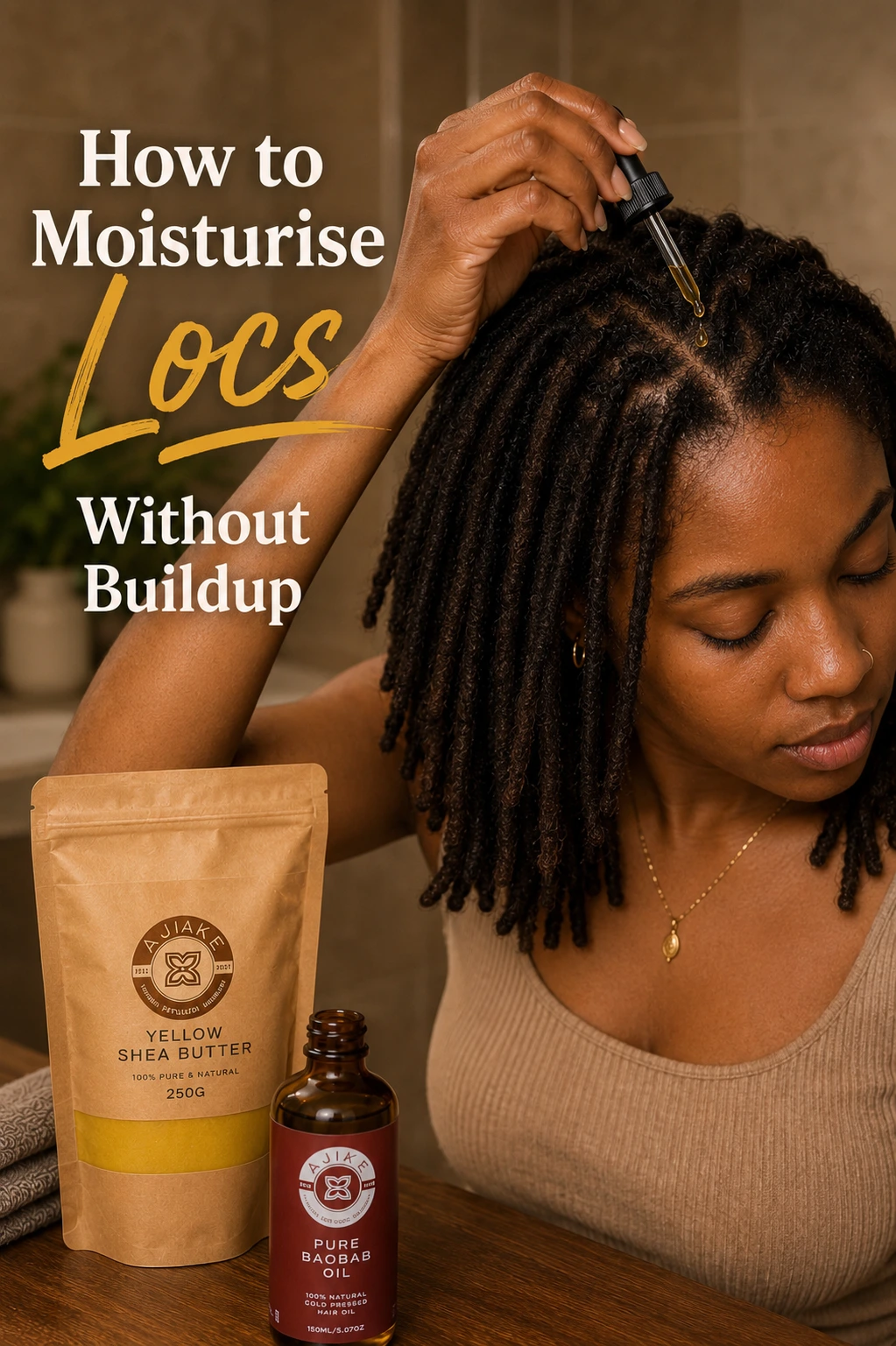
Water First: Why Locs Need Water Before Anything Else
Water is the only genuine moisture for hair. Oils, butters, and conditioners support moisture retention but do not provide moisture themselves. For locs, this distinction is especially important because the temptation to skip the water step and apply oil directly is common, and it produces locs that feel conditioned but are actually dry.
Before applying any oil or product, mist the locs lightly with water using a spray bottle. Work through the locs section by section, ensuring the outer surface of each loc is damp before applying any oil. For deeper moisture, submerge the locs briefly in water or wash under running water to allow the loc interior to absorb moisture before sealing. The oil is then applied to seal this water into the loc rather than to substitute for it.
Light Oils vs Heavy Oils: What Locs Can and Cannot Absorb
Locs can effectively absorb and benefit from light, fast-absorbing oils whose molecular structure allows them to penetrate the compressed loc fibres and reach the interior. Baobab oil and argan oil are in this category. They absorb within minutes and leave minimal surface residue, making them appropriate for regular loc use without contributing to buildup.
Heavy oils with high saturated fatty acid content, including castor oil, coconut oil (which solidifies below 24 degrees Celsius), and refined oils with heavy additives, do not penetrate the compressed loc structure effectively. They sit on the surface and outer fibres, creating a coating that attracts dust and debris and progressively accumulates as buildup over multiple applications.
Baobab Oil for Locs: Why the Light Texture Makes the Difference
Baobab oil's oleic acid content allows it to penetrate the compressed loc fibres more effectively than saturated oils while its light texture means it does not leave the heavy surface coating that causes buildup. Applied in the right quantities (1 to 2 drops per loc for maintenance, slightly more for intensive treatment), baobab oil distributes into the loc's outer layer and some of the interior, providing genuine conditioning rather than just surface coating.
The vitamin A, D, E, and F content of cold pressed baobab oil also supports the health of the scalp skin beneath the locs and of the hair strands within the loc structure. Over consistent use, the essential fatty acids from the linoleic acid and alpha-linolenic acid content contribute to the strand integrity within the loc, reducing the fibre breakage inside the loc that contributes to thinning.
How to Apply Oil to Locs Without Residue
Apply baobab oil to locs using a dropper if the bottle has one, or tilt the bottle and let drops fall directly onto the loc surface along its length. Work one loc at a time. After applying, use fingertips to gently work the oil from the surface into the outer fibres of the loc. The amount should be enough to feel on your fingertips but not enough to leave the loc looking oily or greasy.
For daily use, 1 drop per loc is appropriate for most loc wearers. For intensive treatment or very dry locs, 2 drops per loc, left on overnight under a satin bonnet, provides deeper conditioning. The day after an intensive treatment, locs should feel noticeably softer and more flexible than before.
Leave-In Conditioner for Locs: What to Look for and What to Avoid
Leave-in conditioners for locs need to be genuinely light and water-based with no heavy conditioning agents, silicones, or thick emollients. The ingredient list should lead with water and contain humectants like glycerine or aloe vera for moisture attraction and light plant extracts rather than heavy conditioning polymers.
Apply leave-in to locs sparingly using a spray format rather than a cream. A diluted leave-in spray, made by mixing one part Ajike Marula and Baobab Leave-In Conditioner with three to four parts water in a spray bottle, provides the moisture and conditioning benefit of a leave-in without the heavy deposit that concentrated leave-in would leave on locs.
How Often to Moisturise Locs at Each Stage
Starter locs (first 6 months): moisturise every 2 to 3 days with water and a very light oil. Keep product use minimal during this phase to avoid locking product inside the forming loc structure. Locs in the first year benefit most from water misting alone on non-wash days.
Locs 6 to 18 months: every 2 to 3 days with a water mist followed by baobab oil applied lightly to the outer surface of each loc. Still minimal product use. Wash every 1 to 2 weeks.
Mature locs (18 months and beyond): daily to every other day light moisture refresh with water mist and 1 drop of baobab oil per loc. Weekly scalp oil treatment. Wash every 1 to 2 weeks.
How to Wash Locs Without Damaging Them
How Frequently to Wash Locs and Why It Matters
Locs should be washed regularly despite the common belief that they require infrequent washing. A dirty scalp beneath locs is not a healthy environment for hair growth, and the warm, relatively airless environment between locs is conducive to the microbial overgrowth that causes dandruff and seborrhoeic dermatitis.
Washing frequency depends on lifestyle, scalp oiliness, and the environment. For most loc wearers, once weekly to once every two weeks is appropriate. Starter locs are often washed less frequently in the first few months to allow the loc structure to begin forming without constant disturbance, but by month 3, regular weekly washing should be established.
The Right Shampoo for Locs: Residue-Free Is Non-Negotiable
The shampoo used on locs must rinse out completely without leaving any residue in the compressed loc structure. This means avoiding shampoos with conditioning agents, proteins, silicones, or heavy emollients that deposit on and inside the hair. These ingredients, which provide beneficial conditioning for loose natural hair, build up inside locs with each wash and contribute to the heavy, dull appearance of over-conditioned locs.
Ajike Peppermint, Rosemary and Tea Tree African Black Soap Shampoo is residue-free by design: the African black soap base saponifies completely during rinsing, leaving no depositing agents behind. The essential oils provide scalp health benefits without contributing to buildup.
How to Wash Locs Without Disturbing the Loc Structure
Apply shampoo to the scalp in sections, working between the locs with fingertips. Avoid vigorous scrubbing of the locs themselves, which creates friction that loosens the outer fibres of the loc and can cause starter and teenage locs to unravel. Focus the shampoo on the scalp and allow the lather to travel down the length of the locs during rinsing rather than working the shampoo through each loc individually.
For mature locs that are stable and fully interlocked, a second application of shampoo squeezed gently through the loc length is acceptable if there is significant product buildup to address. Starter and teenage locs should be cleansed with scalp-focused washing only, with no working of shampoo through the loc length.
How to Dry Locs Properly to Prevent Mildew and Mould
This is the most critical and most underestimated aspect of loc washing. The interior of a mature loc, particularly a thick one, can take 8 to 24 hours to dry completely in open air. Locs that are worn tied up, covered, or in contact with fabric while still damp in the interior create a warm, moist, airless environment that is ideal for mould and mildew growth inside the loc.
After washing, gently squeeze excess water from the locs and then allow them to dry completely in open air before tying, wrapping, or covering them. Use a microfibre towel to gently absorb surface water. If time allows, sit under a hooded dryer on low heat or use a hair dryer on the cool or low heat setting to reduce drying time. Never sleep with damp locs.
Watch for: Signs of mildew in locs: a musty smell that does not resolve after washing, a mildewy or sour odour, particularly in the interior of thick locs. Mildew inside locs is very difficult to eliminate and may require cutting the affected locs.
Clarifying Locs to Remove Buildup: When and How
A clarifying wash, using a sulfate-containing shampoo used specifically for this purpose, is appropriate 2 to 4 times per year to remove mineral deposits from hard water, accumulated scalp oils, and minor product buildup. Use a shampoo containing sodium lauryl sulfate or sodium laureth sulfate applied to the scalp and worked gently through the loc length. This is one of the limited situations where a brief use of a sulfate shampoo is justified on locs.
After a clarifying wash, the locs will feel very clean but may also feel drier than usual. Follow with a light baobab oil treatment applied to damp locs while they are still wet from the wash to replace the oils removed by the clarifying shampoo.
Scalp Care for Locs: The Most Neglected Part of Loc Maintenance
Why the Scalp Is Harder to Reach and Care for in Locs
The scalp beneath locs is partially covered by the loc attachment points and is more difficult to reach for product application, massage, and visual inspection than a loose natural hair scalp. This reduced accessibility means scalp problems can develop further before they are noticed, and scalp treatments need to be applied more precisely and deliberately than with loose hair.
Dry Scalp Under Locs: Causes and Solutions
Dry scalp beneath locs is one of the most common scalp complaints among loc wearers. The loc structure limits airflow to the scalp and changes the natural sebum distribution, with scalp oils tending to accumulate at the loc base rather than travelling down the full length of the hair as they would with loose hair. The result is a scalp that does not benefit from sebum self-moisturisation in the same way that loose natural hair scalps do.
For dry scalp specifically, apply Ajike Pure Baobab Oil directly to the scalp between locs using a dropper, not to the locs themselves. Part the hair to expose the scalp and apply 1 to 2 drops between each parting. Massage gently with fingertips for 3 to 4 minutes per section. This scalp-specific application provides the emollient nourishment the dry scalp needs without adding product load to the locs.
Dandruff and Seborrhoeic Dermatitis in Locs
Dandruff in loc wearers is common because the scalp environment between locs, which is warm, relatively airless, and difficult to cleanse thoroughly, is conducive to Malassezia yeast overgrowth. Flaking may not be as visible through the locs as it would be in loose natural hair, but the itch and scalp discomfort are just as real.
Treatment requires consistent use of an antifungal shampoo applied directly to the scalp at every wash. Ajike Peppermint, Rosemary and Tea Tree Shampoo provides terpinen-4-ol antifungal action from the tea tree, anti-inflammatory menthol from the peppermint, and ursolic acid from the rosemary, in a residue-free African black soap base that cleanses the scalp effectively without leaving anything behind in the locs.
Read Also: Full dandruff guide: Natural Shampoo for Dandruff - Peppermint, Tea Tree and Rosemary Guide →
How to Apply Scalp Oil Between Locs Without Disturbing Them
Use a dropper bottle or the nozzle of the oil bottle to place drops of scalp oil directly onto the scalp surface between the locs, parting the locs slightly with the other hand to expose the scalp. Apply along each parting in sequence, working from the front to the back of the scalp. Do not work the oil into the locs themselves during the scalp treatment.
After applying, use fingertips (not fingernails) to massage the scalp gently in small circular movements for 4 to 5 minutes per section. This massages the oil into the scalp skin and provides the circulation benefit that supports the growth environment beneath the locs.
Scalp Massage for Locs: Technique and Frequency
Scalp massage improves blood flow to the follicles, supports sebaceous gland function, and helps distribute natural scalp oils from the scalp surface into the adjacent hair. For loc wearers, scalp massage is more important than for loose hair wearers because the restricted airflow and reduced sebum distribution in locs make the follicle environment more dependent on active support.
Aim for scalp massage 2 to 3 times per week, for 4 to 5 minutes per session, ideally during the scalp oil application. The combination of oil and massage is more effective than either alone. Steady circular movements using the pads of the fingertips rather than the nails, covering the full scalp systematically from hairline to nape.
When Scalp Problems in Locs Become a Medical Concern
Scalp itch and mild flaking that responds to consistent antifungal shampoo use over 4 to 6 weeks is a routine dandruff or dry scalp issue. Escalate to a healthcare provider if: the itch is severe and constant, there is visible inflammation or scalp skin breakdown, there are pustules or signs of infection, the itch is accompanied by hair loss beyond normal shedding at the loc roots, or the condition does not respond to any improvement despite 6 weeks of appropriate treatment.
Shea Butter for Locs: How to Use It Without the Buildup Problem
Why Shea Butter Has a Reputation for Causing Loc Buildup
Shea butter's reputation for causing buildup in locs is partly deserved and partly a result of misuse. The reputation developed primarily from loc wearers applying generous amounts of shea butter to their locs as a moisturiser, working it into the loc surface and interior in the same way it might be used on loose natural hair. In this application pattern, the thick, fatty acid-rich shea butter does accumulate inside the loc structure and is not fully removed by washing.
The problem is not the shea butter itself. It is applying a product designed to create a moisture seal on individual hair strands to a compressed loc structure where it cannot distribute evenly, cannot wash out easily, and accumulates with each application. Used correctly, in very small amounts and specifically on the scalp rather than the locs, shea butter causes no buildup problems.
When Shea Butter Is Appropriate in a Loc Routine
Shea butter is appropriate in a loc routine in one specific application: as a scalp treatment, applied directly to the scalp between locs in very small quantities. The anti-inflammatory unsaponifiable fraction of raw shea butter, containing triterpenes and phytosterols, provides genuine scalp benefit for dry, inflamed, or eczema-prone scalp skin beneath locs. This benefit justifies the use of shea butter as a scalp-specific treatment.
As a loc moisturiser: not appropriate. The texture of shea butter, even when melted, is too thick for effective loc penetration and creates surface buildup. Baobab oil is the appropriate oil for loc moisturisation; shea butter is the appropriate ingredient for scalp treatment.
How to Use Shea Butter Sparingly as a Scalp Treatment
Take a piece of shea butter no larger than a small pea and melt it completely between fingertips until it becomes a liquid oil. Apply this melted shea butter directly to the scalp between the locs, not to the loc surface. Use a parting to expose the scalp, apply with fingertip, and massage gently into the scalp skin for 1 to 2 minutes. Do not work any shea butter into the locs themselves.
This tiny amount of shea butter provides the scalp with the anti-inflammatory and emollient benefits without creating any buildup risk because it is applied only to the scalp surface, which it nourishes directly without being worked into the loc structure.
Yellow Shea Butter with Burututu Root for Loc Scalp Health
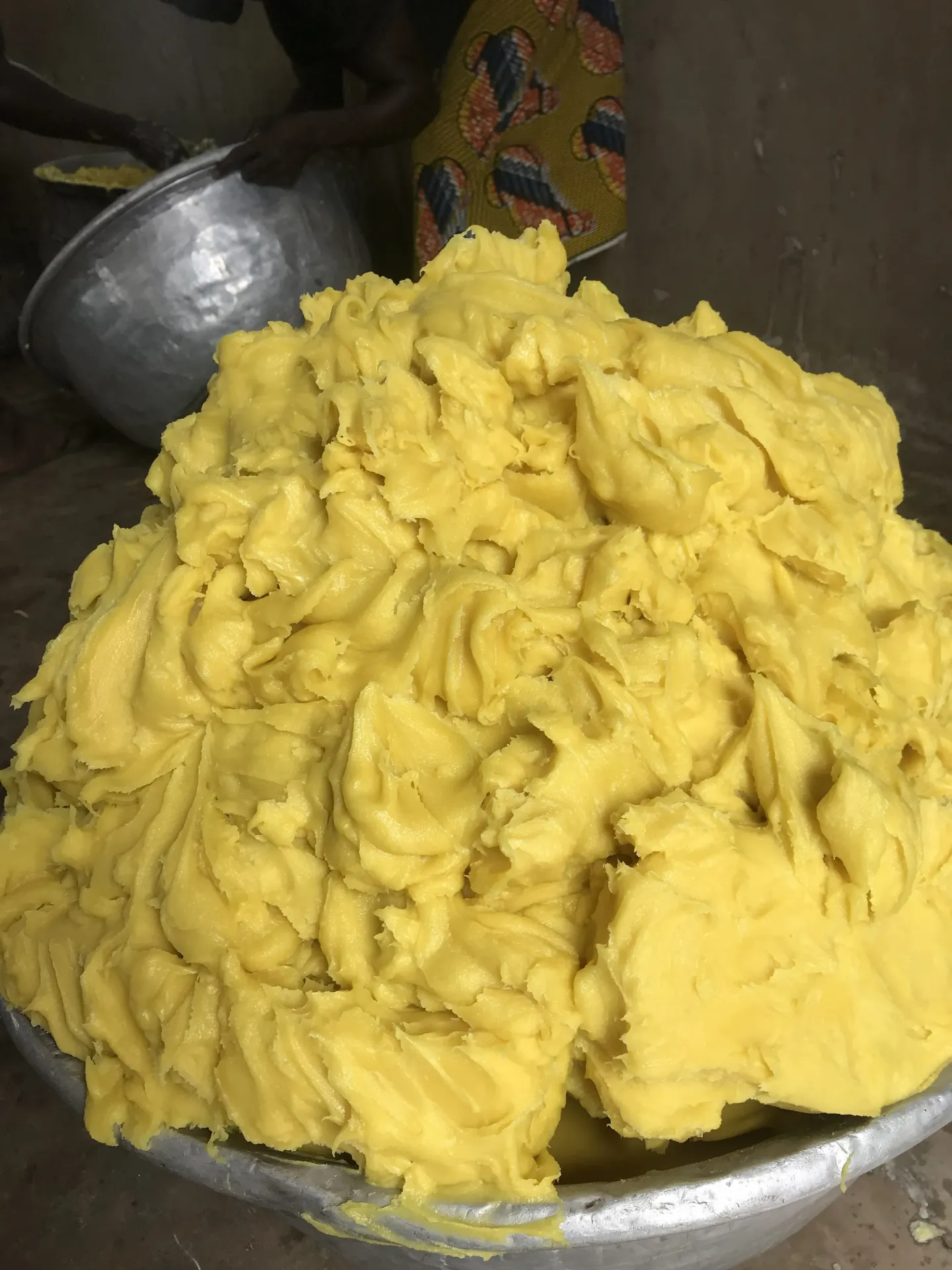
Our yellow shea butter, traditionally infused with wild-harvested burututu root (Crossopteryx febrifuga), adds the antimicrobial and additional anti-inflammatory properties of burututu to the base shea butter benefits. For loc wearers dealing with scalp dandruff, seborrhoeic dermatitis, or scalp inflammation beneath locs, yellow shea butter applied as a scalp treatment provides a more targeted response than ivory shea butter alone.
The burututu root compounds include glycosides and tannins with documented antimicrobial activity against Malassezia and bacterial species, directly complementing the antifungal shampoo routine for scalp conditions in locs. Apply in the same way as the ivory shea butter: melted between fingertips, applied to the scalp between locs, massaged gently, never worked into the locs themselves.
Supporting Loc Growth Naturally
What Actually Determines How Fast Locs Grow
Loc growth is determined by the same factors as loose natural hair growth: the anagen phase length of each follicle, which is genetically determined and not significantly altered by topical products. The average hair growth rate across all hair types is approximately 1 to 1.5 centimetres per month. What can be influenced is the scalp health environment that allows each follicle to complete its full anagen phase rather than being prematurely pushed into the resting phase by chronic scalp inflammation, tension, or nutrient deficiency.
The length that appears to accumulate in locs is also affected by whether the loc is shrinking or elongating as it matures. Starter locs typically shrink significantly as the hair locks, and this shrinkage can obscure actual growth. Mature locs that have finished shrinking elongate more visibly with each month of growth.
Scalp Health as the Foundation of Loc Growth
A scalp that is chronically inflamed, clogged with product buildup, or colonised by Malassezia yeast produces a hostile environment for hair growth. The inflammatory signalling from a problematic scalp can prematurely push follicles out of the active growth phase and into the resting phase, reducing the density and health of the hair being produced.
The most impactful things you can do for loc growth are consistently maintaining a clean, healthy scalp through regular antifungal shampoo washing, regular scalp oil treatment, and regular scalp massage. These fundamentals create the healthiest possible environment for the follicles that produce the hair inside the locs.
How Scalp Massage Supports the Growth Environment
Scalp massage, done consistently 2 to 3 times per week, increases blood flow to the follicles, supporting nutrient delivery to the dermal papilla that produces the hair cell proliferation underlying hair growth. A study published in Stem Cells Translational Medicine found that regular scalp massage produced measurable improvements in hair thickness over 24 weeks of practice.
For loc wearers, scalp massage is most effectively done with a light oil applied to the scalp between the locs, using the pads of the fingertips in small circular movements. The combination of the mechanical circulation stimulus and the oil's scalp nourishment provides a better growth support environment than either approach alone.
Nutrition and Hydration: The Internal Factors Nobody Talks About
The hair that grows from each follicle is only as healthy as the nutrients available to the follicle during the growth phase. Nutritional deficiencies, particularly in iron, zinc, biotin, vitamin D, and protein, are associated with increased hair shedding and reduced hair quality. For loc wearers, where the hair inside the locs cannot be easily assessed or replaced without unravelling the loc, the quality of new growth from the follicle matters.
Adequate hydration, meaning consistent daily water intake rather than just moisturising the locs externally, also affects the moisture content of the growing hair. Hair that forms in a well-hydrated body has better moisture balance from the start than hair that forms during chronic dehydration.
Protective Styling Within the Loc Journey
Locs themselves are a form of protective style when worn loose. The loc protects the hair within from manipulation and environmental damage. The risk comes from within the loc journey, specifically from styles that add tension to the loc roots, such as tightly pulled updos, loc extensions that add significant weight, or frequent retwisting that pulls the roots under tension.
Within a loc routine, the most protective approach is to wear locs loosely the majority of the time, reserve updos and pinned styles for specific occasions, and allow the locs to hang naturally as much as possible to avoid the root tension that impairs growth at the follicle level.
Starter Locs Care Guide
Stage | Washing Frequency | Moisturising Frequency |
Month 1-3 (Starter) | Every 2-3 weeks (gentle) | Water mist only every 2-3 days |
Month 3-12 (Teenage) | Every 1-2 weeks | Water mist + light baobab oil every 2-3 days |
12-18 months (Budding) | Weekly | Daily water mist, baobab oil every 2-3 days |
18+ months (Mature) | Weekly | Daily water mist + 1 drop baobab oil per loc |
The First 3 Months: What to Expect and What to Do
The first three months of the loc journey are the most uncertain and often the most frustrating. The hair has not yet begun to permanently interlock, styles unravel frequently, and it is not always clear whether the hair is actually locking or simply staying twisted from the last retwist. This is normal for every loc journey and does not indicate that locs are not forming.
During the first three months, the priority is establishing the foundation: consistent scalp cleansing every 2 to 3 weeks using a residue-free shampoo applied to the scalp, gentle scalp oil treatment between washes, and minimal product use on the hair itself. Do not use any wax, petroleum, or heavy butter on starter locs. The less product that enters the forming loc structure during this phase, the cleaner the mature loc will be.
How Often to Wash Starter Locs
Starter locs can be washed every 2 to 3 weeks in the first 3 months, extending to weekly washing from month 3 onward. Washing more frequently in the starter phase increases the likelihood of the locs unravelling before they have had time to begin interlocking. The scalp can be refreshed between washes using a light spray of diluted witch hazel or a gentle toner applied with cotton directly to the scalp between locs.
Moisture Routines for Locs That Have Not Yet Locked
During the starter phase, water misting alone is the safest moisture approach. A fine mist spray bottle filled with water, lightly misted over the hair every 2 to 3 days, keeps the hair slightly damp without over-wetting the loc sections that are trying to interlock. If the hair feels very dry, add 1 to 2 drops of Ajike Pure Baobab Oil to the palms and lightly pat the palms along the outside of the loc sections.
Do not apply oil internally to the starter loc sections. Surface application only. The oil on the outside of the loc helps prevent moisture from evaporating from the hair without penetrating inside and getting trapped.
What Products to Avoid Completely in the Starting Phase
- Beeswax in any form, including products marketed as loc starters or loc wax
- Petroleum jelly, petroleum-based pomades, or mineral oil-based products
- Heavy butters applied to the loc sections themselves (scalp use only in very small amounts)
- Leave-in conditioners with silicones, proteins, or heavy conditioning agents
- Styling creams or gels with high polymer content
- Any product that does not rinse out cleanly from a cloth when water is applied
How to Handle Unravelling Without Starting Over
Unravelling in the starter phase is not failure. It is normal hair biology: straight or loosely patterned hair takes longer to interlock than tighter curl patterns, and all locs go through a period of instability before they settle into a permanent structure. When a loc unravels, the most appropriate response depends on the degree of unravelling.
A single loose end or partially unravelled tip: palm roll the loose section back into the loc direction and allow to air dry. A fully unravelled starter loc: re-form the loc section using the original method (two-strand twist, braid, or comb coil) and allow it to begin locking again. Starting over entirely is almost never necessary and should only be considered if the majority of the locs are unravelling simultaneously and the hair is not progressing toward locking after 6 months of consistent maintenance.
Mature Locs Care Guide
How Mature Loc Needs Differ from Starter Loc Needs
Mature locs, those that have reached full interlocking and are stable without frequent retwisting, have fundamentally different care needs from starter and teenage locs. The interlocked structure is resilient and no longer at risk of unravelling. Washing can be done more thoroughly. A slightly wider range of products can be used without creating the locking-in-product risk that exists during the starter phase. And the hair within the loc has accumulated years of growth, meaning each loc contains a complex mixture of hair from different growth periods.
The primary ongoing challenges for mature locs are moisture penetration to the loc interior, preventing and managing buildup from years of product accumulation, maintaining scalp health underneath increasingly dense locs, and managing the root thinning that often develops as mature locs become heavier over time.
Managing Thinning at the Root in Mature Locs
Root thinning, where the base of the loc where it meets the scalp becomes noticeably thinner than the body of the loc, is one of the most common concerns in mature loc care. It develops because the weight of the accumulated loc puts continuous tension on the follicles at the scalp attachment point. As locs become longer and heavier over years, this tension increases progressively.
Management strategies: avoid wearing heavy locs in styles that add additional tension to already-stressed roots, particularly tight updos or styles that pull locs from their natural fall direction. Give the locs rest time lying in their natural direction. If thinning is significant, consult a trichologist or dermatologist to assess whether there is follicle damage alongside the mechanical thinning.
Reviving Dry, Brittle Mature Locs
Mature locs that have become dry and brittle, often from years of product buildup that sealed moisture out, may need an intensive revival treatment. This begins with a thorough clarifying wash to remove as much buildup as possible, followed by a diluted apple cider vinegar rinse to restore pH balance and help dissolve residual mineral deposits.
After clarifying, while the locs are still wet, apply Ajike Pure Baobab Oil generously to each loc from root to tip. Cover with a plastic cap and allow to sit for 60 minutes. Then allow to air dry thoroughly without covering. This process provides the deepest moisture conditioning possible for the loc interior and, repeated over several wash days, produces measurable improvement in loc flexibility and vitality.
When to Consider a Professional Retwist vs Self-Maintenance
Professional retwisting is appropriate when: the root growth has become so significant that the locs are thinning and weakening at the root from uninterlocked new growth, you are seeing irregular or uneven new growth that the locs are not consolidating effectively on their own, or you simply prefer the consistency and assessment that a professional provides at regular intervals.
Self-maintenance is appropriate for most loc wearers for day-to-day care including washing, oiling, scalp treatment, and nighttime protection. When to retwist is less of a fixed schedule decision and more of an assessment of whether the new growth at the root is compromising the structural integrity of the loc.
Nighttime Loc Care: Protecting Locs While You Sleep
Why Nighttime Protection Matters for Locs
Locs in contact with cotton pillowcases and bedding overnight experience friction that abrades the outer fibres of the loc, causes the most recently moisturised surface layer to dry out faster as the cotton absorbs the moisture, and for loose or partially interlocked locs, disturbs the loc structure. Over weeks and months of unprotected sleep, the cumulative effect of nightly friction produces dull, rougher locs with abraded outer fibres that attract more lint and debris.
Satin Bonnet vs Satin Pillowcase for Locs
For short to medium locs, a satin or silk bonnet that fully covers the locs is the most effective nighttime protection. The smooth surface allows the locs to move without friction, the enclosed space reduces evaporation from the loc surface overnight, and the bonnet prevents the lint and fibre pickup from bedding that unsecured locs experience.
For long locs that do not comfortably fit inside a bonnet, a large satin bonnet that accommodates the volume, combined with a satin pillowcase for the length that extends beyond the bonnet, is the most practical approach. A full satin pillowcase as the only protection works adequately for mature locs but does not provide the moisture retention benefit of a bonnet.
How to Cover Long Locs Comfortably at Night
For very long locs, loosely gather them to one side or pile them gently at the top of the head using a very loose, snag-free fabric tie before placing the bonnet. This prevents the locs from spreading across the pillow during movement and allows a single large bonnet to cover the full volume. Avoid tightly securing locs in a high pineapple, as the tension point at the elastic or tie can create root stress on the locs that bears weight in that position throughout the night.
Morning Refresh Routine for Locs
In the morning, remove the bonnet and assess the locs. If the surface feels dry, do a brief moisture refresh: a light water mist applied to the outer surface of the locs, followed by 1 drop of baobab oil applied with palms patted gently along the loc length. This 2 to 3 minute morning refresh reactivates the moisture from the night before and maintains the locs' flexibility through the day.
If the locs look and feel adequately moisturised from the previous day's treatment, the morning refresh can be water misting only or skipped entirely. Daily oil application is not always necessary for well-maintained mature locs on non-wash days.
Ajike Products for Natural Loc Care
Ajike Peppermint, Rosemary and Tea Tree African Black Soap Shampoo: Residue-Free Loc Cleanser
The most critical product choice in a loc routine is the shampoo, because buildup from a depositing shampoo is very difficult to reverse. Our Peppermint, Rosemary and Tea Tree African Black Soap Shampoo is residue-free by design. The African black soap base saponifies completely during rinsing, leaving no depositing conditioning agents in the locs. The functional essential oils provide scalp health benefits, specifically antifungal (tea tree terpinen-4-ol), anti-inflammatory (peppermint menthol), and circulation-supporting (rosemary ursolic acid) action, without contributing to buildup.
Deep Clean Without Leaving Build-Up
Peppermint, Rosemary & Tea Tree African Black Soap Shampoo
A residue-free African black soap shampoo with peppermint, rosemary and tea tree essential oils to gently cleanse the scalp while helping manage dandruff and maintain fresh, healthy locs.
View Product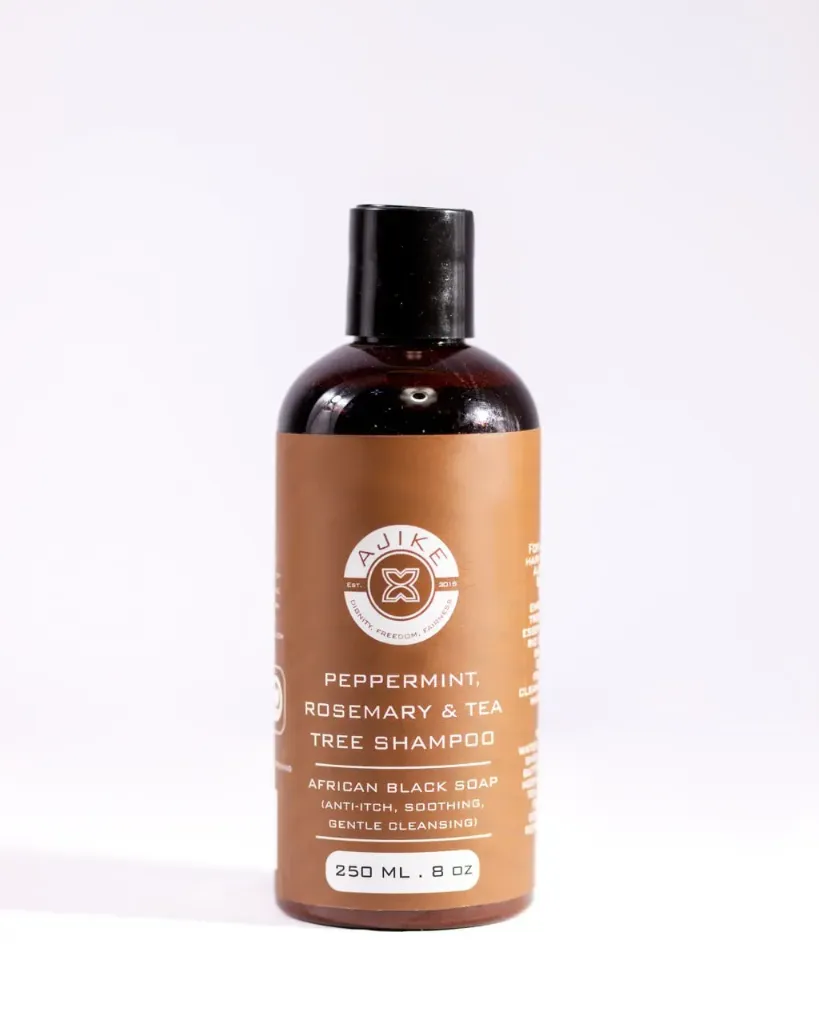
Deep Clean Without Leaving Build-Up
Peppermint, Rosemary & Tea Tree African Black Soap Shampoo
A residue-free African black soap shampoo with peppermint, rosemary and tea tree essential oils to gently cleanse the scalp while helping manage dandruff and maintain fresh, healthy locs.
View Product
Ajike Pure Baobab Oil: The Lightweight Loc and Scalp Oil
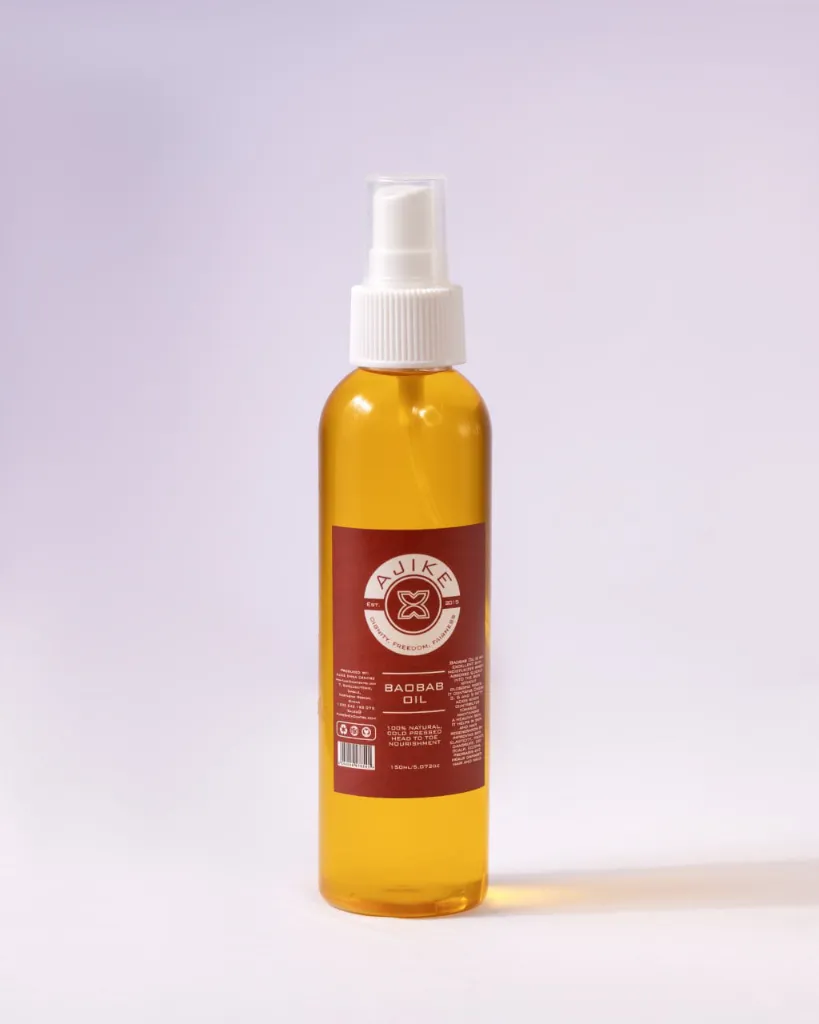
Ajike Pure Baobab Oil is the core product in a natural loc care routine. For locs, it provides the lightest effective oil option: penetrating enough to provide genuine conditioning to the outer loc fibres without creating the heavy surface buildup that heavier oils accumulate over time. For the scalp, it provides emollient nourishment and essential fatty acid support for the scalp skin between the locs.
Moisturise Locs Without Heavy Build-Up
Pure Baobab Oil
100% cold-pressed baobab oil with a light, fast-absorbing texture. Perfect for moisturising individual locs, nourishing the scalp between parts and maintaining healthy-looking hair without residue.
Moisturise Locs Without Heavy Build-Up
Pure Baobab Oil
100% cold-pressed baobab oil with a light, fast-absorbing texture. Perfect for moisturising individual locs, nourishing the scalp between parts and maintaining healthy-looking hair without residue.
Ajike Hair and Scalp Luxury Oil: Between-Wash Scalp Treatment for Loc Wearers
Our Hair and Scalp Luxury Oil provides a more targeted scalp treatment for between washes, combining baobab oil with a rosemary-forward essential oil blend that supports scalp circulation and provides additional anti-inflammatory and antimicrobial support. For loc wearers who experience persistent scalp issues, this between-wash treatment applied with scalp massage 2 to 3 times per week provides consistent scalp health support.
Ajike Raw Yellow Shea Butter: For Scalp Use in Locs
Our wild-harvested yellow shea butter with burututu root is appropriate for scalp use beneath locs, specifically for loc wearers dealing with dandruff, seborrhoeic dermatitis, or scalp inflammation. Applied in tiny amounts (a pea-sized piece melted between fingertips) directly to the scalp between locs, the burututu root's antimicrobial properties complement the antifungal shampoo routine and the shea butter's anti-inflammatory unsaponifiable fraction soothes scalp inflammation.
Ajike Marula and Baobab Anti-Breakage Conditioner: For Deep Conditioning Before and After Locking
Our Anti-Breakage Conditioner is used at two specific points in the loc journey: before starting locs, as a regular deep conditioning treatment to ensure the hair going into the loc journey is in its strongest possible condition, and when unravelling locs, as part of the intensive conditioning treatment that helps restore the hair's health after years of being locked.
During the mature loc maintenance phase, the conditioner can be applied as a pre-wash conditioning treatment on wet locs, left for 20 to 30 minutes, and then washed out. This adds a deep conditioning step without the risk of leave-in conditioning agents building up inside the locs.
Frequently Asked Questions
Shea butter applied to the loc surface in generous amounts will cause buildup. Shea butter applied to the scalp between the locs in very small amounts is appropriate and beneficial, particularly yellow shea butter with burututu root for scalp conditions. The rule is: shea butter for the scalp only, baobab oil for the locs.
For mature locs: daily to every other day, 1 drop of baobab oil per loc applied after a water mist. For starter locs: every 2 to 3 days, and only to the outer surface of the loc sections, not worked into the forming loc interior.
Signs of buildup: locs feel heavy and dense beyond what the hair volume explains, loss of springiness and flexibility, sticky or tacky feel inside the loc when squeezed, whitish or grey residue visible on the loc surface or interior, locs that take unusually long to dry after washing.
Weekly to bi-weekly for mature locs. Every 2 to 3 weeks for starter locs in the first 3 months. From month 3 onward, weekly washing is appropriate regardless of loc stage. A clean scalp is the foundation of healthy locs and healthy loc growth.
Yes. Dandruff in loc wearers is common because the warm, airless environment between locs is conducive to Malassezia yeast overgrowth. Management requires consistent use of a tea tree and antifungal shampoo applied directly to the scalp, and between-wash scalp care. If dandruff does not respond after 6 weeks of consistent treatment, consult a healthcare provider.
Baobab oil is the best single oil for loc care because it is light enough to use regularly without creating buildup, penetrating enough to provide genuine conditioning, and its multi-vitamin profile supports both loc health and scalp health. For scalp use alongside baobab oil for locs, our Hair and Scalp Luxury Oil provides additional targeted scalp support.
Our latest content
Check out what's new in our company !