
Start writing here...
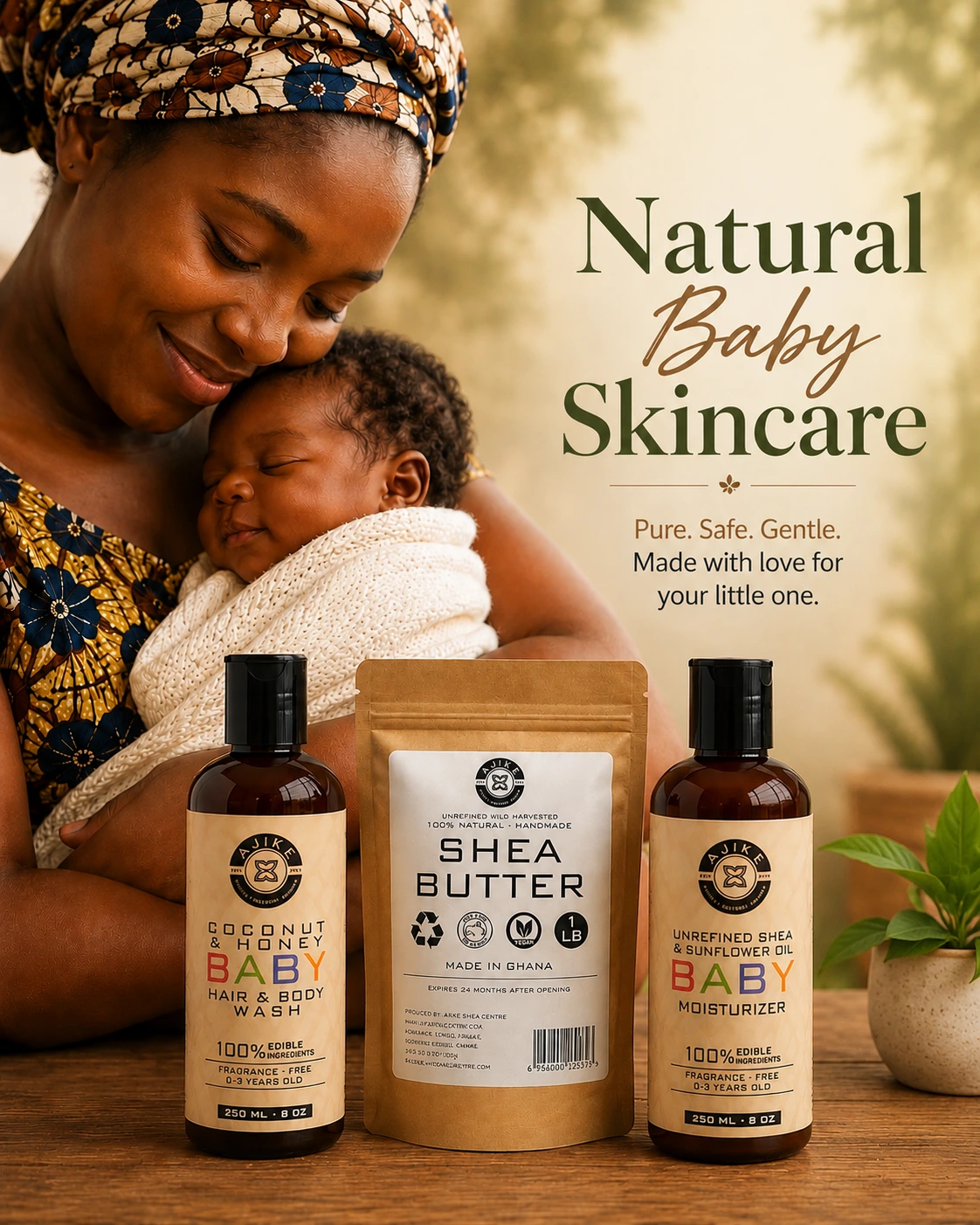 When you become a parent, every product decision feels significant. The skin in front of you is the most delicate you will ever care for, and the question of what is genuinely safe, what actually helps, and what to avoid is one that every new parent navigates with a mixture of research, instinct, and the weight of doing right by someone who cannot tell you if something is wrong.
The baby skincare industry has a problem that most parents are not aware of: the regulatory standards that govern which ingredients are acceptable in baby products are not meaningfully stricter than those for adult products. A product can be marketed specifically for newborns with cheerful imagery of infants and claims of gentleness while containing ingredients with well-documented sensitisation risks.
This guide introduces a clearer standard: edible-grade. If an ingredient is safe enough to eat, it is safe enough for baby skin. This is the standard Ajike applies to our entire baby range, and it is the standard this guide will help you apply to every product you consider for your baby.
Read Also: For shea butter on baby skin: Shea Butter for Baby Skin - Is It Safe and How to Use It →
Why Baby Skincare Requires a Different Standard from Adult Skincare
How Newborn Skin Differs from Adult Skin at a Biological Level
Newborn skin is not simply smaller adult skin. It has a structurally different composition, different functional properties, and a different response to everything that comes into contact with it. The stratum corneum, the outermost protective layer of the epidermis, is thinner in newborns than in adults. The skin cells are smaller. The cell turnover rate is faster. The connections between the deeper layers of the skin are more loosely organised.
At birth, the skin is covered in vernix caseosa, a waxy protective coating produced by the sebaceous glands in utero from approximately 20 weeks of gestation. Vernix has natural antimicrobial properties, helps regulate skin temperature after birth, and serves as the newborn's first barrier protection. Current best practice in maternity care recommends leaving vernix on the skin for the first 24 hours or as long as possible, because its protective properties are superior to anything that can be applied to replace it.
The Higher Absorption Rate That Makes Ingredient Safety Non-Negotiable
Baby skin absorbs topically applied substances at a higher rate than adult skin. The precise degree of increased absorption varies by body site and the specific compound being measured, but the general principle is consistent across the research: the thinner stratum corneum, the higher skin hydration level, and the greater number of hair follicles per square centimetre in infant skin all contribute to a more permeable barrier than adult skin.
The clinical consequence is straightforward: any problematic ingredient applied to a baby's skin has a higher probability of reaching systemic circulation than the same ingredient applied to an adult. An ingredient that produces a minor, localised irritation in adult skin can produce a more significant reaction in baby skin, and an ingredient that is processed and excreted before reaching circulation in an adult may accumulate in infant tissue.
Why the Surface-Area-to-Weight Ratio Changes Everything for Babies
The surface-area-to-weight ratio of a newborn is approximately three times higher than that of an adult. This means that relative to body weight, a baby's skin surface is three times larger than an adult's. Any substance applied across the body, such as a bath wash or a full-body moisturiser, is being applied to a surface that represents a much larger proportion of the baby's total body weight than the same coverage would represent for an adult.
The practical implication: the effective dose of any topically applied ingredient is proportionally much higher for a baby than for an adult applying the same product across the same body proportion. Ingredient safety standards established for adult use may not adequately account for this proportional difference, which is why a more conservative ingredient standard, not just an incrementally stricter one, is appropriate for baby skincare.
How the Developing Skin Barrier Affects What You Apply
The skin barrier, primarily the stratum corneum and the acid mantle, develops progressively over the first year of life. At birth, the skin pH in full-term newborns is relatively high (less acidic) compared to adult levels, typically around pH 6 to 7, and gradually decreases to the healthy adult range of 4.5 to 5.5 over the first weeks and months. This more alkaline neonatal acid mantle is less effective at inhibiting bacterial and fungal growth than the mature adult acid mantle.
Premature babies have an even less mature barrier, making ingredient safety considerations even more important for preterm infants. Any product that disrupts the developing acid mantle, including alkaline cleansers and many synthetic preservative systems, can impair the developing barrier's progression toward healthy function.
Why Regulatory Standards for Baby Products Are Not as Strict as Parents Assume
In most markets, including the European Union and the United States, baby skincare products are regulated as cosmetics rather than as pharmaceuticals or medical devices. Cosmetic regulations set limits on specific categories of known hazardous ingredients, but they do not require pre-market safety testing, they do not account for the specific vulnerabilities of infant skin described above, and they do not specifically restrict ingredients that are known sensitisers at the concentrations they may be present in baby products.
A product can be labelled specifically for newborns and marketed with images of infants while containing synthetic fragrance, preservatives associated with contact dermatitis, and other ingredients that dermatologists and paediatricians recommend avoiding for infant skin. The label alone is not sufficient. Reading and understanding the ingredient list is the only reliable approach.
What Edible-Grade Actually Means and Why It Matters
The Definition of Edible-Grade in the Context of Skincare
Edible-grade, in the context of baby skincare, means that every ingredient in the product meets the safety standards required for human consumption, not merely for topical cosmetic application. Food safety standards are significantly stricter than cosmetic safety standards in most regulatory frameworks, requiring more rigorous assessment of acute and chronic toxicity, systemic absorption, and cumulative exposure.
An edible-grade ingredient is one that has been assessed for safety at the dose levels that would occur from regular consumption, which for a topically applied product translates to a meaningful additional safety margin above what cosmetic regulations alone would require.
Why Edible-Grade Is a Higher Standard Than Cosmetic-Grade
Cosmetic-grade ingredients are assessed for safety in the context of topical application to intact adult skin, with some allowance for incidental mucosal contact. They are not assessed for safety when absorbed systemically at the rates that infant skin absorption can produce. They are not assessed for the cumulative effect of multiple product applications across a day. And they are not specifically assessed in the context of a developing immune system that may be more susceptible to sensitisation than the adult immune system used in standard safety testing.
Edible-grade ingredients have been through safety assessment that, by necessity, considers systemic absorption, repeated exposure, and dose levels that exceed what topical application alone would produce. For baby skin where systemic absorption is higher and the dose-per-body-weight is proportionally larger, this more stringent assessment provides a meaningful additional safety buffer.
How Edible-Grade Eliminates Entire Categories of Potential Risk
Applying the edible-grade standard to baby skincare immediately eliminates: all synthetic fragrances (no fragrance compound is food-safe at typical cosmetic concentrations), all synthetic preservatives including parabens, methylisothiazolinone, and formaldehyde-releasing compounds (none of these meet food safety standards), all petroleum-derived ingredients including mineral oil and petroleum jelly (refined petroleum products are not food-grade), and all synthetic colorants (artificial dyes are not food-safe).
This elimination is comprehensive and immediate. Rather than requiring parents to research each ingredient individually against a list of concerns, the edible-grade standard provides a simple filter that removes the entire categories of concern at once.
Why Babies Need This Standard More Than Any Other Skin Type
Babies are the skin type with the highest topical absorption rate, the highest surface-area-to-weight ratio, the least developed barrier function, the most susceptible developing immune system, and the complete inability to communicate adverse reactions before they become significant. They are also the skin type that has products applied to them multiple times per day, every day, from birth, without any variation.
Additionally, babies put everything in their mouths. They chew their hands and feet. They have direct oral contact with their own skin. Any ingredient applied to a baby's skin is, in practical terms, an ingredient with a meaningful probability of oral ingestion as well as topical absorption. The edible-grade standard accounts for this reality in a way that cosmetic standards do not.
How Ajike Applies the Edible-Grade Standard Across Our Baby Range
Ajike was founded in Ghana in 2015 and our baby range has been built from the beginning on the principle that every ingredient in a baby product should meet edible-grade safety standards. In practice, this means every ingredient in our baby range could, in principle, be eaten safely: shea butter, baobab oil, sunflower oil, argan oil, jojoba oil, coconut oil, baobab fruit powder, and the food-grade surfactants derived from these plant sources.
This is not a marketing position. It is the standard that West African communities where we are rooted have applied to baby skincare instinctively for generations, and it is the standard that dermatological research on infant skin increasingly supports as the appropriate baseline for the most vulnerable skin type.
Ingredients That Are Not Safe for Baby Skin
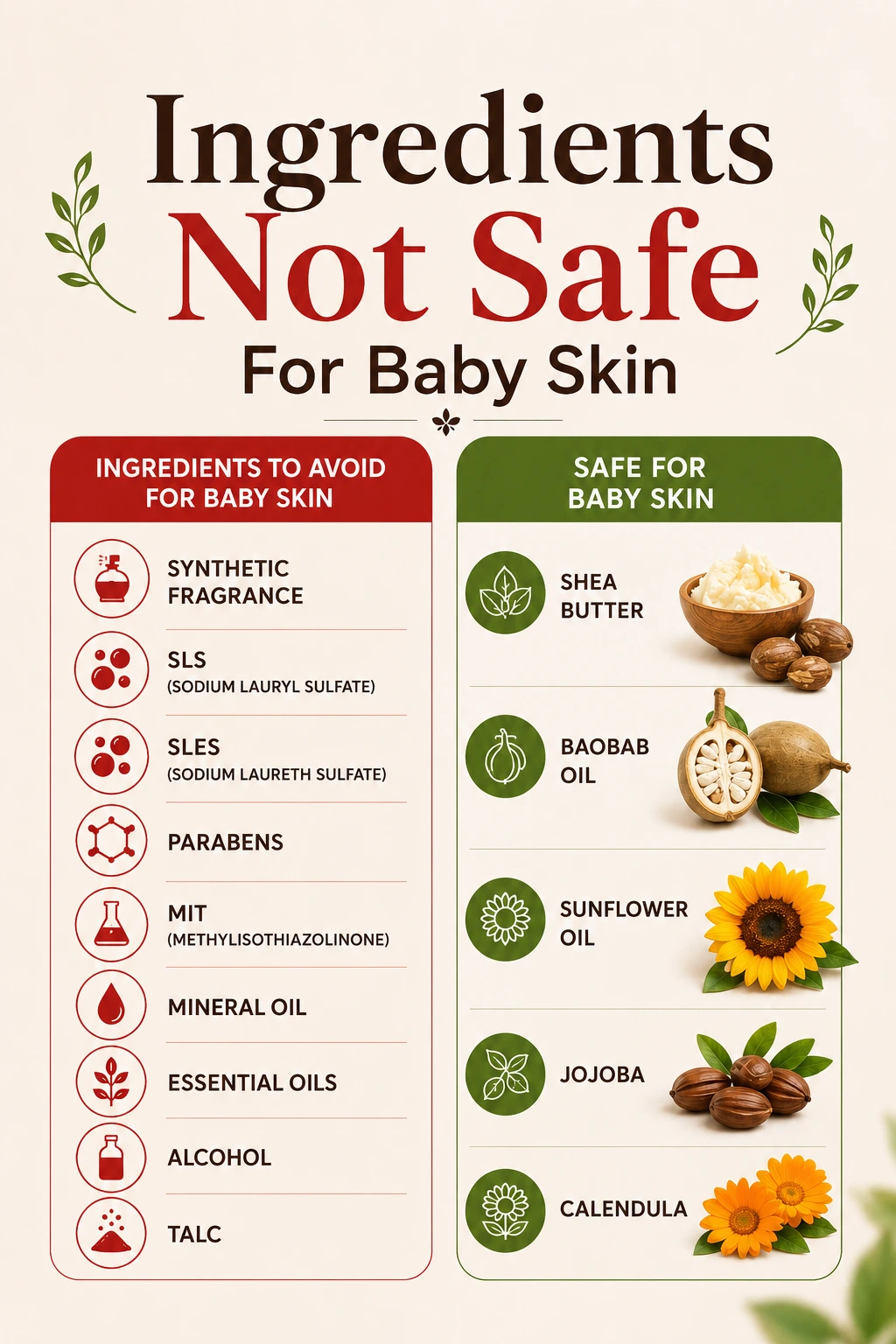
Ingredient | Why It Is Concerning | What to Look for on Label |
Synthetic Fragrance | Most common contact allergen; sensitisation in infancy can cause lifelong allergy | "Parfum" or "Fragrance" in ingredient list |
SLS / SLES | Strips acid mantle, increases skin permeability, disrupts developing barrier | Sodium lauryl sulfate, sodium laureth sulfate |
MIT / MCI | Among the most reactive preservatives; widespread contact dermatitis reactions | Methylisothiazolinone, methylchloroisothiazolinone |
Parabens | Endocrine disruption debate ongoing; conservative approach warrants exclusion for babies | Methylparaben, propylparaben, butylparaben |
Mineral Oil / Petrolatum | Not food-grade; no nutritive value; creates occlusive film without barrier support | Paraffinum liquidum, petrolatum, petroleum jelly |
Talc | Respiratory risk from powder inhalation; potential contamination with asbestos | Talc, magnesium silicate |
Synthetic Fragrances: The Sensitisation Risk That Starts in Infancy
Synthetic fragrance is the most common contact allergen in cosmetic products, and the sensitisation risk that develops in infancy from repeated fragrance exposure can become a lifelong allergy. A fragrance sensitisation that develops in the first months of life, when the immune system is still developing and its tolerance thresholds are being established, may become a persistent immune response that persists into adulthood.
The term fragrance or parfum on an ingredient list can represent any of several hundred individual chemical compounds, many of which are established contact allergens. These compounds are not required to be individually listed. A product that lists only fragrance may contain 50 to 100 individual chemicals, any of which could be the sensitising agent if a reaction develops. For baby skin, fragrance-free is not a preference. It is the only acceptable standard.
Sulfates: Why SLS and SLES Have No Place in Baby Wash
Sodium lauryl sulfate and sodium laureth sulfate are anionic surfactants that create the heavy lather associated with effective cleaning in most commercial washes. They achieve this cleansing action by disrupting the skin's lipid barrier, removing sebum and other surface lipids much more aggressively than the developing infant skin barrier can readily recover from.
For a newborn whose acid mantle is still in its most vulnerable developmental phase and whose barrier function is least established, repeated SLS exposure can significantly impair the barrier development timeline. The research on infant skin care specifically recommends surfactant systems with a pH close to the skin's natural range and a low irritation potential, criteria that SLS fails on both counts.
Synthetic Preservatives: Parabens, MIT and Formaldehyde Releasers
Preservatives are necessary in water-containing products to prevent microbial growth. The question is which preservatives are appropriate for baby products. Methylisothiazolinone (MIT) and methylchloroisothiazolinone (MCI) have been associated with widespread contact dermatitis reactions in the general population, and for baby skin their use is contraindicated by most paediatric dermatology guidelines. Their use in rinse-off products has been restricted in the EU but they remain in some products globally.
Parabens are more nuanced: the debate about their safety is not fully resolved, and different regulatory bodies have different positions. The conservative approach for baby products, where the margin of safety should be as large as possible, is to avoid them where alternatives exist. Formaldehyde-releasing preservatives, including DMDM hydantoin, diazolidinyl urea, and imidazolidinyl urea, release small amounts of formaldehyde over time and are not appropriate for baby products.
Mineral Oil and Petroleum: What They Do and Do Not Do for Baby Skin
Mineral oil (paraffinum liquidum) and petroleum-derived products like petrolatum are inert, non-irritating, and effective occlusives. They are not inherently harmful to baby skin in the way that synthetic fragrances or MIT are. The concern with these ingredients for baby products is twofold: they are not food-grade, and they provide occlusion without any nutritive benefit to the developing skin.
Plant-derived occlusives like shea butter, baobab oil, and sunflower oil provide the same or better occlusive protection while also delivering vitamins, essential fatty acids, and compounds that actively support barrier development. For baby skin that is actively developing its barrier function, ingredients that support that development while protecting the barrier are preferable to inert occlusives that protect but provide nothing supportive.
Essential Oils: Why Even Natural Oils Are Not Safe for Young Babies
Essential oils are highly concentrated plant extracts. Even oils perceived as mild, such as lavender, chamomile, and tea tree, contain phytochemicals at concentrations far above what is found in whole plant ingredients. For babies under 3 months of age, essential oils in any form are not appropriate topically. For babies under 12 months, essential oils should be used with extreme caution at very low dilutions and only those with the most favourable safety profiles.
Camphor, menthol (in high concentrations), and clove essential oil are specifically contraindicated for infant use. Certain citrus oils cause photosensitisation. Tea tree oil, while effective for adults, is too concentrated for routine infant skincare use. None of these concerns mean that all botanical ingredients are inappropriate. Whole plant extracts, infusions, and botanical oils are different from essential oils and do not carry the same risks.
Alcohol in Baby Products: How It Undoes What Good Ingredients Do
Denatured alcohol (alcohol denat.), isopropyl alcohol, and ethanol are drying, barrier-disrupting, and genuinely inappropriate for baby skin. They are sometimes present in baby wipes, in some teething gel formulations, and in hand sanitisers that come into contact with baby skin. Applied to baby skin, they disrupt the acid mantle, increase TEWL, and counteract the barrier-supportive effect of any nourishing ingredients that might be present in the same product.
Talc: Why It Is Still Found in Baby Products and Why to Avoid It
Talc (magnesium silicate) is still found in some baby powder products despite the well-documented respiratory risk from powder inhalation in infants. Baby powder poured or shaken near a baby creates a cloud of fine particles that can be inhaled, particularly in the confined space of a nappy change. Talc inhalation has been associated with pulmonary toxicity in infants. Additionally, some talc sources have historically been contaminated with asbestos fibres.
The appropriate approach is to avoid talc-containing baby powders entirely. If a powder is needed for the diaper area, corn starch-based alternatives are preferable, applied carefully away from the baby's face.
Ingredients That Are Safe and Beneficial for Baby Skin
Shea Butter: The Traditional African Ingredient for Baby Skin
Raw unrefined shea butter with no additives is one of the most appropriate single ingredients for baby skin. Its fatty acid profile, primarily oleic and stearic acid, provides emollient moisturisation compatible with the developing skin barrier. Its unsaponifiable fraction, containing triterpenes and phytosterols, provides anti-inflammatory properties that are beneficial for the frequently irritated skin of newborns and infants.
Shea butter has been applied to newborn skin across West Africa for generations, providing the observational evidence of long-term safety that no new synthetic ingredient can offer. The only caution is potential nut allergy: if there is a family history of tree nut allergy, discuss with a healthcare provider before using shea butter on a baby.
Baobab Oil: Vitamins A, D, E and F for Developing Infant Skin
Cold pressed baobab oil is an edible-grade plant oil that is safe for infant skin from birth. The baobab fruit is consumed as food across sub-Saharan Africa, and the cold pressed seed oil meets food-grade safety standards. For infant skin specifically, the multi-vitamin profile of baobab oil provides the developing skin barrier with vitamin A for cell renewal support, vitamin D for barrier immune support, vitamin E for antioxidant protection, and vitamin F essential fatty acids for ceramide synthesis.
These nutrients support the active process of skin barrier development during the first year of life, providing more than simple occlusion. Ajike uses baobab oil in our baby range precisely because its edible-grade safety profile combined with its developmental support for the infant skin barrier makes it one of the most appropriate ingredients available for baby skincare.
Sunflower Oil: Linoleic-Rich and Barrier-Supporting for Eczema-Prone Baby Skin
Sunflower oil, pressed from Helianthus annuus seeds, is a food-grade plant oil with a high linoleic acid content of approximately 65 to 70 percent. Linoleic acid is a component of ceramide synthesis in the stratum corneum, and research has found that topical application of linoleic acid-rich oils to newborn skin may support barrier development. Sunflower seed oil has been studied specifically for use in newborn skin care and found to be well-tolerated even in preterm infants.
For eczema-prone baby skin, where ceramide deficiency is a primary barrier dysfunction, sunflower oil's high linoleic acid content provides direct support for the ceramide production that the eczema-affected skin cannot fully achieve on its own.
Jojoba Oil: The Wax Ester That Mimics Infant Sebum
Jojoba oil is technically a liquid wax ester rather than a triglyceride oil, which means it does not behave like an oil in the traditional sense on the skin. Its composition is similar to the wax esters in human sebum, which gives it excellent skin compatibility and a non-comedogenic profile. For baby skin, jojoba's close structural similarity to the sebum that the developing sebaceous glands produce makes it highly compatible with the skin's own chemistry.
Argan Oil: Antioxidant Protection for Sensitive Baby Skin
Cold pressed argan oil is a food-grade oil with a high vitamin E content that provides antioxidant protection for infant skin. Used as a component of a baby moisturiser rather than as a standalone product, its vitamin E and oleic acid content contribute to skin surface protection without any concerns about the synthetic additives present in many conventional skincare products. The Ajike Baby Moisturiser uses argan oil as part of the multi-oil blend for precisely this vitamin E and antioxidant benefit.
Coconut Oil: Beneficial but Not for All Baby Skin Types
Coconut oil is effective for some baby skin applications, particularly for its lauric acid content which provides natural antimicrobial properties relevant to the diaper area and cradle cap. However, coconut oil has a comedogenicity rating of 4 to 5, making it potentially congesting on facial skin and on eczema-prone skin where the follicle environment is already compromised. For baby skin specifically, coconut oil works well in the diaper area but is not recommended for the face or for generalised use on eczema-prone baby skin.
Calendula: The Traditional Soothing Botanical for Irritated Baby Skin
Calendula officinalis flower extract has been used for centuries across Europe and West Africa for the treatment of irritated, inflamed skin. Its active compounds include flavonoids, carotenoids, and polysaccharides that contribute anti-inflammatory and wound-healing properties. At appropriate concentrations in baby products, calendula extract provides soothing action for irritated baby skin without the sensitivity risk of essential oils.
Calendula-based preparations have been studied specifically in neonatal and infant skincare and found to be effective for diaper area skin and irritated newborn skin without causing adverse reactions in the general population. It remains one of the most validated traditional botanical ingredients for infant skincare.
How to Read a Baby Skincare Label
The INCI System: What Those Long Ingredient Names Actually Mean
All cosmetic ingredients in most markets are listed using the International Nomenclature of Cosmetic Ingredients (INCI) system, which uses standardised Latin or scientific names for each ingredient. This standardisation means that the same ingredient will appear under the same name regardless of which country the product is manufactured in or sold.
Some INCI names are intuitive: Butyrospermum parkii butter is shea butter, Helianthus annuus seed oil is sunflower oil, Adansonia digitata oil is baobab oil. Others are less obvious: Aqua or Aqua purificata is water. Glycerin is glycerine. Parfum or Fragrance covers synthetic fragrance compounds. Paraffinum liquidum is mineral oil. Learning the INCI names for the most common safe and unsafe ingredients is the most reliable approach to understanding what is actually in a baby product.
Where to Find the Highest-Risk Ingredients on a Label
Ingredients are listed in descending order of concentration. The first five ingredients are the highest-concentration components and define the character of the product. However, problematic ingredients like synthetic fragrance and preservatives are often present at low concentrations and appear further down the list, sometimes after the 1 percent threshold where they must be listed but can appear in any order.
Scan specifically: the middle section of the ingredient list for preservatives (MIT, parabens, formaldehyde releasers), any mention of parfum or fragrance regardless of its position in the list, and the end of the list for fragrance components that are separately listed in some markets.
Marketing Words That Mean Nothing: Natural, Gentle, Hypoallergenic
Natural has no regulated definition in cosmetics in any major market. A product containing 95 percent synthetic ingredients and 5 percent plant extract can legally call itself natural. Gentle is entirely subjective and unverifiable. Hypoallergenic means only that the manufacturer believes the product is less likely than average to cause allergic reactions. It is not a certification, it does not mean allergy-free, and it is not independently verified.
The only reliable information is the ingredient list. Marketing claims on the front of the packaging are commercial communication. The INCI ingredient list on the back is the actual content of the product. When evaluating any baby product, start with the ingredient list and treat the front of the packaging as irrelevant to your assessment.
What Fragrance-Free Really Means vs Unscented
Fragrance-free means the product contains no added fragrance compounds, including neither synthetic fragrance nor fragrant essential oils. The product may still have a faint natural scent from its plant-based ingredients, such as the mild nutty scent of shea butter, but no fragrance has been added for cosmetic purposes.
Unscented means fragrance chemicals may have been added to mask other odours in the formula, creating a product that smells neutral despite containing fragrance compounds. For baby products, fragrance-free is the appropriate standard. An unscented product is not necessarily fragrance-free and should be assessed by its ingredient list rather than by its scent.
Preservative-Free: What It Means and When It Is Genuine
Preservative-free means the product does not use synthetic preservative systems to prevent microbial growth. Water-containing products require some form of preservation to be safe. Genuinely preservative-free water-containing products achieve stability through specific packaging (airless pumps, single-dose sachets), specific formulation chemistry (high pH or high glycerine concentrations that are inhospitable to microbes), or they have a very short shelf life and require specific storage conditions.
The Ajike baby products that are preservative-free achieve this through formulation and packaging choices that do not rely on synthetic preservative systems. For parents seeking preservative-free baby products, look for anhydrous (water-free) formulations like pure shea butter and plant oils, which do not require preservatives because they contain no water for microbes to grow in.
How to Use the EWG Skin Deep Database as a Cross-Reference
The Environmental Working Group's Skin Deep database (ewg.org/skindeep) provides safety ratings for individual cosmetic ingredients based on available research. It is not definitive and has been criticised by some toxicologists for being overly precautionary, but it is a useful first reference when encountering an unfamiliar ingredient in a baby product.
Enter the ingredient's INCI name into the search function and review the concern rating. For baby products, any ingredient rated 4 or above by EWG warrants additional scrutiny and consideration of whether an alternative without that ingredient is available. Prioritise avoiding ingredients rated 6 or above in baby products regardless of any assurances from the manufacturer.
Baby Skin Conditions and How Safe Ingredients Address Them
Newborn Dry Skin and Peeling: What Is Normal and What Is Not
Skin peeling in the first two weeks of life is normal for full-term newborns. The skin that was protected by amniotic fluid during pregnancy is adjusting to the dry air environment, and the surface layer that was hydrated in utero dries and peels as it acclimatises. This is the vernix-protected skin transitioning to normal surface shedding. It requires no treatment and resolves on its own within the first two weeks.
For dryness that persists beyond the first two to three weeks, or that is accompanied by redness, cracking, or significant irritation, daily moisturisation with a plain oil or butter is appropriate. Any dryness accompanied by significant inflammation, widespread rash, or signs of discomfort warrants a healthcare provider assessment.
Read Also: Full rash guide: My Baby Has a Skin Rash - Natural Remedies That Actually Help →
Baby Eczema: Safe Ingredients That Support the Barrier Without Triggering Flares
Atopic dermatitis (eczema) affects approximately 10 to 20 percent of infants. The safe ingredients most relevant to baby eczema management are those that provide ceramide-adjacent barrier support without triggering further sensitisation. Sunflower oil (high linoleic acid for ceramide synthesis), raw shea butter (anti-inflammatory unsaponifiable fraction), and baobab oil (essential fatty acids and vitamin D for barrier immunity) all address the barrier dysfunction of eczema without introducing the sensitisation risk of synthetic additives.
All products used on eczema baby skin must be fragrance-free. The risk of fragrance sensitisation is heightened in already-compromised eczema skin where the barrier dysfunction allows deeper penetration of potential allergens.
Cradle Cap: Safe Oils That Help Without Worsening the Condition
Cradle cap (infantile seborrhoeic dermatitis) produces yellowish, greasy-looking scales on the baby's scalp. Applying a small amount of baobab oil or sunflower oil to the scalp, leaving for 15 to 20 minutes, and then gently loosening the scales with a soft baby brush before washing is the most effective and gentlest natural approach. The oil softens the adherent scales, making gentle removal possible without scalp trauma.
Diaper Rash: Barrier Ingredients That Protect Without Irritating
Diaper rash is an irritant contact dermatitis caused by prolonged skin contact with the contents of a soiled nappy. Prevention is more effective than treatment: frequent nappy changes, air time without nappies where possible, and a barrier product applied at each change to create a physical barrier between the skin and the nappy.
The most appropriate natural barrier ingredients for the diaper area are zinc oxide (the one conventional active genuinely worth keeping for its barrier-protection and mild antifungal properties) combined with raw shea butter (anti-inflammatory and emollient barrier). The Ajike Baby Diaper Ointment combines these with baobab oil for a comprehensive natural diaper barrier that protects without any synthetic additives.
Heat Rash: Why Less Is More and Which Ingredients to Avoid
Heat rash (miliaria) develops when sweat glands become blocked, producing small red or clear bumps in skin creases and on the torso, neck, and head. The treatment is cooling and reducing sweating. Applying moisturisers, oils, or any occlusive product to heat rash makes it worse by further blocking the sweat glands. For heat rash, move the baby to a cooler environment, use loose breathable clothing, and allow the skin to be exposed to cool air. Resume moisturising once the heat rash has resolved.
Baby Acne: Why You Should Not Apply Products to It
Baby acne, which appears as small red or white bumps on the face, particularly the cheeks, nose, and forehead, in the first 2 to 4 weeks of life, is caused by maternal hormones that crossed the placenta during pregnancy and stimulated the baby's sebaceous glands. It is not true acne and it resolves on its own within a few weeks without any treatment.
Do not apply any skincare products to baby acne. Creams, oils, or washes applied to the area can worsen the condition or introduce an irritation on top of the existing self-resolving bumps. Simply clean the area gently with plain warm water and allow the condition to resolve naturally.
The African Tradition of Natural Baby Skincare
How Shea Butter Has Been Used on Newborns Across West Africa for Generations
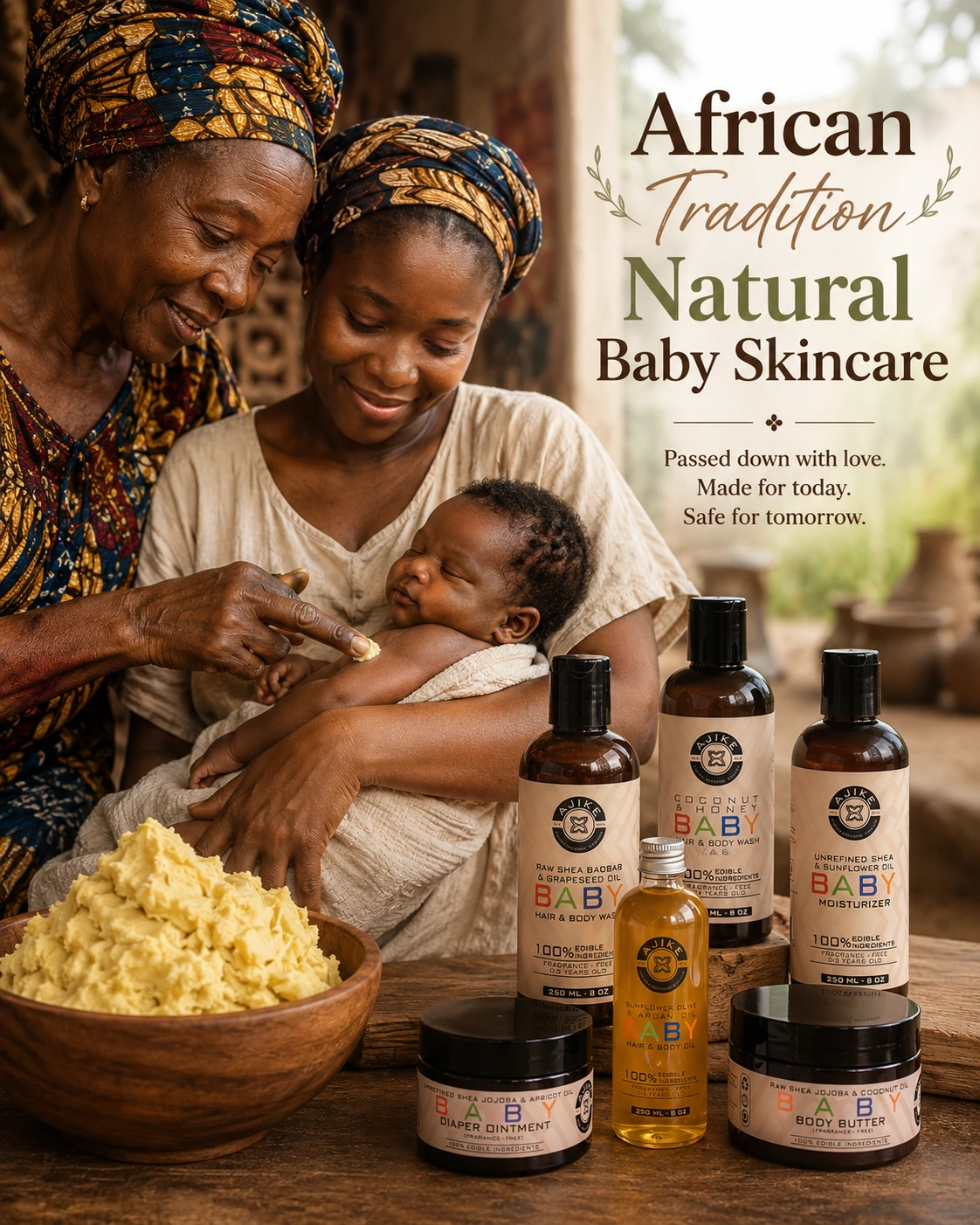
In communities across West Africa, including Ghana, Nigeria, Burkina Faso, and Mali, the application of raw shea butter to newborn skin from birth is not a trend or a wellness choice. It is a practice so embedded in the culture of new motherhood that its origins are not documented because it predates documentation. New mothers receive shea butter as part of their care kit. Grandmothers teach daughters and daughters-in-law how to apply it. The knowledge is transmitted person to person as part of the understanding of how to care for a new baby.
This generational practice has produced an unbroken chain of observational evidence spanning centuries. Communities that have applied shea butter to newborns for generations have not observed the adverse outcomes that would have led to discontinuing the practice. This observational evidence is not equivalent to a randomised clinical trial, but for an ingredient used by millions of families over centuries, it provides a quality and depth of safety data that no new synthetic ingredient can match.
Why Traditional African Baby Skincare Was Already Edible-Grade by Default
The traditional baby skincare ingredients used across West Africa, primarily shea butter, plant oils, and botanical preparations, were edible-grade by default because they were derived from the same plants that provided food. Shea butter pressed from shea nuts was used both in cooking and on skin. Baobab fruit was eaten and baobab oil pressed from the seeds was applied to skin. The concept of a separate, specially developed synthetic ingredient for skincare did not exist in these communities.
The edible-grade standard that Ajike explicitly applies to our baby range is, in effect, the same standard that West African communities have been applying intuitively to baby care for generations. We have simply given it a name and a formal framework.
What Ghanaian Baby Care Looks Like and What the Rest of the World Can Learn from It
In Ghana, the traditional care of a newborn typically involves: leaving vernix on the skin for the first 24 hours, washing with warm water and a gentle preparation, applying raw shea butter to the skin after bathing, and using baobab oil or neem leaves for specific skin concerns. The product philosophy is minimal. The ingredients are whole, recognisable plant-derived substances. The knowledge of which ingredients to use and how to use them comes from the community rather than from commercial marketing.
The global baby skincare market, with its hundreds of products containing dozens of ingredients each, many of which would not pass an edible-grade standard, is a fundamentally more complex and more risky approach than the simple, plant-based Ghanaian model. The rest of the world has a great deal to learn from communities that got baby skincare right through centuries of practical wisdom.
Why Generational Knowledge of Ingredient Safety Has More Value Than Marketing Claims
A new synthetic ingredient introduced into baby products has, by definition, no long-term safety data. The regulatory safety assessment covers acute toxicity and short-term studies. The real-world safety data for a new ingredient accumulates only through use in the population over years and decades, which means that parents using a newly formulated baby product are, in effect, participating in a long-term safety study.
Traditional plant-based ingredients used across generations have accumulated exactly this kind of long-term real-world safety data, not in a laboratory but in the most demanding possible real-world test: consistent application to the most vulnerable skin type by communities that would observe and respond to adverse outcomes. This is the foundation of confidence that Ajike's traditional African botanical ingredients provide.
Building a Safe Natural Baby Skincare Routine
The Minimal Approach: Why Fewer Products Are Better for Baby Skin
The safest baby skincare routine is the simplest one. Every product introduced is a potential source of reaction, sensitisation, or adverse interaction. A baby whose skincare routine consists of warm water baths, a gentle fragrance-free wash, and raw shea butter applied after bathing has a lower total allergen and sensitiser exposure than a baby whose routine includes six specially formulated products.
Start with the minimum. For a healthy newborn with no skin conditions, water, a gentle fragrance-free wash, and a single plain plant oil or shea butter is sufficient. Add additional products only when a specific skin concern identifies a specific need. The temptation to use a complete product range from birth, driven by marketing, should be resisted in favour of the minimal approach that the dermatological evidence supports.
Newborn Routine: What the First Weeks Actually Need
Weeks 1 to 4: plain warm water top-and-tail cleaning is sufficient and appropriate for the first week. After the umbilical cord stump has fallen off and healed, brief baths in warm water with a very small amount of gentle fragrance-free wash. Pat dry with a soft towel. Apply a small amount of raw shea butter or sunflower oil to any areas of dryness while the skin is still slightly damp. Nothing else is needed for a healthy newborn with normal skin.
For premature babies or babies with specific skin conditions: consult the NICU or neonatal dermatology team before applying any product to the skin.
3 to 12 Months Routine: Adjusting as the Skin Barrier Matures
As the baby grows and the skin barrier matures, a slightly broader routine may be appropriate if skin conditions develop or if the skin has higher moisturisation needs. From 3 to 12 months: gentle fragrance-free wash at bath time, Ajike Baby Moisturiser applied to the full body after bathing, raw shea butter to any particularly dry patches. If eczema has developed, add Ajike Baby Body Butter to active patches and consult a healthcare provider for any eczema that is moderate to severe.
Toddler Routine: When to Introduce More and When to Keep It Simple
By 12 to 18 months, as the skin barrier has matured significantly, the range of tolerable products broadens somewhat. However, the principle of minimalism and the preference for plant-based, edible-grade ingredients over synthetic alternatives remains applicable throughout early childhood. The transition to a toddler routine is more about reducing the frequency and intensity of applications than about adding more products.
How to Introduce New Products Safely: The Patch Test Protocol for Babies
Before applying any new product to a baby's full body for the first time, patch test on the inner forearm. Apply a small amount of the product, leave for 24 hours, and assess the test area before any redness, rash, or increased irritation appears. If no reaction is observed after 24 hours, the product is likely to be tolerated.
For eczema-prone baby skin, extend the patch test period to 48 hours. Apply the patch test on an area of skin that is representative of eczema-affected skin rather than a clear area, as the response on compromised barrier skin may differ from the response on intact skin.
Choosing the Safest Baby Wash and Shampoo
What Sulfate-Free Baby Wash Should and Should Not Contain
A sulfate-free baby wash should contain water as the first ingredient, gentle plant-derived surfactants such as coco glucoside or decyl glucoside as the cleansing agents, simple humectants like glycerine or aloe vera, and plant-based conditioning ingredients. It should not contain synthetic fragrance, MIT or MCI, parabens, formaldehyde-releasing preservatives, silicones, or artificial dyes.
The surfactant system is the most important choice in a baby wash. Coco glucoside and decyl glucoside are derived from coconut and glucose and are among the gentlest surfactants available. They have a relatively neutral pH, do not strip the acid mantle to the degree that SLS does, and have a good safety profile for infant skin.
Why Fragrance-Free Is the Only Acceptable Standard for Baby Wash
Baby wash is applied to the skin of a baby who is developmentally in a sensitive period for immune programming. The patterns of immune response being established in infancy have implications for allergy susceptibility throughout life. Synthetic fragrance exposure during this period has been associated in research with increased sensitisation risk, not just immediate irritation but the development of long-term immune reactions to common fragrance compounds.
Every baby wash used regularly from birth should be fragrance-free. Not low-fragrance. Not naturally scented. Fragrance-free.
Plant-Derived Surfactants vs Synthetic Surfactants for Baby Skin
The distinction between plant-derived and synthetic surfactants is relevant for baby products because the two categories behave differently at the skin surface. Plant-derived surfactants like coco glucoside, derived from coconut and glucose, and sodium cocoyl glutamate, an amino acid-derived surfactant, have a gentler action profile, a pH closer to the skin's natural range, and a lower irritation potential than synthetic anionic surfactants like SLS.
How to Assess a Baby Shampoo Before the First Use
Check the ingredient list for the surfactant system (avoid if SLS or SLES appear), fragrance (avoid if parfum, fragrance, or any essential oil appears for babies under 12 months), preservatives (avoid MIT, MCI, parabens, and formaldehyde releasers), and any ingredient that does not meet an edible-grade standard. The EWG Skin Deep database can provide a quick reference for any unfamiliar ingredient.
Ajike's Baby Range: Edible-Grade from Ghana Since 2015
Why We Built Our Entire Baby Range on Edible-Grade Ingredients
Ajike was founded in Ghana in 2015. Ghana is a country where the traditional care of babies with plant-based edible-grade ingredients is not a lifestyle trend but an unbroken generational practice. Our founders did not approach the baby range as a product development exercise where ingredients are selected by safety rating and marketing appeal. They approached it as an extension of what communities in Ghana have understood for centuries: that the most vulnerable skin needs the most trustworthy ingredients, and the most trustworthy ingredients are those that have been part of the human diet and traditional medicine for generations.
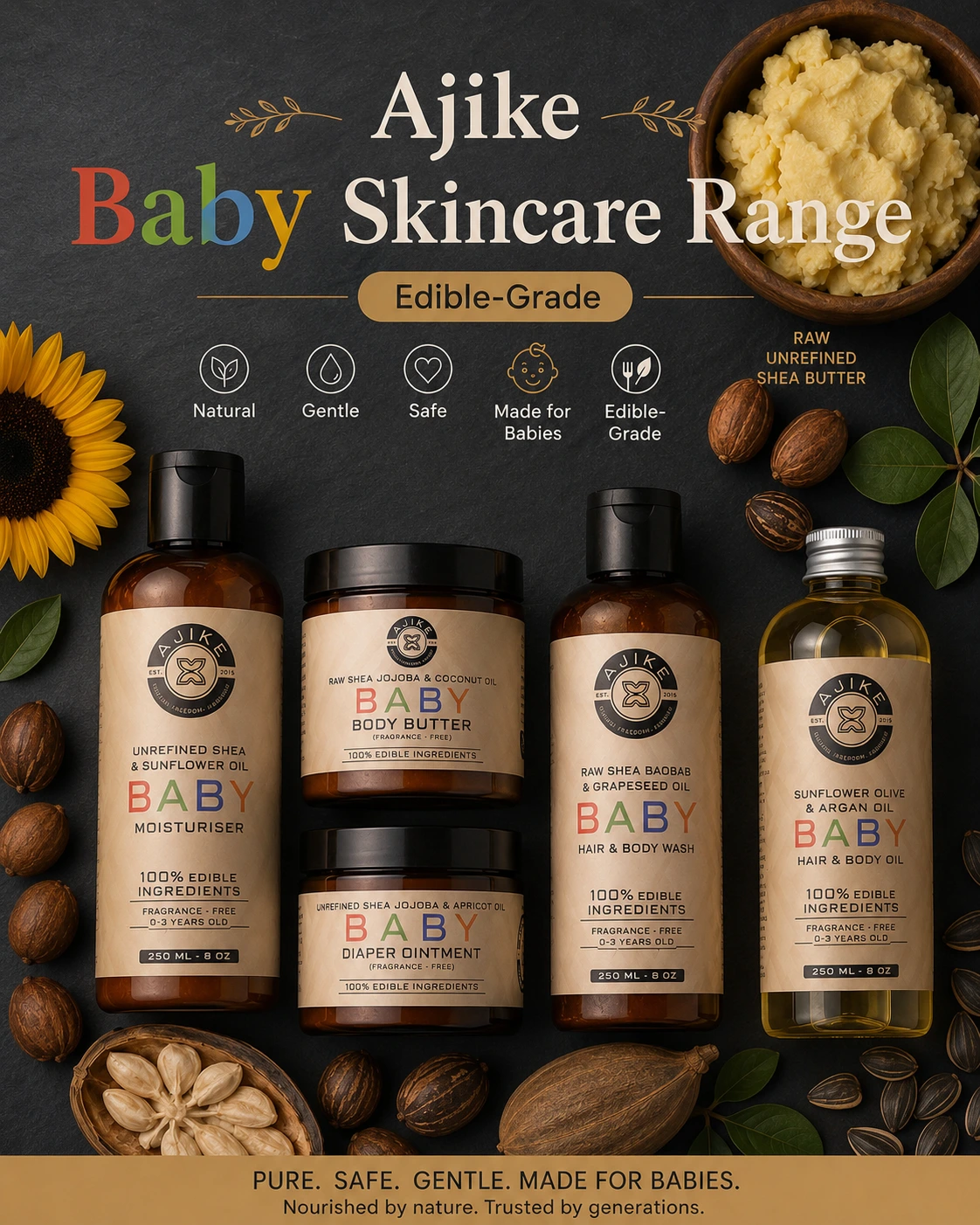
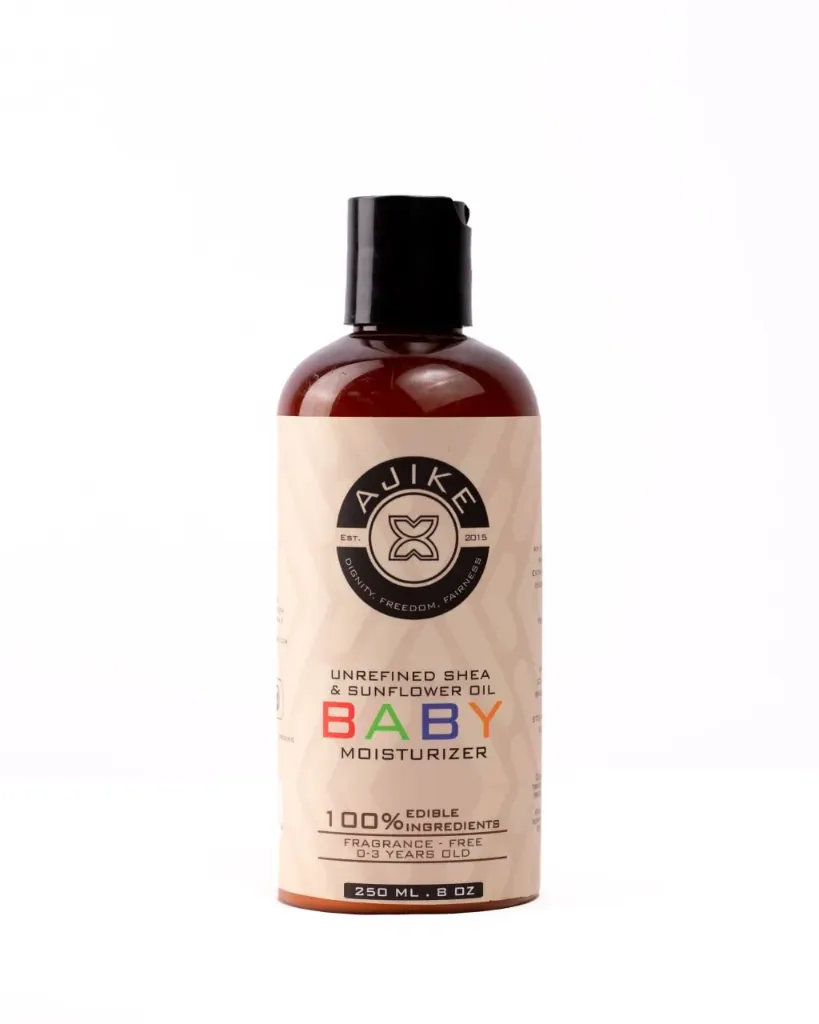
Ajike Baby Moisturiser: Shea Butter, Baobab, Sunflower, Argan, Jojoba and Coconut
Our Baby Moisturiser is formulated with six edible-grade plant oils and butters: shea butter for anti-inflammatory emolliency, baobab oil for the four-vitamin multi-nutritive profile, sunflower oil for high linoleic acid barrier support, argan oil for antioxidant vitamin E, jojoba for sebum-compatible surface conditioning, and coconut oil for its antimicrobial lauric acid content. Completely fragrance-free. Completely preservative-free through the formulation and packaging design. Safe from birth.
Ajike Baby Diaper Ointment: Barrier Protection for the Most Sensitive Area
Our Baby Diaper Ointment provides comprehensive natural barrier protection for the diaper area with a formula containing zinc oxide for its proven barrier and mild antifungal properties, raw shea butter for anti-inflammatory and emollient barrier support, and baobab oil for skin-soothing vitamins and essential fatty acids. No synthetic fragrances, no parabens, no petroleum-derived ingredients. Applied at each nappy change to clean, dry skin.
Ajike Baby Body Butter: For Eczema-Prone and Very Dry Baby Skin
For babies with particularly dry skin or mild eczema, our Baby Body Butter provides a richer, more intensive moisturisation than the standard lotion formula. The edible-grade plant ingredient base provides intensive emolliency and barrier support for the most demanding baby skin conditions. Appropriate for overnight use on particularly dry patches or for intensive barrier support during an eczema episode.
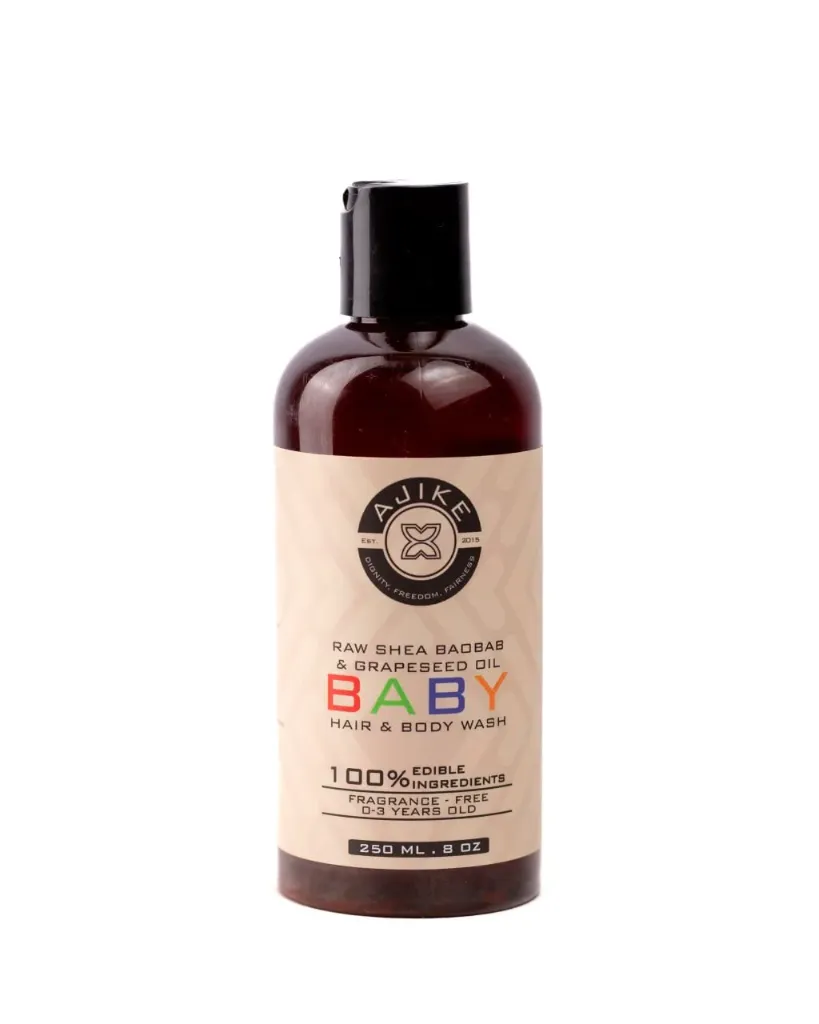
Ajike Shea Baobab Baby Hair and Body Wash: Edible-Grade Cleansing
Our Baby Hair and Body Wash uses a plant-derived surfactant system based on coco glucoside as the cleansing agent, free from SLS, SLES, synthetic fragrances, and synthetic preservatives. Shea butter and baobab oil are integrated into the rinse-off formula to provide conditioning during the cleansing step. Fragrance-free and suitable for use from birth on hair and body.
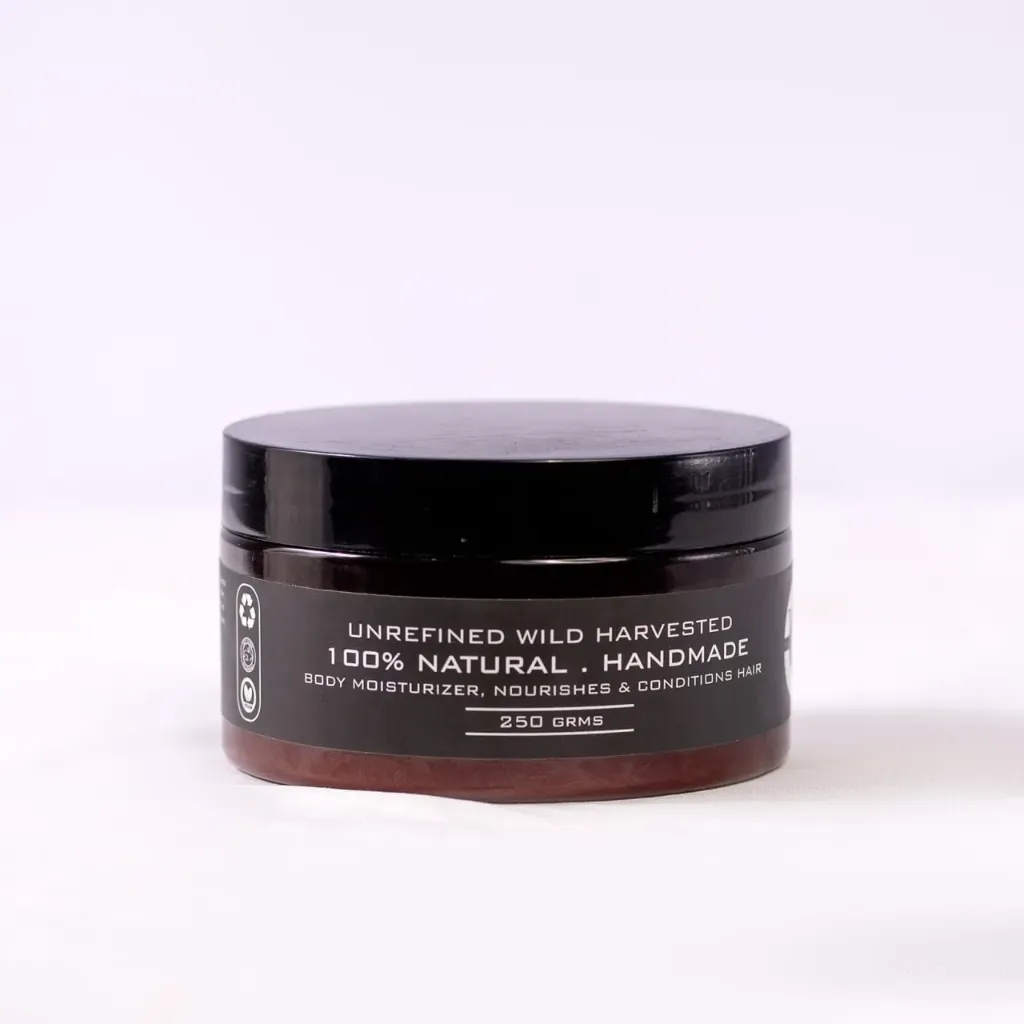
Ajike Raw Unrefined Shea Butter: The Purest Single-Ingredient Option for Newborns
For parents who want the simplest possible option for newborn skin, our raw unrefined ivory shea butter with no additions is the purest choice. One ingredient. Wild harvested in Ghana. No additives of any kind. Safe from birth for patch-tested babies without nut allergy family history. The most traditional and the most minimal option in the range.
How to Build a Complete Ajike Baby Routine from Birth
Birth to 4 weeks: plain warm water or minimal Shea Baobab Baby Wash for gentle cleansing, raw shea butter applied to damp skin after bathing to any areas of dryness. Ajike Baby Diaper Ointment at each nappy change.
4 weeks to 12 months: Shea Baobab Baby Wash at bath time, Ajike Baby Moisturiser applied to the full body after bathing while slightly damp, Ajike Baby Diaper Ointment at each nappy change. For dry skin or eczema patches: Ajike Baby Body Butter applied to affected areas.
12 months to toddler: the same routine with reduced frequency of full-body moisturiser application as the skin barrier matures. Transition gradually as the skin demonstrates readiness through reduced dryness and sensitivity.
Frequently Asked Questions
Edible-grade means every ingredient in the product meets the safety standards required for human consumption, not just for topical application to adult skin. This is a higher standard than standard cosmetic-grade because food safety standards assess systemic absorption, repeated exposure, and dose levels that account for the possibility of ingestion. For baby skin, where topical absorption is higher and oral contact with skin is common, the edible-grade standard provides the most appropriate safety margin.
Plain warm water is appropriate from birth. A very small amount of gentle fragrance-free, sulfate-free baby wash can be introduced once the umbilical cord stump has healed. Raw shea butter or a simple plant oil can be applied from birth to any areas of skin dryness. Full product routines, with multiple products, are not needed for a healthy newborn and should be introduced gradually and minimally.
Mineral oil (paraffinum liquidum) is not food-grade and does not provide the nutritive support for developing infant skin that plant-based alternatives offer. While it is not acutely harmful in the way that synthetic fragrances or MIT are, the edible-grade standard excludes it. Plant-based occlusives like shea butter and baobab oil provide comparable or better occlusive protection while also supporting the active development of the infant skin barrier.
Essential oils are not appropriate for babies under 3 months and should be used with significant caution for babies under 12 months. They are highly concentrated plant extracts that behave very differently from whole plant oils or botanical extracts. Certain essential oils, including camphor, menthol in high concentrations, and clove oil, are specifically contraindicated for infants. Whole plant oils like baobab and sunflower oil are not essential oils and do not carry the same concerns.
Signs of a reaction: redness, rash, or increased dryness in the area where the product was applied within 24 to 48 hours. The baby seems uncomfortable, itchy, or more irritable after application. The reaction appears where the product was applied and is not present elsewhere. If any of these occur, discontinue the product immediately, cleanse the area with plain warm water, and monitor. If the reaction is severe (significant swelling, widespread rash, the baby is very distressed), seek medical attention.
Our latest content
Check out what's new in our company !