
Start writing here...
 A rash on your baby's skin is one of the most common things that will happen in the first year of life, and one of the most anxiety-provoking. The skin is telling you something, but it is not always obvious what.
The most important thing to understand before reaching for any treatment is that different baby rashes have different causes, and treating the wrong rash with the wrong approach makes things worse rather than better. Applying oil to heat rash is the wrong answer. Withholding all products from baby eczema is the wrong answer. The right answer depends on which rash you are actually looking at.
This guide covers eight of the most common baby rashes, how to tell them apart, which respond to natural remedies, and which need medical attention before any home treatment. For each type where natural remedies are appropriate, we cover what works, what does not, and how to use the most effective ingredients correctly.
Read Also: Full baby skincare ingredient guide: Natural Baby Skincare - Why Edible-Grade Ingredients Are the Safest Choice
Before You Treat: Identify the Rash First
Read This First: The sections that follow contain specific treatment guidance for individual rash types. Do not apply any treatment until you have read this section and identified which rash type you are dealing with. Treating heat rash with oils, or treating baby acne with any product at all, produces worse outcomes than correct identification and appropriate management.
Why Treating the Wrong Rash Makes Things Worse
The most common rash treatment mistake is applying a rich moisturiser or oil to any rash that appears on baby skin, on the assumption that moisture will help. For eczema and diaper rash, moisturising is central to management. For heat rash, adding any occlusive product to the skin further blocks the sweat glands that are already causing the problem. For baby acne and milia, products applied to the skin prolong or worsen the condition. For contact dermatitis, applying additional products risks adding to the allergen load.
Each rash type has a specific cause and requires a management approach that addresses that cause. The guide below will help you identify which you are looking at before deciding how to respond.
The Most Common Baby Rashes and How to Tell Them Apart
The eight baby rashes covered in this guide are: diaper rash, baby eczema, newborn acne, milia, heat rash, cradle cap, contact dermatitis, and erythema toxicum neonatorum. They vary significantly in appearance, location, cause, and appropriate management. The most reliable distinguishing factors are: where on the body the rash appears, what it looks like at the individual lesion level (flat, raised, bumpy, blistered, scaly, oily), whether it is itchy or painful, whether it has appeared on a newborn or an older infant, and whether anything changed recently in the baby's environment or routine.
Rashes That Are Harmless and Self-Resolving
Several very common baby rashes require no treatment and resolve on their own within days to weeks. These include newborn milia, baby acne, erythema toxicum neonatorum, and most cases of mild heat rash. For these conditions, the correct approach is watchful waiting: keep the area clean and dry, do not apply any products specifically to the rash, and monitor for any worsening or signs that the condition is becoming something more serious.
Rashes That Need Medical Attention Before Any Home Treatment
Some rash presentations warrant medical assessment before any home treatment is applied. Seek medical attention promptly if: the rash is accompanied by fever, the baby is unusually lethargic or difficult to rouse, the rash is spreading rapidly, there are signs of infection including warmth, swelling, yellow crusting, or pus, the rash covers large areas of the body or is particularly severe, the baby appears to be in significant distress, or you simply cannot identify what you are looking at.
In a newborn under 4 weeks of age, any new rash beyond the expected transitional newborn rashes (milia, newborn acne, erythema toxicum) should be assessed by a healthcare provider, as the immune system is not yet fully functional and infections that would be mild in older babies can be more serious in very young newborns.
How Rashes Look Different on Dark-Skinned Babies
The standard descriptions of baby rashes in most medical literature assume a light skin tone. On melanin-rich skin, the presentation of many rashes is different and can delay identification. Redness, the primary indicator of inflammation in light skin descriptions, appears as a darker, dusky, violet or grey-tinged discolouration on dark skin rather than a bright red. Eczema patches on dark-skinned babies may appear grey, violet, or hyperpigmented rather than red.
Erythema toxicum neonatorum on dark skin may show primarily as raised bumps rather than the red base with central bump that is described for lighter skin. Post-inflammatory hyperpigmentation, where a healed rash leaves a darker mark, is significantly more pronounced on dark-skinned babies than on light-skinned ones. When assessing a rash on a dark-skinned baby, focus on texture, distribution, and associated symptoms rather than relying primarily on colour to identify the rash type.
The Most Common Baby Rashes Explained
Rash | Key Appearance | Location | Treat or Wait? |
Diaper Rash | Red, raw, irritated skin | Nappy area | Treat: barrier cream, air time |
Baby Eczema | Dry, itchy, red/grey patches | Cheeks, elbows, knees first | Treat: moisturise, avoid triggers |
Newborn Acne | Red bumps, small pustules | Face (cheeks, nose, forehead) | Wait: self-resolves, no treatment |
Milia | Tiny white bumps, no redness | Face, especially nose | Wait: self-resolves in weeks |
Heat Rash | Small red or clear bumps | Neck, chest, creases | Cool: no creams or oils |
Cradle Cap | Yellow-brown greasy scales | Scalp, sometimes eyebrows | Treat: oil soak, gentle brush |
Contact Dermatitis | Red, inflamed, sometimes blistered | Area of contact | Remove trigger first |
Erythema Toxicum | Red blotches with white/yellow centres | Trunk and limbs, spares palms/soles | Wait: harmless, resolves in days |
Diaper Rash: What It Is and What Causes It
Diaper rash is an irritant contact dermatitis caused by prolonged contact of the diaper area skin with urine and stool. The combination of moisture, ammonia produced as urine breaks down, and digestive enzymes from stool irritates and erodes the skin barrier, producing the characteristic redness, rawness, and sometimes superficial ulceration of severe diaper rash.
The rash appears in the nappy zone: the buttocks, genitals, and inner thighs. Skin folds that are protected from direct nappy contact, such as the deep creases at the top of the inner thigh, are typically clear of diaper rash unless a yeast secondary infection has developed. Clearing in the skin folds is one of the key distinguishing features between irritant diaper rash and candidal diaper rash.
Baby Eczema (Atopic Dermatitis): Chronic and Recurring
Baby eczema typically first appears between 2 and 6 months of age. In infants, the initial presentation is usually on the cheeks, forehead, and scalp, appearing as dry, red or grey (on dark skin), intensely itchy patches. As the baby becomes mobile, the eczema pattern often shifts to the fronts of the elbows and knees, and the inside of the wrists and ankles.
The defining characteristic of eczema that distinguishes it from other baby rashes is the chronic, relapsing pattern: flares of active eczema followed by periods of relative clearing, driven by the underlying genetic and immune dysfunction that causes atopic dermatitis rather than by any single external trigger.
Newborn Acne: Why You Should Not Treat It
Newborn acne appears as small red bumps and sometimes small pustules on the face, particularly the cheeks, nose, and forehead, in the first 2 to 4 weeks of life. It is caused by maternal hormones that crossed the placenta during pregnancy and stimulated the baby's immature sebaceous glands. It is not the same as adolescent acne and does not require treatment.
The most important management instruction for newborn acne is to not apply any products to it. Creams, oils, and washes applied to newborn acne can cause further irritation, introduce additional sensitising compounds to already-reactive newborn skin, or simply prolong the condition. Wash gently with plain water, pat dry, and leave the skin alone. The acne resolves on its own within 4 to 6 weeks.
Milia: The Tiny White Bumps That Resolve on Their Own
Milia are tiny, white or yellow-white, dome-shaped bumps that appear on the nose, cheeks, and chin of many newborns. They are not pimples. They are superficial cysts formed by keratin trapped beneath the skin surface, a consequence of the skin's immature barrier function at birth. They are painless, not itchy, and cause no discomfort to the baby.
Like newborn acne, milia require no treatment. They resolve spontaneously within 4 to 6 weeks as the skin's normal exfoliation process clears the trapped keratin. Do not attempt to squeeze or extract milia. Do not apply any products specifically to them.
Heat Rash (Miliaria): When Sweat Cannot Escape
Heat rash develops when sweat glands become blocked, preventing sweat from reaching the skin surface and evaporating. The trapped sweat produces small, often itchy or prickly red bumps (miliaria rubra) or clear water-blister-like bumps (miliaria crystallina) in areas where sweat glands are concentrated: the neck, chest, back, and skin creases. It occurs in hot, humid weather or when the baby is over-bundled.
The key diagnostic feature of heat rash is its distribution in sweat-gland-rich areas and skin creases, and its association with overheating. It is more common in young infants because their sweat gland pores are narrower and more easily blocked than those of older babies and adults.
Cradle Cap: Scalp Flaking That Is Not Dandruff
Cradle cap, the common name for infantile seborrhoeic dermatitis, produces yellowish-brown, greasy-looking scales on the baby's scalp. Unlike the dry, loose white flakes of dandruff, cradle cap scales are oily and adherent, often forming thick crusts over areas of the scalp. It is caused by overactive sebaceous glands producing too much sebum, which traps dead skin cells rather than allowing them to shed normally.
Cradle cap is extremely common: it affects up to 70 percent of infants in the first three months. It is not caused by poor hygiene, it is not contagious, and in most cases it resolves on its own by 6 to 12 months. It is not painful or itchy for the baby.
Contact Dermatitis: When Something Is Touching and Irritating the Skin
Contact dermatitis in babies presents as a red, sometimes raised, sometimes blistered rash exactly where the skin came into contact with the triggering substance. The distribution is the most reliable diagnostic clue: a rash that follows the outline of a nappy tab, a rash exactly where a clothing elastic sits, a rash across the chin and drool area from a new bibs.
The trigger can be either an irritant (a substance that directly damages the skin through chemical action) or an allergen (a substance that the immune system has become sensitised to and reacts against). Irritant contact dermatitis can occur on first exposure. Allergic contact dermatitis typically requires prior exposure and develops more rapidly and more severely on subsequent exposures.
Erythema Toxicum Neonatorum: The Common Newborn Rash Nobody Talks About
Erythema toxicum neonatorum is one of the most common newborn skin conditions but is rarely discussed outside medical settings, which means parents who encounter it in the first days of their baby's life are often alarmed by something that is completely harmless and self-resolving. It appears in the first 2 to 4 days of life and consists of blotchy red patches, each containing a central white or yellow papule, distributed primarily across the trunk, arms, and legs but sparing the palms, soles, and face.
The cause is not fully understood but is thought to relate to the newborn immune system's initial response to the skin microbiome. It resolves completely within 2 to 4 days without any treatment. No products should be applied to erythema toxicum.
Natural Remedies for Diaper Rash
Why Most Diaper Rash Creams Contain Ingredients Worth Avoiding
Many commercial diaper rash creams contain ingredients that are problematic for the already-compromised skin of the rash-affected diaper area. Synthetic fragrances on raw, irritated diaper skin significantly increase the risk of fragrance sensitisation. Parabens and other synthetic preservatives are applied to skin where the barrier is already broken. Some creams contain paraffin or petroleum jelly-based ingredients that provide occlusion but no barrier-repair support.
For a diaper area that is already inflamed and barrier-compromised, the edible-grade standard is even more important than for intact skin. Everything that goes onto the diaper area is going onto skin that will allow more penetration than intact skin, and it is going onto skin where the baby's hands may make contact and then reach the mouth.
Shea Butter as a Diaper Barrier: How It Protects Without Blocking Skin
Raw unrefined shea butter is one of the most effective natural diaper barriers. Its unsaponifiable fraction, containing triterpenes and phytosterols, provides anti-inflammatory action that directly helps calm the irritated diaper area skin. The fatty acid barrier protects the skin from further contact with urine and stool. And unlike petroleum jelly, the shea butter provides these protective properties while also delivering compounds that actively support skin barrier repair.
Apply a thin layer of raw shea butter to clean, dry diaper area skin at each nappy change. Melt a pea-sized amount between fingertips until completely liquid before applying. The thin, melted layer distributes more evenly and provides better coverage than applying semi-solid shea butter directly from the jar.
Zinc Oxide: The One Conventional Ingredient Worth Keeping
Zinc oxide is the single pharmaceutical active ingredient that warrants inclusion in a natural diaper rash approach. It creates a physical barrier at the skin surface, is mildly antifungal (relevant when Candida secondary infection is present or suspected), and has a long, well-established safety record for use on infant skin. It is an inorganic mineral compound rather than a synthetic chemical, and at the concentrations used in barrier creams it is appropriate for use on baby skin.
The Ajike Baby Diaper Ointment combines zinc oxide with raw shea butter and baobab oil to provide both the pharmaceutical barrier-protection of zinc oxide and the active anti-inflammatory and barrier-supportive properties of the plant ingredients.
Baobab Oil for Soothing Inflamed Diaper Skin
Cold pressed baobab oil applied to clean diaper area skin provides vitamin A to support skin cell renewal in the damaged diaper zone, vitamin E for antioxidant protection of the inflamed skin, and essential fatty acids for ceramide synthesis in the disrupted skin barrier. Applied in small amounts alongside or as part of a barrier preparation, baobab oil supports the healing process rather than simply creating a protective surface layer.
The Air Time Approach: Why Letting Skin Breathe Outperforms Any Cream
Air time, periods during which the baby is allowed to go without a nappy in a warm, safe environment, is the single most effective intervention for diaper rash. Direct exposure to air allows the diaper area skin to dry completely, which is the condition in which it heals most rapidly. No cream or ointment, however effective, can replicate the healing benefit of unencumbered air exposure.
Aim for 15 to 30 minutes of nappy-free time after each nappy change during an active diaper rash episode. Place the baby on a waterproof mat covered by a soft towel during air time. The reduction in diaper rash severity from consistent air time during a rash episode is often more significant than any product change.
How Often to Change Nappies During a Diaper Rash Episode
Change nappies as frequently as possible during an active diaper rash episode, ideally after every urination. The primary mechanism of diaper rash is prolonged skin contact with urine and stool. Reducing this contact time is the most direct treatment. Check the nappy every 1 to 2 hours and change as soon as any soiling is detected. At night, if the baby is sleeping and not distressed, changing immediately may not be necessary for mild rash, but for moderate to severe rash, nightly changes are warranted.
What to Stop Using Immediately When Diaper Rash Appears
- Fragranced baby wipes: switch to plain warm water and cotton wool, or fragrance-free unscented wipes
- Fragranced diaper creams or baby products: fragrance on raw skin significantly worsens irritation
- Baby powder: talc or corn starch should not be applied to a diaper rash
- Any new product introduced in the 48 to 72 hours before the rash appeared: it may be the trigger
- Tight fitting nappies: ensure the current nappy brand allows adequate airflow
Natural Remedies for Baby Eczema
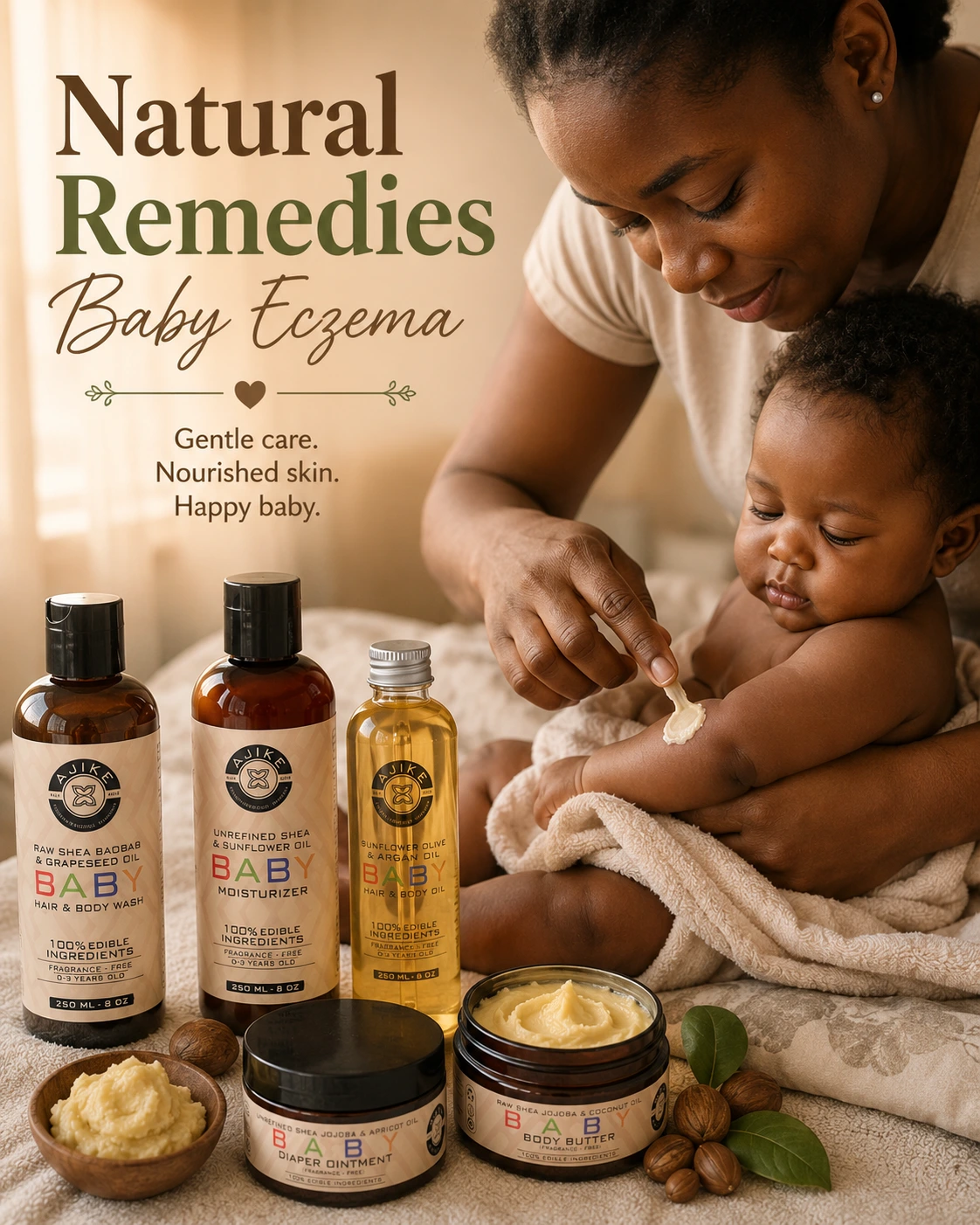
What Is Actually Happening in Baby Eczema Skin
Baby eczema involves two interacting problems at the skin barrier level. The first is a structural deficiency: in atopic dermatitis, the production of filaggrin, a protein critical for the stratum corneum's barrier function, is genetically reduced. This structural weakness makes the barrier leaky: water evaporates through it faster than normal (high transepidermal water loss), and irritants and allergens can penetrate inward more easily.
The second is immune dysregulation: the skin's immune cells respond to the barrier breach with an inflammatory response that produces the itching, redness, and skin cell accumulation visible as eczema patches. The inflammation further damages the barrier, which allows more irritant penetration, which drives more inflammation. The eczema cycle is self-reinforcing once it is established.
Shea Butter for Baby Eczema: Application and Expectations
Raw shea butter addresses baby eczema through two mechanisms. The fatty acid profile, particularly the oleic and stearic acid content, provides emollient support for the barrier and helps replace some of the structural lipid that the eczema-prone barrier is deficient in. The unsaponifiable fraction's triterpenes and phytosterols provide anti-inflammatory action that helps moderate the immune response driving the eczema inflammation.
Apply raw shea butter to eczema patches twice daily, after every cleanse, and immediately after bathing while the skin is still slightly damp. The damp-skin application is essential: the shea butter seals in the moisture from the bath or cleaning rather than simply coating dry skin. Results are cumulative and require consistent twice-daily application over weeks before the full benefit is apparent. Results may vary depending on skin type.
Read Also: Full eczema and shea butter guide: Shea Butter for Eczema - How to Use It and What to Expect →
Baobab Oil for Eczema-Prone Baby Skin: Barrier Support Without Irritation
Baobab oil provides essential fatty acids, particularly linoleic acid, that support ceramide synthesis in the eczema-prone skin barrier. Ceramide deficiency is one of the primary structural problems in atopic dermatitis skin, and providing topical linoleic acid supports the skin's ability to produce the ceramides it needs for barrier repair.
The vitamin D content of baobab oil also provides some support for the antimicrobial peptide production in the skin's barrier immune system, which is typically compromised in eczema-prone skin and contributes to the Staphylococcus aureus colonisation that worsens eczema. Apply in small amounts alongside shea butter or as part of the Ajike Baby Body Butter for eczema-prone baby skin.
Sunflower Oil: The Linoleic-Rich Option for Compromised Baby Barrier
Sunflower seed oil has the highest linoleic acid content of the major plant oils commonly used in baby skincare, at approximately 65 to 70 percent. For eczema-prone baby skin where ceramide deficiency drives the barrier dysfunction, sunflower oil's linoleic acid content is the most directly relevant of all the plant oil options. It has been specifically studied in newborn skin care for barrier protection and found to be well-tolerated and beneficial.
For baby eczema management, sunflower oil applied to still-damp skin after bathing provides direct essential fatty acid support for barrier repair. It is lighter in texture than shea butter and can be used alone or as the oil step before shea butter as a final occlusive seal.
How to Moisturise an Eczema Flare vs Between Flares
During an active flare: increase moisturising frequency. Apply shea butter after every cleanse, more frequently to active patches (every 2 to 4 hours if the baby's distress warrants it), and immediately after any contact with water. During a flare, avoid introducing any new products. Keep the routine as simple as possible.
Between flares: this is the most important period for moisturising. Twice daily application of shea butter or the Ajike Baby Body Butter during clear periods maintains the barrier improvement that prevents future flares. The temptation to reduce moisturising when the baby's skin looks clear should be resisted: the clear period is when barrier building happens.
What to Avoid Entirely on Eczema Baby Skin
- Synthetic fragrance in any form, in any product that touches the baby's skin including laundry detergent
- Bubble bath and any bath product with sulfates or synthetic fragrance
- Coconut oil on eczema-affected facial skin: comedogenic rating 4-5 is too high for eczema-compromised facial skin
- Baby wipes with fragrance or alcohol on eczema patches
- Any new product introduced during an active flare: wait until the flare has resolved before introducing anything new
- Wool or rough synthetic fabrics in direct contact with eczema skin: use cotton against the skin
When Natural Remedies Need to Be Combined with Medical Treatment
For mild baby eczema, consistent twice-daily barrier moisturisation with safe natural ingredients as described above is an appropriate primary management strategy. For moderate to severe eczema, where the baby is significantly distressed by itching, the eczema is covering large areas of the body, there are signs of secondary skin infection, or the baby's sleep and feeding are affected, a healthcare provider assessment and prescription treatment is appropriate.
Natural barrier moisturisers are compatible with prescribed topical treatments and are used alongside them in standard eczema management protocols. Apply prescribed treatments to active patches and then apply natural moisturiser to the broader skin area around them.
Natural Remedies for Cradle Cap
What Cradle Cap Actually Is and Why It Happens
Cradle cap develops because of overactive sebaceous glands in the scalp producing excess sebum, which traps dead skin cells that should normally shed invisibly from the scalp surface. The trapped dead cells, coated in the excess sebum, accumulate into the visible yellowish-brown scales that characterise cradle cap. The Malassezia yeast that contributes to adult dandruff may also play a role, as seborrhoeic dermatitis in adults and infants share some overlapping features.
How Baobab Oil Loosens Cradle Cap Scales Gently
Apply a small amount of cold pressed baobab oil directly to the scalp, working it into the area of scales and gently over the full scalp. Leave for 15 to 20 minutes to allow the oil to penetrate the scale layer and soften the adherent dead skin cells. The oil acts as a solvent that softens the dried sebum binding the scales to the scalp, making gentle removal possible without the traction that would damage the scalp underneath.
Baobab oil's light texture makes it easier to wash out completely after the treatment than heavier oils, which is important for cradle cap management where complete removal of the oil is needed to prevent residue from contributing to further scale formation.
The Soft Brush Technique: How to Remove Scales Without Damaging Scalp
After the 15 to 20 minute oil soak, use a soft baby hairbrush (very soft, natural bristles or silicone bristles designed for newborns) to gently loosen the scales from the scalp. Use light circular motions without pressing the brush hard against the scalp. The goal is to lift scales that have been softened by the oil rather than to scrub or scrape the scalp.
After brushing, wash the scalp with a small amount of Ajike Shea Baobab Baby Hair and Body Wash, rinse thoroughly, and pat dry. In most cases, a meaningful amount of scale is removed in a single treatment. The process can be repeated every few days, not every day, to avoid over-stripping the scalp.
Shea Butter on the Scalp for Cradle Cap Management
A small amount of raw shea butter applied to the scalp after washing, used as an ongoing scalp moisturiser between oil treatments, helps prevent the scalp from becoming excessively dry between treatments. The anti-inflammatory properties of shea butter's unsaponifiable fraction also provide some benefit for the seborrhoeic inflammation contributing to cradle cap.
Apply a piece no larger than half a pea, melted between adult fingertips until completely liquid, to the baby's scalp after washing. Do not apply in large amounts, as excess shea butter on the scalp can contribute to scale formation rather than preventing it.
What Not to Do with Cradle Cap
- Do not attempt to pick or peel scales off without the oil softening step first: this can cause scalp trauma and bleeding
- Do not use adult dandruff shampoos on baby scalp: the antifungal actives at adult concentrations are not appropriate for infant skin
- Do not apply the oil treatment every day: this can cause an oily scalp environment that worsens rather than improves the condition
- Do not be alarmed if full resolution takes weeks to months: cradle cap resolves gradually and partially with each treatment
When Cradle Cap Becomes Seborrhoeic Dermatitis
Cradle cap that extends beyond the scalp onto the face, particularly the eyebrows, nasolabial folds, and behind the ears, is transitioning toward the more significant seborrhoeic dermatitis presentation. Where cradle cap on the scalp alone is typically self-resolving, seborrhoeic dermatitis affecting multiple areas may need more sustained management and, if severe, assessment by a healthcare provider.
Natural Remedies for Heat Rash
Why Oils and Creams Are the Wrong Answer for Heat Rash
This is the most important counterintuitive point in baby rash management: applying any oil, cream, or moisturiser to heat rash makes it worse. Heat rash develops because sweat glands are blocked. Any occlusive substance applied to the skin further blocks the sweat gland openings, trapping more sweat inside and worsening the condition. The instinct to apply a soothing cream to the rash is the opposite of what the skin needs.
Cooling and Ventilation: The Only Approach That Works
The treatment for heat rash is environmental. Move the baby to a cooler environment. Remove excess clothing and use loose, breathable cotton garments against the skin. Allow the skin to be exposed to cool air, which helps the sweat glands to open and drain. A lukewarm (not cold) bath can help cool the baby and open the pores, but do not apply any products to the rash areas during or after the bath.
Most heat rash resolves within a few hours to a few days once the overheating cause is addressed. Do not attempt to apply anything to the affected skin until the rash has fully cleared.
What to Apply After Heat Rash Has Cleared
Once heat rash has completely resolved and the skin is clear, gentle moisturisation with Ajike Baby Moisturiser applied to slightly damp skin after bathing is appropriate to restore the skin's normal moisture balance after the episode. Do not reintroduce heavy products or occlusive preparations until the skin is fully clear.
How to Prevent Heat Rash from Recurring
Heat rash prevention centres on temperature management rather than skincare products. Dress the baby in one layer more than an adult would need in the same temperature, not more. Use loose, breathable cotton or bamboo garments rather than synthetic fabrics or wool. Avoid over-wrapping during outdoor activities. Keep the baby's environment cool and well-ventilated, particularly during sleep. Be especially vigilant in warm, humid weather when the risk of heat rash is highest.
Natural Remedies for Contact Dermatitis in Babies
Finding the Trigger: The Most Important Step
No treatment for contact dermatitis is as effective as removing the trigger. The first and most important step is identifying what the skin came into contact with that caused the rash. The distribution of the rash is the most reliable clue: the rash should closely map to the area of skin that had contact with the triggering substance.
Review everything that touched the baby's skin in the 24 to 72 hours before the rash appeared. New products are the most common triggers: a new laundry detergent for baby clothing, a new diaper brand, a new baby lotion, a new wet wipe brand. In older infants, new foods introduced around the time of the rash may also be relevant.
How to Identify Whether a Product Is the Cause
The patch test approach: stop using all recently introduced products simultaneously and monitor whether the rash improves over 48 to 72 hours. If it does, reintroduce products one at a time with 48 hours between each reintroduction. When the rash reappears, the most recently reintroduced product is the likely cause.
For laundry-triggered contact dermatitis: switching to a fragrance-free, dye-free laundry detergent and washing all baby clothing and bedding in the new product before reassessing the skin.
Soothing Irritated Contact Dermatitis Skin Naturally
Once the trigger has been identified and removed, the affected skin typically needs gentle support while it heals. For the rash area specifically: cleanse gently with plain warm water only (no products on the irritated area), allow to air dry, and apply a small amount of raw shea butter to provide emollient barrier support and anti-inflammatory soothing as the skin recovers. Avoid applying any additional products to the rash area until it has significantly improved.
How Long Contact Dermatitis Takes to Resolve After the Trigger Is Removed
Irritant contact dermatitis typically begins improving within 24 to 48 hours of trigger removal and resolves within 1 to 2 weeks with appropriate gentle care. Allergic contact dermatitis, which involves an immune response that takes time to resolve once activated, may take 2 to 4 weeks to fully clear even after the trigger is removed. If the rash is not improving after one week of trigger removal and gentle care, a healthcare provider assessment is warranted.
What to Look for in a Natural Baby Rash Cream
Ingredients That Soothe Without Sensitising
Effective soothing ingredients for baby rash that do not carry sensitisation risk include: raw shea butter (anti-inflammatory triterpenes, emollient fatty acids), calendula extract (flavonoids and polysaccharides with documented anti-inflammatory and wound-healing properties), baobab oil (vitamins and essential fatty acids with skin support benefits), sunflower oil (high linoleic acid for ceramide-adjacent barrier support), and zinc oxide for the diaper area specifically (proven barrier protection and mild antifungal action).
Ingredients That Protect the Skin Barrier During a Rash
During any active rash, the skin barrier is compromised to some degree. Ingredients that protect and support barrier function during healing include: zinc oxide (physical barrier protection), shea butter (anti-inflammatory and emollient barrier support), baobab oil (essential fatty acids and vitamin A for cell renewal), and sunflower oil (ceramide-supporting linoleic acid).
Ingredients to Avoid in Any Baby Rash Treatment
- Synthetic fragrance: on already-compromised barrier skin, the sensitisation risk is even higher than on intact skin
- Essential oils: too concentrated for infant skin and inappropriate for rash-affected skin
- Alcohol (denatured or isopropyl): strips the barrier further on already-irritated skin
- Talc: respiratory risk from powder inhalation
- Parabens, MIT, DMDM hydantoin: on broken or rash-affected skin with higher permeability
- Mineral oil: provides occlusion without any barrier support compounds
Why Fewer Ingredients Is Always Better for Baby Rash Products
Each additional ingredient in a baby rash product is an additional potential trigger, sensitiser, or irritant. For rash-affected skin where the barrier is already compromised and permeability is higher than normal, the risk associated with each ingredient is proportionally greater than for intact skin. A single-ingredient preparation like raw shea butter or zinc oxide paste has one possible reaction variable. A complex formulation with 15 ingredients has 15 possible variables.
When treating a baby rash, particularly an unidentified one, start with the simplest possible preparation. Add complexity only if the simple approach is insufficient.
The Difference Between a Treatment Cream and a Barrier Cream
A treatment cream is intended to actively address the cause or reduce the severity of an active rash: shea butter and zinc oxide for diaper rash, anti-inflammatory ingredients for eczema. A barrier cream is intended to prevent rash from developing by protecting the skin from external irritants: a zinc oxide-based diaper cream applied preventively at each nappy change on healthy skin.
The distinction matters because barrier creams are used prophylactically on healthy skin and can be richer and more occlusive than treatment creams applied to already-irritated skin. The Ajike Baby Diaper Ointment works as both: as a treatment for active diaper rash and as a barrier cream applied preventively at each nappy change.
When to Stop Natural Treatment and See a Doctor
See a Doctor: Seek immediate medical attention if: fever accompanies any rash, particularly in a newborn under 4 weeks; the rash is spreading rapidly; there are signs of infection (warmth, swelling, yellow crusting, pus); the baby is unusually lethargic; or the rash involves swelling of the face or lips.
Signs a Rash Is Infected and Needs Antibiotics
Secondary bacterial infection of a skin rash, most commonly from Staphylococcus aureus, produces specific signs that distinguish it from the primary rash: increased warmth and tenderness in the affected area, yellow or honey-coloured crusting on the rash surface, spreading redness beyond the original rash boundary, swelling of the area, and sometimes a feverish baby who is more distressed than the visible rash alone would seem to warrant.
Infected diaper rash that does not respond to increased nappy changing frequency and barrier cream within 48 to 72 hours, particularly if there is yellow crusting, may have a secondary bacterial or Candida infection. Infected eczema patches, which are significantly more common and more serious in infants with atopic dermatitis because of the compromised barrier, require prompt medical attention.
Signs a Rash May Be Allergic and Needs Medical Assessment
Allergic contact dermatitis in its more severe form may produce widespread, rapidly spreading redness beyond the contact area, blistering, or a baby who is extremely distressed. Any rash that spreads quickly beyond its initial location, particularly if the baby is distressed in a way that seems disproportionate to the visible rash, warrants medical assessment.
If a rash appears immediately or very rapidly (within minutes) after the baby is exposed to a specific substance, particularly a food, a new formula, or an insect sting, this pattern of rapid onset suggests an IgE-mediated allergic response. Seek medical assessment promptly, particularly if there is any swelling of the face or lips, difficulty breathing, or unusual pallor.
When Eczema Is Severe Enough to Need Prescription Treatment
Baby eczema warrants prescription treatment when: the baby is significantly distressed by itching, scratching is causing visible skin damage, the eczema is covering large areas of the body, sleep and feeding are affected, there are signs of secondary infection, or consistently applied natural moisturising treatment over 2 to 3 weeks has produced no meaningful improvement.
Prescription treatments for baby eczema typically include topical corticosteroids for acute management and newer non-steroidal options. Natural moisturisers are used alongside prescription treatment in standard eczema protocols, not as a substitute for it when prescription treatment is clinically indicated.
Rashes That Come with Fever, Swelling or Spreading Redness
Any baby rash accompanied by fever should be assessed by a healthcare provider. In a newborn under 4 weeks, a rash plus fever is a medical emergency regardless of how mild the rash appears. In older infants, fever plus a new rash may indicate a systemic viral illness (roseola, fifth disease), a bacterial infection, or a more serious condition requiring evaluation.
Spreading redness, particularly if it is warm to the touch and spreading in a visible pattern from a central point, may indicate cellulitis, a bacterial skin infection that requires antibiotic treatment. Do not apply any natural remedies to spreading, warm, tender redness: seek medical assessment.
How to Describe a Baby Rash to a Healthcare Provider
When contacting a healthcare provider about a baby rash, provide the following information: when the rash first appeared and how it has changed since, where on the body it is located and whether it has spread, what it looks like (flat or raised, colour, texture, whether it blisters or crusts), whether the baby appears bothered by it (scratching, crying, unusual fussiness), any recent changes in products, diet, or environment, and whether the baby has a fever or any other symptoms.
If possible, take photographs of the rash at different points in time before the appointment. The appearance of a rash can change rapidly in infants, and photographs taken at home provide the healthcare provider with information they would not otherwise have at the time of the appointment.
Building a Rash-Prevention Skincare Routine for Baby
Daily Moisturising as Rash Prevention, Not Just Treatment
For a baby with eczema-prone or sensitive skin, consistent daily moisturising is one of the most effective rash-prevention strategies available. Research in atopic dermatitis prevention has found that regular application of a simple emollient moisturiser to high-risk infants from the first weeks of life reduces eczema development at 6 months. For babies already showing eczema, consistent daily moisturising reduces flare frequency and severity over time.
Apply Ajike Baby Moisturiser to the full body after bathing while the skin is still slightly damp, every day. This is the single most preventive skincare intervention available for rash-prone baby skin.
The Fragrance-Free, Preservative-Free Standard for All Baby Products
Every product that touches a baby with rash-prone skin should be fragrance-free and preservative-free as a baseline non-negotiable standard. This includes laundry detergent, bath wash, body lotion, nappy cream, and baby wipes. A single fragranced product in an otherwise clean routine can be sufficient to trigger a reaction in a sensitised infant.
How to Change Nappies in a Way That Prevents Diaper Rash
Change nappies frequently, at least every 2 to 3 hours during waking hours. Always clean the diaper area with plain warm water and cotton wool, or a fragrance-free wipe, before applying any barrier product. Dry the skin by patting gently rather than wiping. Apply a thin layer of Ajike Baby Diaper Ointment or raw shea butter to clean, dry skin at every change to maintain the barrier before any rash develops. Allow brief air time when practical.
Bath Frequency and Water Temperature for Rash-Prone Baby Skin
For rash-prone and eczema-prone baby skin, daily brief baths in lukewarm water (not hot) with a small amount of gentle fragrance-free wash, followed by immediate moisturisation of damp skin, are more beneficial than less frequent, longer baths. The three-minute window after the bath, when the skin is still slightly damp and maximally receptive to moisturiser, is the most valuable skincare moment of the day.
Avoid long baths and hot water for rash-prone baby skin. Prolonged water exposure strips more oils from the skin than brief bathing, and hot water increases skin reactivity and TEWL after the bath.
What to Do When a Product Causes a Reaction
Stop the product immediately. Cleanse the affected area with plain warm water. Apply a small amount of raw shea butter to the area if the skin is irritated and dry. Monitor over 48 to 72 hours. If the reaction is clearing, the product was the likely cause. If the reaction worsens or spreads, seek medical assessment.
After a product causes a reaction, check the ingredient list of that product for synthetic fragrance, MIT/MCI, parabens, and other known sensitisers. This information is useful both for avoiding the same ingredient in future products and for discussing with a healthcare provider if further assessment is needed.
Ajike Natural Remedies for Baby Rash
Ajike Baby Diaper Ointment: Shea Butter and Zinc Barrier Protection
Our Baby Diaper Ointment combines zinc oxide for proven barrier protection and mild antifungal action with raw shea butter's anti-inflammatory and emollient properties and baobab oil's vitamin and essential fatty acid support. No synthetic fragrances, no parabens, no petroleum-derived ingredients. Applied at each nappy change to clean, dry skin for both prevention and treatment of diaper rash.
Ajike Raw Unrefined Shea Butter: The Single-Ingredient Option for Any Rash
For parents who want the most minimal possible approach, raw unrefined ivory shea butter from Ajike, with a single ingredient and no additions, is appropriate for: eczema patches (applied twice daily to damp skin after cleansing), cradle cap (applied to the scalp before washing), diaper rash (applied as a barrier at nappy changes), and contact dermatitis healing (applied gently to clean skin after the trigger is removed).
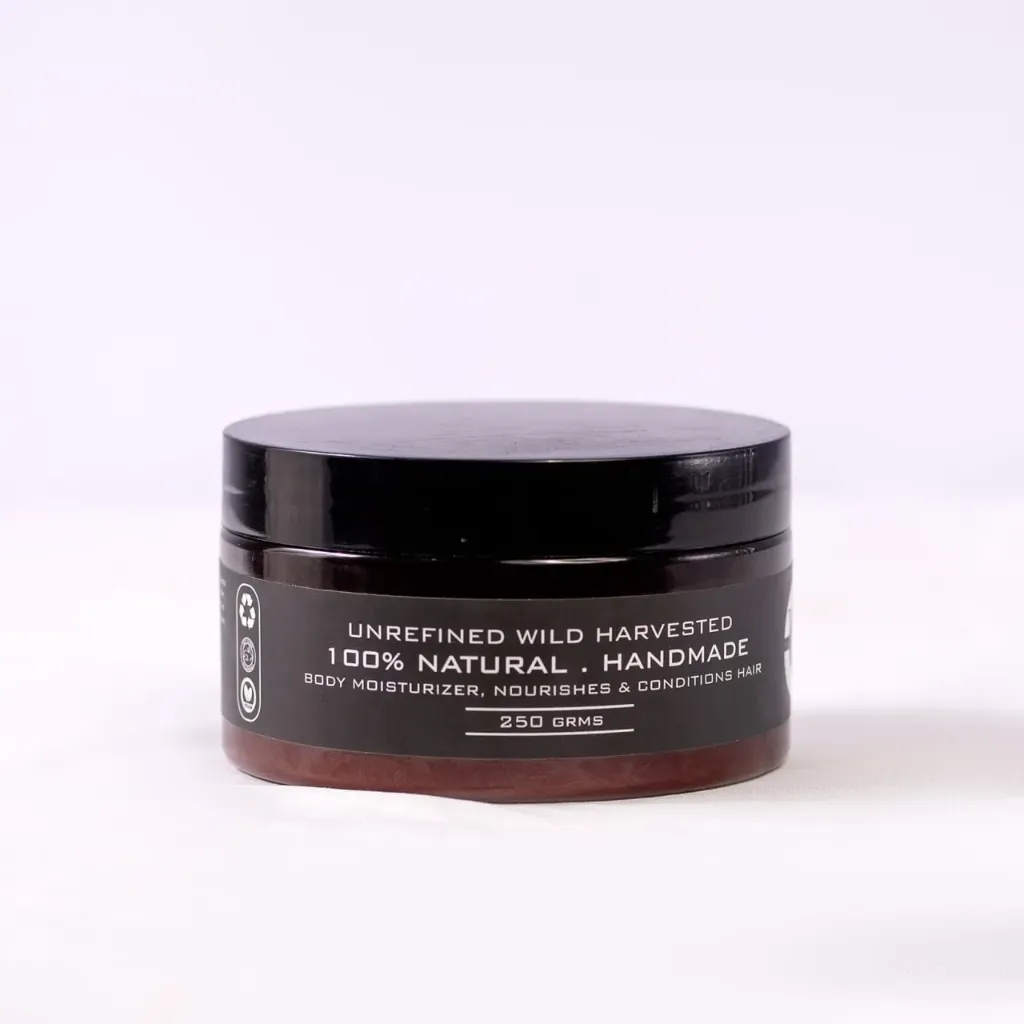
Ajike Baby Moisturiser: Daily Barrier Support for Rash-Prone Baby Skin
Our Baby Moisturiser provides the daily emollient moisturisation that prevents rash-prone baby skin from reaching the dry, compromised-barrier state where rashes are most likely to develop. Applied after every bath to slightly damp skin, it maintains the moisture balance that keeps the skin barrier at its most resilient between wash days.
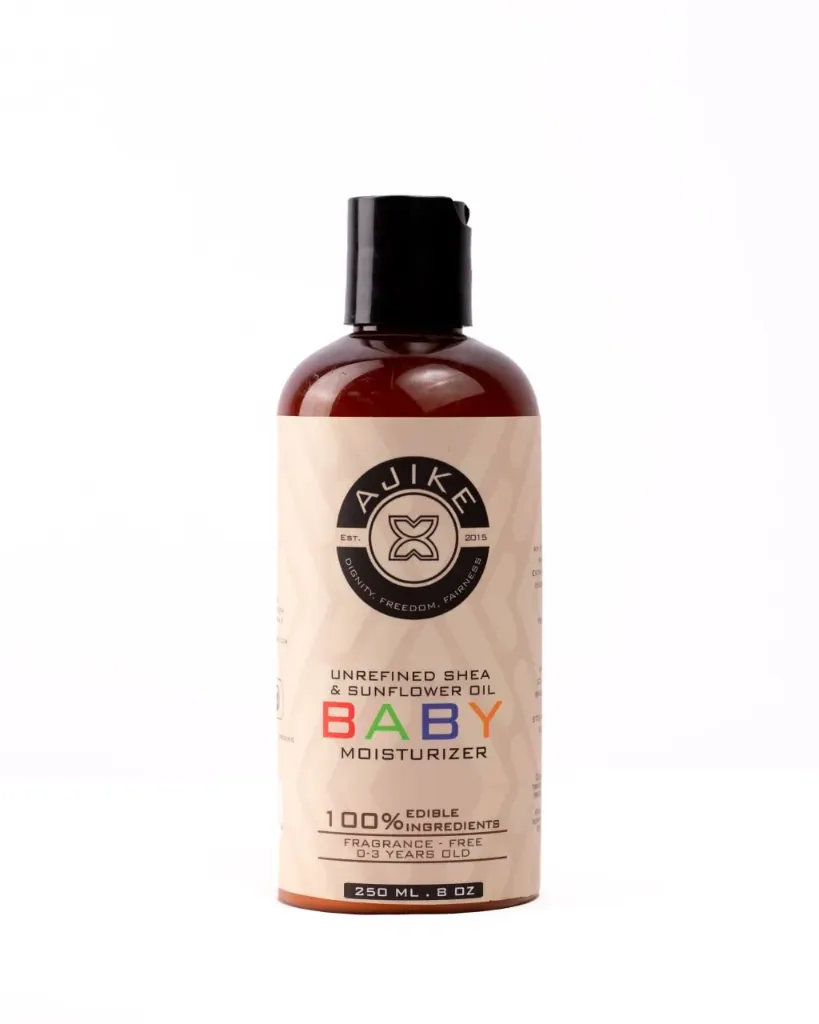
Ajike Baby Body Butter: Intensive Moisture for Eczema and Dry Rash
For baby eczema patches and very dry rash-affected skin, our Baby Body Butter provides a richer, more intensive moisturisation than the standard lotion. Applied to active eczema patches and areas of significant dryness, it provides the more intensive barrier support that dry, compromised eczema skin needs alongside or between applications of any prescribed treatments.
Ajike Shea Baobab Baby Hair and Body Wash: The Safe Cleanser Beneath Every Routine
The cleanser used before applying any rash treatment matters as much as the treatment itself. Our Shea Baobab Baby Hair and Body Wash uses a plant-derived coco glucoside surfactant system, is completely fragrance-free, and leaves the skin in a clean, slightly damp state that is ideal for any subsequent product application. For rash-prone baby skin, the cleanser is not a neutral variable but an active contributor to skin health.
Frequently Asked Questions
See a doctor if: the baby has a fever alongside any new rash (urgent in babies under 4 weeks), the rash is spreading rapidly, there are signs of infection (yellow crusting, warmth, swelling, pus), the rash is accompanied by unusual lethargy or distress, there is any swelling of the face or lips, or you cannot identify the rash and it is not improving within 48 to 72 hours of gentle care.
Yes. Raw unrefined shea butter with no additives is safe and beneficial for baby eczema skin. Its fatty acid profile provides emollient barrier support, and its unsaponifiable fraction provides anti-inflammatory action relevant to eczema management. Apply twice daily to slightly damp skin after cleansing. Always patch test before first full use. Discontinue if irritation occurs. Results may vary depending on skin type.
This can indicate: an ingredient in the cream is triggering a contact reaction (check for synthetic fragrance, preservatives, or any new ingredient), the cream is an occlusive being applied to heat rash (which requires no products), or the cream is adding to the irritant load on already-compromised skin. Discontinue the cream, cleanse with plain water, and apply only raw shea butter in a very small amount to the affected area while you assess the situation.
Coconut oil is appropriate for some baby rash types (cradle cap scalp treatment, diaper area) but not for all. Its comedogenicity rating of 4 to 5 makes it unsuitable for eczema-prone baby skin, particularly on the face. For eczema rashes, baobab oil, sunflower oil, and raw shea butter are more appropriate choices.
Baby eczema follows an individual pattern that varies significantly between children. Many children with infant eczema see significant improvement or complete resolution by age 3 to 5. Some continue to experience eczema into adolescence and adulthood. Consistent daily moisturisation and identification and avoidance of personal triggers are the most reliable strategies for reducing flare frequency and severity over time.
Our latest content
Check out what's new in our company !