
Start writing here...
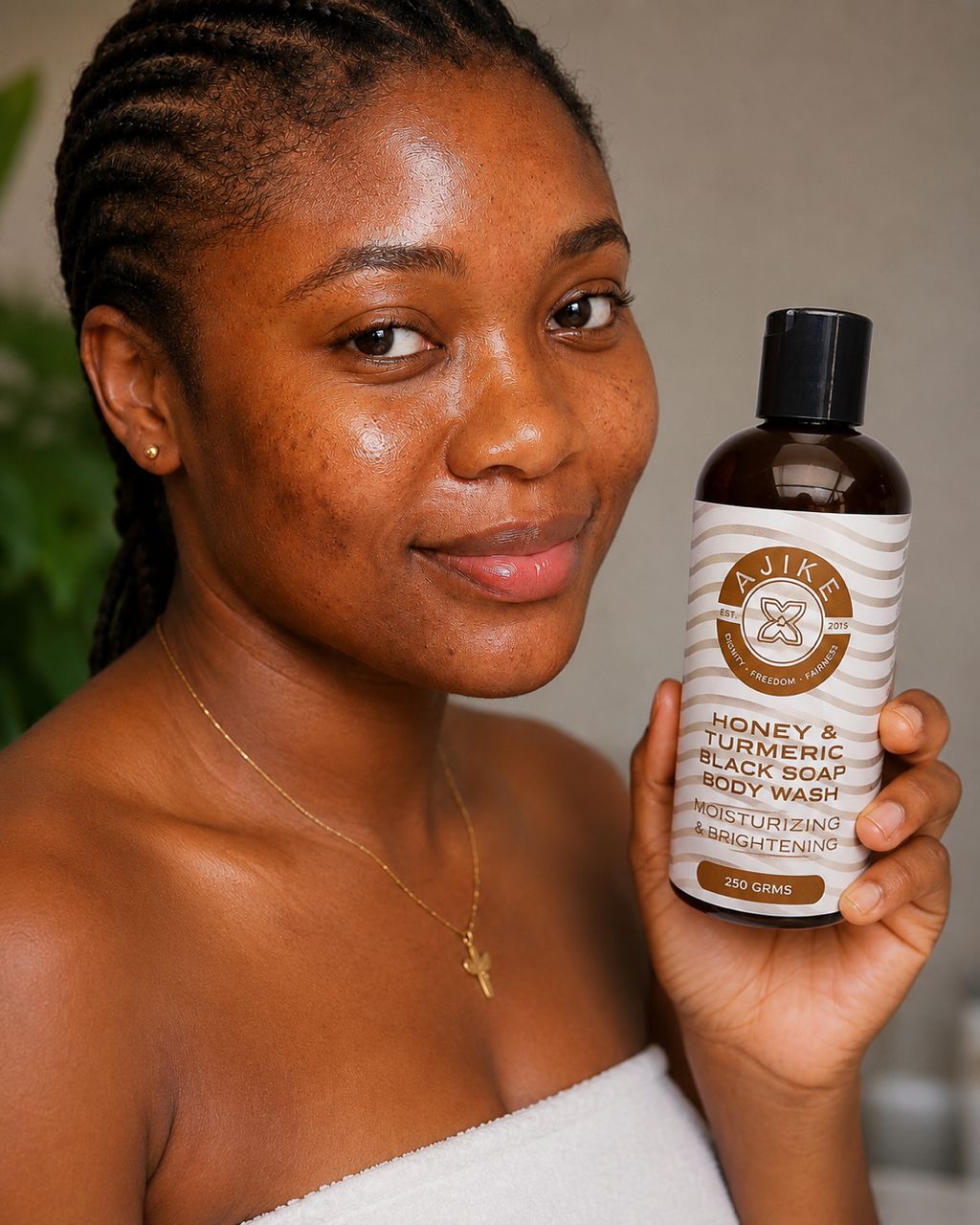
Dark spots. Post-acne marks. Uneven skin tone. If you have melanin-rich skin, you know that these are not just minor cosmetic concerns they can be stubborn, persistent, and deeply frustrating. You also know that many products marketed for dark spots either do not work as promised or, worse, contain ingredients that are too harsh for dark skin and create new problems in the process.
African black soap has been used across West Africa for generations as a daily cleanser and skin balancer. But does it actually help with hyperpigmentation? And if so, how and what can you realistically expect?
This guide answers those questions honestly. We will explain the science behind how African black soap addresses dark spots, which types of hyperpigmentation it helps with, exactly how to use it for the best results, and which Ajike products work best alongside it to accelerate your progress.
🔗 Read Also: New to African Black Soap? Read: What Is African Black Soap? Complete Guide → https://www.ajikeghana.com/blog/what-is-african-black-soap
Understanding Hyperpigmentation on Dark Skin
What Is Hyperpigmentation and Why Does It Happen?
Hyperpigmentation is the darkening of an area of skin caused by excess melanin production. Melanin is the pigment that gives skin, hair, and eyes their colour. It is produced by specialised skin cells called melanocytes, which are found in the deepest layer of the epidermis, the basal layer.
When the skin experiences inflammation, injury, hormonal changes, or UV damage, melanocytes can be triggered to overproduce melanin in a localised area. This excess melanin accumulates in the upper layers of the skin, creating patches, spots, or uneven tone that are darker than the surrounding skin. The result is hyperpigmentation a broad term that encompasses everything from post-acne marks to melasma to sun spots.
Why Dark Skin Is More Prone to Hyperpigmentation
Melanin rich skin, skin with higher concentrations of eumelanin, the darker form of melanin has more active melanocytes that are more readily triggered to produce excess pigment in response to inflammation or injury. This biological characteristic means that what might cause a brief red mark on lighter skin can result in a lasting dark spot on darker skin.
This is not a flaw, it is biology. Melanin provides significant natural protection against UV radiation, and melanin rich skin has a lower lifetime risk of skin cancer than lighter skin. But it does mean that managing hyperpigmentation requires a gentle, consistent approach that works with the skin's melanin biology rather than against it.
Post-Inflammatory Hyperpigmentation: The Most Common Type
Post-inflammatory hyperpigmentation (PIH) is the dark mark left behind after the skin has experienced inflammation most commonly from acne, eczema, an insect bite, a cut, or any other injury. The inflammation triggers the melanocytes in the affected area to overproduce melanin during the healing process, and this excess melanin remains visible in the skin long after the original inflammation has resolved.
PIH is the most common form of hyperpigmentation in melanin-rich skin and the type that African black soap is most directly suited to addressing through its anti-inflammatory and gentle exfoliation properties.
Acne Scars vs Dark Spots What Is the Difference?
These two terms are often used interchangeably, but they refer to different things. True acne scars involve structural changes to the skin indentations (atrophic scars like icepick, boxcar, and rolling scars) or raised tissue (hypertrophic scars or keloids) caused by damage to the dermis during severe or picked acne.
Dark spots from acne sometimes called acne marks or post-acne hyperpigmentation are flat discolourations in the epidermis caused by PIH. They have no structural component they are purely pigment-based. These are what African black soap addresses. True structural acne scars (indentations, raised tissue) require dermatological treatment and cannot be resolved by topical skincare products alone.
Sun-Induced Dark Spots on Dark Skin
UV radiation from the sun stimulates melanocyte activity across the entire skin surface, which is why sun exposure darkens existing hyperpigmentation and can create new spots over time commonly called sun spots or age spots. For melanin-rich skin, unprotected sun exposure is one of the most significant factors that prevents existing dark spots from fading and creates new ones.
This is why sun protection is an essential not optional component of any dark spot treatment routine. African black soap can support skin renewal and reduce existing spots, but without consistent sun protection, UV exposure will continue to stimulate new melanin production and undermine the progress.
Hormonal Hyperpigmentation Melasma and Dark Skin
Melasma is a form of hyperpigmentation directly linked to hormonal changes pregnancy, the contraceptive pill, hormonal IUDs, or other hormonal fluctuations can trigger widespread melanocyte activity, producing characteristic larger patches of pigmentation, typically on the cheeks, forehead, upper lip, and chin.
Melasma is particularly common in melanin-rich skin and is notoriously difficult to treat because the underlying hormonal trigger continues to stimulate pigmentation. African black soap can support gentle skin renewal and a more even surface tone, but melasma typically requires additional treatments, and managing the hormonal cause is the most important factor.
How Does African Black Soap Work on Dark Spots?
Natural Exfoliation Through pH How It Lifts Hyperpigmentation
The most direct mechanism through which African black soap supports dark spot reduction is gentle, consistent chemical exfoliation driven by its natural pH profile. Authentic African black soap, made with cocoa pod ash, has a slightly elevated alkaline pH compared to the skin's natural acidic pH of 4.5 to 5.5.
This mild alkalinity loosens the bonds between corneocytes the dead skin cells in the outermost layer of the stratum corneum and accelerates their removal from the skin surface. Because hyperpigmentation accumulates in the upper layers of the epidermis, this consistent removal of superficial, hyperpigmented skin cells gradually reveals the newer, more evenly pigmented cells beneath.
The key word is gradual. This is not the aggressive chemical exfoliation of high-concentration glycolic acid or trichloroacetic acid (TCA) peels. It is a mild, daily process that over weeks and months produces a meaningful, visible improvement in skin tone evenness without the risk of post-inflammatory hyperpigmentation that harsh treatments carry, particularly for dark skin.
The Role of Cocoa Pod Ash in Skin Cell Renewal
Cocoa pod ash the roasted ash of cocoa pod shells is the defining ingredient that gives Ghanaian African black soap its unique cleansing properties. The mineral profile of cocoa pod ash, rich in potassium hydroxide and natural salts, creates a mildly alkaline cleansing environment that supports the skin's natural desquamation process the shedding of dead surface cells when used consistently.
With regular use, this gentle acceleration of desquamation means that hyperpigmented surface cells are removed more consistently, and the skin surface maintains a higher proportion of newer, less pigmented cells over time. This is the mechanism behind the skin tone evening effect that consistent African black soap users observe.
How Saponification Preserves Skin-Nourishing Compounds
Traditional saponification the process that creates authentic African black soap converts plant oils and ash lye into soap molecules while leaving behind unsaponifiable fractions from the shea butter and other plant oils. These unsaponifiable compounds natural triterpenes, phytosterols, and vitamins are not converted into soap and remain active in the bar.
Phytosterols in particular have documented anti-inflammatory properties and can support the inhibition of excess melanin production by reducing the inflammatory signals that trigger melanocyte overactivity. This means African black soap is not just exfoliating away existing hyperpigmentation it is also working to reduce the inflammatory environment that creates new hyperpigmentation.
Reducing Inflammation Stopping New Dark Spots Before They Form
Post-inflammatory hyperpigmentation only forms when inflammation triggers melanocyte overactivity. One of the most effective long-term strategies for managing dark spots in melanin-rich skin is reducing the incidence and severity of inflammation which means fewer new spots forming in the first place.
By providing effective, gentle cleansing without harsh synthetic additives that can irritate the skin and trigger inflammation, African black soap supports a calmer, more balanced skin environment. Fewer inflammation events mean fewer PIH triggers, which over time translates to clearer, more even skin tone even before the existing spots have fully faded.
What African Black Soap Cannot Do Setting Realistic Expectations
Honesty is important here. African black soap is not a bleaching agent, does not contain hydroquinone, does not suppress melanin production chemically, and does not deliver the rapid spot-fading results of concentrated treatments like kojic acid, azelaic acid, or vitamin C serums used at therapeutic concentrations.
What it does consistently, gently, and safely is support the natural skin renewal process, reduce inflammation, and gradually improve the skin surface's overall tone evenness over weeks and months of regular use. For many people, particularly those with sensitive skin that cannot tolerate harsh actives, this gentle, plant-based approach is exactly what their skin needs. Results may vary depending on skin type.
📌 Honest Expectation: With consistent use of African black soap correctly applied, paired with appropriate brightening products and sun protection most users see meaningful improvement in dark spots within 6 to 12 weeks. Dramatic overnight results are not realistic, and anyone promising them is overpromising.
African Black Soap for Different Types of Dark Spots
Post-Acne Marks and Blemish Scars
Post-acne marks flat dark discolourations left after an acne breakout heals are the type of hyperpigmentation that African black soap addresses most effectively. Because these marks are superficial (in the epidermis) and caused by PIH rather than structural damage, the combination of gentle exfoliation and anti-inflammatory action that African black soap provides is well-suited to gradually fading them.
For best results with post-acne PIH, pair African black soap cleansing with our Nightly Face Serum with Lactic Acid and Papaya Oil in the evening routine the lactic acid provides additional chemical exfoliation at a safe, gentle concentration, and the papaya enzyme (papain) supports further skin renewal.
🔗 Read Also: Full guide: African Black Soap for Acne Step by Step Guide for Clear Skin → https://www.ajikeghana.com/blog/african-black-soap-for-acne
Uneven Skin Tone and Dullness
Uneven skin tone where different areas of the face or body have noticeably different pigmentation intensity is one of the most common concerns among melanin-rich skin types. It can result from a combination of PIH from past blemishes, sun exposure, dryness, and inconsistent desquamation across different skin zones.
African black soap's consistent, gentle exfoliation supports a more uniform rate of desquamation across the skin surface, which over time produces a more even appearance. Pairing it with a brightening body lotion containing kojic acid our Shea Glow Lotion can accelerate this process for the body.
Body Dark Spots Knees, Elbows, Underarms
The skin on the knees, elbows, and underarms is thicker, subject to more friction, and naturally darker due to accumulated dead skin cells and localised hyperpigmentation from pressure and friction. African black soap body wash used daily on these areas supports the removal of excess dead skin buildup and gradually improves the appearance of chronic darkening in these zones.
For body dark spots, our Honey and Turmeric Black Soap Body Wash is particularly effective the turmeric (curcumin) adds an antioxidant and mild anti-inflammatory component that complements the black soap's natural exfoliation. Our Shea Glow Lotion with Kojic Acid applied after bathing accelerates skin tone evening on the body.
Dark Spots from Shaving and Ingrown Hairs
Shaving and ingrown hairs cause repeated micro-trauma to the skin, triggering localised PIH with each incident particularly common in the underarm area, bikini line, and legs. African black soap's antibacterial properties help reduce the inflammation caused by ingrown hairs, while its gentle exfoliation helps prevent the dead skin buildup that traps hairs beneath the surface.
Used consistently in areas prone to shaving-related dark spots, African black soap can both prevent new spots from forming and support the gradual fading of existing ones. Always apply a soothing, non-comedogenic moisturiser after cleansing these sensitive areas.
Sun Spots and Age Spots on Dark Skin
Sun spots also called solar lentigines or age spots are flat, brown, well-defined patches caused by years of cumulative UV exposure. They typically appear on the most sun-exposed areas: face, hands, shoulders, and chest. Unlike PIH, which is triggered by inflammation, sun spots are caused by direct UV stimulation of melanocytes.
African black soap can support gradual lightening of sun spots through consistent gentle exfoliation, but sun protection is absolutely essential alongside this. Without daily sun protection, any progress made in fading existing sun spots will be reversed and new spots will continue to form.
How to Use African Black Soap for Hyperpigmentation Step by Step
Step 1 Cleanse with African Black Soap Correctly
Wet your face with lukewarm water. Create a lather with the soap bar or paste in your hands never apply the bar directly to the face. Massage the lather gently onto skin in circular motions for 30 to 60 seconds. Rinse thoroughly with cool water and pat dry gently, leaving skin slightly damp.
For body dark spots knees, elbows, underarms, legs use Ajike Honey and Turmeric Black Soap Body Wash in the shower. Apply with hands or a soft cloth, 30 to 60 seconds per area. Rinse thoroughly.
Step 2 Do Not Scrub Let the pH Do the Work
This is a point that requires emphasis specifically for dark spot treatment. Many people think that more physical scrubbing equals faster dark spot removal. The opposite is true. Aggressive scrubbing causes micro-tears and inflammation in the skin and inflammation is exactly what creates new PIH in melanin-rich skin.
The exfoliation that addresses hyperpigmentation with African black soap is chemical, not physical driven by the soap's natural pH interacting with the skin surface during gentle massage. Let the pH do the work. Keep the massage motion light and circular. The goal is even coverage and gentle contact, not aggressive friction.
Step 3 Follow with a Brightening Serum or Treatment
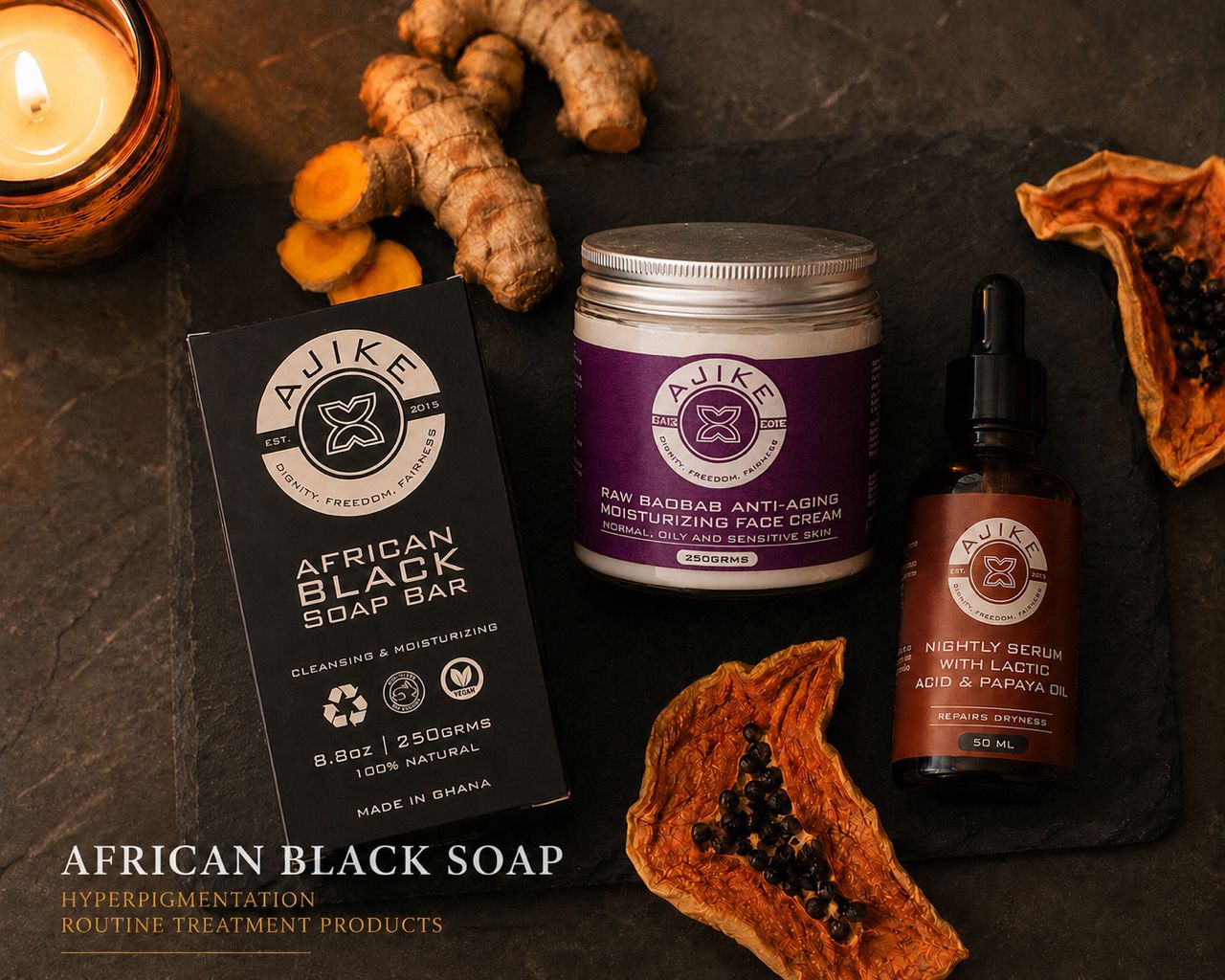
After cleansing and before moisturising, apply a targeted brightening treatment to freshly cleansed, slightly damp skin. For facial dark spots and post-acne marks, our Nightly Face Serum with Lactic Acid and Papaya Oil is ideal for evening use lactic acid gently exfoliates the skin surface at a safe concentration, and papain (papaya enzyme) further supports skin renewal and tone improvement.
This layering gentle cleansing exfoliation with black soap, followed by a targeted serum creates a compound effect that accelerates the progress of both treatments, producing better results than either would achieve alone.
Step 4 Moisturise to Support Skin Renewal
Moisturisation is not just about comfort it is an active component of dark spot treatment. Well-hydrated skin has a more efficient desquamation cycle, meaning dead, hyperpigmented surface cells are shed more regularly and replaced by newer cells more quickly. Dehydrated skin has a slower, less efficient renewal process.
Apply your moisturiser to slightly damp skin immediately after any serum has been absorbed. For facial use, Ajike Raw Baobab Anti-Aging Face Cream provides daily moisturisation while the baobab oil's vitamin A content supports skin cell renewal. For the body, Ajike Shea Glow Lotion with Kojic Acid provides both moisturisation and a dedicated brightening action on body dark spots.
Step 5 Sun Protection The Step Most People Skip
Sun protection is the most important and most commonly skipped step in any dark spot treatment routine particularly for melanin-rich skin. UV radiation directly stimulates melanocyte activity. Every time skin that is working to fade existing dark spots is exposed to UV without protection, the melanocytes in those areas are re-stimulated to produce melanin, darkening the spots and potentially creating new ones.
Without daily sun protection, progress made during the cleansing and treatment steps is partially reversed with each day of unprotected sun exposure. This is why many people find that dark spot treatments work well in winter and seem to stop working in summer it is not the products, it is the UV. Incorporate a broad-spectrum SPF into your morning routine. For melanin-rich skin, mineral SPF formulations (zinc oxide, titanium dioxide) are generally better tolerated and less likely to leave a white cast than chemical SPF.
How Often to Use for Dark Spot Results
- Facial cleansing with African black soap once daily (evening) minimum, twice daily if skin tolerates it
- Brightening serum (Lactic Acid and Papaya Oil) every evening after cleansing
- Moisturiser every morning and evening, immediately after cleansing or serum application
- Honey and Turmeric Body Wash daily during bathing
- Shea Glow Lotion (body) daily after bathing
- Exfoliating face scrub once or twice per week maximum, not on the same evening as the lactic acid serum
How Long Does African Black Soap Take to Fade Dark Spots?
Week 1 to 2 What Is Happening Beneath the Surface
During the first two weeks, the most important work is happening at the cellular level not yet visible on the surface. The consistent gentle exfoliation of African black soap is beginning to accelerate the desquamation cycle. The anti-inflammatory compounds in the saponified shea butter fractions are reducing the inflammatory environment around existing spots. The skin is adjusting to a cleaner, more natural product environment.
Many users see no visible change in dark spots during weeks 1 and 2. This is normal and expected. The foundation is being laid. Stay consistent.
Week 3 to 4 First Visible Changes
By weeks 3 and 4, most users begin to notice that the edges of their dark spots appear slightly less defined spots that previously had sharp, clear edges begin to look slightly softer or less distinct. The overall skin surface may appear brighter or more radiant, and complexion may look more even in diffuse lighting.
For those pairing African black soap with the Nightly Face Serum with Lactic Acid and Papaya Oil, the improvement at this stage is typically more noticeable, as the compound effect of the soap's pH exfoliation and the serum's lactic acid exfoliation is producing faster surface cell turnover.
Month 2 to 3 Consistent Improvement
Month 2 and into month 3 is where the visible improvement in dark spots becomes clearly noticeable for most consistent users. Older, more established dark spots will have faded by a visible degree. Post-acne marks from recent breakouts will typically have faded significantly or cleared entirely. Overall skin tone evenness is noticeably improved.
This is also the period where users who have been consistent with sun protection see a much greater improvement than those who have not the difference by month 2 or 3 between users who incorporated SPF and those who did not is significant and visible.
What Affects How Fast You See Results
- Age of the dark spot recent post-acne marks fade faster than long-established sun spots or old PIH
- Depth of the pigmentation superficial epidermal hyperpigmentation responds faster than deeper dermal pigmentation
- Consistency of use daily use produces meaningfully faster results than occasional use
- Sun protection consistent SPF use is the single biggest accelerator of dark spot fading results
- Skin tone very deep skin tones may see slower surface change as the contrast between spot and surrounding skin is greater
- Pairing with additional treatments adding the Nightly Serum with Lactic Acid and the Shea Glow Lotion accelerates results
- Overall skin health well-hydrated, well-nourished skin renews faster than dehydrated or nutrient-depleted skin
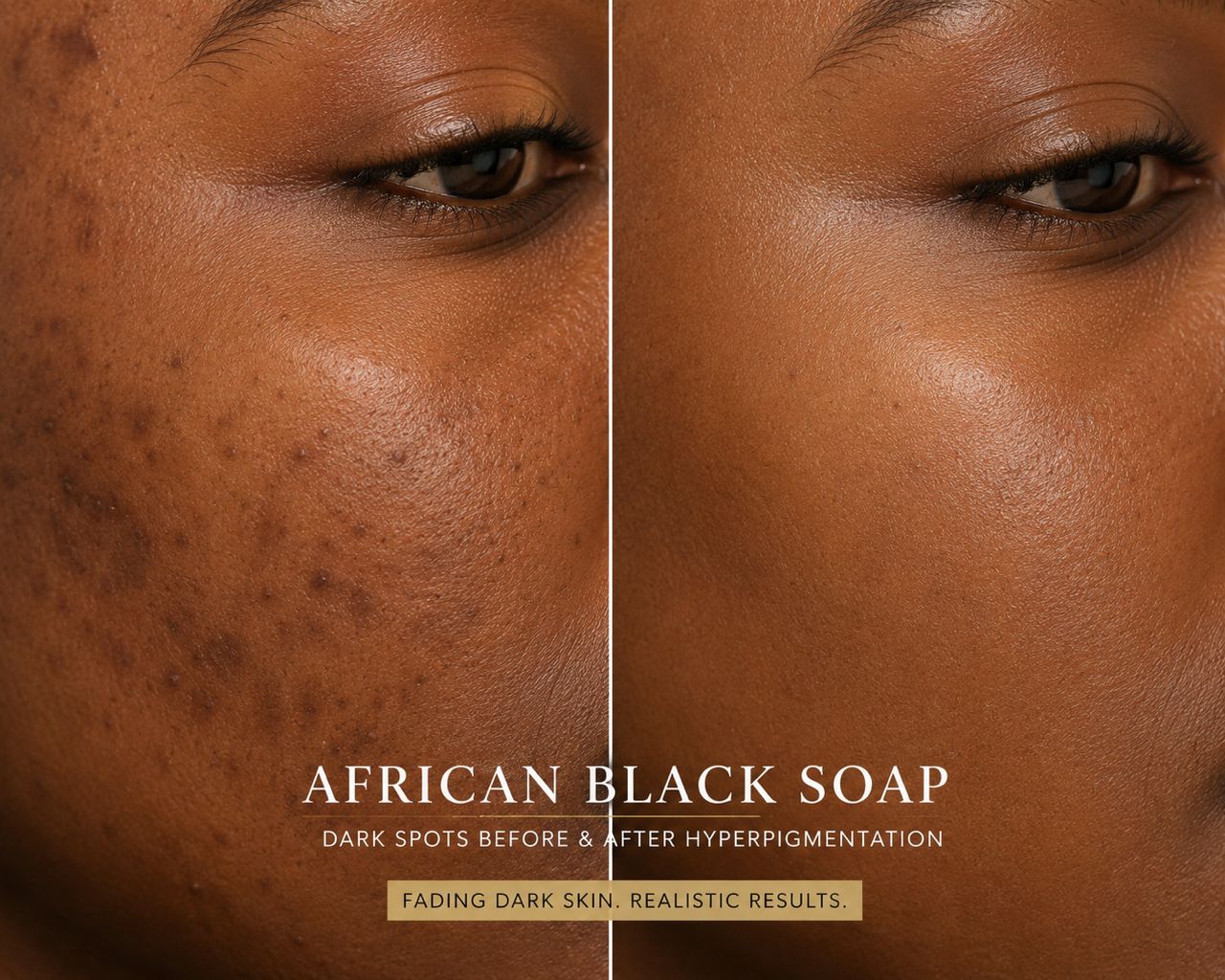
African Black Soap Before and After What Real Results Look Like
What Changes You Can Realistically Expect
With consistent use of African black soap as part of a complete routine correct cleansing, targeted serum, daily moisturisation, and sun protection realistic expectations for 8 to 12 weeks of use include:
- Post-acne marks from recent breakouts significantly faded or cleared in most cases
- Older, established dark spots visibly lighter, edges softer, less defined
- Overall skin tone noticeably more even and less patchy
- Skin surface smoother, more refined texture from consistent gentle exfoliation
- Skin radiance improved natural glow as hyperpigmented surface cells are regularly renewed
- Body areas (knees, elbows, underarms) visibly lighter and more even with consistent body wash and lotion use
Why Results Vary Depending on Skin Type
Results vary because hyperpigmentation varies. The age, depth, cause, and extent of dark spots differs between individuals. Someone with recent post-acne PIH and a consistent routine will see faster results than someone with decade-old sun damage. Someone who adds SPF will see faster results than someone who does not. Someone using the full Ajike routine cleanser, serum, moisturiser, brightening lotion will see faster results than someone using the soap alone.
Results may vary depending on skin type. This is not a disclaimer for uncertainty it is a statement of biological reality. What we can say with confidence is that consistent, correct use of African black soap as part of a supportive routine will produce meaningful improvement in dark spots for the vast majority of users over 8 to 12 weeks.
The Role of Consistency Over Everything Else
In dark spot treatment, consistency is the single most important variable more important than the specific products used, more important than the concentration of actives, more important than any other factor. Skin cell turnover operates on a cycle of approximately 28 to 40 days (longer in older skin). For dark spots to visibly fade, multiple complete cycles of cell renewal are needed. This takes time, and it requires consistent, daily effort.
Using African black soap three times a week and a serum occasionally will produce some improvement. Using African black soap daily, following with a serum every evening, moisturising consistently, and wearing SPF every day will produce dramatically better results in the same timeframe. There are no shortcuts but there is a clear, straightforward path, and consistency is the engine that drives it.
Best Ajike Products to Pair with African Black Soap for Dark Spots
Ajike Nightly Face Serum with Lactic Acid and Papaya Oil
Our Nightly Face Serum with Lactic Acid and Papaya Oil is the most targeted dark spot treatment in our range for the face. Lactic acid a gentle AHA derived from milk provides chemical exfoliation at a safe, skin-compatible concentration, accelerating the removal of hyperpigmented surface cells without the irritation risk of stronger acids. Papaya oil contains papain, a natural enzyme that further supports skin renewal and brightness.
Apply to freshly cleansed, slightly damp skin every evening after African black soap cleansing. Allow to absorb for 1 to 2 minutes before applying moisturiser over the top. For melanin-rich skin, lactic acid is one of the safest and most effective acids available its larger molecular size means it exfoliates more gently and is less likely to cause the rebound PIH that more aggressive acids can trigger in dark skin.
🛒 PRODUCT LINK Ajike Nightly Face Serum with Lactic Acid & Papaya Oil Natural Exfoliating Night Repair Glow Serum Lactic acid + papain (papaya enzyme). Gentle AHA exfoliation. Dark spot fading. Skin renewal overnight. All skin types. Apply after black soap cleansing every evening. 🔗 https://www.ajikeghana.com/products/nightly-face-serum-lactic-acid-papaya-oil
Ajike Shea Glow Lotion with Kojic Acid For Body Dark Spots
For body dark spots knees, elbows, underarms, uneven body tone our Shea Glow Lotion is the most targeted product in our range. Kojic acid is a naturally derived skin-brightening compound produced during the fermentation of rice, traditionally used in Japanese skincare and now one of the most well-researched natural alternatives to hydroquinone for dark spot treatment.
Kojic acid works by inhibiting the enzyme tyrosinase, which is responsible for converting the amino acid tyrosine into melanin. By gently reducing tyrosinase activity, it slows new melanin production in hyperpigmented areas while the skin's natural renewal process removes existing hyperpigmented cells. Applied daily after bathing to the body areas with dark spots, consistent use produces visible tone improvement over 6 to 10 weeks.
🛒 PRODUCT LINK Ajike Shea Glow Lotion Brightening Lotion for Dark Spots & Uneven Skin Tone Kojic acid + shea butter + plant oils. Brightening and moisturising. Daily body lotion for dark spots, uneven tone, dull skin. Apply after bathing with Honey & Turmeric Body Wash. 🔗 https://www.ajikeghana.com/products/shea-glow-lotion
Ajike Honey and Turmeric Black Soap Body Wash For Uneven Body Tone
Our Honey and Turmeric Black Soap Body Wash combines the traditional cleansing and exfoliating properties of African black soap with honey a natural humectant and antibacterial ingredient and turmeric, which contains curcumin, a potent antioxidant and anti-inflammatory compound with documented skin-brightening properties.
Curcumin inhibits melanin synthesis through multiple pathways, including tyrosinase inhibition and reduction of oxidative stress that triggers melanocyte overactivity. Combined with the gentle pH exfoliation of the black soap base, the Honey and Turmeric Body Wash provides a meaningful brightening action with every wash particularly effective for body dark spots on knees, elbows, and underarms.
🛒 PRODUCT LINK Ajike Honey & Turmeric Black Soap Body Wash Natural Cleanser for Dark Spots & Uneven Skin Tone African black soap + honey + turmeric (curcumin). Daily brightening body wash. Dark spots, uneven body tone, dull skin. Use on knees, elbows, underarms, full body. 🔗 https://www.ajikeghana.com/products/honey-turmeric-black-soap-body-wash
Ajike Walnut and Papaya Exfoliating Face Scrub
For once or twice weekly use not daily our Walnut and Papaya Exfoliating Face Scrub adds a physical exfoliation dimension to the dark spot routine. Finely milled walnut powder provides gentle abrasion that is effective enough to remove dead surface cells but fine enough to be suitable for facial skin, including sensitive skin. Papaya extract contributes additional enzymatic exfoliation for improved skin renewal.
Use this scrub on the 1 to 2 evenings per week when you are not using the Nightly Face Serum with Lactic Acid do not use both on the same evening as the combined exfoliation may be too much for most skin types. Follow with moisturiser as always.
🛒 PRODUCT LINK Ajike Walnut & Papaya Exfoliating Face Scrub Natural Glow & Skin Renewal Finely milled walnut powder + papaya extract. Weekly exfoliation for dark spots. 1-2x per week only. Do not use same evening as lactic acid serum. Follow with moisturiser. 🔗 https://www.ajikeghana.com/products/walnut-papaya-exfoliating-face-scrub
Ajike Raw Baobab Anti-Aging Face Cream Moisture and Renewal
Supporting skin renewal which is the core mechanism behind dark spot fading requires well-hydrated, well-nourished skin. Our Raw Baobab Anti-Aging Face Cream provides daily moisturisation with raw baobab oil rich in vitamin A, which supports epithelial cell renewal and skin elasticity, and glycerine, which maintains the hydration levels necessary for efficient desquamation.
🛒 PRODUCT LINK Ajike Raw Baobab Anti-Aging & Moisturizing Face Cream Raw baobab oil + shea butter + glycerine. Vitamin A for cell renewal. Daily moisturiser supporting dark spot fading routine. All skin types including dark skin. 🔗 https://www.ajikeghana.com/products/raw-baobab-anti-aging-face-cream
African Black Soap vs Other Dark Spot Treatments
Why Harsh Chemical Treatments Can Worsen Dark Spots on Dark Skin
This is a critically important point for melanin-rich skin. Many popular dark spot treatments high-concentration glycolic acid peels, aggressive retinoid regimens, chemical exfoliant combinations at high percentages carry a significant risk of causing post-inflammatory hyperpigmentation in dark skin. The treatment designed to remove dark spots can, if it causes enough inflammation or irritation, create new dark spots in melanin-rich skin.
This paradox is well-documented in dermatology and is the reason that many dermatologists recommend a gentler, more conservative approach for melanin-rich skin when it comes to hyperpigmentation treatment. The gentler the treatment, the lower the risk of triggering new PIH and the safer the long-term skin health outcome.
Why a Gentle Consistent Approach Works Better for Dark Skin
The most effective strategy for dark spots on melanin-rich skin is not the most aggressive one it is the most consistent one. Gentle, daily exfoliation combined with targeted brightening agents (lactic acid, kojic acid, papaya enzyme), consistent moisturisation, and daily sun protection will produce better results over 3 to 6 months than an aggressive treatment regimen that triggers rebound PIH and requires recovery periods.
African black soap sits perfectly within this philosophy. It provides daily, gentle exfoliation that is safe for consistent use on dark skin without irritation risk, paired with natural anti-inflammatory properties that reduce rather than increase the PIH risk.
The Case for Plant-Based Ingredients on Melanin-Rich Skin
Plant-based ingredients cocoa pod ash, shea butter, turmeric, papaya, kojic acid from rice fermentation have been used on melanin-rich skin in West Africa and other regions for generations. These are not experimental ingredients on dark skin. They are proven, traditional ingredients with a long track record of safe, effective use on the skin tones they were developed for.
Ajike's formulations are created in Ghana, where dark skin is the standard, not the exception. Our product development is guided by what works for the melanin-rich skin of our community not adapted from formulations originally developed for lighter skin types.
Ajike African Black Soap Made for All Skin Tones Including Dark Skin
Pure Ingredients That Work with Melanin-Rich Skin
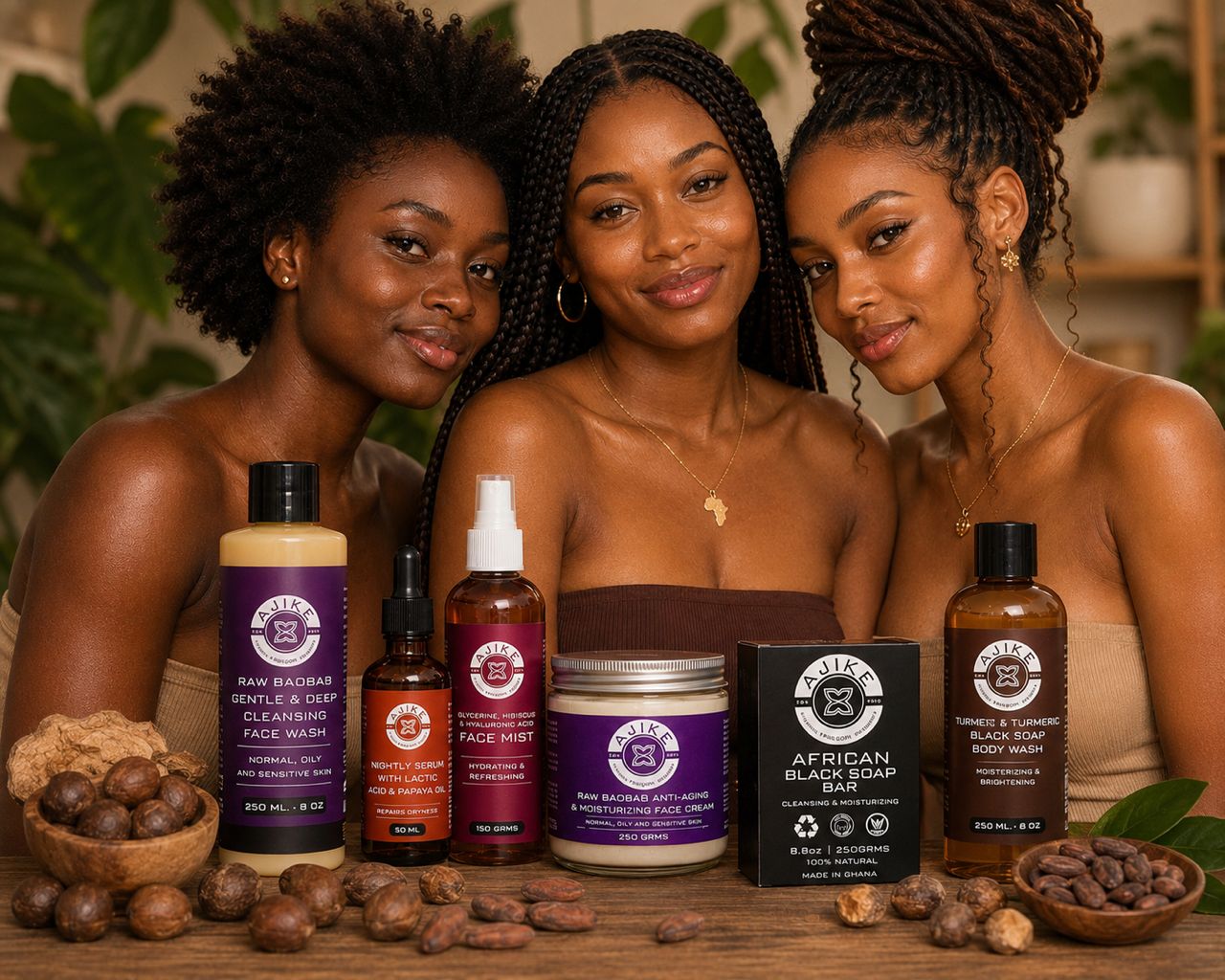
Every ingredient in Ajike's formulations is plant-derived, naturally compatible with melanin-rich skin, and selected for its proven benefit rather than its cosmetic appeal. Cocoa pod ash from Ghanaian cocoa farms. Wild-harvested shea butter from northern Ghana. Turmeric. Honey. Papaya. Kojic acid. Lactic acid. Baobab oil. These are ingredients with deep roots in African skincare tradition and solid modern evidence behind them.
None of our products contain hydroquinone, mercury compounds, strong steroid bleaching agents, or the synthetic skin-lightening chemicals that have caused documented harm in communities using unregulated brightening products. We do not bleach skin. We support its natural renewal.
Handcrafted in Ghana Formulated Where Dark Skin Is the Standard
Ajike was founded in Ghana in 2015. Our products are developed, tested, and made in Ghana a country where melanin-rich skin in all its tones is the baseline, not the edge case. When we formulate for dark spots, we are not adapting a product originally designed for lighter skin. We are formulating for the skin types we know and work with every day.
This matters. It means our understanding of how these ingredients interact with melanin-rich skin comes from direct, daily experience not from a laboratory that considers darker skin types an afterthought.
Our Commitment No Bleaching, No Harsh Chemicals, Just Results
Ajike's commitment is simple: pure ingredients, no harsh chemicals, results that come from supporting the skin's natural processes rather than overriding them. We do not promise overnight miracles. We promise that if you use our products consistently, correctly, and with the patience that genuine skin renewal requires, you will see meaningful, lasting improvement in your dark spots and overall skin tone without compromising your skin health in the process.
Frequently Asked Questions
Yes African black soap supports the gradual fading of dark spots through consistent gentle exfoliation and reduction of skin inflammation. It works best as part of a complete routine that includes a targeted brightening serum, daily moisturisation, and sun protection. Results are gradual typically visible within 4 to 8 weeks and vary by dark spot age, depth, and consistency of use. Results may vary depending on skin type.
No. African black soap does not bleach or lighten skin. It contains no hydroquinone, no mercury compounds, no steroid bleaching agents, and no ingredients that suppress melanin production globally. What it does is support gradual, even skin renewal which over time produces a more even skin tone by consistently removing hyperpigmented surface cells and reducing the inflammation that creates new dark spots. This is brightening through natural renewal, not bleaching.
Most users see the first visible changes by weeks 3 to 4 of consistent daily use. Meaningful improvement noticeably lighter spots, more even tone is typically visible by month 2. Significant improvement or clearance of recent post-acne marks typically occurs within 8 to 12 weeks of consistent use alongside a serum and moisturiser. Older, deeper, or more established spots take longer. Results may vary depending on skin type.
Yes authentic African black soap made with traditional ingredients (cocoa pod ash, shea butter, plant oils) is safe for melanin-rich skin. It contains no harsh chemicals, no bleaching agents, and no synthetic additives that could trigger adverse reactions or PIH in dark skin. Its gentle, plant-based formula is well-suited to the needs of dark skin, as it cleanses effectively without causing the inflammation that triggers new hyperpigmentation.
Yes post-acne dark spots (PIH) are the type of hyperpigmentation that African black soap addresses most effectively. Its gentle exfoliation and anti-inflammatory properties work together to gradually fade these marks. For faster results on post-acne PIH specifically, pair with Ajike Nightly Face Serum with Lactic Acid and Papaya Oil every evening after cleansing.
Yes for body dark spots on knees, elbows, underarms, and areas with shaving-related hyperpigmentation, our Honey and Turmeric Black Soap Body Wash used daily in the shower, followed by Ajike Shea Glow Lotion with Kojic Acid, provides a targeted body brightening routine that produces visible results within 6 to 10 weeks of consistent use.
Shop Ajike's Dark Spot Treatment Range Handcrafted in Ghana for Melanin-Rich Skin →
https://www.ajikeghana.com/collections/african-black-soap
Related Articles Ajike Blog:
🔗 Read Also: Blog 1 What Is African Black Soap? Complete Guide → https://www.ajikeghana.com/blog/what-is-african-black-soap
🔗 Read Also: Blog 2 African Black Soap Breaking Me Out Is This Normal? → https://www.ajikeghana.com/blog/african-black-soap-breaking-me-out
🔗 Read Also: Blog 3 How to Use African Black Soap Without Drying Your Skin → https://www.ajikeghana.com/blog/how-to-use-african-black-soap-without-drying-skin
🔗 Read Also: Blog 5 African Black Soap for Acne Step by Step Guide → https://www.ajikeghana.com/blog/african-black-soap-for-acne
🔗 Read Also: Blog 6 African Black Soap for Eczema and Itchy Skin → https://www.ajikeghana.com/blog/african-black-soap-for-eczema
🔗 Read Also: Blog 7 How to Store African Black Soap So It Does Not Go Mouldy → https://www.ajikeghana.com/blog/how-to-store-african-black-soap