
Start writing here...
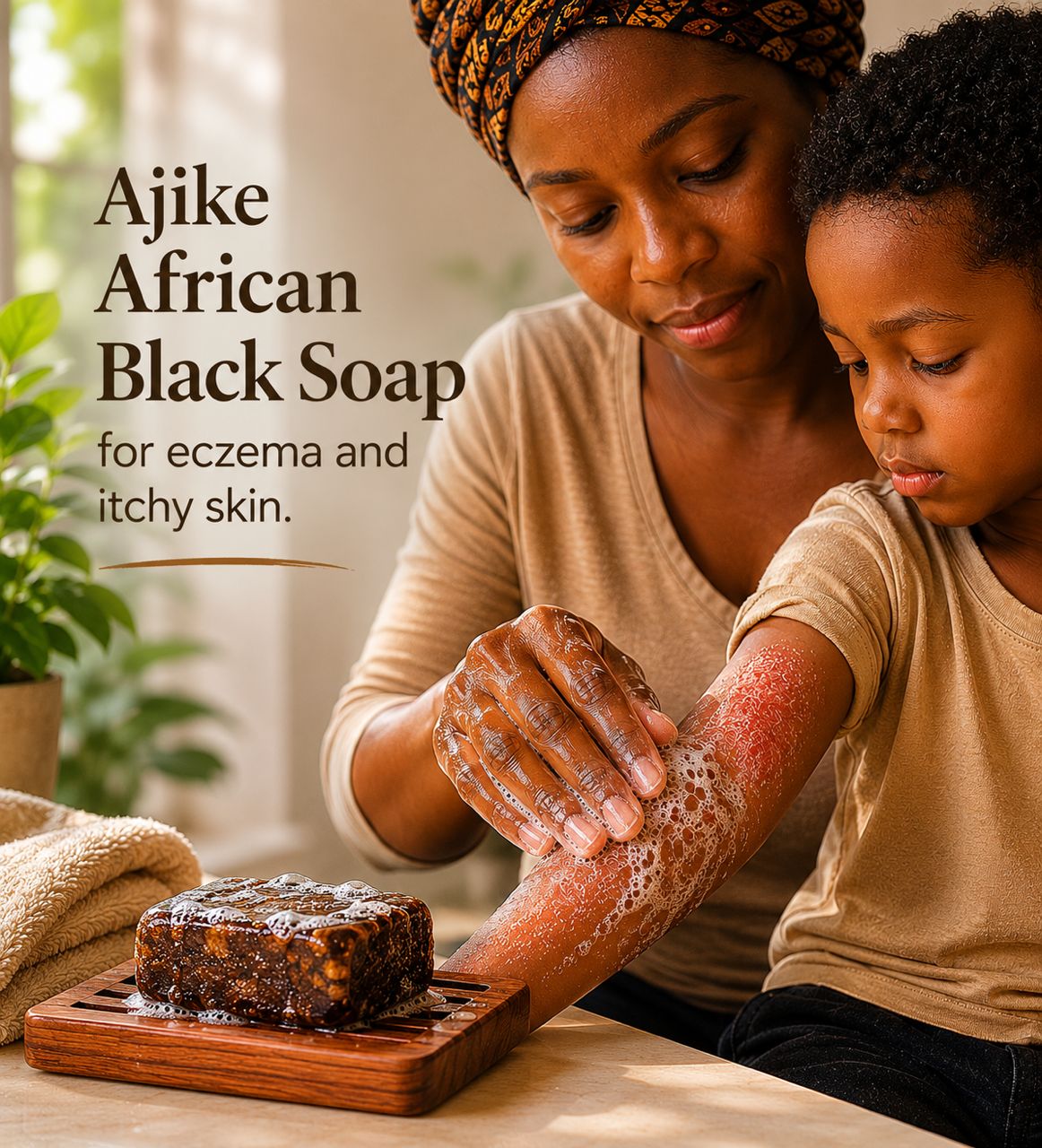
If you have eczema, you already know that finding a cleanser that does not make your skin worse is one of the hardest parts of managing the condition. Most soaps and body washes even ones marketed as gentle or natural contain at least one ingredient that triggers a flare. Fragrance. Sulfates. Preservatives. The list of triggers in commercial cleansers is long and often hidden behind ingredient names that are difficult to identify.
African black soap is one of the few cleansers with a genuinely clean formulation no sulfates, no synthetic fragrance, no harsh preservatives, no artificial additives of any kind. For eczema-prone skin, this is not a minor detail. It is the difference between a cleanser that calms the skin and one that inflames it.
This guide explains the biology of eczema, why most cleansers worsen it, how African black soap's specific properties make it a suitable option for eczema-prone skin, and exactly how to use it safely. We also tell you honestly what it can and cannot do.
🔗 Read Also: New to African Black Soap? Read: What Is African Black Soap? Complete Guide → https://www.ajikeghana.com/blog/what-is-african-black-soap
Understanding Eczema: What Is Actually Happening to Your Skin
What Is Atopic Dermatitis and Why Does It Happen
Atopic dermatitis the most common form of eczema is a chronic, relapsing inflammatory skin condition characterised by a compromised skin barrier, hypersensitive immune response, intense itching, and dry, inflamed skin. It is part of what is known as the atopic triad alongside asthma and allergic rhinitis, as many individuals with atopic dermatitis also experience these conditions.
At its biological root, atopic dermatitis involves mutations or dysfunction in the gene that encodes filaggrin a structural protein essential to the integrity of the skin barrier. When filaggrin is insufficient or absent, the tight junctions between corneocytes in the stratum corneum are weaker, making the skin more permeable. This increased permeability allows irritants, allergens, and microorganisms particularly Staphylococcus aureus to penetrate the skin more easily, triggering an exaggerated immune response that manifests as inflammation, itching, and the characteristic skin changes of eczema.
The Compromised Skin Barrier: The Root of Eczema
The skin barrier the outermost layer of the epidermis, known as the stratum corneum functions as a physical and chemical shield between the body and the external environment. It prevents water from evaporating out of the skin (transepidermal water loss, or TEWL) and prevents external irritants from penetrating in. In eczema-prone skin, this barrier is structurally compromised.
The compromised barrier creates two simultaneous problems: the skin loses water rapidly (leading to chronic dryness), and external irritants penetrate easily (triggering immune responses and inflammation). Everything about eczema management including choosing a cleanser must prioritise protecting and supporting this compromised barrier rather than further disrupting it.
Common Eczema Triggers Most People Do Not Realise
Beyond the well-known triggers of stress, sweat, and allergens, many eczema sufferers do not realise that their everyday skincare products are contributing to their flares. The most common hidden triggers in skincare products include:
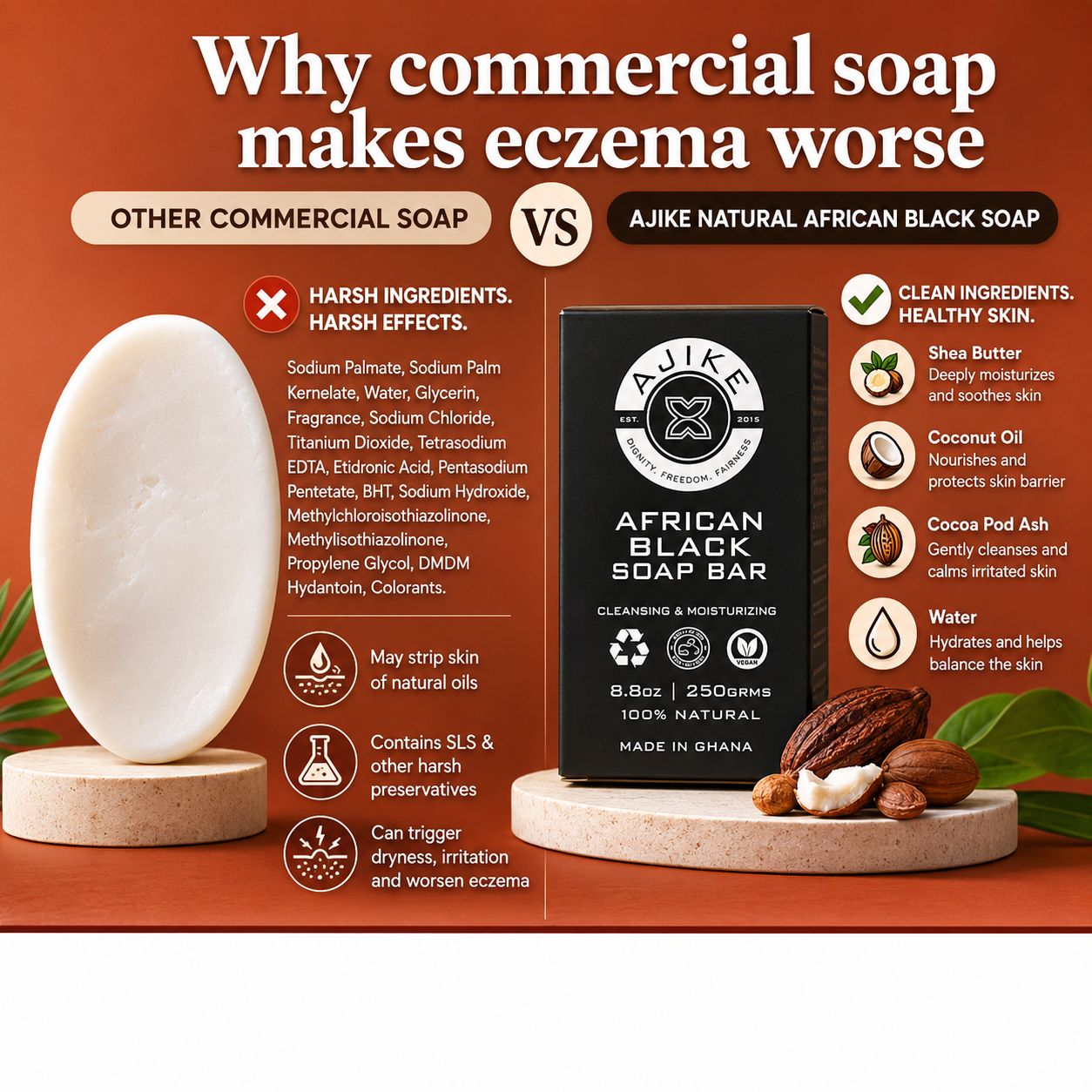
- Synthetic fragrances: the single most common contact allergen in skincare, present in the majority of commercial soaps, body washes, and cleansers
- Sodium lauryl sulfate (SLS) and sodium laureth sulfate (SLES): surfactants that strip the skin's lipid barrier, directly worsening the barrier dysfunction that underlies eczema
- Methylisothiazolinone (MI) and methylchloroisothiazolinone (MCI): preservatives that are potent contact allergens and among the leading causes of contact dermatitis flares
- Formaldehyde-releasing preservatives: DMDM hydantoin, imidazolidinyl urea, and similar preservatives that release small amounts of formaldehyde over time
- Cocamidopropyl betaine: a surfactant derived from coconut oil that is a common sensitiser in people with eczema despite being marketed as gentle
- Propylene glycol: a humectant that can irritate eczema-prone skin at higher concentrations
Different Types of Eczema: Atopic, Contact, Seborrhoeic
Eczema is not a single condition it is a group of related inflammatory skin conditions with different causes and presentations:
- Atopic dermatitis: the most common type, linked to filaggrin deficiency and immune hypersensitivity. Chronic, relapsing, often begins in childhood
- Contact dermatitis: triggered by direct contact with an irritant (irritant contact dermatitis) or an allergen (allergic contact dermatitis). Common triggers include synthetic fragrances, preservatives, nickel, and latex
- Seborrhoeic dermatitis: affects areas with high sebaceous gland density scalp, face (particularly around the nose and eyebrows), and chest. Linked to Malassezia yeast overgrowth and sebum production
- Nummular eczema: coin-shaped patches of inflamed skin, often on the limbs. Can be triggered by dry skin, stress, or skin injuries
- Dyshidrotic eczema: small, intensely itchy blisters on the palms and soles, linked to sweating and stress
Eczema on Different Skin Tones: Why Dark Skin Presents Differently
Eczema presents differently on melanin-rich skin compared to lighter skin tones, and this difference is important for both diagnosis and management. On lighter skin, eczema typically appears as red, inflamed patches. On darker skin, the inflammation may appear as grey, violet, or dark brown rather than red making it harder to identify visually, and unfortunately leading to underdiagnosis and delayed treatment in people with darker skin tones.
Post-inflammatory hyperpigmentation (PIH) is also more significant in eczema on dark skin each flare can leave a lasting dark mark that takes months to fade, even after the eczema itself has resolved. This is why gentle, anti-inflammatory management is even more critical for melanin-rich eczema-prone skin: every unnecessary flare creates a new pigmentation challenge.
Eczema vs Dry Skin vs Skin Rash: How to Tell the Difference
Dry skin: tightness, flaking, and discomfort from insufficient moisture. Responds well to moisturisation alone. Does not typically itch intensely or form specific patches.
Eczema: intense itching (often worse at night), specific inflamed patches that may weep or crust, chronic and relapsing pattern, often correlates with known triggers. Moisturisation helps but does not resolve the condition alone.
Skin rash: sudden onset, often linked to a specific exposure (contact allergen, food, medication, infection). May resolve completely once the trigger is removed. Can mimic eczema if the trigger is something you are regularly exposed to.
Why Most Soaps and Cleansers Make Eczema Worse
Sulfates and the Skin Barrier: Why SLS Is So Damaging
Sodium lauryl sulfate is the most aggressive skin barrier disruptor found in commercial cleansers. Its mechanism of action inserting itself between the phospholipid molecules of the skin's lipid bilayer is highly effective at removing sebum and dirt, but it also irreversibly disrupts the lamellar bilayer structure of the stratum corneum.
For eczema-prone skin, where this barrier is already structurally compromised, SLS exposure is particularly damaging. Studies have demonstrated that SLS application to eczema-prone skin increases TEWL, reduces skin hydration, and triggers mast cell activation the immune cells responsible for the inflammatory response in eczema. Even brief contact with SLS-containing cleansers can trigger or worsen a flare in sensitive eczema-prone skin.
Synthetic Fragrances: The Number One Eczema Trigger in Cleansers
Synthetic fragrance is the single most common contact allergen identified in patch testing of eczema patients. A product listed as 'fragranced' may contain anywhere from 10 to several hundred individual chemical compounds many of which are sensitisers that trigger immune responses on repeated exposure.
Critically, even products labelled 'unscented' may contain masking fragrances synthetic ingredients added to neutralise the natural odour of other ingredients, which do not add scent but still contain fragrance chemicals. True fragrance-free means no fragrance chemicals of any kind, not simply no perceptible scent. Ajike's eczema formulations are genuinely fragrance-free no added scent of any kind.
Preservatives and Harsh Additives That Inflame Eczema Skin
Preservatives are necessary in water-based commercial products to prevent microbial growth but many commonly used preservatives are significant sensitisers for eczema-prone skin. Methylisothiazolinone (MI) in particular caused a major contact dermatitis epidemic in Europe when its use in rinse-off products was dramatically increased in the 2010s. Parabens, formaldehyde-releasing preservatives, and phenoxyethanol at higher concentrations are all potential triggers.
African black soap in its authentic bar form contains no synthetic preservatives its low water content and high pH create a self-preserving environment. Ajike's products use only food-grade preservatives where required in water-based formulations.
How Commercial Soaps Strip Natural Lipids from Eczema Skin
The skin's natural lipid barrier a complex mixture of ceramides, fatty acids, and cholesterol in a precise ratio is the primary structural component of barrier function in the stratum corneum. Eczema-prone skin has a reduced ceramide content compared to healthy skin, making this lipid barrier inherently weaker.
Commercial soaps and surfactants strip these natural lipids during cleansing removing not just dirt and sebum but also ceramides and fatty acids that are essential to barrier integrity. This stripping is cumulative: repeated daily washing with SLS-containing products progressively depletes the skin's ceramide content, worsening barrier dysfunction over time. The result is a cycle of cleansing that aggravates the very condition it is supposed to help manage.
Why pH Matters for Eczema-Prone Skin
Healthy skin has an acidic pH of 4.5 to 5.5, which is maintained by the skin's acid mantle. This acidic environment supports beneficial skin microbiome organisms, inhibits pathogens like Staphylococcus aureus, and promotes the enzymatic activity necessary for ceramide production and barrier repair.
Most commercial soaps are alkaline with pH values ranging from 9 to 11 which temporarily disrupts the acid mantle with each wash. For healthy skin, this disruption is brief and the skin recovers quickly. For eczema-prone skin, where acid mantle function is already compromised, this repeated alkaline disruption inhibits S. aureus management, reduces ceramide synthesis, and prolongs the post-wash vulnerability of the barrier. The skin simply cannot recover between washes fast enough.
Is African Black Soap Good for Eczema?
No Sulfates: Gentle Cleansing That Respects the Skin Barrier
African black soap contains no SLS, no SLES, no synthetic surfactants of any kind. The cleansing action comes entirely from the saponified plant oils and ash lye created through traditional saponification. This gentle, plant-derived cleansing effectively removes dirt, sebum, and impurities from the skin surface without the aggressive lipid-stripping action of synthetic surfactants.
For eczema-prone skin, the practical consequence is significant: cleansing with African black soap does not further deplete the ceramide and lipid content of an already-compromised barrier. The skin can cleanse and still retain more of its natural protective lipids than it would after a commercial soap wash.
No Synthetic Fragrance: Removing the Biggest Trigger
Ajike's African black soap products particularly our dedicated eczema formulations contain no synthetic fragrances. No added scent, no masking fragrance, no fragrance chemicals of any kind. For eczema-prone skin sensitised to fragrance compounds (which represents the majority of patch-test-positive eczema patients), this single omission makes African black soap a fundamentally different cleansing experience from commercial alternatives.
No Harsh Preservatives: Fewer Ingredients, Fewer Reactions
Authentic African black soap in bar form requires no synthetic preservatives its chemistry and low water content create a self-preserving product. Where preservatives are necessary in our formulations (water-based products), we use only food-grade preservatives the same preservative standards used in products safe for human consumption. This significantly reduces the sensitisation risk compared to the cosmetic preservatives used in most commercial skincare.
Natural Glycerine Retention: Moisture While Cleansing
The traditional saponification process that creates authentic African black soap retains the natural glycerine produced during the reaction. This glycerine a powerful humectant is present in the bar and releases onto the skin during cleansing, drawing moisture into the skin cells during the wash. For eczema-prone skin, which struggles with chronic TEWL and dehydration, a cleanser that actively moisturises during use rather than stripping moisture is a meaningful functional advantage.
Shea Butter Content: Built-In Skin Barrier Support
Raw unrefined shea butter in Ajike's African black soap contains a significant unsaponifiable fraction compounds that are not converted to soap during saponification and remain active in the bar. These unsaponifiable fractions include natural triterpenes, phytosterols, and tocopherols (vitamin E) with documented anti-inflammatory and barrier-supporting properties.
Phytosterols in particular have shown anti-inflammatory activity in skin barrier models they reduce cytokine production in keratinocytes and support ceramide synthesis, which is particularly relevant for eczema-prone skin where ceramide deficiency is a core structural problem. The shea butter content in African black soap is not just a moisturising ingredient it is an active anti-inflammatory component of the formula.
Cocoa Pod Ash: Natural Antibacterial Without Harsh Chemicals
Staphylococcus aureus colonises the skin of up to 90% of atopic dermatitis patients, compared to approximately 5% of healthy individuals. S. aureus produces virulence factors including toxins and proteases that directly damage the skin barrier, trigger immune responses, and worsen eczema inflammation. Managing S. aureus on the skin surface is therefore an important component of eczema management.
The natural alkaline environment created by cocoa pod ash during African black soap cleansing creates conditions that are unfavourable for S. aureus growth on the skin surface. This provides a gentle, natural antibacterial effect without the use of antibiotics (which carry resistance risks) or harsh antiseptic chemicals (which can further irritate eczema-prone skin).
What African Black Soap Cannot Do for Eczema: Honest Expectations
African black soap is a cleanser. It is not a treatment for eczema as a medical condition, and it does not address the underlying causes of atopic dermatitis filaggrin deficiency, immune dysregulation, or genetic factors. It will not resolve an active eczema flare on its own, and it is not a substitute for prescribed eczema treatments when these are medically necessary.
What it can do: provide a gentle, irritant-free cleansing option that does not worsen eczema, support a calmer skin surface environment, and reduce the likelihood of cleanser-triggered flares. For many eczema sufferers, switching from a commercial cleanser to African black soap removes a significant ongoing trigger from their daily routine and that alone can meaningfully improve their eczema management. Results may vary depending on skin type.
📌 Important: Always patch test before first full use on eczema-prone skin. Apply a small amount of lather to the inner arm, leave for 60 seconds, rinse thoroughly, and monitor for 24 to 48 hours. Discontinue use if irritation occurs.
African Black Soap for Different Types of Eczema and Skin Conditions
Atopic Dermatitis: Chronic Dry Itchy Skin
Atopic dermatitis is the type of eczema that benefits most directly from African black soap's gentle, fragrance-free, sulfate-free cleansing. The removal of common cleanser triggers SLS, synthetic fragrance, harsh preservatives from the daily routine reduces one significant ongoing source of barrier disruption and inflammation.
For atopic dermatitis, African black soap should be used alongside not instead of a prescribed emollient or barrier cream regimen. Apply the emollient immediately after cleansing while skin is still damp, within 60 seconds of patting dry. The soap cleanses; the emollient repairs and seals.
Contact Dermatitis: Reaction-Based Eczema
Contact dermatitis whether irritant or allergic is directly triggered by specific substances that the skin comes into contact with. If your contact dermatitis is triggered by ingredients commonly found in soaps (SLS, fragrance, preservatives), switching to African black soap removes those triggers from your daily cleansing routine.
If your contact dermatitis has a different cause (nickel, rubber, plant allergens), African black soap cleansing will not directly address that trigger but remains a gentle daily cleansing option that does not add additional irritant load to already-reactive skin.
Seborrhoeic Dermatitis: Scalp and Face Eczema
Seborrhoeic dermatitis on the scalp responds well to African black soap used as a shampoo the natural antibacterial action of cocoa pod ash helps manage Malassezia yeast overgrowth, which is a primary driver of seborrhoeic dermatitis. Our Peppermint, Rosemary and Tea Tree African Black Soap Shampoo is the most appropriate formulation for scalp seborrhoeic dermatitis, as these essential oils have additional antifungal and scalp-calming properties.
For facial seborrhoeic dermatitis around the nose, eyebrows, and ears, our Black Soap Eczema Soap (unscented) used gently on the affected facial areas can help manage the condition without the irritation risk of fragranced alternatives.
Eczema on the Body: Arms, Legs, Torso
For eczema on the body, the Lavender and Lemongrass Black Soap Body Wash or the African Black Soap Bar can be used in the shower for general body cleansing. For eczema-prone body skin, keep contact time short (30 to 45 seconds on affected areas), use lukewarm water, rinse thoroughly, and apply a generous amount of emollient moisturiser immediately after patting dry.
For those with sensitive eczema body skin who cannot tolerate any essential oils, our Black Soap Eczema Soap or the unscented African Black Soap Bar are the appropriate choices.
Eczema on the Face: Extra Care Required
Facial eczema-prone skin requires the most cautious approach. The face has thinner skin than the body, is more exposed to environmental triggers, and is more visible making flares more distressing. For facial eczema, use only the paste format or the dedicated Eczema Soap. Keep contact time to 20 to 30 seconds maximum. Use only lukewarm water. Apply a facial emollient immediately after cleansing.
Do not use the African Black Soap Bar directly on an active eczema flare on the face during active inflammation, even gentle cleansers can be too stimulating. During flares, a simple water rinse may be preferable to any soap contact on inflamed areas.
Eczema in Children and Babies: When to Use and When Not To
For older children (over 3 years) with mild to moderate eczema that is not in an active flare, the unscented Ajike Black Soap Eczema Soap is a suitable gentle cleansing option. For babies and toddlers with eczema, our dedicated baby care range is more appropriate particularly our Shea Baobab Baby Hair and Body Wash, which is formulated with edible-grade ingredients specifically for delicate infant skin.
Never use scented African black soap formulations on babies or young children with eczema. Do not use any new product on a child with eczema without first discussing with a healthcare provider. Discontinue use if irritation occurs.
🔗 Read Also: Explore: Natural Baby Skincare Why Edible-Grade Ingredients Are the Safest Choice → https://www.ajikeghana.com/blog/natural-baby-skincare-edible-ingredients
Itchy Skin Without Diagnosed Eczema: Can African Black Soap Help?
Many people experience itchy, reactive, or easily irritated skin without a formal eczema diagnosis. This can be the result of a compromised skin barrier from over-use of harsh cleansers, contact sensitivity to specific product ingredients, environmental dryness, or simply naturally reactive skin.
For these individuals, switching to African black soap as a daily cleanser removes the most common cleanser-based skin irritants from their routine. Many people find that persistent itchiness and skin reactivity resolves or significantly improves after switching not because African black soap is a treatment for their condition, but because it removes the daily irritation that was causing the problem.
How to Use African Black Soap Safely on Eczema-Prone Skin
Always Patch Test First: How to Do It Correctly
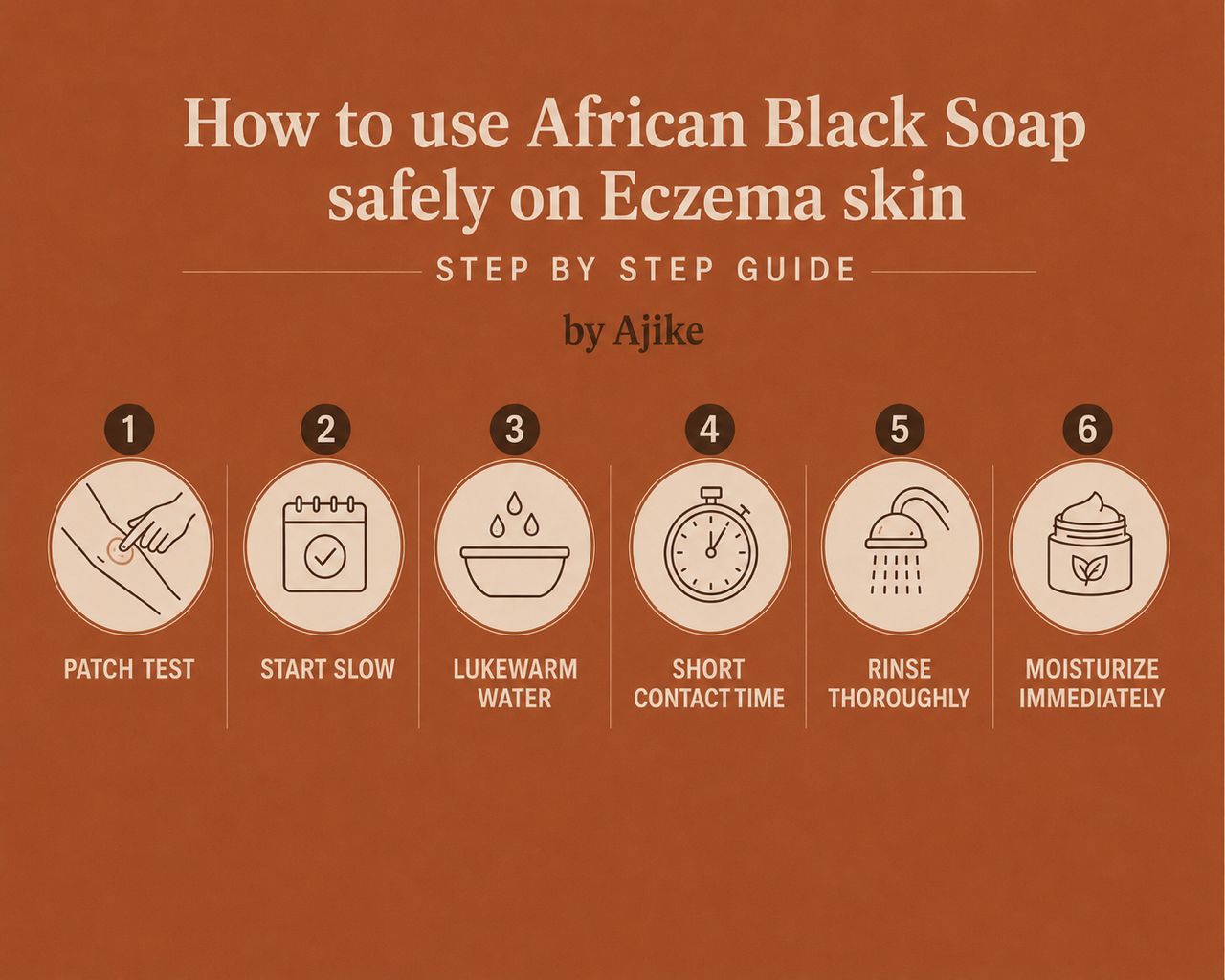
Before using any new product on eczema-prone skin, a patch test is essential. Apply a small amount of lather from the soap to the inner forearm an area of skin that is accessible and not typically involved in your usual eczema flares. Leave the lather on the skin for 60 seconds, then rinse thoroughly with cool water. Pat dry. Do not apply any other product to that area.
Monitor the patch test area for 24 to 48 hours. If you see redness, swelling, blistering, increased itching, or any sign of irritation within this period, discontinue use. If there is no reaction after 48 hours, proceed to first full use but still start cautiously.
Start with the Least Sensitive Area of Your Body
For your first full use, start on the least eczema-affected area of your body perhaps your arms or legs rather than your face or torso if those are your most affected areas. This allows you to assess how your skin responds to the soap on relatively healthy skin before applying it to the most vulnerable areas.
Progress to more sensitive areas only after 1 to 2 weeks of comfortable use on less affected areas.
Use Lukewarm Water: Never Hot
Hot water is particularly damaging for eczema-prone skin. It dissolves the skin's natural lipid layer more aggressively than lukewarm water, increases TEWL during and after bathing, and activates mast cells in the skin that release histamine directly triggering the itch response that characterises eczema. Always use lukewarm water for cleansing, and keep baths and showers short (under 10 minutes).
Keep Contact Time Short: Under 45 Seconds
For eczema-prone skin, keep the contact time of African black soap on the skin to under 45 seconds. On actively inflamed or flaring areas, consider reducing contact time further to 20 to 30 seconds. The shorter the contact time, the lower the alkaline exposure to the compromised skin barrier. The soap still effectively cleanses in this brief contact period.
Rinse Thoroughly: No Residue Left Behind
Thorough rinsing is particularly important for eczema-prone skin. Any soap residue remaining on the skin after rinsing continues to exert an alkaline effect on the skin surface, disrupting the acid mantle and providing a continued irritant load. Rinse with cool water until the skin feels completely clean and residue-free. Pay particular attention to skin folds and creases where residue can accumulate.
Moisturise Immediately on Damp Skin: This Is Non-Negotiable
For eczema-prone skin, the moisturisation step after cleansing is not just beneficial it is essential. The wet wrapping technique used in clinical eczema management is based on the same principle: applying emollient to damp skin seals in moisture and significantly reduces TEWL compared to application on dry skin.
Apply your emollient or eczema cream within 60 seconds of patting dry while the skin is still slightly damp. This single practice makes a meaningful difference to post-cleansing skin comfort and the frequency of eczema flares associated with daily bathing.
How Often to Use on Eczema Skin
For eczema-prone skin in a stable (non-flaring) period: once daily use (evening) is the appropriate starting frequency. After 2 to 3 weeks of comfortable use, once daily can be maintained or kept at every other day depending on how the skin responds.
During an active eczema flare: reduce to every other day or pause soap use entirely on affected areas. A simple water rinse on actively inflamed skin is preferable to any cleanser contact during a severe flare. Resume African black soap use once the flare has subsided.
What to Expect When You First Start Using African Black Soap on Eczema Skin
Week 1: The Adjustment Period
During the first week, the skin is transitioning from a commercial cleanser formula to a plant-based one. This transition involves the skin's microbiome adjusting, the acid mantle recalibrating, and the sebaceous glands adapting to a gentler cleansing environment. Some users notice that their skin feels slightly different after cleansing not worse, but different from the synthetic smoothness they were accustomed to. This is normal.
Focus on the moisturisation step during week 1 applying emollient immediately after every cleanse, generously, to slightly damp skin. The cleanser alone will not improve your eczema in week 1. The cleanser plus immediate emollient application together is what produces improvement.
Week 2 and 3: What Should Be Improving
By weeks 2 and 3, most users who have switched from a commercial cleanser to African black soap for eczema notice that their skin is less reactive immediately after cleansing. The post-wash discomfort, redness, or itching that occurred after their previous cleanser is reduced or absent. The skin may feel more comfortable and balanced throughout the day between washes.
For those who have also made the switch to Ajike Eczema Cream as their post-cleansing moisturiser, visible improvement in the dryness and texture of eczema patches typically becomes apparent during weeks 2 to 3.
Signs It Is Working for Your Eczema
- Post-cleansing comfort: skin feels calm and comfortable after washing rather than tight or itchy
- Reduced flare frequency: fewer eczema flares triggered by the cleansing routine itself
- Improved skin hydration: skin retains moisture better between washes
- Reduced itching: particularly in the period immediately after cleansing
- Improved sleep: for many eczema sufferers, reduced nighttime itching is the first sign that the cleansing routine is improving skin health
Signs You Should Stop and Reassess
- Increased redness, swelling, or blistering after use possible contact reaction to a specific ingredient
- Burning or stinging during application that does not subside within seconds of rinsing
- Worsening of existing eczema patches within 48 hours of first use
- New eczema patches appearing in areas not previously affected
- No improvement in post-cleansing comfort after 3 to 4 weeks of consistent use
Discontinue use if irritation occurs and consult with a healthcare provider or dermatologist if your eczema worsens.
Best Ajike Products to Use Alongside African Black Soap for Eczema
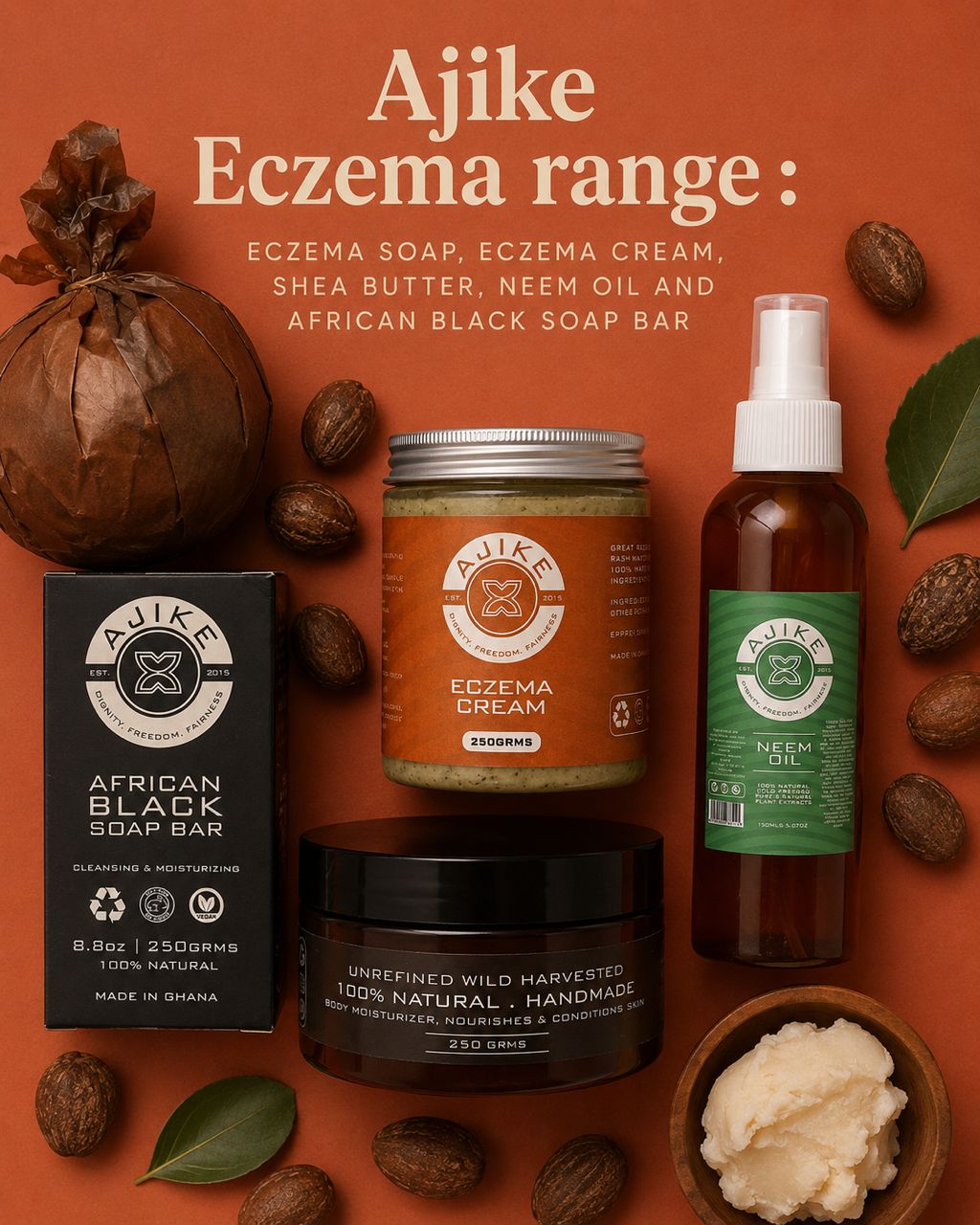
Ajike Black Soap Eczema Soap: Specifically Formulated for Eczema Skin
Our Black Soap Eczema Soap is the most appropriate African black soap product for eczema-prone skin. It is unscented no fragrance of any kind and enriched with shea butter, cocoa butter, and neem extract for additional barrier support and antibacterial action. It is formulated specifically for sensitive, reactive, and eczema-prone skin, and is safe for both children and adults.
This is the product to start with for eczema. If you tolerate it well over 2 to 3 weeks, you can then consider exploring other Ajike formulations on less sensitive body areas.
🛒 PRODUCT LINK: Ajike Black Soap Eczema Soap: Natural Relief Soothing Soap for Dry, Itchy and Sensitive Skin Unscented. Fragrance-free. Shea butter, cocoa butter, neem extract. Formulated for eczema-prone skin. Safe for children and adults. The gentlest cleansing option in the Ajike range. 🔗 https://www.ajikeghana.com/products/black-soap-eczema-soap
Ajike Shea Butter and Neem Eczema Cream: Soothe and Repair
Our Eczema Cream pairs directly with the Eczema Soap as the post-cleansing moisturiser for eczema-prone skin. Formulated with shea butter, cocoa butter, neem extract, and soothing plant oils, it supports barrier repair and provides intensive moisture while the neem content contributes natural anti-inflammatory and antibacterial properties relevant to eczema management.
Apply to slightly damp skin immediately after cleansing with the Eczema Soap. For active eczema patches, apply generously and allow to absorb before dressing.
🛒 PRODUCT LINK: Ajike Shea Butter and Neem Eczema Cream: Soothing Cream for Eczema-Prone, Dry and Sensitive Skin Shea butter, cocoa butter, neem extract, plant oils. Barrier repair and moisture for eczema. Apply after eczema soap on damp skin. Children and adults. Fragrance-free. 🔗 https://www.ajikeghana.com/products/shea-butter-neem-eczema-cream
Ajike Raw Unrefined Shea Butter: Intensive Skin Barrier Repair
For very dry, severely eczema-affected skin particularly during or after a flare raw unrefined shea butter is the most intensive natural barrier repair ingredient available. Its high unsaponifiable fraction, rich in phytosterols and tocopherols, provides both emollient and anti-inflammatory support. Applied generously to affected areas immediately after cleansing, it creates an intensive occlusive barrier that significantly reduces TEWL.
Shea butter has been used on eczema-prone skin in West Africa for generations it is not an experimental treatment but a traditional remedy with deep roots in the communities where eczema is common. Our ivory shea butter is wild harvested and completely unrefined every nutrient intact.
🛒 PRODUCT LINK: Ajike Raw Unrefined Shea Butter (Ivory): Natural African Moisturiser for Dry Skin and Hair Care Wild harvested, pure, unrefined shea butter. Intensive barrier repair for eczema. Apply generously to affected areas after cleansing. Children and adults. No additives. 🔗 https://www.ajikeghana.com/products/raw-unrefined-shea-butter-ivory
Ajike Neem Oil: Natural Antibacterial and Anti-Inflammatory Support
Pure neem oil, applied sparingly to specific eczema patches as a targeted treatment, provides concentrated antibacterial action against S. aureus the bacteria that colonises eczema skin and worsens inflammation along with nimbidin and nimbin compounds that have documented anti-inflammatory activity. Neem oil is potent and should be diluted or used sparingly on eczema-prone skin. Apply 1 to 2 drops to a small amount of shea butter or eczema cream and apply to the affected patch specifically.
Due to neem oil's strong natural scent, it may not be appropriate for those with fragrance sensitivity. Test on a small area first before applying to larger eczema patches.
🛒 PRODUCT LINK: Ajike Neem Oil: Natural Acne and Scalp Treatment for Clear Skin and Healthy Hair Pure neem oil. Natural antibacterial against S. aureus. Anti-inflammatory. For targeted eczema patch treatment. Dilute with shea butter before applying to skin. Test first. 🔗 https://www.ajikeghana.com/products/neem-oil
Ajike Baby Moisturiser: Gentle Enough for Severe Eczema Flares
For adults with very severe, reactive eczema who cannot tolerate most moisturisers, our Baby Moisturiser formulated with edible-grade plant ingredients specifically for the most sensitive skin possible provides a genuinely minimal-ingredient, ultra-gentle option. When even eczema-specific products cause reactions, the baby moisturiser's ultra-clean formulation is often the safest starting point.
🛒 PRODUCT LINK: Ajike Unrefined Shea and Sunflower Oil Baby Moisturiser: Gentle Natural Fragrance-Free Lotion Edible-grade ingredients. Fragrance-free, preservative-free. Shea butter, sunflower oil, argan oil, jojoba oil, coconut oil, baobab oil. Ultra-gentle. Safe for newborns, babies, toddlers and sensitive adults. 🔗 https://www.ajikeghana.com/products/baby-moisturizer
Natural Soap for Eczema: What to Look for and What to Avoid
Ingredients That Help Eczema Skin
- Shea butter: emollient, anti-inflammatory unsaponifiable fraction, ceramide synthesis support
- Colloidal oatmeal: clinically proven skin barrier support and anti-itch properties
- Glycerine (natural): humectant that supports skin hydration during and after cleansing
- Neem extract: natural antibacterial against S. aureus and anti-inflammatory
- Cocoa butter: emollient and barrier-supporting properties
- Plant-derived oils (sunflower, jojoba, baobab): emollient without comedogenic risk
Ingredients That Always Make Eczema Worse
- Sodium lauryl sulfate (SLS) and sodium laureth sulfate (SLES): barrier-stripping surfactants
- Synthetic fragrances: most common contact allergen in eczema patients
- Methylisothiazolinone (MI) and methylchloroisothiazolinone (MCI): potent sensitisers
- Formaldehyde-releasing preservatives (DMDM hydantoin, imidazolidinyl urea)
- Propylene glycol at higher concentrations: potential irritant for eczema skin
- Cocamidopropyl betaine: common sensitiser despite gentle marketing positioning
- Mineral oil and petroleum derivatives: occlusive but do not repair the barrier
- Alcohol (denatured): drying and barrier-disrupting
How to Read a Soap Label If You Have Eczema
When evaluating any soap or cleanser for eczema-prone skin, follow this approach:
- Look at the first five ingredients: these are the highest-concentration components. If SLS or SLES appears anywhere in the list, avoid.
- Search for 'fragrance', 'parfum', or 'aroma': any of these terms indicates synthetic fragrance chemicals are present. Avoid.
- Check for preservatives: methylisothiazolinone, parabens, DMDM hydantoin, and phenoxyethanol should be approached with caution for highly reactive eczema skin.
- Count the total ingredients: fewer ingredients means fewer potential triggers. Authentic African black soap typically has 3 to 6 ingredients. A commercial soap with 25 ingredients has 25 potential trigger points.
- Look for 'pH balanced' or 'gentle': these are marketing terms with no regulatory definition. They do not guarantee the product is suitable for eczema skin.
Why Handmade Traditional Soap Is Better for Eczema Than Commercial Options
Handmade traditional soaps made through genuine saponification rather than synthetic detergent manufacture retain natural glycerine, use plant-based oils as their only cleansing agents, and contain none of the synthetic additives that commercial soap production requires. For eczema-prone skin, this translates to a fundamentally cleaner product with fewer potential irritants.
The regulatory environment for cosmetics does not require safety testing for eczema-prone skin specifically. Commercial products can be sold as 'gentle' or 'suitable for sensitive skin' without any clinical evidence for those claims. Traditional handmade soap, by contrast, has a centuries-long track record of safe use on reactive skin in the communities where it was developed which is a different kind of evidence, but a meaningful one.
Ajike African Black Soap: Formulated with Eczema-Prone Skin in Mind
Pure Ingredients: Nothing That Does Not Need to Be There
Every product in Ajike's range and especially the dedicated eczema formulations is built on the principle of minimal, purposeful ingredients. No ingredient is included for cosmetic appearance, commercial convenience, or shelf-life extension at the expense of skin safety. Every ingredient serves a function and has a reason to be there.
For eczema-prone skin, this philosophy is not just a marketing position it is a functional advantage. Every ingredient removed from a formula is one fewer potential trigger for a reactive skin type. Our eczema soap has fewer than 10 ingredients. A commercial eczema soap may have 25 or more.
No Harsh Additives: No Known Eczema Triggers
Ajike's African black soap and eczema range contains no SLS, no SLES, no synthetic fragrances, no methylisothiazolinone, no formaldehyde-releasing preservatives, no mineral oil, no petroleum derivatives, no parabens, no silicones, no artificial colours, and no synthetic thickeners. The list of what we do not include in our formula is, for eczema-prone skin, as important as the list of what we do include.
Handcrafted in Ghana: Traditional Formula, Modern Understanding
African black soap has been used on eczema-prone skin in West Africa for generations. The women who have made and used this soap in Ghana and across West Africa have observed its effects on reactive, sensitive, and inflamed skin over centuries of daily use. This traditional knowledge refined over generations is the foundation of Ajike's formulations.
We combine this traditional knowledge with modern understanding of skin biology and eczema management choosing our ingredient combinations with awareness of skin barrier function, TEWL, S. aureus management, and the specific sensitivities of eczema-prone skin. Traditional formula, modern understanding.
Our Dedicated Eczema Range: Because Some Skin Needs Extra Care
We developed our dedicated eczema range the Black Soap Eczema Soap and the Shea Butter and Neem Eczema Cream because we recognised that eczema-prone skin has specific needs that go beyond what our standard African black soap range was designed for. Unscented. Minimal ingredients. Specifically enriched with shea butter, neem, and cocoa butter for barrier support and anti-inflammatory properties.
This range exists because we believe everyone deserves a clean, gentle skincare option including those whose skin makes it hardest to find one.
Frequently Asked Questions
African black soap particularly Ajike's dedicated unscented Eczema Soap formulation is a suitable gentle cleanser for many people with eczema. It contains no sulfates, no synthetic fragrances, no harsh preservatives, and no artificial additives that commonly trigger eczema flares. It cleanses effectively without stripping the skin barrier and provides natural antibacterial action relevant to eczema management. Results may vary depending on skin type. Always patch test before full use.
No. Eczema is a chronic inflammatory condition with genetic and immune components that no topical product can cure. African black soap is a cleanser it can provide a gentle, trigger-free cleansing option that reduces daily irritant exposure and supports better skin conditions. For many eczema sufferers, removing cleanser triggers from their daily routine produces meaningful improvement in symptom management, but this is management, not cure.
Start with the Ajike Black Soap Eczema Soap as your cleanser and the Ajike Shea Butter and Neem Eczema Cream as your post-cleansing moisturiser. These two products work together as a gentle cleansing and repair routine for eczema-prone skin. For very severe eczema or highly reactive skin, add Ajike Raw Unrefined Shea Butter as an intensive barrier repair treatment on active patches.
During a mild to moderate flare: use the Eczema Soap with reduced contact time (20 to 30 seconds), lukewarm water only, and apply emollient generously immediately after. During a severe flare with open, weeping, or crusting lesions: avoid soap contact on the actively inflamed areas and use a simple water rinse only until the flare subsides. Discontinue use if irritation occurs.
For older children (over 3 years) with mild, stable eczema that is not in an active flare, the Ajike Black Soap Eczema Soap (unscented) is appropriate. Always patch test first. For babies and young children with eczema, the Ajike Baby range is more appropriate. Always consult with a healthcare provider before introducing new products to a child with eczema. Discontinue use if irritation occurs.
Most users who switch from a commercial cleanser to African black soap for eczema notice reduced post-cleansing reactivity within 1 to 2 weeks. Broader improvement in overall eczema management typically becomes apparent over 3 to 6 weeks as the daily cleanser-triggered irritant load is consistently reduced. Results vary significantly depending on the individual causes and severity of each person's eczema. Results may vary depending on skin type.